The Road to Alesia
After the shocking Roman defeat at Gergovia, Julius Caesar’s campaign in Gaul hung by a thread. Across the hills, Vercingetorix had gathered the Gallic tribes and retreated to the fortified heights of Alesia, turning it into a fortress no enemy could easily breach. Caesar’s legions, exhausted and wary, faced a double threat: the defenders within the fort, fierce and determined, and a massive Gallic relief force gathering beyond the hills. Encircled by terrain, outnumbered in parts, and racing against time, Caesar would have to rely on strategy, discipline, and sheer audacity. The fate of Gaul—and the legacy of Rome itself—would be decided in 52 BC at the Battle of Alesia.
The Gallic Revolt Expands
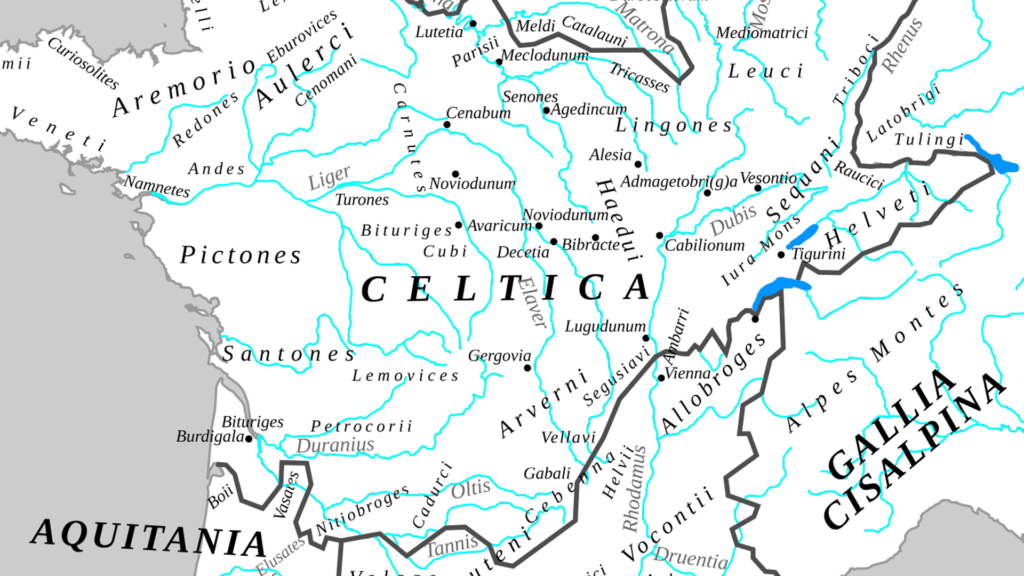
The Roman withdrawal from Gergovia in the spring of 52 BC significantly deepened instability throughout Gaul, triggering a broader wave of rebellion. Notably, the Aedui—formerly among Caesar’s most dependable Gallic allies—also defected and joined the uprising. In the aftermath, they moved against Noviodunum, an oppidum situated along the river Liger, which served as a key logistical and administrative hub for Caesar. The site housed Gallic hostages, substantial grain reserves, the military treasury, cavalry remounts, and a large share of the army’s baggage, making it a strategically critical target.
Eporedorix and Viridomarus, two young Aeduan leaders, launched an assault on the Roman garrison, killing both soldiers and civilian traders. They freed the hostages and carried off as much of the treasury and grain supplies as they could manage. What they could not take was deliberately destroyed—thrown into the river—and the oppidum itself was subsequently set on fire.
The Aedui used the captured hostages as leverage to open negotiations with other Gallic tribes. A general assembly was convened at Bibracte, bringing together Vercingetorix and leading chieftains from across Gaul. At this gathering, the Aedui attempted—unsuccessfully—to secure the appointment of one of their own leaders as supreme commander in place of the Arvernian. Despite their dissatisfaction, they ultimately accepted Vercingetorix’s authority in the interest of unity. By this stage, nearly all Gallic tribes had aligned against Caesar, with the majority of the Belgic peoples also joining the coalition.
Vercingetorix remained committed to a strategy of avoiding direct confrontation, focusing instead on wearing down the Romans through constant harassment and by cutting off their access to food supplies and forage for their animals. While maintaining his existing infantry strength, he requested additional cavalry from the tribes, expanding his mounted force to around 15,000 riders.
To further strain Roman resources, he coordinated with the Aedui and other allied tribes to launch renewed attacks into Transalpine Gaul, aiming to disrupt Caesar’s lines of communication and compel a withdrawal toward Transalpine Gaul. As these measures took effect, the Roman position grew increasingly unstable, with the expanding rebellion casting a serious threat over the continuation of Caesar’s campaign.
Caesar Regroups and Advances
Caesar, however, chose a more audacious course of action, advancing northward to reunite with his lieutenant Titus Labienus, who had recently completed a successful campaign against the Parisii and Senones. Moving with remarkable speed through continuous forced marches, he reached the river Liger before the Aedui could react. He crossed the swollen river at a deep ford, paused briefly to secure grain and livestock, and then advanced into the territory of the Senones, aiming to link up with Labienus at Agedincum. Within a few days, Labienus joined him. With this reunion, the Roman field army was once again consolidated. Its ten legions likely numbered between 35,000 and 40,000 soldiers, supported by a contingent of auxiliary troops.
With the number of cavalry available from his remaining Gallic allies steadily declining, Caesar turned to the Germanic tribes across the Rhine to procure mounted troops along with their accompanying light infantry. Upon their arrival, he improved their effectiveness by exchanging their small native horses for stronger mounts taken from Roman tribunes, equestrian officers, and affluent veteran soldiers who had been recalled to service. Meanwhile, the renewed attacks on Transalpine Gaul caused growing concern. In response, Caesar advanced his army along the frontier of the Lingones and into the territory of the Sequani, positioning himself closer to the province in order to better secure and respond to threats against it.
Clash of Cavalry: Turning the Tide
For the time being, the strategic initiative had shifted to Vercingetorix, who now resolved to intensify pressure on the Romans. Relying on his substantial cavalry force, he planned to strike the legions while they were on the move, targeting them at moments when they were slowed and burdened by their baggage train.
After re-establishing contact with the Romans, Vercingetorix chose to risk a cavalry engagement, likely aiming to destroy Caesar’s mounted forces and thereby limit his ability to track Gallic movements and secure supplies. In this relatively small-scale encounter near the, Caesar’s Germanic cavalry absorbed the initial impact of the Gallic charge. The fighting proved decisive on the Roman right, where the German horsemen routed their opponents, forcing the rest of the Gallic cavalry to retreat. The Romans pressed the pursuit, leaving two legions behind to guard the baggage train while the remaining eight advanced in close support of the cavalry. Gallic losses in the engagement were considerable.
Taking Back the Initiative
The momentum of the campaign shifted once more. Vercingetorix had miscalculated the situation, assuming that Caesar was in retreat and needed to be relentlessly harassed to prevent a future Roman return in greater strength. In reality, Caesar’s forces remained intact and quickly resumed the offensive, taking advantage of the proximity of the Gallic army as a clear and immediate target. Vercingetorix withdrew and established his camp in Alesia, a fortified hilltop settlement of the Mandubii. Within a day, Caesar arrived and positioned his own forces opposite the town. The opposing armies were now in place, setting the stage for the decisive confrontation that would determine the outcome of the Gallic revolt.
Alesia: The Fortress of Vercingetorix
Alesia was situated on an elongated hill characterized by steep natural slopes, which provided strong defensive advantages. To the west stretched a broad, open plain, while the remaining sides were surrounded by elevated ground broken by a series of valleys. These surrounding hills and ridgelines formed an approximate crescent-shaped landscape. Additionally, streams flowed along both the northern and southern sides of the central hill, further shaping the terrain.
To further strengthen his defensive position, Vercingetorix ordered the construction of a ditch and a wall approximately six feet high—likely built of roughly worked stone—on the eastern side of Alesia, where the slopes were more accessible. This fortification significantly increased the difficulty of any direct approach from that direction, which otherwise offered the most practical line of attack. Confident in both the natural strength of the terrain and the additional defenses, Vercingetorix, supported by his large force of warriors, regarded Alesia as effectively impregnable.
A direct assault on the position would have been hazardous and likely to incur heavy casualties, regardless of its outcome, as Vercingetorix and his forces held the advantage of elevated ground. Caesar reports that the Gallic army numbered around 80,000 infantry in addition to its cavalry, though the accuracy of this figure remains uncertain. Given these conditions, a frontal attack was an unattractive option. However, unlike the situation at Gergovia, Caesar now commanded his entire army. Assessing the terrain, he concluded that it was feasible to surround and isolate Alesia, effectively placing both the town and the Gallic forces under blockade.
The Double Fortification System
Caesar’s first move was to secure the surrounding hills to the north, east, and south of Alesia, deploying appropriate detachments on each elevation and planning the course of his lines of contravallation. Cavalry units were stationed near the streams, while infantry occupied the hilltops. He then proceeded along the slopes, linking point to point with continuous intrenchments that ultimately extended for approximately eleven miles, forming the inner contravallation. The scale and sophistication of the Roman siege works at Alesia were remarkable. To protect the working parties from cavalry attacks, a deep ditch was first excavated across the plain. Behind this, the Romans constructed a rampart reinforced with a palisade and towers at regular intervals, supplemented by a double ditch, one of which was filled with water diverted from nearby rivers wherever possible. Additionally, seven fortified camps and twenty-three redoubts were established at strategic locations along the line, creating a highly organized and formidable network of siege defenses.
Despite the strength of his fortifications, Caesar sought to further reinforce them. He extended a series of defensive obstacles several yards in front of the trenches. These consisted of successive layers of hazards: rows of sharpened stakes, concealed pits filled with stakes, and additional rows of wooden stakes embedded with iron spikes. This network of booby traps greatly increased the difficulty of any direct assault on the Roman lines.
The Gauls did not remain passive and sent their cavalry to engage the Romans. They were met by the auxiliary and allied cavalry, but it was only after Caesar committed his reserve of German horsemen and deployed selected legionaries in support that the Gallic forces were ultimately repelled. Recognizing the inevitability of a protracted siege, Vercingetorix dismissed his cavalry before the blockade was fully established, instructing them to return to their respective tribes and raise a relief army. The ultimate fate of Gaul would now be decided at Alesia, where Caesar’s forces were as firmly positioned as Vercingetorix’s army had been contained within the town.
Vercingetorix now recognized that a siege was unavoidable. Yet he lacked the confidence to break out before the encirclement was complete, fearing once more the prospect of confronting Roman legionaries in open battle. He placed his hopes on a result similar to the Gallic victory at Gergovia and resolved to endure the siege. The town’s position, if anything, was stronger than before. Grain supplies within Alesia were placed under centralized control and distributed according to fixed rations, while cattle were entrusted to individual care until needed for slaughter. The Gauls thus settled in, awaiting the arrival of a relief force and the decisive confrontation with Caesar.
Observing that the Gallic cavalry had escaped the siege, Caesar anticipated that the Gauls would return with reinforcements. In response, he ordered the construction of a second line of fortifications. This circumvallation, extending for approximately fourteen miles beyond the original contravallation, was designed to serve as a defensive barrier against any relieving forces. The entire system required roughly a month to complete. Archaeological evidence suggests, however, that the fortifications were likely less continuous than Caesar claimed, with potential gaps in the lines, particularly in areas where the natural terrain offered inherent protection.
It was essential for Caesar to secure as much grain and as many livestock as possible before any relieving force arrived, and he instructed his troops to gather sufficient supplies to sustain the entire army for thirty days. The labor required for these preparations was immense, but Caesar now commanded his full forces along with his most capable senior officers. Among them were the legates Quintus Cicero and Caius Trebonius, as well as the young Decimus Brutus and his newly appointed quaestor, Marcus Antonius AKA Mark Antony. The Romans carried out their work under the watchful eyes of the Gauls within Alesia, who occasionally launched small-scale raids but avoided engaging in a major confrontation until external support arrived. Both sides thus awaited the impending clash.
Gallic Relief Army Mobilizes
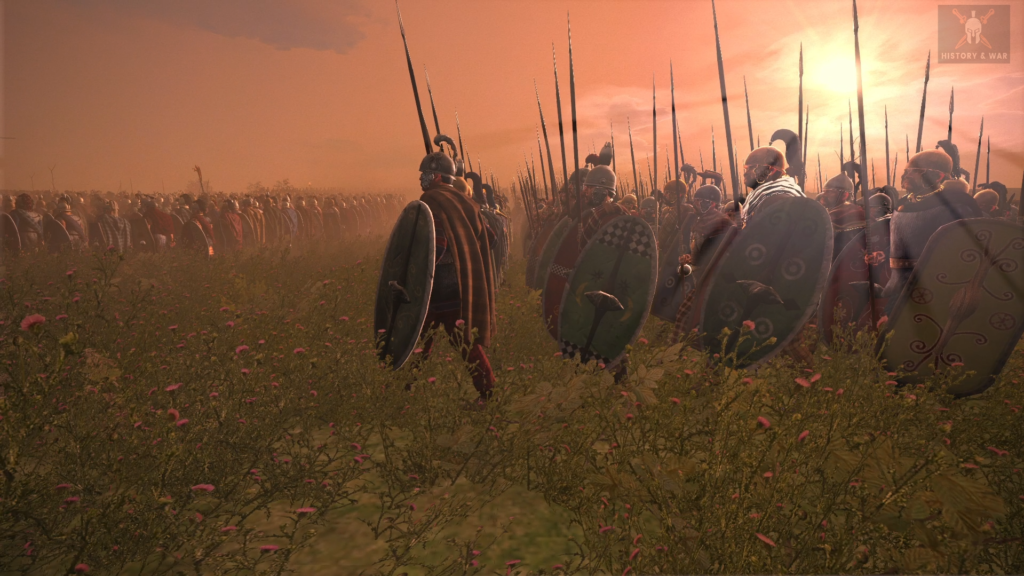
It took considerable time for the Gallic tribes to assemble a relief force. The chieftains convened to determine the number of warriors each people would contribute. Caesar provides a detailed list of the contingents requested from each tribe and claims that the army eventually numbered 8,000 cavalry and 250,000 infantry. While these figures may be inaccurate, and could have been deliberately exaggerated, they are broadly consistent with the numbers Caesar cites elsewhere in the Commentarii for Gallic forces. This consistency may reflect a pattern of exaggeration rather than precise enumeration.
Even if Caesar’s numbers were exaggerated, the circumstances of such a large, coordinated coalition—fully aware that it was confronting a decisive engagement—suggest that this was likely among the largest Gallic armies ever assembled. According to Caesar, the tribes did not call upon every able-bodied man, reasoning that an excessively large force would be cumbersome to command and nearly impossible to provision. Nevertheless, it is probable that many warriors who would ordinarily have fought only to defend their own territories were incorporated into the army, whether voluntarily or under the orders of their chieftains.
Four leaders were appointed to command the Gallic relief force. One was Commius, king of the Atrebates, while two others were the chieftains who had previously led Caesar’s Aeduan cavalry earlier in the campaign. The fourth was Vercassivellaunus, a cousin of Vercingetorix, and the only commander who does not appear to have served with Caesar’s army at any prior point. The army assembled gradually and advanced at a correspondingly slow pace, as was inevitable given the size of the force.
Starvation and Expulsion of Civilians
Meanwhile, unaware of the rapid approach of the Gallic relief army, the besieged at Alesia were increasingly uncertain how to respond. Six weeks had passed since Vercingetorix had dispatched his message for reinforcements, and the town’s provisions, intended to last thirty days, were nearly exhausted. Starvation loomed. An Arvernian named Cirtognatus proposed that the town consume those considered non-combatants, including incapacitated soldiers and civilians, but this plan was ultimately set aside in favor of sending the civilians out of the city. The entire civilian population of the Mandubii was thus marched beyond the walls; however, the Romans refused to accept them even as captives and forced them back into the town.
Caesar reinforced the sentries along the ramparts and refused to admit any of the civilians. He may have feared that allowing such a large group to pass could conceal a military attack, or been unwilling to permit them into an area where his troops were foraging, which would deplete supplies necessary for the army. Alternatively, he may have calculated that the Gauls would be compelled to retrieve their civilians, thereby rendering his blockade more effective. In the event, they did not act. At this stage of the campaign, each side demonstrated a comparable level of calculated ruthlessness. The townspeople’s appeals were ignored, leaving them to face starvation between the lines. Caesar may have anticipated that such suffering would demoralize the Gauls, and it certainly contributed to the grim nature of the final confrontation.
Battle
Battle of Alesia: Stage 1 (Cavalry Engagement)
As with many engagements in the ancient world, the precise sequence of events in the main confrontation at Alesia cannot be reconstructed with certainty. The Gallic relief army eventually arrived and established its camp on elevated ground, likely to the southwest, barely more than a mile from the outward-facing circumvallation. On the following day, the army was arrayed for battle, with the cavalry positioned on the plain in advance and the vast masses of infantry arrayed on the slopes behind them, both to demonstrate their formidable numbers to the Romans and to signal support to their besieged compatriots within the town.
Vercingetorix responded by assembling his forces outside the city walls, preparing to withstand any assault by the approaching relief army. He had arranged large numbers of hurdles to fill the trenches and overcome the Roman entanglements. His troops advanced and began filling the first ditch, indicating that the confrontation might escalate into a full-scale infantry engagement. Meanwhile, Roman forces were carefully positioned along the walls, oriented both toward the city and the relief army.
As a demonstration of confidence, Caesar deployed his cavalry from the siege lines to engage the horsemen of the Gallic relief force. The Gauls had incorporated light troops alongside their cavalry to provide stability and support. The battle quickly intensified, with the Gauls relying on their numerical advantage and urging their men forward with shouts and cries, while the inhabitants of Alesia encouraged their compatriots with equal clamour. The engagement continued from noon until sunset. Neither Vercingetorix nor the relief army pressed for a decisive advance, and the fighting appears to have been confined to cavalry skirmishes, supported by slingers and archers, rather than developing into a full-scale engagement of infantry.
Ultimately, after Caesar’s cavalry had nearly been overwhelmed, the German horsemen, rallying in column for a decisive push, drove back the Gallic forces despite their numerical advantage, shattering their formations. Once dispersed, the Gauls were unable to regroup; Caesar’s squadrons pursued them, inflicting heavy casualties on the supporting archers who could not retreat quickly. The forces from Alesia withdrew in dejection, and both armies returned to their respective camps as night fell.
Night Assault on Roman Lines: Stage 2
The following day was devoted to preparation, with the Gallic warriors constructing ladders, assembling ropes to scale the Roman ramparts, and preparing fascines—bundles of sticks intended to fill the enemy’s ditches. The relief army launched its assault at midnight, raising a great cheer to signal Vercingetorix of the attack, as the two Gallic forces were unable to communicate directly with one another due to the Roman positions between them. In response, the Arvernian commander ordered trumpets to sound, signalling his own troops to attack the corresponding section of the contravallation. Despite these preparations, the assaulting forces required considerable time to organize, and even longer to fill the Roman ditches sufficiently to advance.
In the darkness, the Gauls endeavored to fill the pits and trenches with fascines and hurdles, covering their work with a continuous barrage of sling-stones and arrows. The Romans, fully alert to the demands of the situation, held their positions with discipline, each soldier aware of his assigned post. Troops were dispatched from the less exposed redoubts to reinforce the sectors under the heaviest pressure. The legates Trebonius and Antonius brought additional reinforcements to the threatened points. The Romans responded to the Gallic missile fire with arrows, sling-stones, and hand-thrown stones weighing approximately one pound—of which they had stockpiled a large supply—as well as pointed stakes kept in reserve along the walls.
The Roman military engines were also brought into action. In the darkness, shields offered little protection, as the direction of incoming projectiles could not be discerned. When the Gallic lines were at a distance, their assault inflicted more casualties on the Romans than when they approached the walls; at close range, many attackers fell into the pits and trenches, creating confusion and panic. Their aim became erratic, and their weapons caused minimal damage. The Romans, in contrast, hurled their heavy siege pila from the intrenchments with devastating effect. Gradually, the intensity of the Gallic attack diminished as their momentum waned.
At daybreak, the Gallic forces, fearing a potential attack on their exposed right flank from the Roman positions on the hills south of the town, and worn down by fatigue and casualties, began to withdraw. Meanwhile, Vercingetorix faced similar difficulties from the town side. His troops had spent most of their effort attempting to fill the twenty-foot ditch and had made no progress beyond it. As daylight revealed that the assault by the relief army had failed, he sounded the signal to retreat. The extensive fortifications, constructed through the arduous labor of Caesar’s forces, had demonstrated their effectiveness.
The Weak Point Discovered
Before attempting another assault, the four commanders of the Gallic relief army took greater care to conduct reconnaissance and consult with local inhabitants familiar with the terrain. They identified a vulnerable point in the Roman fortifications: a camp situated on the slopes of a hill at the north western extremity of the crescent-shaped high ground surrounding the town. The Romans had been unable to incorporate this hill within their lines, as doing so would have significantly increased the already immense labor required to construct the siege works.
Only two Roman legions were stationed at the previously mentioned camp, yet Commius and the other chieftains resolved to commit nearly a quarter of their infantry—approximately 60,000 selected warriors—against this position. Vercassivellaunus led his men under cover of night to the reverse slope of the hill, where they could remain concealed from the Romans. Diversionary attacks were planned elsewhere to draw attention away before the main assault commenced at noon. Observing some of these preparations, Vercingetorix, though unaware of the full details, resolved to provide assistance by launching a concerted attack on the inner Roman lines.
The Final Assault: Stage 3
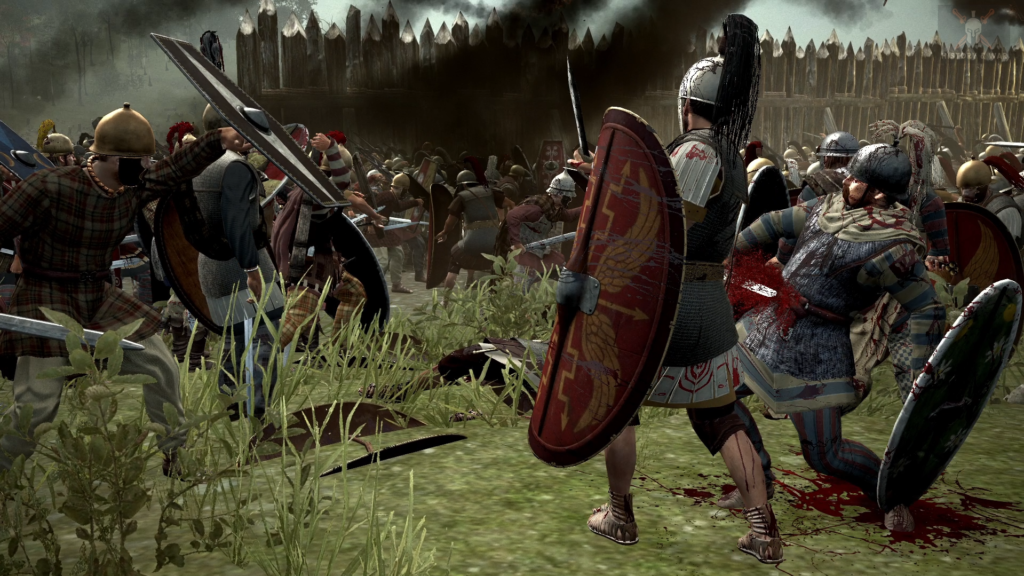
As noon approached, Vercassivellaunus drew up his troops—well-fed, rested, and eager for combat—and advanced swiftly against the Roman camp. Simultaneously, the other Gallic leaders launched diversionary attacks on different sections of the circumvallation. Pressed on multiple fronts, the Roman defenders were spread thin and subjected to intense pressure. From within the town, Vercingetorix quickly recognized the efforts of his countrymen. He sallied forth equipped with a large supply of movable shelters, ladders, mural hooks, and other siege implements he had prepared for such an occasion. His main attack was directed against the Roman line opposite Vercassivellaunus, slightly to the left.
Thus, while the attacks by the other three Gallic contingents caused Caesar considerable concern, his primary apprehension was that two infantry forces—each nearly equal in size to his entire army—were simultaneously assaulting his lines from the front and rear at a sector where his defenses were potentially weakest. The Roman forces were widely dispersed, making it difficult to anticipate which portion of the line might be attacked next.
The assault was sudden and intense. The Gallic forces employed every available means to press against the sections of the Roman walls that appeared most vulnerable. Their determination was unmistakable, and they fought with the conviction of men who believed victory to be within their grasp. Their bravery was remarkable. Caesar had established several vantage points from which he could observe the entire battlefield. From one such position, likely near the southern end of the twenty-foot trench, he directed troops to critical points, sending reinforcements wherever they were most needed. Each unit was galvanized to perform at its maximum capacity. The Gauls, aware that this may be their final opportunity to break free from Roman domination, fought with urgency; the Romans, equally conscious, recognized that success would bring an end to their labors, while failure would mean certain disaster.
The fiercest fighting took place at the northwest camp, where the elevated terrain above the Roman defenses allowed the Gauls to launch missiles with increased effectiveness, compelling the Romans to adopt testudo formations. This sector also housed the most skilled and formidable Gallic warriors, whereas the forces at other points, though numerous, lacked equivalent combat experience. The massing of troops at the northwest camp enabled the Gauls to rotate exhausted fighters with fresh men at frequent intervals and to build mounds against the Roman walls, thereby neutralizing the advantage of the legionaries’ height and fortifications. After several hours of engagement, the Roman soldiers in this sector had exhausted their supply of projectiles. Noticing that Vercassivellaunus was steadily advancing against the hillside camp, Caesar dispatched his most trusted subordinate, Labienus, with six cohorts to reinforce the position. Labienus was granted discretion to withdraw the garrison if he judged the camp could not be held.
Caesar recognized that mere observation and command were insufficient, and so he moved among his troops, offering encouragement and emphasizing that the outcome of the day would determine the fate of the entire campaign. Vercingetorix and his forces had been repelled in their initial attacks on the weakest points of the Roman contravallation. Shifting tactics, they now targeted multiple positions that, while naturally protected by the slopes, were lightly defended by the Roman garrisons.
At one point, the Gauls managed to surmount the rampart, employing grappling irons and ropes in an attempt to seize one of the Roman towers. Caesar dispatched Decimus Brutus with a contingent of troops to the threatened sector, but he was initially unable to halt the assault. Additional cohorts, commanded by the legate Caius Fabius, were then sent to reinforce the position, successfully closing the breach in the line.
Caesar’s Decisive Counterattack
Shortly thereafter, Labienus sent word that the rampart and ditch at his position were no longer defensible, and that he intended to break out with an additional eleven cohorts drawn from the neighboring redoubts. By this point, it is likely that the Gauls believed the day was theirs. In response, Caesar quickly assembled four cohorts from a nearby redoubts and personally led them into the heart of the fighting in a decisive, high-stakes counterattack. At this stage, much of the Roman cavalry remained uncommitted; Caesar divided it, retaining one contingent with himself while dispatching the other beyond the line of contravallation to strike Vercassivellaunus’ forces in the flank.
The display of Caesar’s purple cloak signaled his personal arrival, reinvigorating the Roman soldiers, while the Gauls, emboldened by the intensity of the struggle, renewed their assault on the Roman defenses with vigor. The combat escalated sharply, with the Romans first hurling their pila before engaging with the gladius in close quarters. At this critical moment, the German cavalry, previously dispatched by Caesar, struck the left rear of the Gallic forces with a sudden and forceful charge. Encouraged by this maneuver, the legionaries advanced with renewed determination. Overwhelmed by the ferocity of the Roman attack, the Gallic army broke and fled, only to be pursued and cut down by the cavalry. Among the casualties were several Gallic leaders, including Sedulius, prince of the Lemovices, while others, most notably Vercassivellaunus, were captured. In the aftermath, seventy-four Gallic standards were seized by the Romans.
Vercingetorix and his forces, unable to break through the Roman lines, withdrew upon witnessing the complete failure of the relief army’s assaults. While the events of the day may not have unfolded as swiftly or as straightforwardly as Caesar claims, the decisiveness of the Roman victory is indisputable.
The momentum of the Gallic rebellion was effectively broken. Vercingetorix’s army faced severe shortages of food and had no viable means of escape. The relief force had launched two major offensives, both of which had failed. Given the logistical constraints of maintaining such a large tribal army in the field, there was little chance of sustaining further operations or mounting another successful assault before the coalition would be compelled to disperse.
Surrender of Vercingetorix
The following day, Vercingetorix convened a council of his chieftains and proposed surrender, offering himself to the Romans. The council raised no objection. Envoys were dispatched to Caesar, who demanded that the Gauls relinquish their weapons and submit their leaders.
In Caesar’s Commentaries, the capitulation is treated briefly, yet accounts from Plutarch and Dio provide a more vivid depiction. Vercingetorix donned his finest armor and rode from the town on his most distinguished warhorse. Approaching Caesar, who sat upon his tribunal in his capacity as magistrate, the Arvernian chieftain circled him once, dismounted, laid down his weapons, and seated himself at Caesar’s feet, awaiting custody. The Roman narrative, however, minimizes this display, ensuring that the glory of the commander remained unchallenged.
The Fall of Gaul
Almost all the tribes involved in the rebellion ultimately surrendered. Caesar’s final triumph was made all the more significant by the scale of the coalition arrayed against him. The Gallic tribes had tested the military capabilities of the Roman legions and suffered a decisive defeat, leaving them broadly reconciled to Roman domination.
Caesar treated the captives from the Aedui and Arverni, as well as likely those from their dependent peoples, with notable clemency; they were not sold into slavery. Vercingetorix, however, was retained as a prisoner until the celebration of Caesar’s triumph, when he was executed in accordance with Roman ritual by strangulation. Many other captives were available for sale, with the proceeds divided among the army. The lenient treatment of the Aedui and Arverni reflected Caesar’s strategic calculation: these were influential peoples whose cooperation he wished to secure, demonstrating that his victory was not only military but also political.
The victory at Alesia effectively ended organized resistance in Gaul. In 51–50 BC, Roman legions conducted final operations to suppress remaining pockets of opposition. By this stage, the conquest of Gaul was largely complete, and the tribes had been brought under Roman control. Significant numbers of Gauls were killed during the campaigns, while many others were taken captive and sold into slavery. Large sections of the population were displaced or resettled as Roman authority was established across the region.
The success in Gaul also elevated the political and military standing of Julius Caesar. His growing influence contributed to rising tensions with Pompey and the Roman Senate. In 49 BC, Caesar led his forces into Italy, initiating a civil conflict that would determine control of Rome. That, however, is a separate chapter.
© 2026 History and War
Author: Jishu Roy
Unauthorized reproduction of this content is prohibited.