The Road to Cunaxa: Ambition, Rivalry, and the Fate of an Empire
The dust of Mesopotamia hung thick in the air as two brothers prepared to decide the fate of an empire. In the late summer of four hundred one BC, on the flat plains near Cunaxa, an army unlike any the Achaemenid world had seen stood ready for battle. At its heart was Cyrus the Younger—a prince driven not merely by ambition, but by a burning conviction that the throne of Persia was rightfully his. Opposing him stood his elder brother, Artaxerxes II, the Great King, commanding the vast resources of an empire that stretched from the Aegean to the Indus.
Among Cyrus’ ranks marched ten thousand Greek mercenaries—seasoned hoplites far from home, bound not by loyalty to Persia, but by gold and the promise of glory. They did not yet know that they were stepping into one of history’s most perilous campaigns, one that would test not only their strength in battle, but their will to survive.
When the armies finally clashed, the outcome seemed, at first, to favor the rebel prince. Steel met flesh, shields splintered, and the Greeks drove back all before them. Yet, in a single reckless moment—one charge, one decision—everything would change. For at Cunaxa, victory and defeat would not be decided by armies alone, but by the fate of one man. And before the sun set over the Euphrates, the dream of a king would lie shattered in the dust, leaving behind a story of ambition, courage, and tragedy that would echo through the ages.
A House Divided
In 408 BC, King Darius II of the Achaemenid Empire fell ill and summoned his sons to his deathbed. He designated his eldest son, Arsicas, as his successor, granting him the throne under the name Artaxerxes the second. Meanwhile, his younger son, Cyrus, retained his position as satrap of Lydia and commander of the empire’s maritime provinces. Upon Darius the second’s death in 404 BC, Artaxerxes II officially ascended to the throne. However, Cyrus was dissatisfied with this arrangement and plotted to assassinate his brother. The satrap of Caria, Tissaphernes, uncovered the conspiracy and reported it to Artaxerxes II. As a result, Cyrus was arrested. Nevertheless, due to the intervention of his mother, Parysatis, he was pardoned and allowed to return to his satrapy. According to Plutarch, his resentment for his arrest made him more eagerly desirous of the kingdom than before.
The Long March to War
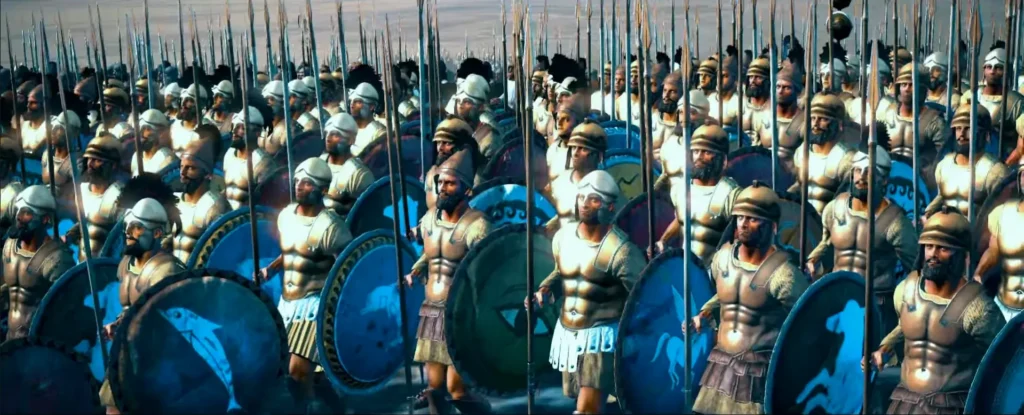
Cyrus the Younger assembled a formidable army by provoking a conflict with Tissaphernes, the satrap of Caria, over control of the Ionian cities. To disguise his true intentions, he also claimed to be preparing a campaign against the Pisidians, a rebellious mountain tribe in the Taurus region that had long resisted Achaemenid rule. In the spring of 401 BC, Cyrus set out with approximately 10,000 Greek mercenaries, determined to seize the Persian throne from his brother, Artaxerxes II. Through skillful diplomacy and generous promises, he persuaded the Greek troops to overcome their concerns about the length and dangers of the campaign. A Spartan fleet of 35 triremes, commanded by Pythagoras the Spartan, secured the passes of the Amanus Mountains into Syria and transported a Spartan force of 700 men under the leadership of General Cheirisophus. Cyrus had secured Spartan support by reminding them of the assistance he had provided during the Peloponnesian War, urging them “to show themselves as good friends to him as he had been to them during their war against Athens.” Cyrus’s army consisted of 10,400 Greek hoplites, 2,500 peltasts, and an additional 10,000 Asiatic troops under the command of Ariaeus. Artaxerxes II, caught off guard, was only warned of the invasion at the last moment by Tissaphernes and hastily assembled an army of approximately 40,000 men. Cyrus advanced deep into Babylonia before finally encountering opposition. In October 401 BC, the two forces clashed in the Battle of Cunaxa.
Clash of Kings
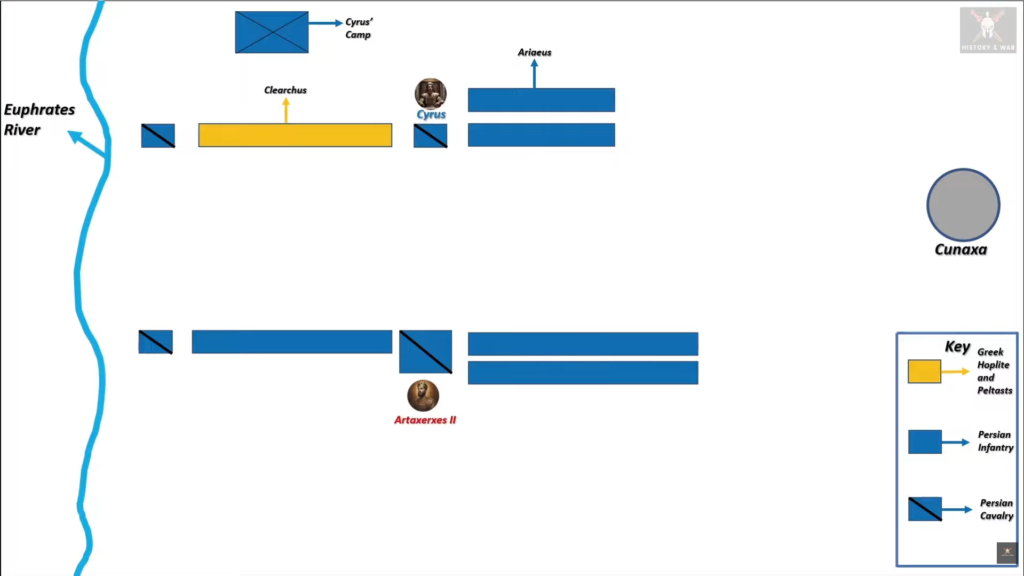
Upon learning that his elder brother, the Great King, was approaching with his army, Cyrus arranged his forces in battle formation. He positioned the Greek mercenaries on the right flank, near the river, in accordance with the traditional battle order of the time. Their position was further reinforced by a cavalry unit of 1,000 men on their right, as was customary. To the Greeks, this placement was considered a position of honor. Cyrus himself took position at the center of the formation, accompanied by 600 elite bodyguards. This was to the left of the Greek mercenaries, the spot traditionally occupied by Persian monarchs in battle. On the left flank, Cyrus stationed his Asiatic troops, completing the deployment of his forces in preparation for the confrontation with Artaxerxes II.
Conversely, Artaxerxes II positioned his left flank along the river, supported by a cavalry unit. He himself took position at the center of his formation, accompanied by 6,000 Persian cavalry, regarded as some of the finest in the world at the time. This placed him directly opposite Cyrus, though his battle line extended significantly beyond that of his brother due to his numerical superiority. Artaxerxes’ forces greatly outnumbered those of Cyrus, allowing his battle line to overlap Cyrus’ formation considerably, giving him a strategic advantage in the confrontation.
As the enemy approached to within a mile, Cyrus observed that the king’s battle line extended well beyond his own left flank, putting it at risk of encirclement. He relayed this concern to Clearchus, who, stationed at the far right end of the two-mile-long battle line, likely had limited visibility of the overall battlefield. Cyrus suggested that instead of engaging the enemy troops directly opposite them on the left wing, the Greek mercenaries should instead concentrate their attack on the center, where the king was positioned, stating, “for if we win there, the whole thing is over.” However, Clearchus, like many mercenary commanders wary of unnecessary risks, responded with a vague and non-committal answer that effectively amounted to a refusal. Earlier historians have criticized him for obstinacy and for rigidly adhering to conventional defensive tactics, but the battle plan had likely been established beforehand. Cyrus himself had positioned himself in the center, in keeping with Persian royal tradition, and it is unlikely that he had expected to assume direct command of the Greek forces had they also been stationed there. The arrangement had been mutually agreed upon, as the Greeks, preferring to have their right flank secured, had likely insisted on positioning themselves near the river. Given Clearchus’ leadership style, he was not one to be easily persuaded at the last moment. Moreover, his decision was not without justification. He was not particularly popular among his troops and may have recognized that they would not readily follow such an abrupt command. The Greek forces were still arriving at their positions, and with the enemy advancing, it would have been impossible to reposition 10,000 men mid-deployment without causing confusion. Attempting to do so while crossing the front of the approaching enemy would have been disastrous. Additionally, an oblique attack would have disrupted the formation of Cyrus’ Asiatic troops in the center and left the Greeks vulnerable to a flank assault from the cavalry positioned on the enemy’s left wing. Ultimately, the primary responsibility for the situation rested with Cyrus himself, as he had allowed himself to be caught off guard by Artaxerxes’ maneuver.
The Thunder of Spears
The sun glared down on the parched plains of Babylonia as dust swirled beneath the feet of thousands of soldiers. The soldiers stood ready, their shields locked and spears angled forward, waiting for the call to advance. Then, like a thunderclap breaking the stillness, the order was given. The Greeks surged forward, their battle cry echoing across the battlefield. The hoplites, clad in bronze, charged with disciplined precision, their heavy shields slamming into the enemy ranks with crushing force. The royal Persian left wing, unprepared for the sheer momentum of the Greek assault, buckled almost instantly. Spears pierced through linen & cloth armor, shields splintered under the weight of the assault, and within moments, the enemy’s formation crumbled. The Persians turned in disarray, some throwing down their weapons while others were cut down as they fled. The Greeks pressed on, pursuing the retreating enemy with relentless determination. To their flanks, the peltasts moved swiftly, supporting the advance. The Persian cavalry, though outnumbered, remained close, ready to strike if needed. The battle seemed all but won—until a new threat emerged.
A Cavalry Gambit
From the Persian center, a column of armored cavalry thundered toward the Greeks’ exposed side. At its head rode Tissaphernes, his crimson cloak billowing behind him. His men, clad in shining armours and wielding long lances, lowered their weapons as they galloped forward. The peltasts, realizing the danger, quickly repositioned. Unlike the hoplites, they had no heavy shields to withstand a cavalry charge, nor did they have the numbers to counter the attack head-on. Instead, they used their agility. As the enemy horsemen closed in, the peltasts sprinted toward the nearest irrigation levees, their feet kicking up dirt as they climbed onto the soft, muddy embankments. The horses, powerful but unwieldy in such terrain, struggled to follow. The peltasts turned and, from their elevated position, rained down javelins on their pursuers. Spears found their marks, striking horses and riders alike. Cries of pain filled the air as some Persians fell from their saddles, their bodies crashing into the dust. Yet the Persian cavalry did not stop. Instead of retaliating against the peltasts, they veered away and continued their charge—toward the Cyrus the younger’s camp. The mercenaries, still locked in battle, could only watch as the enemy disappeared behind them, dust trailing in their wake. In the distance, past the chaos of the battlefield, the Persian horsemen reached the rebel encampment.
Diodorus does not mention this cavalry charge, possibly because he was aware from other sources that Tissaphernes had been positioned at the center of the Persian army. However, the charge itself was a reality—likely part of a larger pincer movement intended to envelop Cyrus’ forces. If Xenophon did not witness the event firsthand, he likely learned of it from the peltasts, who would have had no reason to fabricate such an incident. Xenophon, however, provides little insight into the strategic objective of the charge, leaving its precise purpose unclear.
The Prince’s Reckless Charge
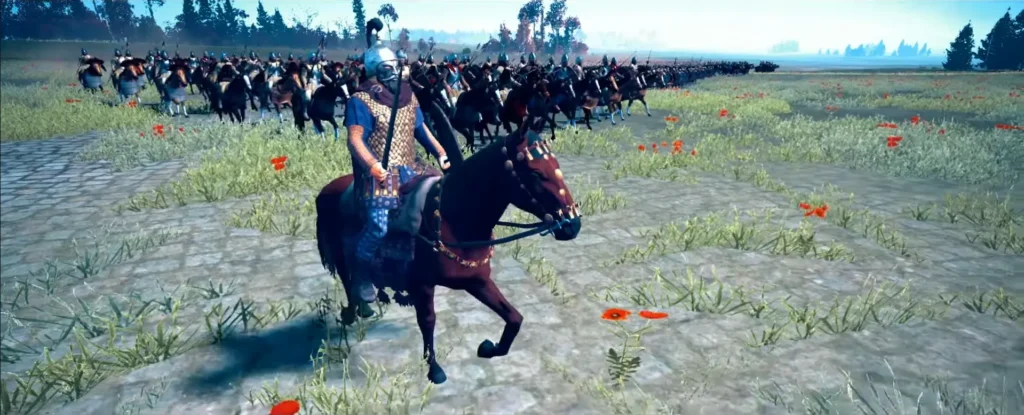
The battlefield was a swirling haze of dust and chaos, the air thick with the acrid stench of sweat and blood. The sun burned high overhead, casting long shadows over the plain as the armies of Cyrus and Artaxerxes clashed in a contest that would decide the fate of an empire. Xenophon, in his account, says little about the main battle. But one must assume that Cyrus, a prince of royal blood and a man of ambition, could not stand idly by while his Greek mercenaries carried the fight forward. Pride alone would have driven him to action—he could not allow it to be said that the battle had been won while he remained a mere spectator. As the Greeks shattered the enemy’s left wing and surged forward in pursuit, the rest of the battlefield was coming alive. Thousands of men clashed in brutal combat, their ranks tightening as arrows and javelins darkened the sky. Shields rang like hammer on anvil, and the cries of the wounded were drowned by the deafening roar of battle. Cyrus, astride his warhorse, remained at the head of his 600 cataphracts—his elite, fully armored cavalry. Their gleaming breastplates and scaled armor reflected the afternoon sun, making them appear as a wall of bronze and iron. Positioned on the left flank of his center division, closest to where the enemy’s heart lay, he held them back, his keen eyes watching the movements of the Great King’s forces. He was waiting, calculating, searching for the moment to strike. Perhaps he was not as concerned for the Greek mercenaries as Xenophon believed. After all, they had their own discipline, their own commanders. But one thing was certain—Artaxerxes’ vast army, which outnumbered his own, would attempt to encircle his forces. It was the natural course of Persian tactics, perfected over generations. And, in due time, it began. To his right, he saw the Persian cavalry sweeping forward, their horsemen curving around in an attempt to envelop his army. Dust churned beneath galloping hooves as banners snapped in the hot wind. Cyrus turned in his saddle, scanning for the Greeks, willing them to return. But they had vanished into the distance, too deep in pursuit of the fleeing enemy to offer support. Minutes passed. His heart pounded, though whether from fear or exhilaration, he did not know. He had counted on the Greeks to return—but now, there was no more time to wait. The enemy was closing in, and hesitation meant destruction. Raising his sword high above his head, Cyrus turned to his cavalry, his voice rising above the battlefield’s din. “Forward! For victory and for the throne!” With a deafening roar, the cataphracts surged forward, iron-shod hooves thundering against the earth. The very ground trembled beneath their charge. Lances were leveled, shields locked tight, and in a heartbeat, they crashed into the enemy’s center with the force of a tidal wave. Screams filled the air as the two lines met in a cataclysm of shattered spears and crushed bodies. Horses reared, men were thrown from their saddles, and the once-ordered formations dissolved into desperate melee. Cyrus, his eyes fixed on one target—the Great King himself—pressed forward, cutting down all who stood in his way. Victory was close. He could feel it. But fate, cruel and indifferent, had other plans.
In the heart of the battlefield, where dust and blood mixed in a swirling storm, Cyrus the Younger made his fateful move. With his 600 elite cavalry at his back, he fixed his gaze on a single target—the Great King, Artaxerxes. The enemy monarch stood at the center of his army, surrounded by 6,000 of the finest Persian horsemen, with ranks of infantry stretching beyond. The odds were impossible. The risk was immense. They struck the enemy line like a spear hurled from the heavens. The Persian royal cavalry had remained at the halt, expecting the charge but unprepared for its sheer ferocity. The impact was devastating—men were thrown from their saddles, horses trampled beneath the onslaught, and the front ranks collapsed into chaos. Lances shattered against shields, swords clashed in a frenzy, and the cries of the dying filled the air. The commander of the royal cavalry tried to rally his troops, but before he could issue an order, Cyrus was upon him. With a single sweep of his blade, the man fell, his lifeblood spilling onto the earth. The enemy wavered. For a moment, it seemed as if the impossible had happened—Cyrus had broken through. But victory was not yet his. Amidst the chaos, Cyrus saw his brother, Artaxerxes. There, just beyond the swirling melee, the Great King sat astride his horse, his golden armor catching the sunlight, his standard held high. Cyrus’ pulse quickened. This was his moment. He could end the war with a single strike. Forgetting all else, he drove his spurs into his horse and surged forward. But in his reckless pursuit, he lost sight of his own men. His cavalry, scattered from the initial impact, could not reform quickly enough to follow. Alone, he rode straight into the heart of the enemy. The moment Artaxerxes saw him coming, the Great King gave the order. His bodyguards surged forward, spears leveled. Cyrus fought like a man possessed, cutting down any who stood in his path, but he was surrounded. A javelin found its mark, piercing his thigh. He faltered. Then came the killing blow. A Persian warrior, seizing his chance, struck him down. Cyrus fell from his horse, crashing to the ground in a cloud of dust. Blood pooled beneath him as the din of battle raged on. His dream of the throne—of victory—died with him on the battlefield of Cunaxa.
The Turning Tide
Diodorus significantly expands upon Xenophon’s account by providing a more detailed explanation of Tissaphernes’ role in the battle. As the dust of battle settled momentarily over the chaos of Cunaxa, the battlefield was filled with the desperate cries of men locked in combat. Cyrus the Younger lay slain, his lifeblood seeping into the scorched earth. His reckless charge, though audacious, had failed to break the might of the royal army. The battle, however, was not yet over. For a brief moment, confusion spread through the ranks of the Great King’s forces. Artaxerxes had been wounded in the clash, and whispers of uncertainty rippled among the troops. If their king had fallen, disaster could follow. A panicked retreat, a complete rout—such things had undone mighty armies before. But before the embers of doubt could ignite into full-fledged chaos, one man stepped forward to seize control: Tissaphernes. A seasoned commander and brother-in-law to Artaxerxes, Tissaphernes saw what had to be done. The battlefield could not be allowed to descend into disorder. Riding through the ranks, his voice rang out above the din of battle. “Stand firm! The king lives! Rally to me!” His presence alone was enough to steady the men. The core of the Achaemenid army—thousands of foot soldiers, still tightly formed despite the shock of Cyrus’ charge—held their ground. Without hesitation, Tissaphernes took command, reorganizing the faltering center and preparing for a counterattack. He knew that the battle was far from lost. Tissaphernes seized the moment. Raising his sword high, he bellowed the command: “Advance!” The Persian lines surged forward in a coordinated assault. The sheer mass of infantry bore down on the disorganized soldiers of Cyrus’ center. Spears clashed, shields locked, and the sound of steel against flesh filled the air. The pressure was relentless. The troops who had followed Cyrus’ bold attack now found themselves overwhelmed, unable to withstand the weight of superior numbers. Slowly, the men of Cyrus’ army were driven back. Some tried to stand and fight, but without a leader, without a rallying point, their resistance crumbled. One by one, they were cut down or forced to flee. Tissaphernes had turned the tide. The threat of Cyrus’ rebellion had been extinguished, not just in blood, but in the sheer weight of a well-disciplined army reclaiming its ground. His leadership in that critical moment ensured that Artaxerxes’ throne would remain secure.
Conflicting Accounts
The only eyewitness account of the events that followed comes from Ctesias, the physician of Artaxerxes, who was present with the king and attended to his wounds. According to Ctesias, Cyrus was making gains against the enemy center when he suddenly caught sight of his brother. Seizing the opportunity, Cyrus hurled his spear, striking Artaxerxes in the chest and causing him to fall from his horse. The wounded king was quickly assisted by his attendants and taken to a nearby hill for safety. Meanwhile, Cyrus found himself surrounded by enemy troops. Initially, those around him accepted him as the new king, possibly due to the confusion of battle. However, this illusion was shattered when the turban that marked his royal status fell from his head. At that moment, a young Persian soldier, unaware of Cyrus’ true identity, thrust a javelin near his eye. Mortally wounded, Cyrus fell from his horse and was killed, bringing his bold campaign to a tragic end.
Returning to Xenophon’s account, we find that while one man—Cyrus—had fallen, approximately 50,000 others remained engaged in battle with several hours of daylight still ahead. However, Xenophon provides little further detail on the ongoing conflict. Instead, he takes a lengthy detour to extol the virtues of the fallen prince before resuming his narrative. Upon hearing of Cyrus’ death, Ariaeus, who commanded the left wing, immediately fled with his forces. His troops did not halt their retreat until they had reached the previous night’s encampment, some twelve miles away. With Ariaeus and his men in full flight, Xenophon shifts focus to the Greek mercenaries, who had seemingly disappeared from the battlefield.
The prolonged absence of the Greek mercenaries from the battlefield remains one of the most perplexing aspects of Xenophon’s account. After breaking through the enemy’s left wing around 2:30 p.m., they continued their advance without hesitation. At one point, they were reported to be 30 stadia beyond the enemy lines. It seems implausible that heavily armed hoplites would have run such a distance without pausing to engage the enemy, loot the fallen, or regroup. Given the circumstances, their absence must have lasted at least two hours, possibly even longer—perhaps from 2:30 to 5:00 p.m.—and they only returned when the battle had already been lost. The question remains: why did they persist in what appears to have been a relentless but futile pursuit of lightly armed opponents who could have easily outpaced them? If not engaged in pursuit, what occupied them during this critical period? Xenophon, despite being present at the battle, offers no clear explanation. Strikingly, he does not even seem to acknowledge the need for one, leaving modern scholars to speculate on the motivations and actions of the Greek forces during this decisive phase of the conflict.
Conclusion: Victory for Artaxerxes
The course of the battle is relatively clear. It concluded with a decisive and well-earned victory for the forces of Artaxerxes II. Although the Greek mercenaries initially shattered the enemy’s left wing with their charge, the royal army responded with a coordinated encircling maneuver on both flanks. This double envelopment gradually overwhelmed the remaining forces of Cyrus, who were likely inferior in both numbers and overall quality. Ultimately, the superior strategy and numerical advantage of Artaxerxes’ army secured his triumph.
The notable lack of resistance from the king’s left wing against the Greek assault may have been due to the positioning of the weakest troops in that sector—whom Diodorus describes as ‘inexperienced.’ However, it is also possible, and indeed likely, that their retreat was a deliberate tactical maneuver. A perceptive strategist on the royal side may have recognized that Persian troops would be unlikely to withstand the formidable Greek hoplites in direct combat. By orchestrating a controlled withdrawal, they could have successfully lured the Greeks away from the main battlefield, ensuring an easier victory over the remainder of Cyrus’ army through sheer numerical superiority.
Cyrus proved to be an inadequate commander, ultimately dooming his expedition by failing to secure the strong cavalry force essential for warfare in open terrain—despite the fact that his satrapy of Lydia produced some of the finest horses in the empire. Aside from his 600 heavily armored cavalrymen, he relied primarily on light horsemen. His slow and unhurried advance from Sardis to Cunaxa, more akin to a leisurely procession than a military campaign, squandered any opportunity to catch the king unprepared. Furthermore, through sheer negligence, he allowed himself to be taken by surprise, forcing him to hastily and chaotically form his battle line. His tactical dispositions were deeply flawed. The one decisive advantage he possessed—his Greek mercenaries under Clearchus—was poorly utilized. He had witnessed first-hand how the disciplined advance of hoplites could send Asiatic troops into flight. Had he positioned the Greeks at the center, flanked by peltasts and supported by all available cavalry, including his bodyguards, while leaving his native infantry to secure the wings, he might have succeeded in breaking the enemy center. However, he refused to humble himself to the role of leading auxiliaries and instead proposed an impractical alternative at the last moment. He placed his greatest asset—the Greek hoplites—where they could contribute little to the overall battle. Ultimately, he squandered not only his strategic advantage but also his own life, proving himself an inept cavalry commander in his final reckless charge.
© 2026 History and War
Author: Jishu Roy
Unauthorized reproduction of this content is prohibited.