The Road to Kadesh
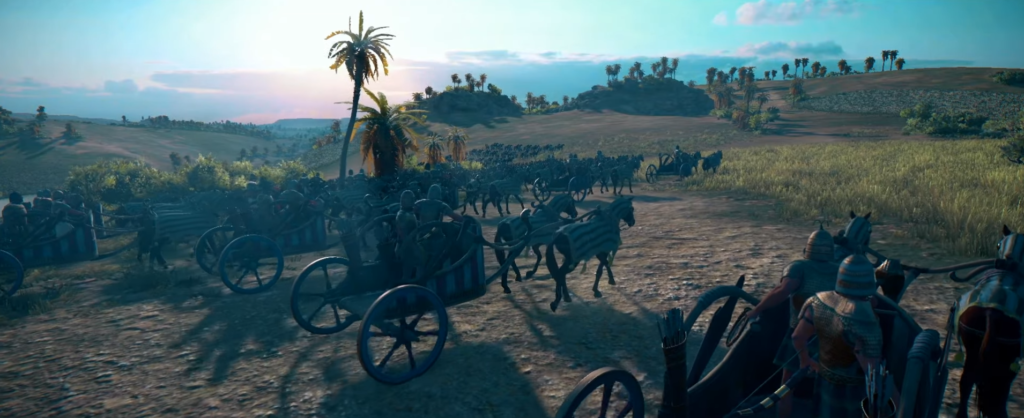
After expelling the Hyksos’ around 1550 BC, the rulers of Egypt’s New Kingdom adopted a more aggressive strategy to secure and expand their borders. Pharaohs such as Thutmose I, Thutmose III, and his son and coregent Amenhotep II led military campaigns extending from Megiddo to the Orontes, reinforcing Egyptian dominance in the Levant. However, during the reigns of Thutmose IV and Amenhotep III, Egypt gradually lost territory in northern Syria as the Mitanni strengthened their influence. The Amarna letters, a collection of diplomatic correspondence from the late Eighteenth Dynasty, document the decline of Egyptian authority in the region. For much of this period, Egypt showed little interest in reclaiming lost territory. It was only toward the end of the dynasty that Horemheb, its final ruler, launched military campaigns in the area, marking the beginning of Egypt’s renewed engagement in Near Eastern affairs.
This process continued into the Nineteenth Dynasty. Like his father, Ramesses I, Seti I was a military commander who sought to restore Egypt’s empire to the strength it had enjoyed under the Eighteenth Dynasty pharaohs nearly a century earlier. Inscriptions on the walls of Karnak provide detailed accounts of his campaigns in Canaan and ancient Syria. Leading an army of 20,000 men, he reoccupied abandoned Egyptian outposts, established garrisons in key cities, and secured control over coastal regions along the Mediterranean. He also negotiated an informal peace with the Hittites while continuing military operations in Canaan. During a subsequent campaign, Seti I successfully captured Kadesh and the kingdom of Amurru. His son and heir, Ramesses II, accompanied him on these expeditions. Historical records indicate that shortly before leading his own campaign to Kadesh in his fifth regnal year, Ramesses II commissioned a significant order of weapons, suggesting preparations for large-scale conflict. However, the long-term status of Kadesh and Amurru remains uncertain. Some evidence suggests that both territories eventually fell back under Hittite control. Hittitologist Trevor R. Bryce argues that while Amurru may have briefly shifted allegiance, it most likely remained a vassal state of the Hittite Empire.
The events leading up to the Battle of Kadesh were shaped by Ramesses II’s early military campaigns in Canaan. In the fourth year of his reign, he led an expedition north into Syria, either to reclaim Amurru or to assess the loyalty of his vassals while surveying the terrain for potential battlegrounds. By the spring of his fifth regnal year, in May 1274 BC, Ramesses II launched a full-scale campaign from his capital. His army advanced beyond the fortress of Tjaru, following the Horus Military Route along the coastal road leading to Gaza. Meanwhile, the Hittite king Muwatalli II viewed Egypt’s attempt to recover Amurru as a direct challenge to his authority, prompting him to march south and confront the Egyptian forces.
The Might of the Hatti
The army assembled by the King of Hatti to confront the resurgent Egyptian Empire and its new pharaoh at Kadesh was drawn from across the vast territories of the Hittite realm. Muwatalli II’s earlier military successes against rebellious kingdoms in western and northern Anatolia, followed by their subsequent reorganization, enabled him to mobilize a substantial force for his campaign in Syria. This army was composed of both allied and vassal contingents, but its core consisted of troops from the heartland of the Hittite Empire, known as Great Hatti. The scale and composition of this force reflected Muwatalli II’s strategic efforts to consolidate power and mount a decisive challenge to Egyptian expansion in the region.
Like other Late Bronze Age armies, the military forces of Hatti were centered around chariotry and infantry. The chariot corps consisted of a small standing force that expanded significantly during the campaigning season, as men were called to service under the feudal obligations owed to the king. The Hittites also made extensive use of mercenary troops. This is reflected in the Rameside Poem describing the Kadesh campaign, where Pharaoh claims: “…He had no silver left in his land, he stripped it of all its possessions and gave them to all the foreign countries in order to bring them with him to fight.” While some exaggeration is expected in Egyptian royal inscriptions, it is evident that Muwatalli II expended significant wealth to assemble an army of the necessary size for his campaign. Many Hittite soldiers, however, fought without direct pay, relying instead on the promise of plunder as an incentive. While this strategy helped muster a large force, it also introduced risks. As events at Kadesh would demonstrate, the temptation of looting the Egyptian camp of Amun and Pharaoh’s enclosure led Hittite charioteers into premature engagement, with significant consequences for the battle.
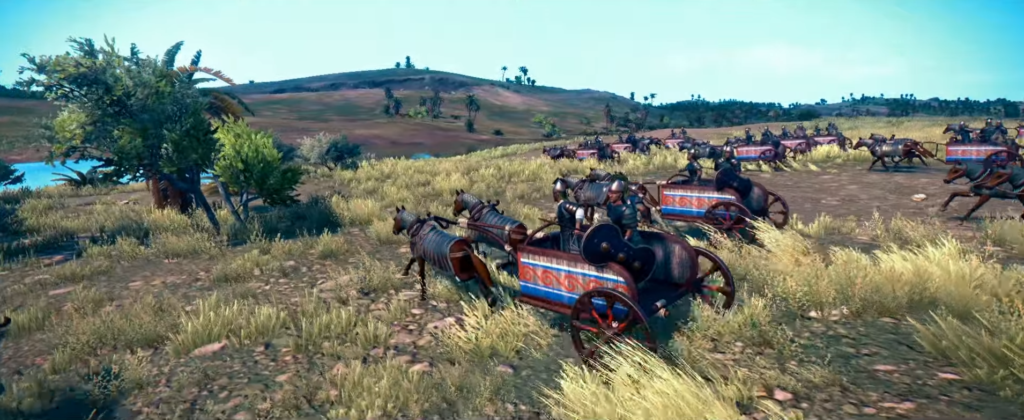
In contrast to its great southern rival, the Egyptian army, the primary offensive force of the Hittite military was the chariot. This distinction extended not only to the importance placed on chariotry but also to its tactical role, which was reflected in the design and function of the chariot itself. While Hittite chariot crews did make use of the composite bow, their primary weapon remained the long, thrusting spear. The Hittites viewed the chariot as an assault weapon, intended to break up enemy infantry formations through direct impact. Unlike the lighter and more maneuverable Egyptian chariots, which were optimized for speed and archery, Hittite chariots featured a centrally placed axle and a sturdier frame capable of carrying a three-man crew. This made them slower and less agile but better suited for shock tactics. When deployed under optimal conditions, these heavy chariots could disrupt enemy lines, creating openings for the Hittite infantry to advance and engage. As a result, the infantry played a supporting role, following up on the attacks initiated by the chariot corps. This approach emphasized the chariot as the dominant force in Hittite military strategy.
Unlike Egyptian infantry, who typically operated in relatively uniform terrain and climate—reflected in the consistency of their attire—Hittite infantry fought in a variety of environmental conditions. As a result, their clothing varied according to the demands of each campaign. The depictions of Hittite soldiers on the Kadesh reliefs, therefore, should not be taken as representative of a standard uniform. For example, the long white coveralls seen on many soldiers at Kadesh differ from the attire of the infantrymen depicted at the King’s Gate in Hattusa.
In terms of weaponry, Hittite foot soldiers carried arms similar to those of their Egyptian counterparts. The thr warriors surrounding Muwatalli II at Kadesh are depicted wielding long thrusting spears and short stabbing daggers, weapons also used by Hittite chariot crews. Bronze remained the primary material for melee weapons, with the sickle sword and battle-axe being the most common. While it is evident that Hittite soldiers wore helmets and bronze scale armor, many of those depicted in the Kadesh reliefs appear without protective gear. Some scholars suggest that the white coveralls worn during campaigns in Syria may have been layered over scale armor, providing an additional protective or practical function in battle.
There is little doubt that the Hittites were highly skilled strategists who readily employed deception and misdirection to gain a tactical advantage. Evidence suggests that whenever possible, they sought to manipulate battlefield conditions to lure their enemies into open combat, where their chariot forces could be used to maximum effect. Their preferred strategy aimed to disrupt enemy formations with chariot charges, creating an opportunity for their infantry to follow through and deliver a decisive blow. In light of this, some scholars argue that the battle that unfolded at Kadesh was not the engagement the Hittites had originally planned. Instead, it is likely that they intended to wait for the full concentration of the Egyptian army near Kadesh before deploying their forces and forcing a confrontation on open terrain, where they could dictate the terms of battle. This interpretation suggests that the Hittite leadership was not only tactically astute but also adaptable when battlefield conditions did not align with their initial strategy.
The Egyptian Army Marches to War
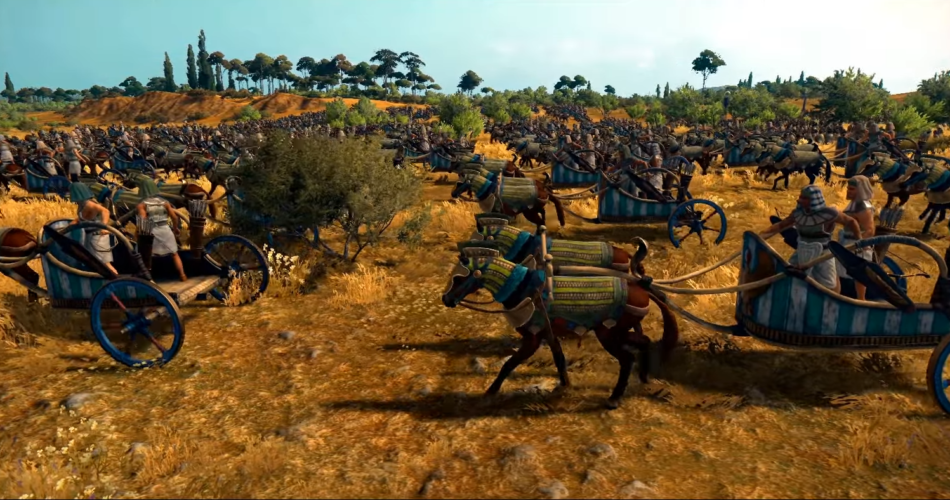
On the ninth day of II month of the summer season, mid to late April 1274 BC, the Egyptian army set out on its campaign. Having assembled at the Delta city and military outpost of Pi-Rameses, the army moved beyond the great frontier fortress of Tjel and onto the coastal road leading to Gaza, beginning its month-long march toward the battlefield near Kadesh in central Syria. For Ramesses II, leading from the front, this campaign was driven by a determination to restore Egypt’s northern borders and to emulate the military achievements of his esteemed predecessors. Confidence in victory was likely high among both the king and his soldiers, as they marched with one of the largest and best-equipped armies Egypt had ever assembled for an offensive campaign. The Egyptian force was a reflection of a military tradition that had developed over three centuries. It included massed chariot squadrons, disciplined infantry divisions, and a display of power through glittering standards and military musicians. As the army advanced, it carried not only weapons of war but also the weight of Egyptian imperial ambition.
It was most likely during the brief reign of his father, Ramesses the First, that Crown Prince Seti began the process of expanding the Egyptian army. This effort was driven by the new dynasty’s goal of reclaiming Egypt’s lost territories in central Syria. Achieving this objective required military strength, as the only means of restoring Egyptian control was through armed conflict. However, the emerging dynasty faced a powerful adversary in the kingdom of Hatti, making the task all the more challenging.
Egyptian military tradition had long emphasized organizing soldiers into local contingents. During the New Kingdom, these units were structured into self-contained corps, each consisting of approximately 5,000 men when fully assembled for a campaign. Each corps was associated with a specific temple or estate region in Egypt and was named in honor of the local deity. The Corps of Amun was drawn from Thebes, while the Corps of Ra, or P’Re, originated from Heliopolis. The Corps of Sutekh, composed of men from the northeastern Delta, was based in the former Hyksos capital of Avaris. The fourth corps, dedicated to the god Ptah, was recruited from the Memphite region. These four corps formed the core of the Egyptian army that marched to Kadesh, providing the structure and manpower for the campaign.
The self-contained structure of each corps, consisting of approximately 5,000 men—including around 4,000 infantry and 500 charioteers—granted the Pharaoh significant flexibility in military campaigns. This organization allowed for locally dispersed operations, where each corps could be assigned distinct objectives while remaining within supporting distance of the others. However, when necessary, these units could also operate independently across greater distances, adapting to the strategic demands of the campaign.
Unlike the Hittites, whom they were preparing to face in battle, the strength of the Egyptian army lay primarily in its infantry rather than its chariot forces. In this way, the New Kingdom army maintained a strong continuity with the military traditions of the Old and Middle Kingdoms. This reliance on infantry was largely due to Egypt’s significantly larger native population compared to its adversaries, allowing it to field a substantial number of foot soldiers as the core of its military power. While the introduction of the chariot enhanced mobility and became a formidable striking force, even at the peak of Egypt’s military dominance, the army remained centered around its infantry corps. Additionally, Egypt’s long-standing expertise in mobilizing and managing large labor forces for its monumental building projects translated naturally into military organization. Many of the administrative systems used for construction efforts were adapted to efficiently manage and supply Egypt’s large field armies.
A Deadly Deception
As Pharaoh advanced toward Kadesh, he encountered two Shasu Bedouin who, when questioned, claimed that Muwatalli and the Hittite army were far from the city. According to their report, the Fallen One of Hatti, Muwatalli, was in the land of Khaleb, to the north of Tunip. no But, this information was deliberately false. The Bedouin were, in fact, Hittite spies sent to deceive the Pharaoh. In a calculated attempt to manipulate the Egyptian king’s perception of the situation, the spies suggested that Muwatalli had not come to Kadesh because he feared Pharaoh’s power. This deception, likely orchestrated by the Hittite king himself, was intended to lull the Egyptians into a false sense of security. By arriving at Kadesh under the mistaken belief that they were unopposed, the Egyptian forces would not only require time to rest and reorganize but would also be psychologically unprepared for an imminent attack. Meanwhile, the Hittite army was already in position, concealed and well-rested. This allowed Muwatalli to seize the strategic initiative, deploying his forces and preparing for battle before the Egyptians were fully ready. In the contest for battlefield advantage, the Hittites had outmaneuvered their enemy, setting the stage for a decisive confrontation.
The precise location of the Egyptian encampment remains uncertain, but it was likely established in nearly the same position as the one used by Seti in his earlier campaign. Upon arrival, the soldiers of the Amun corps set up their camp, constructing a defensive perimeter and digging an embankment for added security. To further reinforce their position, infantry shields were placed along the top of the embankment, creating a makeshift barrier against potential attacks. Inside the camp, preparations were made for an extended stay. At its center stood a shrine dedicated to the god Amun, serving as a spiritual focal point for the army. Nearby, the great tent of Pharaoh was erected, where he was attended by his retinue, ensuring that the command structure remained intact and functional as the Egyptian forces readied themselves for the confrontation ahead.
One of Pharaoh’s scouts returned with two prisoners who had been caught lurking near the Egyptian camp. When they refused to speak, they were subjected to a harsh beating before being brought before Pharaoh. At this point, Rameses had not yet realized the full extent of the danger. He questioned them directly, asking, “What are you?” He was not concerned with their identities as individuals but rather with who had sent them. The prisoners soon admitted that they served the King of Hatti. They revealed that the Hittite army was not far away, as previously believed, but was instead fully armed and positioned just behind Kadesh, ready for battle. “They are furnished with their infantry and their chariotry, carrying their weapons of warfare, and they are more numerous than the sand on the riverbanks,” they warned. Rameses was stunned. The realization that he had been deceived and that the Egyptian army was in imminent danger hit him with full force. Recognizing the severity of the situation, he quickly gathered his senior officers to discuss their next move. They all agreed that the only option was to immediately summon the remaining three corps to concentrate at Kadesh as quickly as possible. Orders were issued to the Vizier to hasten the arrival of the rest of the army, directing them to march from the south of the town of Shabtuna to reinforce Pharaoh’s position. Rameses now understood that Muwatalli had completely outmaneuvered him, seizing the strategic advantage. The fate of the Egyptian army now hung in the balance.
The Advance of P’Re
In the early hours of the morning on Day 10, the Vizier arrived at the camp of the corps of P’Re, which, was likely positioned near the ford at Ribla. At this time, the troops were still asleep, recovering from the previous day’s long march. Only a few teams remained on guard duty, while the rest of the chariots were unhitched and their horses tethered. The stillness of the dawn was suddenly disrupted by the unexpected arrival of the Pharaoh’s chief minister in his chariot. Immediately, a wave of activity swept through the camp as senior officers were roused from their sleep to receive an urgent message from Rameses. Clearly anxious, the Vizier ordered them, in the name of Pharaoh, to march toward Kadesh without delay. Across the camp, orders were shouted, signal trumpets blared, and war drums sounded. Soldiers, still drowsy from sleep, were shaken awake or kicked into consciousness and commanded to prepare for immediate departure. Despite the urgency, breaking camp was not an instant process—it took several hours to dismantle tents, feed the horses, and load supplies onto ox-wagons and pack animals. Meanwhile, the Vizier, now with a fresh team of horses, had already set off southward to alert the corps of Ptah, which was stationed further away, near the town of Aronama.
Several more hours were spent as the corps of P’Re forded the Orontes River, struggling to cross terrain that had been churned up by the passage of the corps of Amun the previous day. Given the urgency of reinforcing Pharaoh, it is likely that maintaining strict formation became increasingly difficult once they reached the western bank. In their eagerness to come to Rameses’ aid, some elements of the corps may have abandoned standard military caution. It is possible that certain chariot units were sent ahead in haste, further disrupting the cohesion of the advancing force.
Battle
The Hittite Ambush
As the sun rose above the dissipating morning mist, the corps of P’Re completed their crossing of the cold waters of the Orontes and began assembling for their final march toward Pharaoh’s camp, located approximately six and a half miles to the north. The distant blare of battle trumpets echoed down the column, their sharp notes merging into a discordant chorus, signalling the start of the advance. With a final command from their officers, the soldiers slung their shields across their backs and hoisted their spears and bows. Standard-bearers raised their banners high as each infantry company moved forward in disciplined succession. The pace quickly increased, and soon, the soldiers found themselves enveloped in a haze of fine dust, kicked up by marching feet and the chariots rolling alongside them. Their visibility was limited to only the scene immediately ahead. Through the din of movement and clattering weapons, the faint strains of battle songs could be heard from the ‘menfyt’ troops leading the vanguard. From the rear, the voices of foreign auxiliaries—likely Nubians or Libyans—blended into the rising chorus, adding their own chants to the march.
To the right of the advancing Egyptian column, just over three-quarters of a mile away, a dense ribbon of green vegetation marked the course of Al-Mukadiyah, a tributary of the Orontes. This waterway ran along the base of the tell before curving south of the city. Here, the barren edge of the plain gave way to lush growth—bushes, shrubs, and trees—that concealed the terrain beyond. It was from this natural cover that a formidable force of Hittite chariots suddenly emerged, thundering toward the Egyptian corps in a devastating ambush. The Egyptian chariot units positioned on the right flank had no time to respond. In an instant, they were overwhelmed, trampled beneath the onrushing wave of Hittite vehicles. As the heavier Hittite chariots gained speed on the open plain, they crashed into the densely packed ranks of Egyptian infantry in the center of the column. The initial impact disrupted their momentum, but the damage was already done. The entire right flank of P’Re crumbled as soldiers were thrown to the ground and crushed beneath the wheels and hooves of the charging Hittites. Long spears flashed in every direction as Hittite warriors struck down Egyptian infantry, while chariot drivers urged their horses forward, carving deeper into the collapsing formation. The suddenness and ferocity of the assault shattered Egyptian discipline. Resistance was minimal—panic set in as soldiers abandoned their weapons and shields in a desperate attempt to escape. Within moments, the cohesion of the corps had completely disintegrated. More and more Hittite chariots poured onto the battlefield, emerging from a gap in the treeline where they had just crossed the ford. The sheer number of vehicles advancing in such a short span created chaos even among their own ranks—some chariots overturned in the crush, flinging their crews beneath the wheels of those following behind. At the front of the Egyptian column, soldiers turned to witness the catastrophe unfolding behind them. A wide path of destruction had been cut through the heart of P’Re, leaving the corps in complete disarray. Hittite chariots surged forward, accelerating across the open plain beyond. Unlike the lighter and more maneuverable Egyptian chariots, the heavier Hittite machines could not execute rapid turns without risking collapse. Instead, they took advantage of the open terrain, veering westward before beginning a broad, sweeping turn to the north.
The speed and ferocity of the assault left the senior officers at the front of the Egyptian column momentarily unable to grasp the full extent of the unfolding disaster. Maneuvering their chariots to gain a clearer view, they were confronted with a scene of utter chaos—the ranks of P’Re collapsing as soldiers fled in all directions, while Hittite chariots surged through the disintegrating formation. However, the greatest threat did not come from the melee itself but from the long column of Hittite chariots that had broken through and were now advancing with purpose along a parallel course to the west of the Egyptian forces. Despite the turmoil they had unleashed, the Hittite chariots showed no sign of halting to engage in further combat. Instead, they pressed forward, their trajectory making their intent unmistakable: they were heading directly for Pharaoh’s camp. At this point, it was clear that P’Re could not be saved. Recognizing the urgency of the situation, the Egyptian officers at the head of the column swiftly dispatched chariot squadrons northward to warn Pharaoh of the imminent attack. With a sharp crack of their whips, the charioteers urged their horses forward, driving at full speed across the plain. Meanwhile, on the far side of the battlefield, the Hittite column continued its relentless advance, its movement marked by a towering plume of dust as both forces raced toward the camp of Amun and Rameses.
Throughout the early morning, sentries atop the shield wall of Amun’s camp remained vigilant, scanning the southern plain for signs of P’Re’s approach. However, the flat terrain, combined with the shimmering heat haze and swirling dust, made distant visibility difficult. Although the previous night’s revelation of the Hittite army’s proximity had heightened tension, there was little expectation of an imminent attack. Most assumed that battle remained days away, though many anxiously awaited the arrival of the remaining Egyptian forces. While the camp’s fortifications were still being completed, caution dictated that some troops remain on high alert. Infantry companies and chariot squadrons stood ready in case of any unforeseen developments. If all proceeded as planned, P’Re and Ptah—summoned in haste by the Vizier—would arrive by nightfall, with Sutekh following the next day. Meanwhile, sentries on the northern wall watched for the Ne’arin, expected to emerge from the mountains after their march through Amurru.
Chaos at Amun’s Camp
Urgent shouts from the southern shield wall were the first sign that something was wrong. Guards pointed to rising dust clouds in the distance—one approaching swiftly from the left and another growing larger to the right. Experienced officers quickly identified the telltale signs of fast-moving chariots, but their allegiance remained unclear. Moments later, the first surviving chariots of P’Re raced into the camp, their crews frantically signaling towards the massive dust plume behind them. As it resolved into a charging Hittite force, panic surged through Amun’s camp. Infantry scrambled for weapons, while chariot crews rushed to hitch their teams. The Hittites, now an overwhelming tide, swung around the western and northern edges before smashing through the shield wall to launch their assault.
As the Anatolian warriors surged into the western end of the Egyptian camp, their momentum began to wane. The tightly packed tents, supply stores, and other obstacles disrupted their advance, slowing the once-unrelenting charge. Amid the confusion, Egyptian soldiers who had remained on high alert throughout the night recognized the shift in battle dynamics. Seizing the opportunity, they advanced with khopesh and spear in hand, engaging the enemy in desperate hand-to-hand combat. A brutal melee unfolded as Egyptian troops dragged Hittite charioteers from their cabs or fell to the long thrusting spears of their adversaries. The congestion within the camp grew worse—horses struggled to move, chariots became entangled, and the once-fluid assault ground to a chaotic halt. Egyptian archers, exploiting the disorder, loosed arrows into the mass of chariots, striking both men and animals. The shrieks of the wounded and the panicked cries of horses filled the air. Egyptian infantry swiftly overwhelmed stranded Hittite crews, cutting them down with vicious strokes of the khopesh. Amidst the fighting, it became increasingly clear that many Hittite warriors were more focused on plundering the Egyptian camp than continuing the battle. As more chariots poured in, disorder spread, marking a critical turning point in the confrontation.
As soon as the assault on the camp began, Pharaoh’s bodyguard swiftly moved to secure the royal enclosure. Experienced infantry formed a defensive line alongside the Sherden warriors, identifiable by their distinctive horned helmets and long swords, as they braced for the impending Hittite onslaught. Inside the enclosure, urgent preparations were underway. Pharaoh was quickly informed of the dire situation. Recovering rapidly from the shock of P’Re’s destruction and the Hittite attack, he wasted no time in readying himself for battle. Donning his corselet and battle attire, he prepared to lead his household chariotry along with the few squadrons stationed at the rear of the camp, still untouched by the enemy assault. Meanwhile, his household staff rushed to secure the royal family. His eldest son, Prahiwenamef, along with the other children, was escorted under guard to the far end of the encampment, away from the fighting. Pharaoh’s instructions were clear: “Do not go out on the west side of the camp and keep clear of the battle.” Wearing the blue khepresh crown, Pharaoh mounted his chariot. With a brief command to Menna, his kedjen, he led his available chariots out of the eastern entrance of the camp at full speed, preparing for a swift counterattack against the advancing Hittite forces.
The Pharaoh Strikes Back
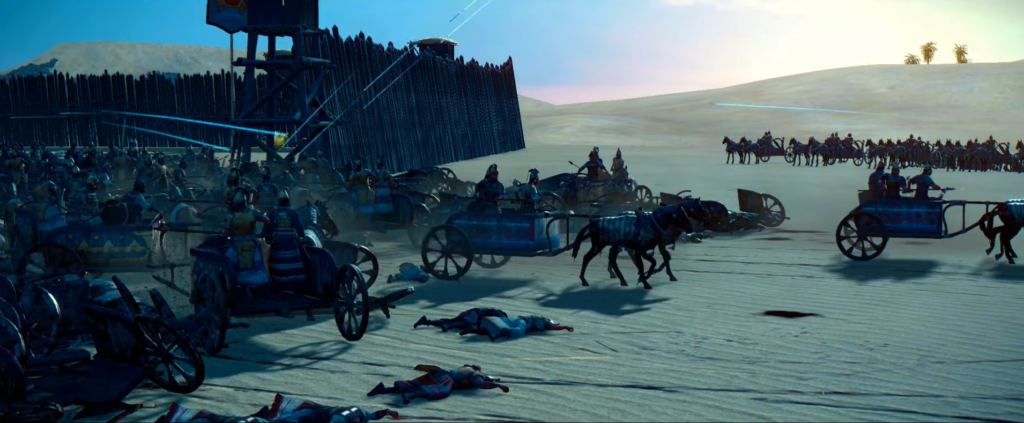
The Egyptian chariot force swiftly maneuvered northwest, rapidly forming a battle line. Until this moment, no Egyptian chariotry had directly engaged the Hittite attackers, who remained preoccupied with the chaos inside the camp. Many Hittite chariots roamed the battlefield, cutting down fleeing Egyptian infantry, while others focused on looting. However, amidst this disorder, it became evident that the Hittite formation had disintegrated, creating an opportunity for Pharaoh to regain control of the battle. Recognizing the enemy’s fatigue, the lack of cohesion among their chariots, and the obscuring dust cloud drifting over the battlefield, Pharaoh initiated a bold and unexpected counterattack. The superior range and power of the Egyptian composite bows gave his forces a crucial advantage, mitigating the numerical superiority of the Hittite army. Under these conditions, the overwhelming size of the Hittite force became less significant, as their disorganized ranks struggled to respond to the sudden Egyptian assault.
At Pharaoh’s signal, the Egyptian chariots surged forward, steadily gaining speed as they advanced on the disorganized Hittite force, which remained unaware of the impending assault. Utilizing the superior range of their composite bows, the Egyptian charioteers unleashed a relentless barrage of arrows, executing disciplined volleys reminiscent of their rigorous training. The tightly packed Hittite chariots provided an ideal target, ensuring that each arrow found its mark. As the Egyptians continued their maneuver, executing rapid turns without direct engagement, the Hittites were slow to react. Their confusion deepened as their comrades fell around them, struck down by the precise and unrelenting fire of the Egyptian archers. In desperation, some Hittite charioteers urged their exhausted teams forward in an attempt to close the distance, only to be cut down before reaching their foes. Sensing the tide of battle shifting, the remaining Hittites abandoned their assault on the camp and attempted a chaotic withdrawal to the south. Pharaoh, recognizing the moment of weakness, ordered his fresh chariot squadrons to press the attack. A triumphant cheer erupted from the Egyptian troops within the camp, who had moments earlier been fighting for survival. Clambering over the wreckage of shattered chariots and the bodies of fallen men and horses, many infantry soldiers joined the pursuit, determined to exact vengeance on the retreating enemy.
With Rameses leading the charge, the Egyptian chariots swept around the devastated western end of their camp, relentlessly pursuing the fleeing Hittites. As the enemy chariots dispersed, each becoming an individual target, the Egyptian archers adjusted their fire, ensuring greater accuracy. The Hittite drivers, in desperation, lashed their exhausted horses in a futile attempt to reach the safety of the river. However, the prolonged exertion of battle had taken its toll, and their teams could no longer maintain speed. Seizing the advantage, the Egyptian archers unleashed a devastating barrage of arrows and javelins, striking down both men and horses. The retreat quickly descended into chaos, with the battlefield strewn with overturned and shattered chariots. Those Hittite warriors who survived the destruction of their vehicles but lay wounded or pinned beneath the wreckage met a swift end at the hands of pursuing Egyptian infantry. As they moved through the battlefield, the foot soldiers carried out the grim practice of severing the hands of the fallen—tangible proof of their kills. These trophies would later be presented to the royal scribes, who meticulously recorded each warrior’s deeds as they vied for Pharaoh’s recognition and the coveted ‘gold of valor.’
The Second Wave
From his vantage point near Kadesh, Muwatalli observed the battle unfolding in a manner far different from what he had anticipated. With most of his forces already engaged or in disarray, the Hittite king had only his personal entourage at hand—men who had gathered to witness the battle rather than participate in it. Yet, with the situation deteriorating, Muwatalli now called upon these elite warriors to take up arms. Among them were some of the most distinguished figures of the Hittite army, including the king’s close relatives and high-ranking leaders of the allied contingents. Demonstrating unwavering loyalty, they swiftly assembled into an improvised chariot force. Without delay, they set out to cross the river at a location near Pharaoh’s camp, prepared to launch a desperate assault in an attempt to reverse the course of battle.
The Ne’arin Arrive
Crossing the Orontes proved challenging, but once assembled on the far side, the Hittite force advanced swiftly toward the eastern section of the Egyptian camp. However, just as the first chariots breached the encampment, they were met with an unexpected and ferocious counterattack. A contingent of Egyptian and allied chariotry, arriving unanticipated from the north, struck with decisive force. This was the long-awaited Ne’arin force from Amurru, reaching the battlefield at a critical moment for Pharaoh. Having left their slower-moving infantry behind several miles along their line of march, the Ne’arin chariots surged forward to reinforce the Egyptian army. At the same time, Rameses’ own chariotry, still regrouping after repelling the initial Hittite assault to the south, was in no position to defend the camp, where the royal princes and household remained vulnerable. Further misfortune awaited the Hittites. As their forces struggled against this new threat, the Ptah division, arriving from the south, moved into position, threatening their rear and placing them in an increasingly precarious situation.
In a repeat of Rameses’ earlier success, the Ne’arin unleashed sustained volleys of arrows into the advancing Hittite chariots. Unable to close the distance and engage in direct combat, the Hittites had no means of defense. Their formation wavered before breaking into a full retreat. Their withdrawal quickly turned into a rout as Pharaoh, along with elements of his chariotry—possibly including the lead units of Ptah—closed in from the south. As the Egyptians pursued them toward the Orontes, relentless fire from their composite bows continued to devastate the fleeing Hittite ranks. The ground was strewn with broken chariots and fallen warriors. In desperation, some of the Hittite charioteers drove directly into the river, hoping to escape. Many were dragged under by the current or the weight of their armor, while a fortunate few managed to reach the far bank. With the last of the Hittite chariots forced across the river, the battle effectively came to an end. Pharaoh returned to his shattered camp, while Egyptian infantry spread across the battlefield, severing the hands of the fallen as proof of their kills for the official records. Among the prisoners taken from the wreckage of the Hittite force, many were of high status, further underscoring the scale of the Egyptian victory.
Aftermath: Victory or Stalemate?
Unable to sustain a prolonged siege of Kadesh, Rameses withdrew his forces southward toward Damascus before ultimately returning to Egypt. In his official account, he claimed a decisive victory, asserting that he had routed the enemy and had never intended to capture the city. The battle was presented as a personal triumph, highlighting his ability to rally his scattered troops and turn the tide of combat despite facing near-certain defeat. The engagement also demonstrated the effectiveness of Egypt’s new, lighter two-man chariots, which proved superior in speed and maneuverability compared to the heavier, three-man Hittite chariots. However, in response to the initial failure of the Amun division, Rameses reportedly ordered its execution, holding it responsible for the near disaster. Hittite records from Hattusa, in contrast, describe Rameses’ withdrawal as a forced retreat, suggesting that the Egyptians had suffered a defeat. Modern historians generally view the battle as inconclusive. While neither side secured a decisive victory, the encounter marked a turning point for Egypt, prompting military reforms and advancements in response to continued Hittite incursions.
© 2026 History and War
Author: Jishu Roy
Unauthorized reproduction of this content is prohibited.