War Returns to Anatolia
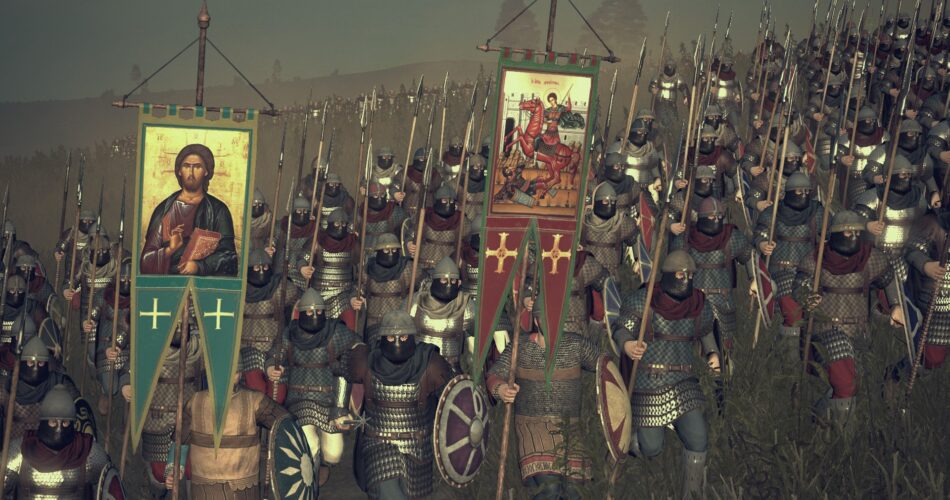
In the autumn of AD 1116, beneath a sky the color of fading bronze, the plains near Philomelion trembled once more with the sound of war. The summer heat had broken, but Anatolia was not at peace. Dry grass whispered in the wind, and dust hung low over the earth—a land fought over for nearly half a century. At their head rode Emperor Alexios I Komnenos, not a young conqueror seeking glory, but an aging ruler determined to reclaim what had been torn away. For decades, Anatolia had slipped from imperial hands, village by village, fortress by fortress, until Roman soil itself felt foreign. Across the horizon, the Seljuk waited—swift, disciplined, and merciless in the art of mounted war. They did not need walls. The steppe was their fortress. Their arrows were their storm. At Philomelion, there would be no grand speeches, no shining clash of equal lines. There would be dust, fear, and the sickening thud of arrows punching through flesh and shield. Men would be trampled beneath hooves. Officers would scream for their ranks to hold as the sky darkened with shafts. The autumn wind carried the hiss of arrows long before the men who loosed them could be seen. The Seljuks circled like wolves, testing the Roman line, probing for weakness. And the Romans—hemmed in, bleeding, but unbroken—fought not for conquest, but for survival. At Philomelion, survival itself became strategy. Victory would not be measured in glory, but in who was still standing when the arrows finally stopped falling. It was a grinding trial of discipline against mobility, endurance against exhaustion—a battle where one broken formation meant annihilation. This is the story of the Battle of Philomelion.
The Struggle for Anatolia After Manzikert
Following the success of the First Crusade, the Byzantine Empire regained significant territory in western Anatolia. Imperial forces, commanded by John Doukas in his capacity as megas doux, reconquered much of the Aegean coastline as well as substantial portions of the western Anatolian interior. This marked a temporary restoration of Byzantine authority in regions that had been lost after the Battle of Manzikert. However, the broader strategic situation remained unstable. After the failure of the Crusade of 1101, Turkish powers in Anatolia resumed offensive operations. The Seljuqs renewed pressure on Byzantine frontier zones, exploiting the weakening of crusader momentum and the limitations of imperial resources.
Under the leadership of Malik Shah, the Seljuqs gradually reasserted control over central Anatolia. They consolidated their political and military position around the city of Iconium, creating a durable territorial base from which to conduct raids and defensive operations. This reorganization allowed them to recover from earlier setbacks and re-establish a viable state structure in the region. Meanwhile, Emperor Alexios I Komnenos, now elderly and suffering from an illness that would ultimately prove fatal, struggled to contain renewed Turkish incursions into recently recovered Byzantine territories. Although the empire managed to repel a Seljuq attempt to seize Nicaea in AD 1113, the frontier remained volatile, and Turkish raids continued to threaten imperial control in Anatolia.
In AD 1116, Emperor Alexios I Komnenos was once again able to take personal command in the field, directing defensive operations in north-western Anatolia. Establishing his main base at Lopadion, he ordered the assembly of a field army in preparation for renewed campaigning. The Byzantine army at this time consisted of regular imperial troops, reinforced by foreign auxiliaries and mercenary contingents. The process of mustering these forces required considerable time, suggesting that Alexios was drawing not only on local troops from Thrace, but also on contingents stationed in Macedonia and possibly Thessaly. Such a wide mobilization indicates the seriousness with which the emperor viewed the Turkish threat. During the summer of AD 1116, before all mercenary units had arrived, Alexios advanced from Nicaea with the forces already assembled. Leaving the yet-to-arrive mercenaries behind, he conducted a reconnaissance movement south-westward, aiming to assess enemy activity and secure the frontier before undertaking deeper operations.
Meanwhile, two experienced Byzantine commanders, Strabobasileios and Stypiotes, took up positions along the ridges known as the Fermioi. Both officers had long and distinguished military careers, and they were entrusted with monitoring the surrounding roads for signs of enemy movement. Their intention was to ambush any Turkish raiding force that might pass through the area, much as hunters would trap a wild animal.
When intelligence reached them that a Turkish mounted detachment had entered the region, the two commanders moved down from the high ground into the plains to confront it. A fierce engagement followed. In the ensuing clash, the Turkish raiders were decisively defeated. An especially noteworthy aspect of this wider campaign is that, despite earlier Crusader successes in restoring large areas of territory to Byzantine control, Turkish raiding forces were still able to penetrate deep into imperial lands, appearing even in regions close to the Bosphoros. This illustrates the continued volatility of the frontier and the persistence of mobile Turkish warfare, which remained a serious challenge to Byzantine security.
After these operations, Emperor Alexios I Komnenos returned to his base at Lopadion. While the army was encamped there, the long-expected mercenary contingents finally arrived, strengthening the imperial forces. As Alexios reorganized and consolidated his troops, he received alarming intelligence: a substantial Turkish force was advancing toward Nicaea, the most important Byzantine urban center in Asia Minor.
At this point in her narrative, Anna Komnene offers one of her more striking justifications of the emperor’s conduct. Critics in Constantinople had accused Alexios of hesitation and inactivity while he remained at Lopadion. In response, Anna presents a defensive explanation. According to her account, Alexios deliberately refrained from launching an immediate offensive against the Seljuk sultan because his earlier defensive measures in western Asia Minor had already alarmed the Turks. She suggests that a more aggressive move might have caused them to retreat prematurely toward Iconium, thereby denying the emperor the decisive engagement he sought. This interpretation reflects Anna’s broader effort to portray her father’s actions as calculated and strategic rather than hesitant, and it highlights the political tensions surrounding the campaign within the Byzantine capital.
Despite her efforts to defend him, Anna Komnene acknowledges that dissatisfaction was widespread. As she records, “there was much criticism and whispering against the Emperor, for after having made such preparations, and having gathered such a force against the barbarians, nothing great was accomplished, but he retired to Nicomedia.” This remark reveals that many contemporaries viewed the campaign as anticlimactic and questioned the emperor’s apparent reluctance to engage decisively. Anna once again attempts to justify what appeared to be a passive response. She argues that true generalship does not always require open battle, and that victory may be achieved through caution, calculation, and strategic restraint rather than direct confrontation.
However, the underlying implication of her narrative is clear. Alexios I Komnenos likely judged his army too small to risk a full-scale engagement with the sultan’s main force. His withdrawal to Nicomedia therefore appears to have been a practical decision aimed at recruiting additional troops and strengthening his position before seeking battle. In this light, the retreat can be interpreted not as hesitation, but as a strategic recalculation in the face of unfavorable odds.
The Imperial Campaign Begins
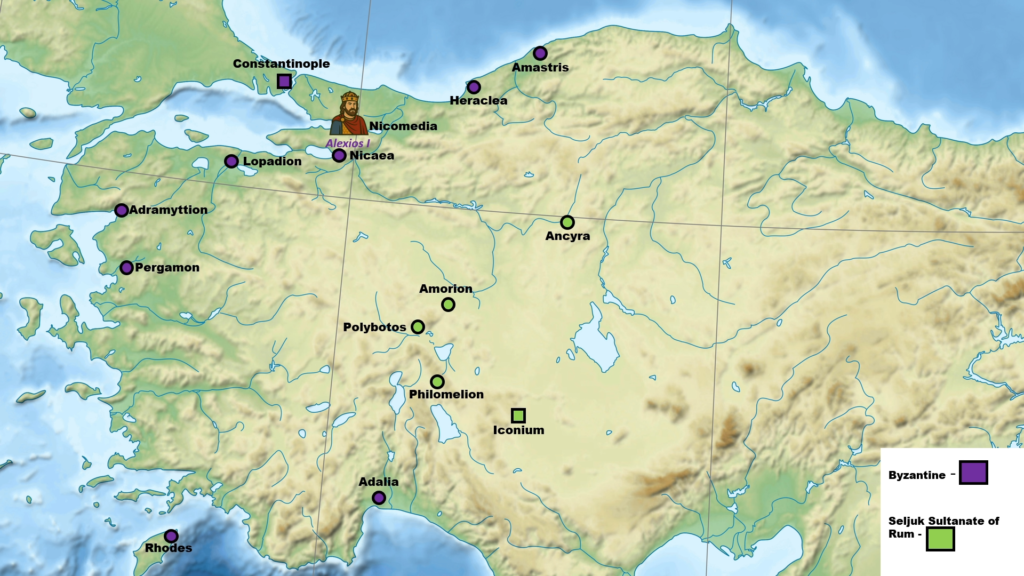
After receiving reinforcements, Emperor Alexios I Komnenos shifted from a defensive posture to an offensive strategy. With his strengthened army, he advanced to Santabaris and divided his commanders to operate along multiple routes, a maneuver designed to apply coordinated pressure on Turkish-held positions.
General Kamytzes was dispatched toward Polybotos and Kedros, the latter being a strongly fortified settlement under the control of a Turkish satrap named Poucheas. Meanwhile, Commander Stypiotes was ordered to engage Turkish forces operating around Amorion. The emperor’s plan, however, was compromised when two Scythian deserters learned of the movements. They fled to Poucheas and informed him of Kamytzes’ approach as well as of the emperor’s advance.
Alarmed by this intelligence, Poucheas abandoned Kedros during the middle watch of the night, fleeing with his followers in haste. At dawn, Kamytzes arrived to find the town deserted. Although Kedros contained considerable booty, he chose not to linger. Frustrated at losing his principal target, he redirected his forces immediately toward Polybotos. There, Kamytzes launched a sudden attack against Turkish forces, inflicting heavy casualties. The Byzantines recovered both plunder and prisoners in the process. After securing the area, his troops established a camp nearby to await the emperor’s arrival. Stypiotes was similarly successful in his operations at Poemanenon before rejoining the main army. By sunset, Alexios himself reached Kedros, consolidating the gains achieved by his subordinate commanders and reinforcing imperial control in the region.
Byzantine Advances and Turkish Countermoves
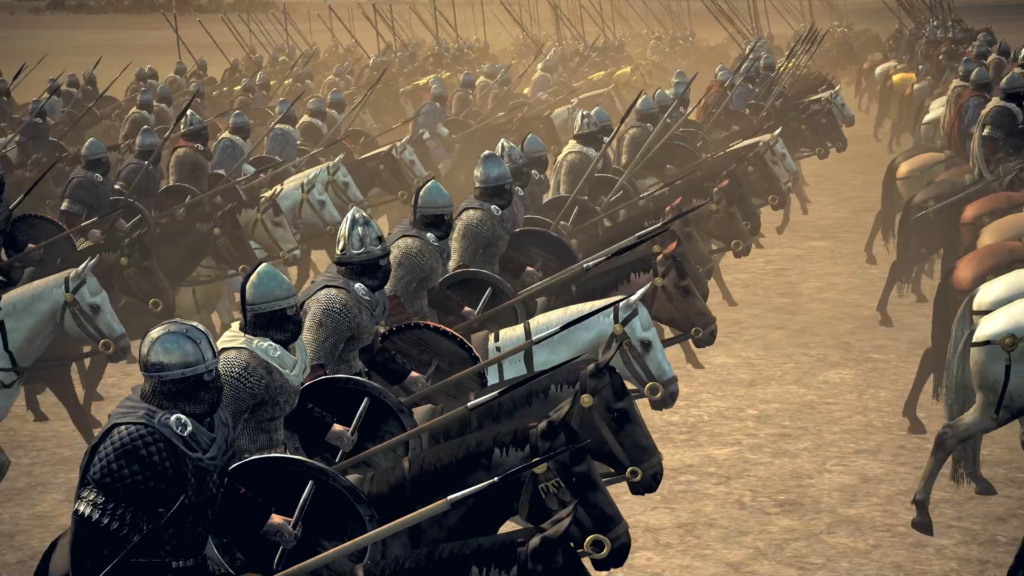
The following day, as Alexios I Komnenos was completing his preparations to depart, new intelligence arrived that significantly altered the strategic situation. The Seljuk sultan, Malik-Shah, having learned of the emperor’s movements, had ordered the destruction of crops and the burning of the plains across parts of Asia Minor. This deliberate devastation left the countryside without sufficient provisions for either soldiers or animals, effectively employing a scorched-earth strategy to weaken the advancing Byzantine army.
At the same time, reports circulated that another Turkish force was approaching from the more northerly regions. The rumor spread quickly, increasing uncertainty and anxiety within the army. Whether fully accurate or not, such intelligence added to the strategic pressure facing the emperor.
Alexios now confronted a serious logistical dilemma. A direct march toward Iconium risked exposing his army to severe shortages of food, with the possibility that it might suffer hunger and exhaustion before reaching its objective. He was also cautious about the strength and disposition of the enemy forces likely awaiting him there. In response, the emperor chose a course that combined prudence with boldness. Rather than advancing blindly, he sought counsel from God, asking whether he should proceed along the road to Iconium or instead redirect his operations against the enemy in the region of Philomelion.
According to the account preserved by Anna Komnene, the emperor adopted a strikingly symbolic method of decision-making. Alexios I Komnenos wrote the two strategic options—whether to march toward Iconium or to move against the enemy near Philomelion—on separate pieces of paper and placed them upon the Holy Altar. The entire night was then spent in prayer and the chanting of hymns, as the army sought divine guidance for the campaign. At dawn, a priest entered the sanctuary, selected one of the papers from the altar, and opened it in the presence of those assembled. The message read aloud indicated that the emperor should choose the road to Philomelion. Whether understood as an act of genuine piety or as a means of reinforcing morale and legitimacy, this episode illustrates the close connection between religion and military decision-making in the Byzantine world. Having received what was interpreted as divine approval, Alexios resolved to direct his operations toward the sector of Philomelion, where the next decisive phase of the campaign would unfold.
Meanwhile, General Bardas Burtzes was advancing when he observed a substantial Turkish force moving rapidly to join the Turkish commander Manalugh across the bridge at Zompe. Recognizing the threat, Burtzes acted without delay. He engaged the force on the plain of Amorion and achieved a decisive victory, routing the enemy and securing considerable spoils.
However, events soon took an unfavorable turn. Another Turkish detachment, arriving from the east and likewise hurrying to reinforce Manalugh, unexpectedly encountered Burtzes’ camp while he was still absent. Finding it insufficiently protected, they plundered the encampment, seizing the soldiers’ baggage and any pack animals they could locate.
When Burtzes returned in triumph from the battlefield, laden with captured spoils, he encountered one of his men departing the devastated camp. From him he learned that the enemy had stripped the camp of its supplies—including the booty he had just won—and had already withdrawn.
Bardas Burtzes assessed the situation with care. Although he wished to pursue the Turkish raiders who had plundered his camp, he recognized the practical limitations facing his force. The enemy was moving quickly, while his own horses were exhausted from recent operations. A pursuit under such conditions would have been risky and potentially disastrous. He therefore decided against it, judging that caution was preferable to exposing his men to further losses. Instead, he resumed his march at a measured pace and in good order.
By daybreak, Burtzes reached settlements associated with his family lineage and took steps to evacuate the local population, likely to prevent them from falling victim to further raids. During these operations, Byzantine forces recovered prisoners and seized whatever Turkish supplies they could find in the area. After allowing a brief rest for both himself and his weary horses at a suitable location, Burtzes began the return march to rejoin Emperor Alexios I Komnenos as the sun was rising.
While returning to rejoin the main army, Bardas Burtzes encountered yet another Turkish force. Without hesitation, he engaged them, and a fierce battle followed. The fighting was intense, with both sides sustaining pressure over a prolonged exchange. After some time, the Turkish force proposed negotiations. They demanded the return of prisoners and the booty previously taken from them. In return, they promised to cease hostilities against the Byzantines and withdraw from the region. Burtzes rejected these terms. Unwilling to make concessions that might weaken imperial authority or encourage further demands, he chose instead to continue the engagement. He resumed the battle decisively, demonstrating both resolve and confidence in his position.
On the previous day, his soldiers had gone through the fighting without any access to water. Now, upon reaching the bank of a river, they finally had the opportunity to quench their burning thirst. They did so in relays: while one group continued to hold the line, another temporarily withdrew from the fighting to drink and recover before returning to the struggle. Bardas Burtzes was deeply concerned. The Turkish forces displayed considerable courage and determination, and they significantly outnumbered his own men. Despite his troops’ discipline and endurance, the situation grew increasingly precarious. As the pressure mounted and the engagement threatened to turn against them, a messenger was dispatched to inform Emperor Alexios I Komnenos of the urgent circumstances.
The messenger chosen for this critical task was not an ordinary soldier, but George Lebounes himself—a man of standing and proven reliability. The route to the emperor was extremely dangerous, as Turkish forces occupied much of the surrounding terrain. Nevertheless, Lebounes forced his way through the enemy lines, pushing through hostile formations and successfully reaching the imperial camp.
The Road to Philomelion
Upon learning of Burtzes’ predicament, Emperor Alexios I Komnenos immediately grasped the seriousness of the situation. The report provided him with a clearer understanding of the scale and strength of the Turkish forces involved. Recognizing the urgent need to reinforce Burtzes with additional troops and supplies, he acted without delay. Alexios personally armed himself and ordered the rapid mobilization of his army. Once the various military units had assembled and prepared for action, he advanced to confront the Turkish forces, determined to relieve his embattled commander and regain the initiative.
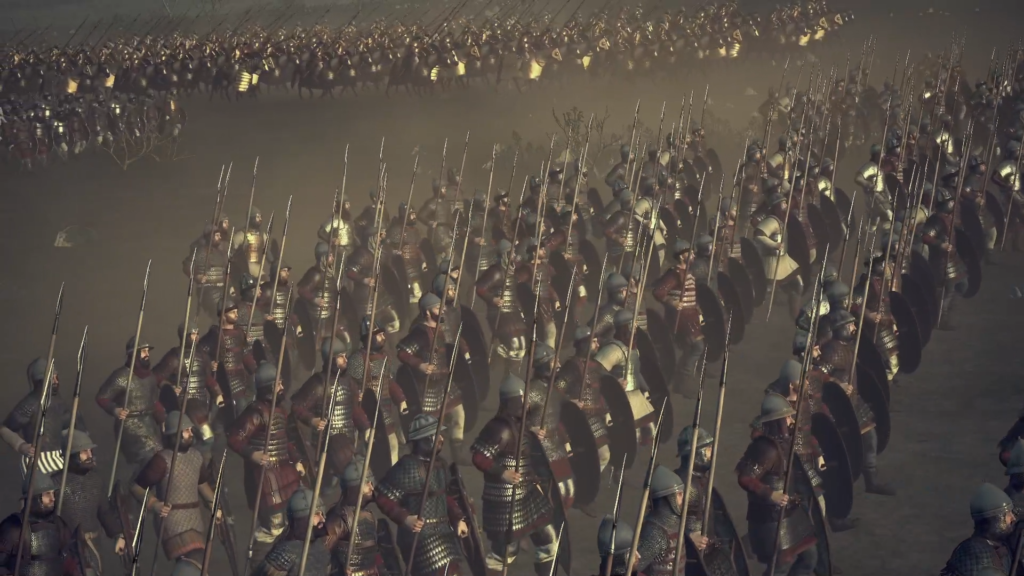
The imperial army was arranged in a structured battle formation. The vanguard was placed under the command of Basileus Michael, while Bryennios led the right wing, Fabras the left, and Cecaumenus commanded the rear guard. This deployment reflects a conventional Byzantine tactical arrangement, designed to maintain cohesion and flexibility in open-field engagement.
As the Turkish forces waited at some distance, tension mounted before the lines. At this moment, Nikephoros—the young nephew of the empress—acted with notable boldness. Eager for combat, he rode forward ahead of the main formation, accompanied by a small group of similarly impetuous warriors.
In the ensuing clash, Nikephoros engaged the first Turkish horseman who charged toward him. During the encounter, he was wounded in the knee. Despite this injury, he managed to thrust his spear into his opponent’s chest, killing him instantly and unseating him from his horse. Witnessing this display of courage, the Turkish troops immediately behind the fallen rider broke formation and retreated. Emperor Alexios I Komnenos, observing the episode, was reportedly pleased by Nikephoros’ bravery. On the battlefield itself, he received the young nobleman and publicly commended him for his conduct.
The imperial army then advanced toward Philomelion. On the march, it first reached the so-called Lake of the Forty Martyrs, and on the following day proceeded to a location known as Mesanakta. Continuing its advance, the army arrived at Philomelion, which was taken by assault, bringing the town under Byzantine control.
After securing the position, Emperor Alexios I Komnenos dispatched several detachments under experienced and capable officers. Their mission was to operate in the districts surrounding Iconium, raiding smaller settlements, disrupting Turkish positions, and recovering prisoners. These units spread out widely across the countryside in coordinated sweeps designed to weaken enemy infrastructure and restore imperial authority.
The operations proved effective. Numerous captives were liberated and brought back to the main army along with recovered baggage and supplies. At the same time, many local inhabitants—Roman subjects who had been living under Turkish control and feared reprisals—voluntarily joined the imperial forces. Among them were women carrying infants, as well as men and children seeking protection. For these displaced populations, the emperor and his army represented security and the restoration of imperial order in a region long marked by instability.
Anna Komnene, the principal source for this campaign, suggests that the Seljuq capital of Iconium was originally the intended objective of the expedition. In practice, however, it appears that Emperor Alexios I Komnenos did not pursue a direct assault on the city. Instead, he limited his operations to a visible demonstration of imperial strength and focused on evacuating the native Christian population from Turkish-controlled territories through which his army passed.
The Parataxis Formation
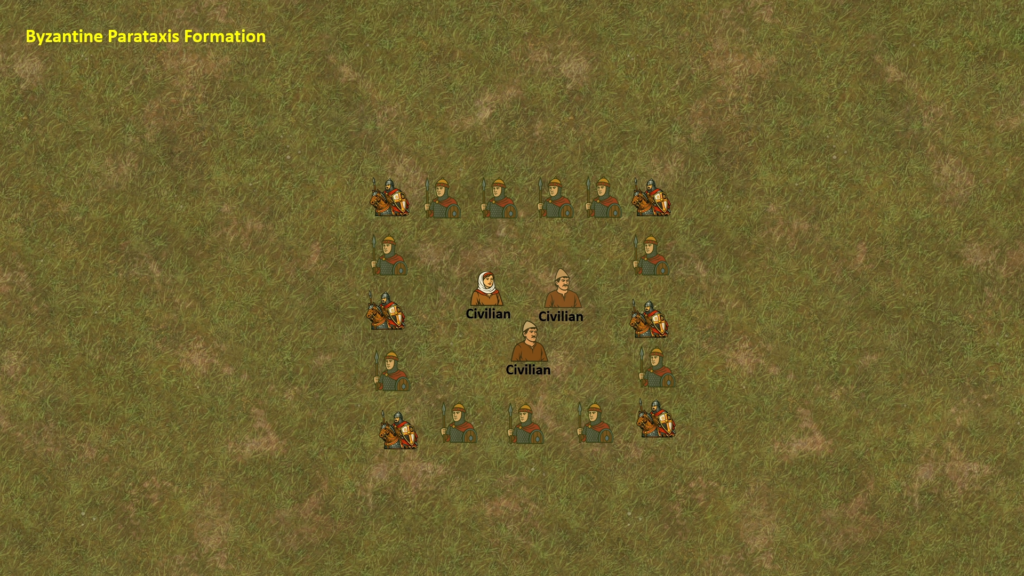
After gathering these refugees into his column, Alexios adopted a new battle formation of his own design, known as the parataxis. From Anna’s description of the army in action, the structure of this formation becomes clear. It was essentially a defensive hollow square. The baggage train and non-combatants, including the rescued civilians, were placed in the center. Infantry units formed the outer perimeter, creating a protective barrier, while cavalry units were positioned between the infantry ranks, allowing them to launch controlled counterattacks when opportunities arose.
This formation was particularly well suited to countering Turkish tactics, which relied heavily on mobile horse-archers conducting rapid, repeated harassment attacks. The parataxis enabled the Byzantine army to maintain cohesion, protect vulnerable elements, and respond flexibly to threats from multiple directions. With this carefully organized formation, Alexios began his march back toward Nicomedia, prepared to withstand continued harassment while safeguarding both his army and the civilian population under his protection.
The Fighting Retreat
As the Byzantine army continued its march, no Turkish forces initially appeared in front of them. However, Turkish commander Manalugh was shadowing the column with a substantial army. Rather than engaging immediately, he deployed ambushes along both flanks, waiting for a favorable moment to strike.
When the emperor’s forces were crossing the plain between Polybotos and the previously mentioned lake, a detachment from the main Turkish army suddenly revealed itself. These troops, lightly armed and experienced in rapid attack, had been concealed on elevated ground to the left and right of the Byzantine column. Their sudden appearance marked the beginning of a coordinated attempt to test the imperial formation.
This was the first occasion on which Manalugh, observed the new Byzantine formation in action. Though an elderly commander with extensive military experience, he was reportedly astonished by the unfamiliar arrangement. Recognizing its discipline and structural coherence, he inquired about the identity of the commanding officer and concluded that such an innovative deployment could only have been devised by Emperor Alexios I Komnenos himself.
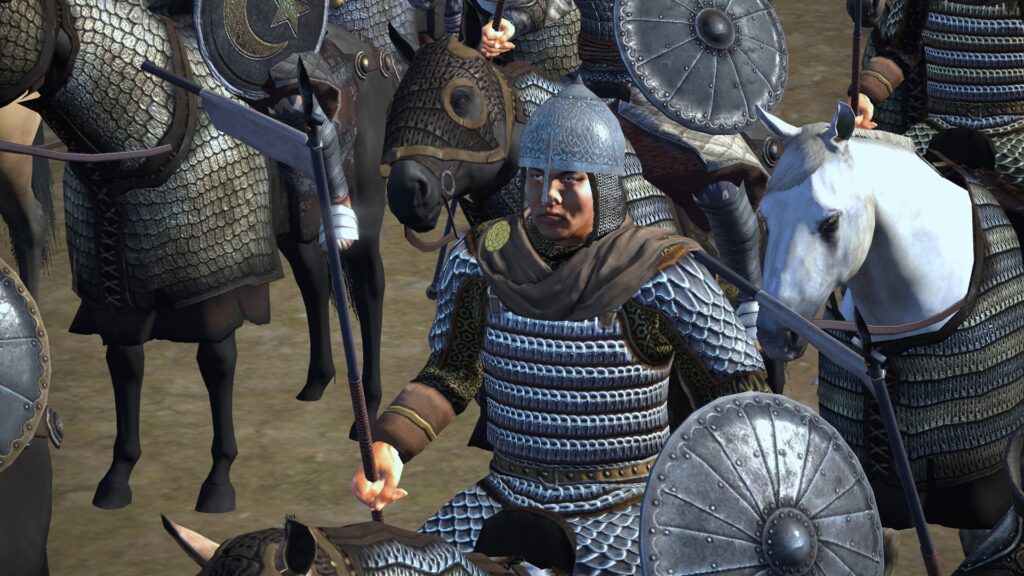
Manalugh was inclined to attack but hesitated, uncertain how best to confront the unfamiliar Byzantine formation. Despite this uncertainty, he ordered his troops to raise their war cries. Seeking to create the impression of overwhelming numbers, he instructed them not to advance in tight ranks, but instead to move in dispersed groups without fixed formation. This method—characteristic of Turkish warfare—was intended to intimidate the enemy through speed, unpredictability, and the thunderous noise of galloping horses. The objective was psychological as much as tactical: to unsettle the Byzantine army with a sudden display of mobility and apparent numerical superiority.
In contrast, Emperor Alexios I Komnenos maintained visible composure at the head of his formation. Riding along the front line, he encouraged his troops and instructed them to preserve their defensive arrangement. According to the account, his calm and resolute presence strengthened morale and reinforced discipline at a critical moment. By insisting that the army hold its formation, Alexios countered the intended shock effect of the Turkish advance and preserved the cohesion upon which his strategy depended.
As a result of the emperor’s leadership, morale within the Byzantine ranks was strengthened, and each soldier maintained his assigned position. The army continued its march in disciplined order. So steady and controlled was their movement that, from a distance, it reportedly appeared to the Turkish forces as though the formation was barely advancing at all.
The Battle for Survival
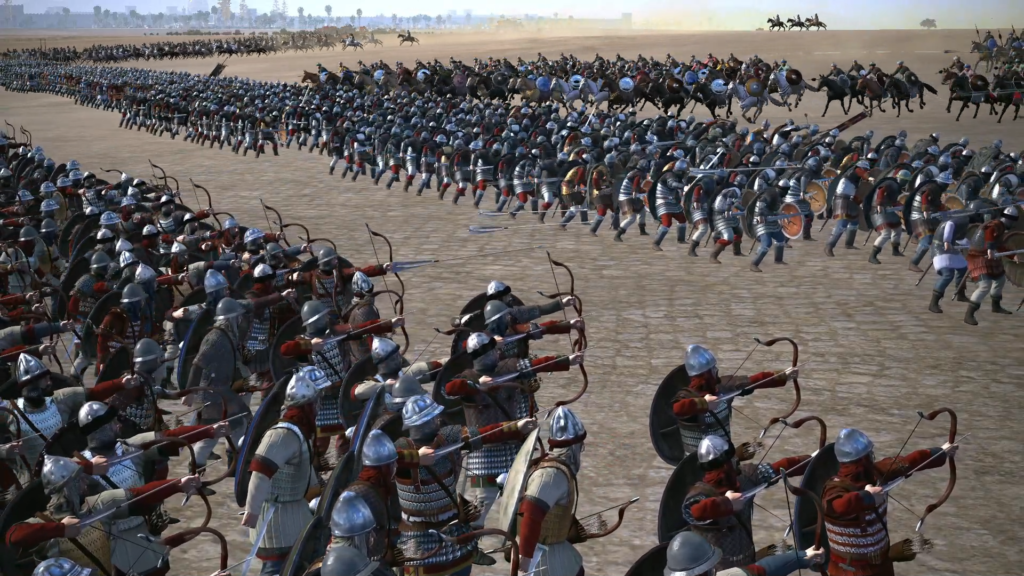
Throughout the day, the enemy launched repeated attacks. However, these assaults failed to produce any meaningful breakthrough. The Turkish forces were unable to disrupt the Byzantine formation, either at isolated points or across the line as a whole. The cohesion of the defensive arrangement prevented the kind of fragmentation upon which Turkish tactics typically depended.
By the end of the day, having achieved no tangible success, the attackers withdrew to the surrounding high ground. There, they established numerous watchfires. During the night, they continued their efforts at psychological intimidation—shouting, jeering, and attempting to provoke the Byzantine troops.
At daybreak, Manalugh continued to implement the same tactics as on the previous day, instructing his forces to maintain their dispersed formations and repeated harassment attacks. Shortly thereafter, Sultan Malik-Shah himself arrived on the field. He, too, was reportedly struck by the discipline and cohesion of the Byzantine army, which had thus far resisted sustained pressure without losing order.
Under the sultan’s direction, the Turkish forces prepared a coordinated three-pronged assault against the Byzantine formation. One contingent was assigned to attack the rear guard, aiming to disrupt the column’s withdrawal and threaten its vulnerable elements. At the same time, other commanders were ordered to launch a frontal assault against the main body of the army. Additional units were directed to strike both flanks simultaneously, in an effort to overwhelm the formation from multiple directions and break its defensive structure.
Nicephoros Bryennios, who commanded the right wing of the Byzantine army, became aware that intense fighting had broken out in the rear. Although he was eager to intervene, he restrained himself, conscious of his relative youth and unwilling to act rashly or appear inexperienced. Instead, he continued to advance in good order, maintaining the cohesion and discipline of his ranks.
However, when he observed that a section of the left wing was on the verge of collapse, he acted decisively. Bryennios wheeled his contingent around and moved swiftly to support the endangered troops. His timely intervention stabilized the line and reversed the momentum of the engagement. At this point, the Turkish forces broke and fled. Sultan Malik-Shah withdrew with them, retreating at speed toward the surrounding hills. Although many were killed during the fighting, a significant number were taken prisoner. The remaining survivors scattered in disorder. According to the account, the sultan himself, fearing for his life, escaped with only a single companion—his cupbearer.
At nightfall, the emperor established camp at the position the army had reached. Alexios then divided his forces into two groups. One contingent was ordered to remain in the camp, maintaining vigilance and strict discipline. The other was instructed to arm themselves, leave the camp perimeter, and position themselves in anticipation of a renewed Turkish assault, prepared to engage the enemy if necessary.
During the night, Turkish forces maneuvered around the Byzantine troops, effectively surrounding them. They carried out repeated charges near the foothills and continually discharged volleys of arrows in an attempt to harass and destabilize the formation. Despite this sustained pressure, the Byzantine soldiers adhered closely to the emperor’s instructions. They defended themselves methodically and maintained their ranks without disorder. At sunrise, the army resumed its march in the same disciplined formation. Maintaining cohesion and defensive readiness, the army proceeded toward Ampous.
A further intense engagement followed. The sultan regrouped his forces and once again encircled the Byzantine army, launching coordinated attacks from multiple directions. The assault was forceful and sustained. However, he was unable to break the cohesion of the Roman formation. The tightly ordered ranks proved resistant to repeated attacks, and the Turkish forces were ultimately repelled without achieving a breakthrough.
That night, unable to secure victory, the sultan reportedly remained awake in anxious reflection. In growing frustration, he consulted with Manalugh and the other satraps. With their unanimous agreement, he resolved at dawn to seek terms of peace from the emperor.
Alexios did not refuse the proposal. A signal was given to halt hostilities, yet the army was ordered to maintain its defensive posture. The soldiers remained in formation, without dismounting or unloading the baggage animals. Fully armed with shield, helmet, and spear, they stayed in battle readiness, ensuring that negotiations proceeded without compromising their security.
Peace Between Emperor and Sultan
On the plain between Augustopolis and Akroinon, Sultan Malik Shah and Emperor Alexios met in person. According to the account, Alexios placed his own costly cloak around the sultan’s shoulders, a symbolic gesture that conveyed both magnanimity and imperial authority. A peace agreement was concluded in which Malik Shah undertook to halt Turkish raiding activity and acknowledged a degree of dependence—largely symbolic rather than practical—on the Byzantine emperor. Anna Komnene records that the treaty required the complete evacuation of Anatolia by Turkish forces. This claim, however, is highly improbable and is generally regarded as an exaggeration intended to enhance the emperor’s achievement.
The campaign itself was notable for the exceptional discipline displayed by the Byzantine army. Alexios demonstrated that he could lead his forces safely through territory dominated by Turkish powers without suffering serious disruption. By contrast, Malik Shah’s failure at Philomelion and the resulting loss of prestige likely weakened his political position. Soon afterward, he was deposed, blinded, and ultimately killed on the orders of his brother Masʿud. When Alexios died in AD 1118, the broader ambition of recovering all of Asia Minor remained unrealized. This objective passed to his thirty-one-year-old son and successor, John II Komnenos.
© 2026 History and War
Author: Jishu Roy
Unauthorized reproduction of this content is prohibited.