The Desert Ignites
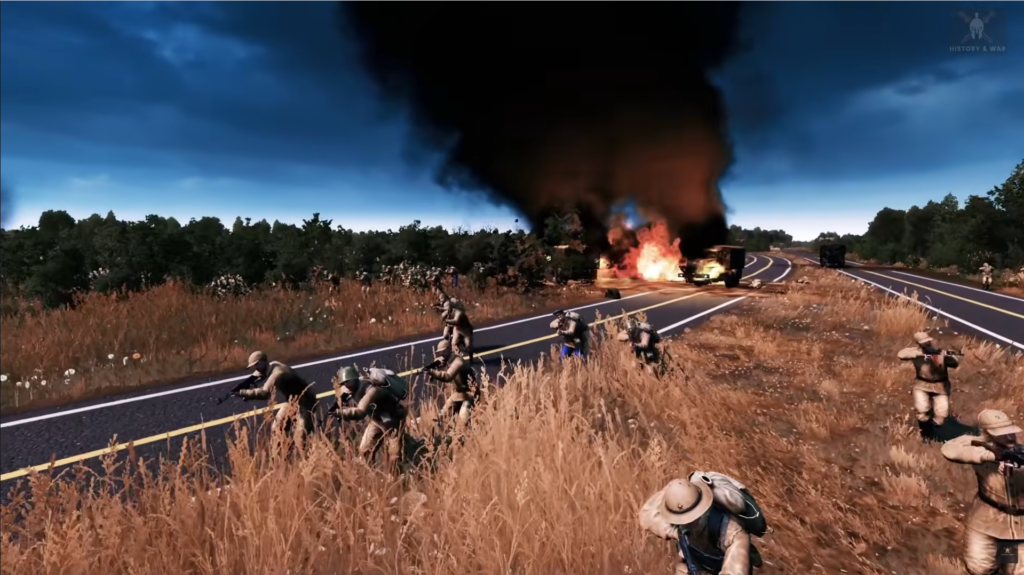
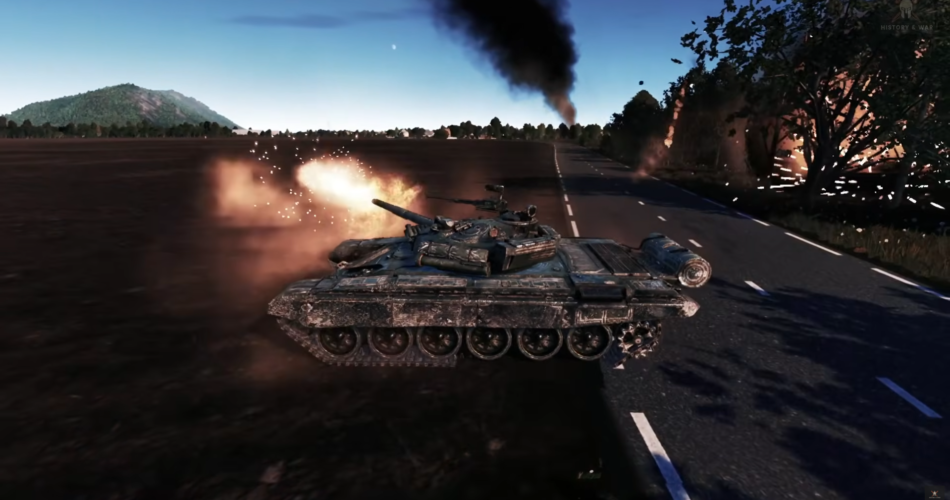
Welcome back to History and War. Today, we turn to the steel and firepower of the late twentieth century — tanks, mechanized columns, and artillery rolling across the desert in the opening hours of the Gulf War. In the early morning of August 2, 1990, Iraqi armored columns crossed into Kuwait with speed and precision. West of Al Jahra, at a pair of key highway overpasses on the Sixth Ring Road, the Kuwaiti Army’s 35th Armoured Brigade positioned itself to block the advance. Facing them were elements of Iraq’s Republican Guard — including units from the 1st Hammurabi Armoured Division — advancing with overwhelming numerical and material superiority. In the desert dawn, Kuwaiti Chieftain tanks and mechanized infantry opened fire, attempting to delay the Iraqi thrust toward Kuwait City. This was the Battle of the Bridges — a brief but decisive clash that marked the beginning of Kuwait’s rapid collapse.
Oil, Debt, and Diplomacy: The Road to War
Iraq’s territorial claims over Kuwait predate the modern Kuwaiti state and are rooted in historical control by the Ottoman Empire. Following Kuwait’s independence from Britain on June 19, 1961, these territorial disputes escalated, bringing the two nations to the brink of conflict. Shortly after independence, Iraq asserted that Kuwait was an integral part of its territory and threatened to invade. In response, British troops were deployed to the region, positioning themselves on the Mutlaa Ridge until the Arab League could organize a peacekeeping force. Arab League forces remained in Kuwait until February 1963, when a revolution in Iraq led to a change in government. The new Iraqi leadership adopted a more conciliatory stance, prompting the withdrawal of Arab League forces.
In the years that followed, Iraq repeatedly demanded that Kuwait cede control of Bubiyan and Warbah Islands, claiming that military forces stationed there could restrict access to the Shatt al-Arab and Shatt al-Basrah waterways. However, Kuwait had never sought to impose restrictions on commerce in the region. In March 1973, Iraq launched a brief incursion into Kuwait, seizing a border post and a three-kilometer-deep strip of territory near Umm Qasr along the north-eastern coast. Under pressure from the Arab League, Iraq withdrew after securing low-interest loans from Kuwait. A subsequent border dispute was set aside in 1983 as Iraq became preoccupied with the Iran-Iraq War. During that conflict, Kuwait provided Iraq with financial support through low-interest loans and allowed the use of its port facilities.
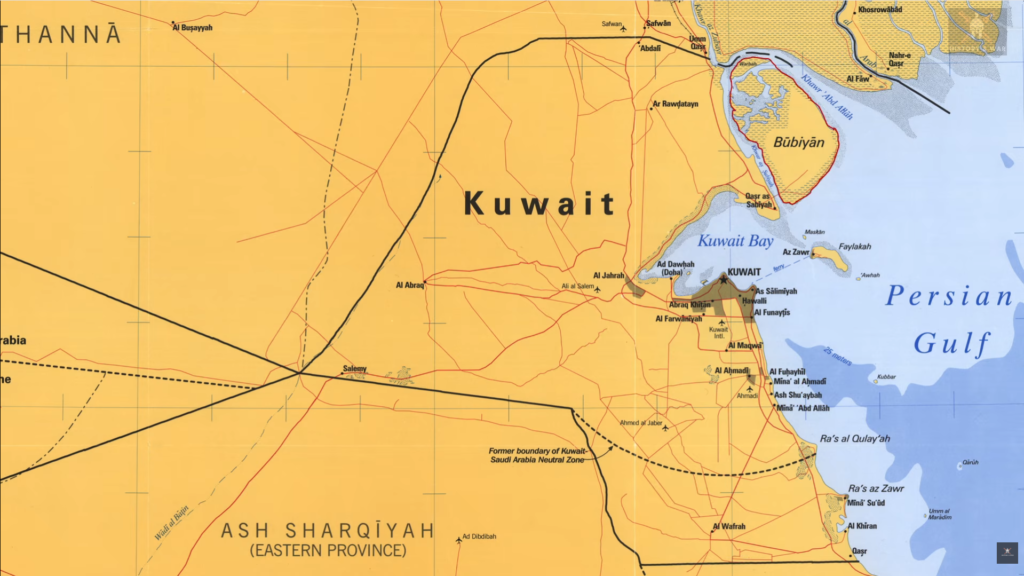
Following the Iran-Iraq War, Iraq faced significant financial challenges due to its large debt. The crisis that led to the 1990 invasion of Kuwait began to escalate in the aftermath of the war. On May 30, 1990, Saddam Hussein voiced concerns over noncompliance with oil production quotas and pricing policies among members of the Organization of the Petroleum Exporting Countries. By July 15, Iraq specifically accused Kuwait and the United Arab Emirates of violating these agreements. Additionally, Kuwait was accused of constructing facilities to extract oil from the Iraqi portion of the Ar Rumaila oil field, effectively reducing Iraq’s oil revenues.
Further tensions arose on July 21 when Iraq alleged that Kuwait had failed to support Iraqi initiatives related to commerce and transportation. In an attempt to ease tensions, Kuwait announced on July 28 that it would reduce its oil production. A final effort at diplomacy took place on August 1 in Jeddah, Saudi Arabia, but negotiations quickly collapsed due to Iraq’s demands for oil, financial aid, and territorial concessions. Given the military movements that had already begun on July 17, it is likely that Iraq never intended for diplomacy to succeed. By August 1, Iraqi forces were fully positioned for an attack.
Order of Battle: The Kuwaiti Land Forces
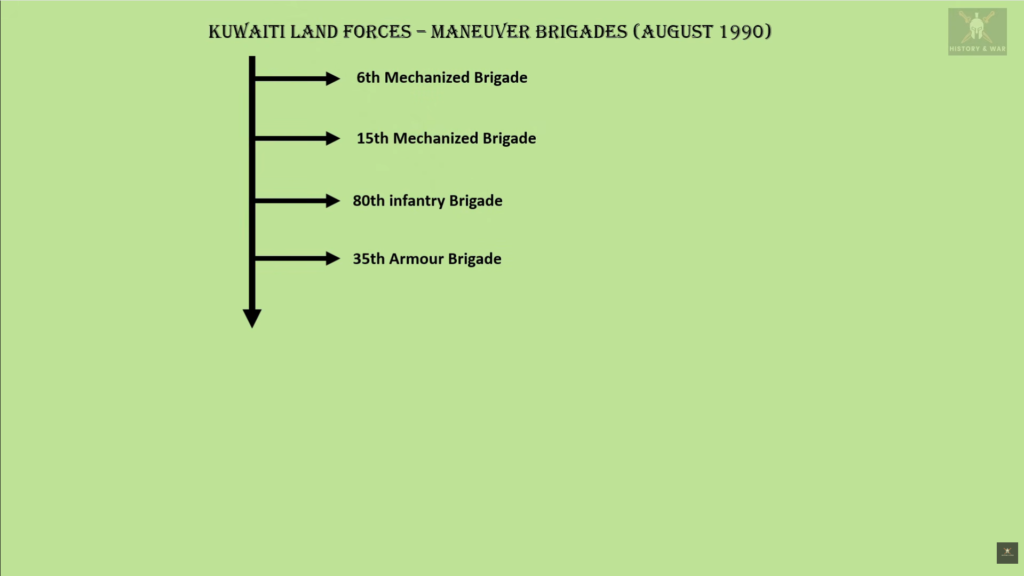
The Kuwait Land Forces were composed of four brigades, in addition to the Amiri Guard and the Commandos Battalion. The 6th Mechanized Brigade was positioned in the north and was equipped with M113 armored personnel carriers, BMP-2 infantry fighting vehicles, and Vickers tanks. South of Kuwait City, the 15th Mechanized Brigade was stationed with Chieftain tanks and M113s. The 80th Infantry Brigade was based in Jahra, consisting primarily of light infantry supported by a limited number of Saladin armored cars.
The 35th Armored Brigade was positioned west of Jahra along the Salmi road. The 35th Armored Brigade, commanded by then-Colonel Salem Masoud Al Sorour, included the 7th and 8th Tank Battalions, the 57th Mechanized Infantry Battalion, an anti-tank company, and the 51st Artillery Battalion. Both tank battalions were equipped with Chieftain tanks. While the 7th Tank Battalion remained in garrison, the 8th Tank Battalion was deployed without its tanks on a routine mission to guard the northern oil fields. In the days leading up to the invasion, the commander of the 8th Battalion ordered the 3rd Company to return from the oil fields.
The 57th Infantry Battalion was equipped with a combination of M113 armored personnel carriers and BMP infantry fighting vehicles. Additionally, two of its companies were deployed in a dismounted role, with one stationed on Bubiyan Island and the other on Faylaka Island. The brigade’s anti-tank company was equipped with Improved TOW Vehicles, while the 51st Artillery Battalion operated M109A2 155-mm self-propelled howitzers.
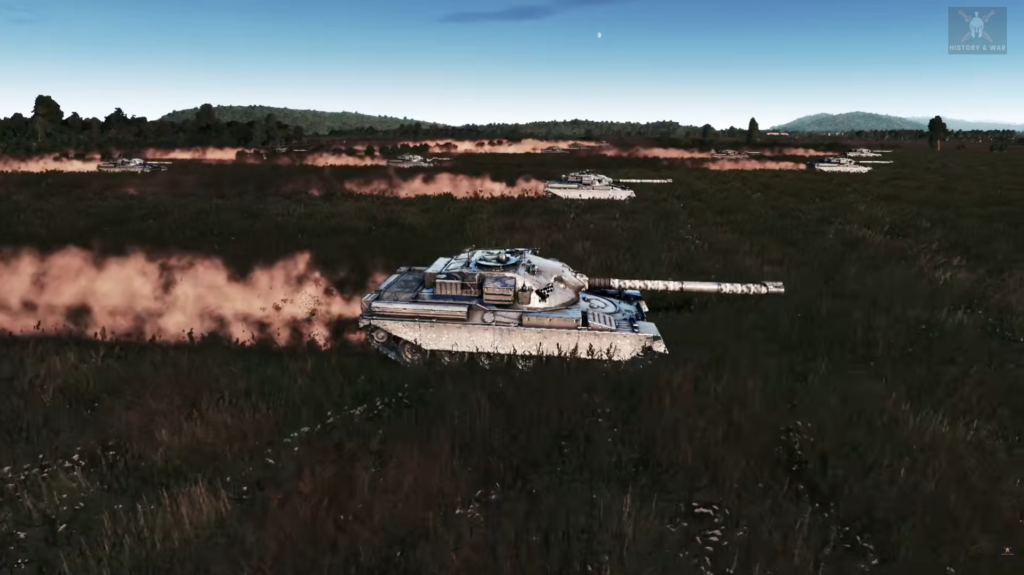
The Kuwaiti variant of the Chieftain tank, the MK 5/2, was an aging but still formidable combat vehicle. It was armed with a 120-mm main gun and featured a laser rangefinder, ballistic computer, infrared night sight, and target designation capability. Although the Chieftain was equipped with a muzzle reference sensor, the 35th Brigade was unable to boresight the tanks on the day of the battle. The primary weakness of the Chieftain lay in its powertrain. The tank was underpowered, with an engine producing only 720 brake horsepower, making it highly prone to mechanical failures. This limitation led to the common Kuwaiti assessment of the vehicle as having a “good gun, bad engine.” At the time, the Chieftain was scheduled to be replaced in the Kuwaiti Land Forces by the M84 tank.
Republican Guard Spearhead: Iraq’s Strike Divisions
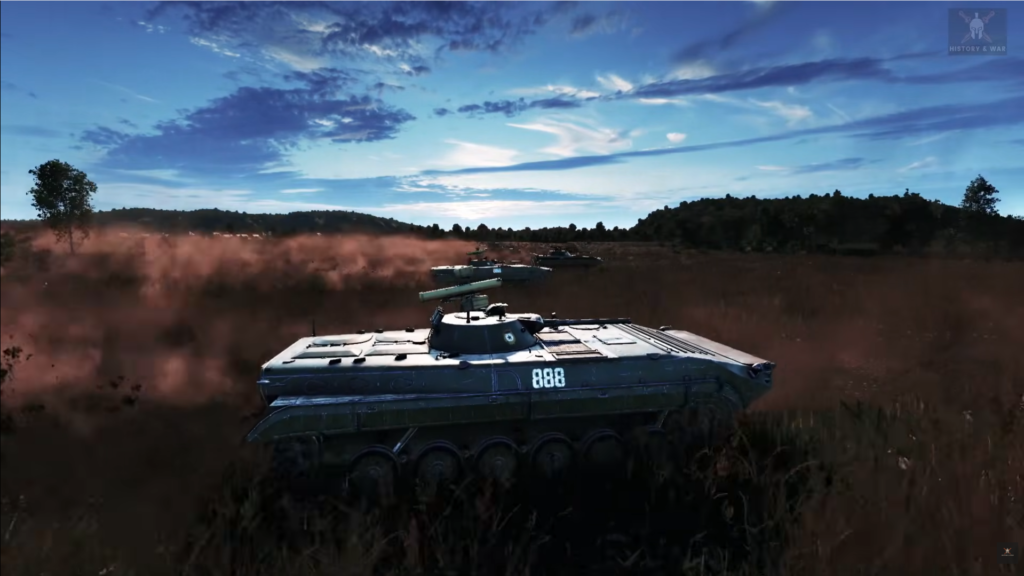
The Iraqi forces were led by Republican Guard units, which originally served as Saddam Hussein’s security force. Over time, however, the Republican Guard expanded into a full corps during the Iran-Iraq War. By the war’s end, the Guards had become Iraq’s primary striking force, often spearheading offensive operations.
The Hammurabi Mechanized and Medina Armored Divisions led the Iraqi attack. Each of these divisions consisted of three brigades: two armored brigades and one mechanized brigade in the armored division, or two mechanized brigades and one armored brigade in the mechanized division. The divisions also included artillery, typically three battalions of the 2S1 self-propelled howitzer and one battalion of the 2S3, along with engineer, commando, air defense, and reconnaissance battalions, as well as logistics units. Each maneuver brigade was made up of three tank battalions and one mechanized battalion, or three mechanized battalions and one tank battalion. Additionally, each brigade contained a reconnaissance platoon and a mortar battery.
The primary weapons of these divisions were the T-72 tank and the BMP Infantry Fighting Vehicle. The T-72 is equipped with a 125-mm smoothbore gun, along with a laser rangefinder, ballistic computer, and infrared night vision capabilities. The gun is stabilized on two axes for improved accuracy. The Iraqi version of the T-72 includes a “Dazzler” device mounted on the turret, designed to counter anti-tank guided missiles, though it is not very effective. The key advantages of the T-72 are its low profile, which makes it harder to target, and its simplicity in operation and maintenance. The Iraqis used both the BMP-1, which is armed with a 73-mm gun and AT-3 missile, and the BMP-2, which is equipped with a 30-mm gun and can fire both AT-4 and AT-5 missiles.
Night of Alert – 1 August 1990
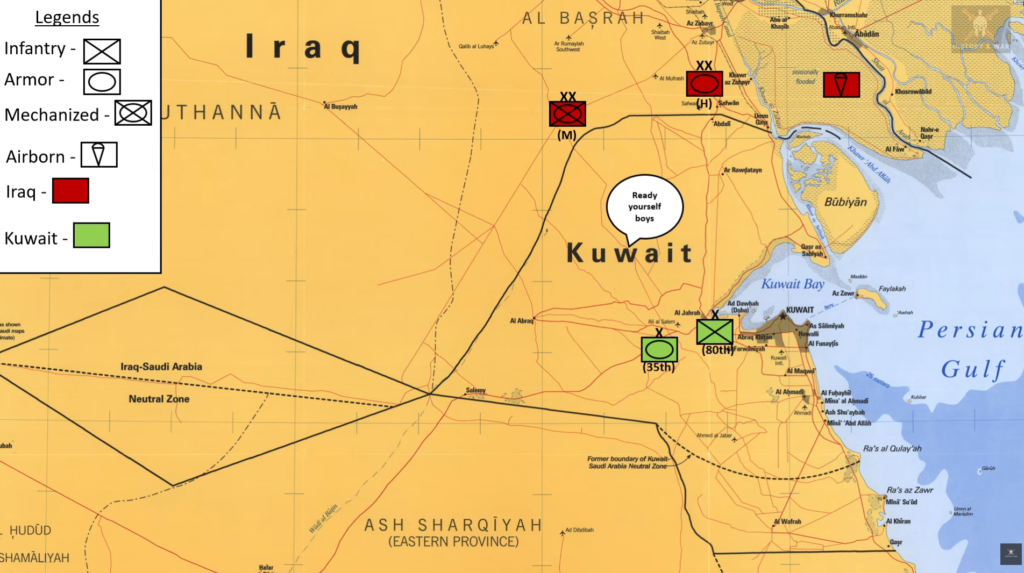
At 10 PM on 1 August, the operations officer of the 35th Brigade was informed of the impending invasion and immediately placed the brigade on alert. The officers and soldiers, notified by telephone, gathered quickly. Some soldiers, who were on leave or unable to report, required new crews to be formed on the spot. Captain Nasser, the Executive Officer of the 7th Battalion, took charge of the situation by evaluating the soldiers’ backgrounds. For instance, if a clerk had previously been trained as a tank gunner, Captain Nasser assigned them to a tank crew as a gunner. The tanks and howitzers were not fully loaded according to the usual peacetime routine, so the ammunition loading process took most of the night. Major Khasan Dawud of the 51st Artillery Battalion noted that the officers and soldiers worked together, without any regard for rank. Despite the efforts, there was a great deal of confusion and uncertainty, with soldiers receiving periodic updates. Many soldiers believed that the situation would mirror the 1973 Iraqi occupation of the border regions.
At 12:30 AM on 2 August, the brigade was informed that Iraqi forces had occupied Al Ratka, and by 1 AM, they had taken control of all the frontier boundary centers in the north. From the brigade commander’s viewpoint, the situation was chaotic. There were numerous tasks to be carried out, but the overall situation remained unclear. A significant number of personnel were still engaged in routine peacetime guard duties and could not be recalled in time to fight with the brigade. The subordinate units required approximately eight hours to load ammunition and supplies. Despite their efforts, they were unable to load all necessary equipment in the limited time available. For instance, the 8th Battalion did not load enough water, which was critical given the heat in Kuwait in August. The artillery battalion was only able to prepare seven of its 18 guns, and the guns were not loaded with a complete mix of ammunition, limiting their flexibility during fire missions.
Dawn Over the Sixth Ring Road
Colonel Salem left the camp at 4:30 AM and joined the antitank company, while the remaining units completed their preparations and cleared the camp by 6 AM, dispersing to avoid becoming a clear target for the Iraqis. The antitank company initially deployed in two sections. One section was sent to the Al Salem airbase for security, while the other secured the intersection of the 6th Ring Road and the Salmi Road. While moving east along the Salmi Road, they observed an Iraqi air raid on the Al Salem airbase. Meanwhile, the rest of the brigade’s forces began to assemble and depart the camp. The 7th Battalion assembled three companies, each with 9, 10, and 7 tanks, respectively, plus the battalion commander’s tank (which broke down during the movement east). The 3rd Company of the 8th Battalion had 10 tanks, the single company from the 57th Battalion had about five BMP-2 Infantry Fighting Vehicles along with several M113 armored personnel carriers, and a composite firing battery from the 51st Artillery Battalion had seven guns.
Phase I – The Hammurabi Division Engages
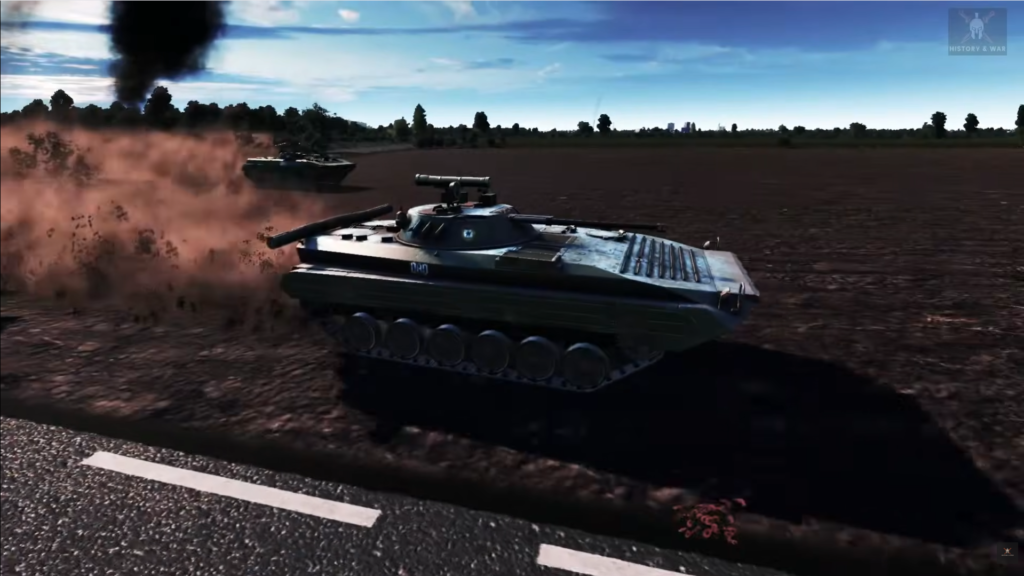
The 7th Tank Battalion led the rest of the brigade as they advanced east along the Salmi Road, reaching the area near the Al Ghanim Oasis. They took up defensive positions near a graveyard north of the road. At approximately 6:45 AM, Lieutenant Colonel Ahmad Al Wazan sent a reconnaissance vehicle forward to the vicinity of the police station on the Mutlaa Ridge to assess activity along the Abdaly Road. The reconnaissance party moved ahead and identified Iraqi forces descending the ridge, attacking both east and west of Jahra. Colonel Salem contacted Lieutenant Colonel Al Wazan and instructed him to take up positions near the graveyard. Upon arrival, Lieutenant Colonel Al Wazan received further instructions from Colonel Salem, who briefed him on the enemy forces coming down from the Mutlaa Ridge. The Iraqi forces continued west in a column along the 6th Ring Road. Colonel Salem then directed the 7th Battalion to engage the enemy, and Lieutenant Colonel Al Wazan issued the order to open fire. The 7th Battalion began engaging the Iraqi column. Meanwhile, the reconnaissance party, still positioned forward, maneuvered through the graveyard to retreat to friendly lines, avoiding fire from both sides.
The Iraqi forces involved were elements of the Hammurabi Division, which was the lead division on the Iraqi northern axis. The division attacked with two brigades moving south along the Abdaly Road and one brigade from Umm Qasr advancing down the eastern coast. The division launched its assault both south and east of Jahra along Highway 80, as well as to the west of Jahra on the 6th Ring Road. The units advancing east of Jahra were briefly delayed by three Saladin armored cars from the 80th Brigade before resuming their advance toward Kuwait City. Meanwhile, the units moving down the 6th Ring Road seemed to have expected little opposition. They proceeded in a column along the road without conducting reconnaissance or securing their flanks.
Chieftain vs T-72 – Fire at the Bridges
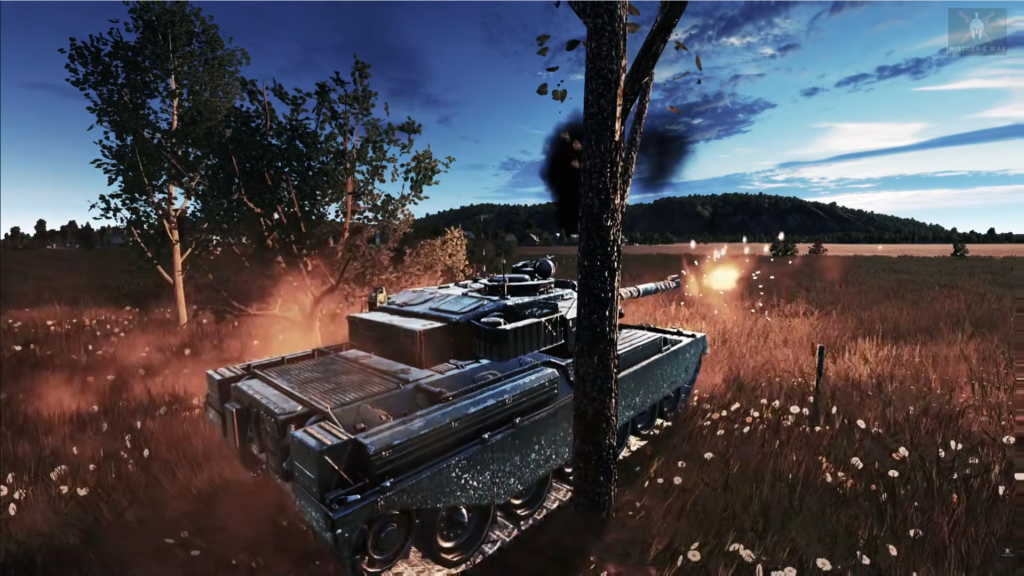
The Chieftain tanks, firing at ranges between 1,000 and 1,500 meters, proved to be highly effective. The Kuwaiti forces successfully hit numerous Iraqi vehicles, forcing the enemy column to halt. However, due to confusion at higher command levels, Lieutenant Colonel Al Wazan received an order to cease fire and return to garrison. After several minutes of consideration, he determined that the order was inappropriate and decided to resume engaging the Iraqi forces.
The Southern Flank – Captain Ali’s Stand
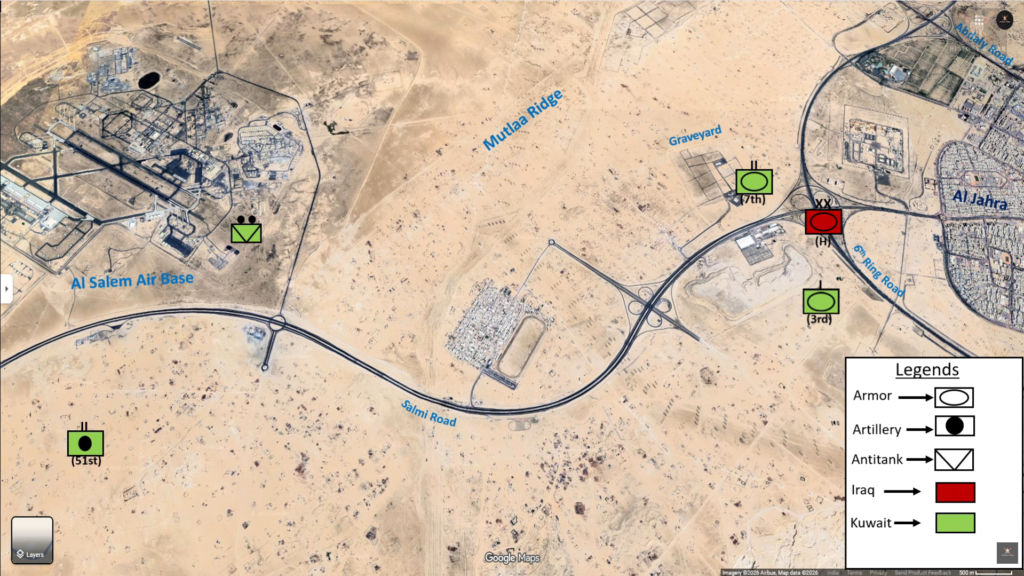
While the 7th Battalion engaged the Iraqi forces from the north side of the Salmi Road, the 8th Battalion arrived on the south side. Captain Ali Abdul Kareem, the commander of the 3rd Company, received orders to move his company across the 6th Ring Road and attempt to free the 80th Brigade, which had been trapped in garrison by the Iraqis. The 6th Ring is a six-lane divided highway with concrete barriers separating the north and south lanes, making it difficult to cross. The Iraqis controlled the two northern bridges, and the only alternative was a long detour to reach the next available bridges to the south. Captain Ali moved forward in his tank, supported by his company, to conduct a personal reconnaissance. However, due to the challenges in locating a suitable crossing site and the continued movement of Iraqi forces south along the 6th Ring Road, the 8th Battalion was eventually instructed to coordinate with the 7th Battalion and halt Iraqi progress along the 6th Ring.
When Captain Ali Abdul Kareem approached the southern flank of the 7th Battalion, Lieutenant Colonel Al Wazan initially did not recognize his forces. He believed the Iraqis were attempting to outflank him from the south and ordered a TOW missile platoon to move in and cover the flank. Lieutenant Colonel Al Wazan later recalled, “You know, I almost killed my friend. I gave the order to prepare to engage, and we had our fingers on the trigger. But then, thank God, we saw the Chieftains and stopped.” This moment turned out to be very fortunate for Captain Ali.
Captain Ali Abdul Kareem positioned his company south of the Salmi Road to cover the two bridges over the 6th Ring Road. After scanning the sector, Captain Ali identified an Iraqi command vehicle located under the southern bridge that crosses the 6th Ring Road. He ordered his crew to fire, but initially, the rest of the company did not respond. Captain Ali then instructed his gunner to fire, successfully destroying the vehicle under the bridge. With this, the Iraqi forces were trapped on the road. Following Captain Ali’s lead, the rest of the company began engaging the enemy. At first, all tanks targeted the same vehicle, but Captain Ali quickly directed his crews to spread their fire across the entire front. The enemy forces, unable to respond aggressively, abandoned their vehicles and sought cover along the road. A tank platoon advanced from the east in an attempt to outmaneuver the Third Company. However, the 3rd company destroyed the enemy platoon.
Helicopters Over Jahra – Air Threat and Survival
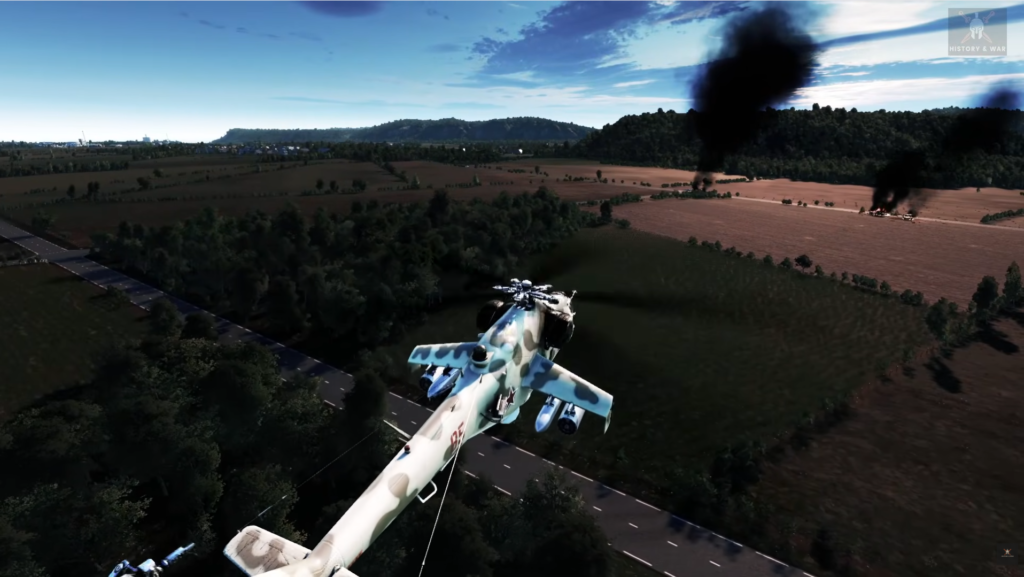
While Captain Ali’s company engaged the Iraqi forces on the road, a group of 30 HIP helicopters flew across his front, heading toward Jahra. Although Captain Ali intended to engage them, he was unable to elevate his gun high enough to target the helicopters. Initially, he was not overly concerned, but his attention was drawn to a HIND helicopter at the rear of the formation. Recognizing the potential threat, he attempted to bring his gun to bear, but could not. The HIND hovered, seemingly preparing to engage, but once again, Captain Ali’s luck was on his side. After hovering for a few minutes, the HIND turned and followed the rest of the formation, allowing Captain Ali’s company to remain unharmed.
The Iraqi forces continued to move down the 6th Ring Road, seemingly unaware of the situation. A convoy of cargo trucks, carrying soldiers, passed in front of the 8th Battalion. The Kuwaiti forces engaged the trucks, prompting several hundred Iraqi soldiers to dismount. However, instead of preparing to fight, most of the soldiers simply sat down by the side of the road, waiting to see how the situation would unfold. Some Iraqi infantry moved into the ammunition camp on Captain Ali’s right flank. His flank tanks came under small arms and RPG fire, but fortunately, they did not suffer any losses. Captain Ali also destroyed a 2S1 self-propelled howitzer still mounted on a transport, further indicating that the Iraqis were unaware of the threat and unable to effectively respond to the 35th Brigade’s fire.
The pace of events along the 6th Ring Road slowed down. The Kuwaiti artillery continued to target the Iraqi soldiers who were sheltering among the wrecks and behind the embankments along the road. Some Iraqi soldiers attempted to surrender, but the Kuwaitis were unable to accept their surrender, as they did not have enough personnel to properly secure prisoners. During this lull in the fighting, the Kuwaitis took the opportunity to send vehicles back to the brigade camp to replenish their ammunition.
Phase II – The Medina Division Enters the Fight
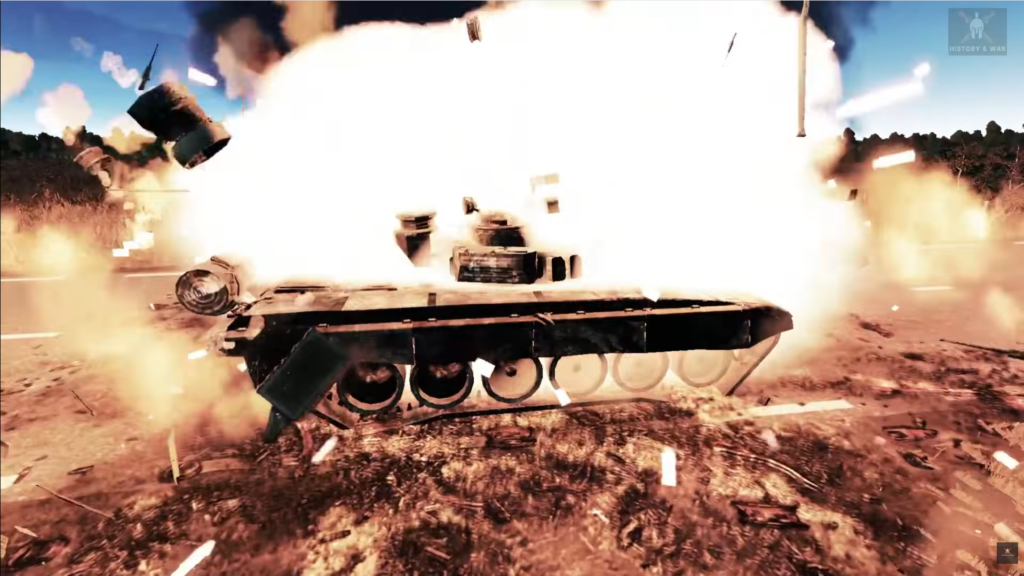
At approximately 11PM, the 35th Brigade received information about an enemy force approaching from the west toward Jahra. The Kuwaitis initially mistook the incoming armored force for a Gulf Cooperation Council reinforcement, as some of the vehicles were flying green flags that were thought to be Saudi Arabian. Captain Khasan walked over to investigate the lead vehicles. As he got closer, he recognized that the force was actually Iraqi, as it was equipped with T-72 tanks and BMP infantry fighting vehicles. However, by this point, Captain Khasan was too committed to turn back. He asked the crew of the lead vehicle for their identity and the location of their commander. Upon receiving their response, he walked back and relayed the information to the brigade. The Iraqi forces continued moving east along the Salmi Road, between the 7th and 8th Battalions. When the lead vehicles turned south onto the 6th Ring Road, the Kuwaitis opened fire. The 7th Battalion turned to engage the enemy along their right flank and rear, while the 8th Battalion engaged a company-sized enemy force in front of them on the 6th Ring Road.
The Iraqi forces encountered by the Kuwaitis were the lead brigade of the Medina Division, which had launched its attack from the west along the Salmi Road. Similar to the Hammurabi Division, the Medina forces were still moving in column on the road and were unaware of the resistance posed by the 35th Brigade. Post-war analysis revealed that there was no direct contact between the Hammurabi and Medina Divisions. In fact, the Medina Division passed by the artillery firing positions and reserve tanks of the 35th Brigade, which were stationed south of the Salmi Road, near the Al Salem Airfield, without engaging them.
The fire from the 7th and 8th Battalions inflicted significant casualties and caused attrition within the lead brigade of the Medina Division. The Kuwaitis were able to capture six prisoners. The brigade operations officer, Lieutenant Colonel Suleiman Al Huwail, interrogated them, and they confirmed that they were members of the Medina Division.
Artillery Duel on the Mutlaa Ridge
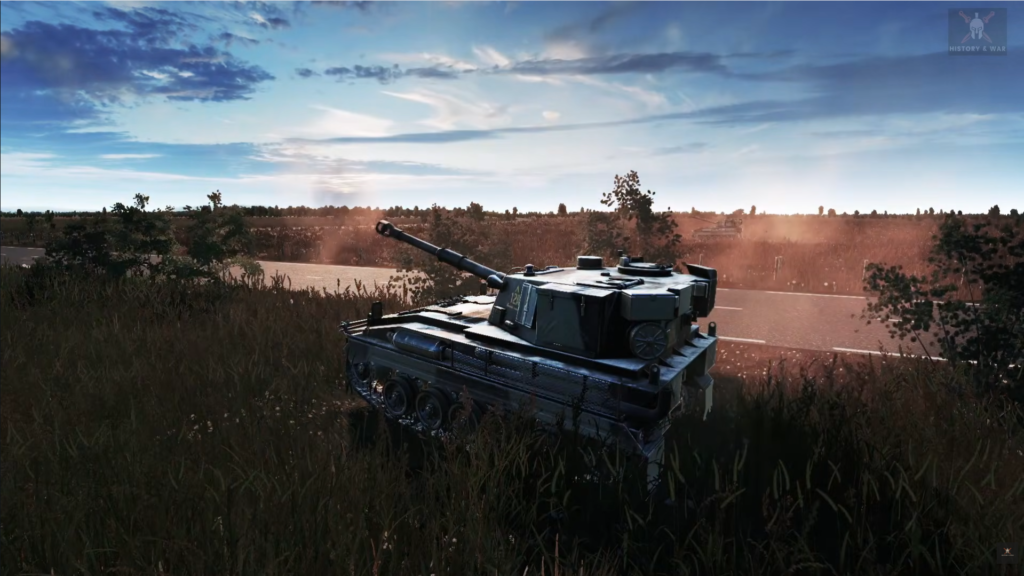
The Iraqi forces withdrew to the west along the Salmi Road and temporarily halted to regroup at a truck-weighing station approximately three kilometers from the positions of the 7th and 8th Battalions. The Kuwaitis quickly responded with effective artillery fire on this location, inflicting additional casualties and causing confusion among the Iraqis. Lieutenant Colonel Fahad Ashush, the commander of the 51st Artillery Battalion, and Captain Khasan Dawud, the commander of the 2nd Battery, were forward acting as observers. The guns were manned by composite crews from various ranks, as the battalion had not yet fully assembled. Major Nabil Saleh, the battalion executive officer, commanded the guns. These artillery strikes forced the Iraqis to continue their withdrawal to the west over the Mutlaa Ridge. However, the Iraqis managed to establish their own artillery positions just north of the Salmi Road on the western end of the Mutlaa Ridge, where they accurately targeted the Kuwaiti positions. Several rounds hit near the brigade command group, seriously wounding Lieutenant Colonel Fahad. As a result, Major Nabil, the battalion executive officer, assumed command of the battalion.
Airpower entering a confused battlefield
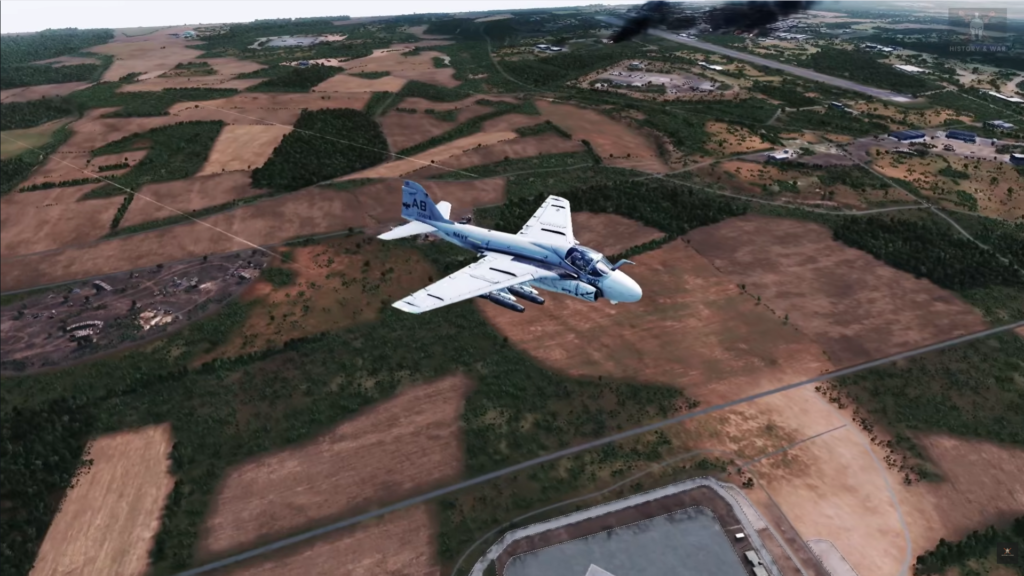
While the 51st Artillery Battalion was engaged with the Medina Division, a Kuwaiti A-4 Skyhawk aircraft appeared in the area. The aircraft flew over the Kuwaiti artillery position twice before attacking the Iraqi columns to the north along the Salmi Road. The artillerymen were concerned about being accidentally targeted, as they were positioned close to the Iraqi forces. Their concerns were justified. Lieutenant Colonel Majed Al Ahmad, an A-4 pilot, conducted one of the airstrikes against the Iraqi forces along both the Abdaly and Salmi Roads. Due to the rapid pace of the invasion, he did not have a clear understanding of the ground situation, nor was there a forward air controller or reliable communications with the ground forces. Under the guidance of the Al Salem Airbase controller, he dropped five MK-82, 500-pound bombs on both the Hammurabi and Medina Divisions. However, he was unaware of the position of the 35th Brigade and could not distinguish the Chieftains from the Iraqi forces during his bomb runs. Lieutenant Colonel Majed targeted the Iraqi columns because he was directed to do so by the airbase controller. After completing his mission, he returned to Al Jaber Airfield but was hit by a surface-to-air missile during his return flight.
Probe and Withdrawal
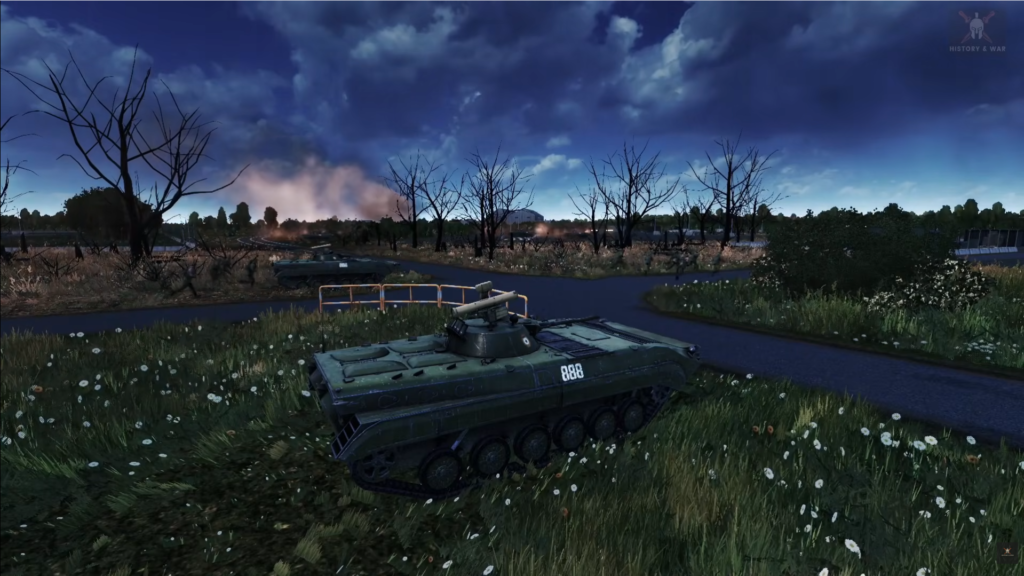
The Iraqi forces attempted to threaten the Kuwaiti artillery positions by advancing with a company of BMP infantry fighting vehicles and firing several 30mm rounds in their direction. Although some rounds struck near the position, the Iraqis were using armor-piercing ammunition rather than high-explosive rounds, which limited their effectiveness. As a result, they failed to score direct hits or inflict any casualties. In response, the Kuwaiti gunners prepared to engage the advancing BMPs with direct fire. Observing this defensive posture, the Iraqis chose not to press their attack further. To reduce their exposure and maintain operational flexibility, the Kuwaiti artillery units relocated to new firing positions further south and east, increasing the distance from the Iraqi forces and minimizing their vulnerability.
Ammunition Running Low – Crisis of the Brigade
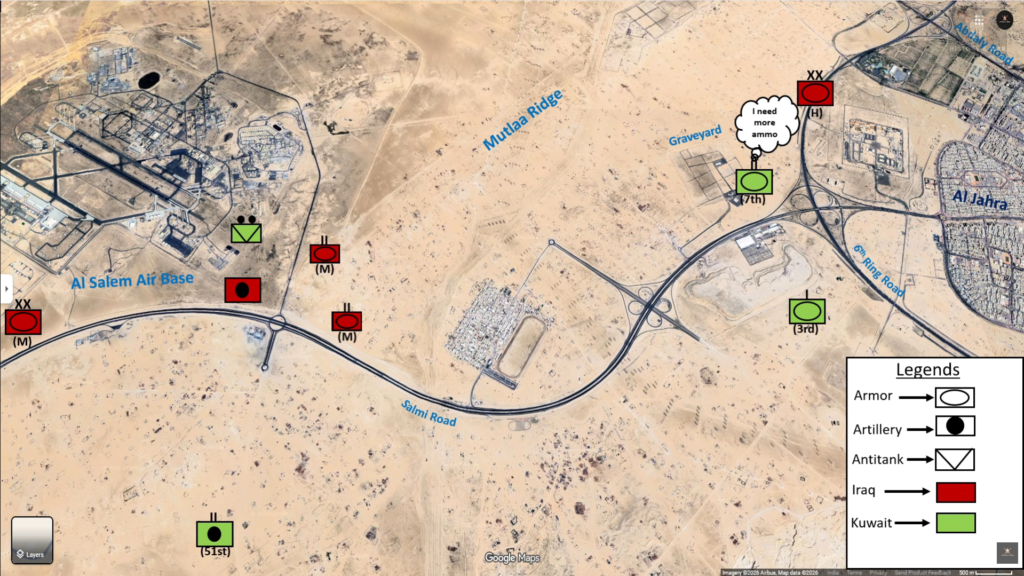
The Medina Division reorganized and launched a renewed offensive, this time with two brigades deployed in a coordinated assault. As the engagement intensified, unit commanders reported to Colonel Salem that their ammunition supplies were critically low, particularly for tank main guns. Many tanks had only two or three rounds remaining. Recognizing the severity of the situation, Colonel Salem requested reinforcements and logistical support from headquarters. However, no additional resources were available. Given the risk of being encircled between the Hammurabi and the now fully deployed Medina Divisions, Colonel Salem ordered a tactical withdrawal to new defensive positions south of the Salmi Road. To facilitate the maneuver, the 8th Battalion provided covering fire while the 7th Battalion executed the initial withdrawal.
The 51st Artillery Battalion repositioned approximately ten kilometers to the south and prepared to resume fire. However, their engagement was delayed as forward observers moved into position and further hindered by communication difficulties. Major Nabil encountered challenges in contacting the brigade commander to coordinate fire support for the repositioning maneuver. Meanwhile, Captain Nasser, assumed command of the two reserve tank platoons and prepared to launch a counterattack. Once communication was restored, the attack was deemed unnecessary and subsequently canceled.
As his company provided cover for the 7th Battalion’s repositioning, Captain Ali stood atop his turret to seek relief from the intense heat. Without any prior instruction, his driver unexpectedly moved the tank forward by approximately ten to twenty meters—an action he had never taken without explicit orders. Moments later, an Iraqi main gun round struck the exact location they had just vacated. Once the 7th Battalion had established its new position, the 8th Battalion began its own movement. During this process, Captain Ali was once again misidentified as an Iraqi unit and narrowly avoided being engaged by friendly forces.
The brigade continued its withdrawal southward to avoid encirclement by converging Iraqi forces. During the repositioning, higher headquarters issued a directive instructing the unit to move toward the 15th Brigade camp for resupply and continued defense. However, due to limited battlefield awareness and unreliable communication, higher headquarters was unable to provide precise guidance. Joint headquarters ultimately authorized Colonel Salem to take whatever action he deemed necessary.
Tactical Withdrawal to the Saudi Border
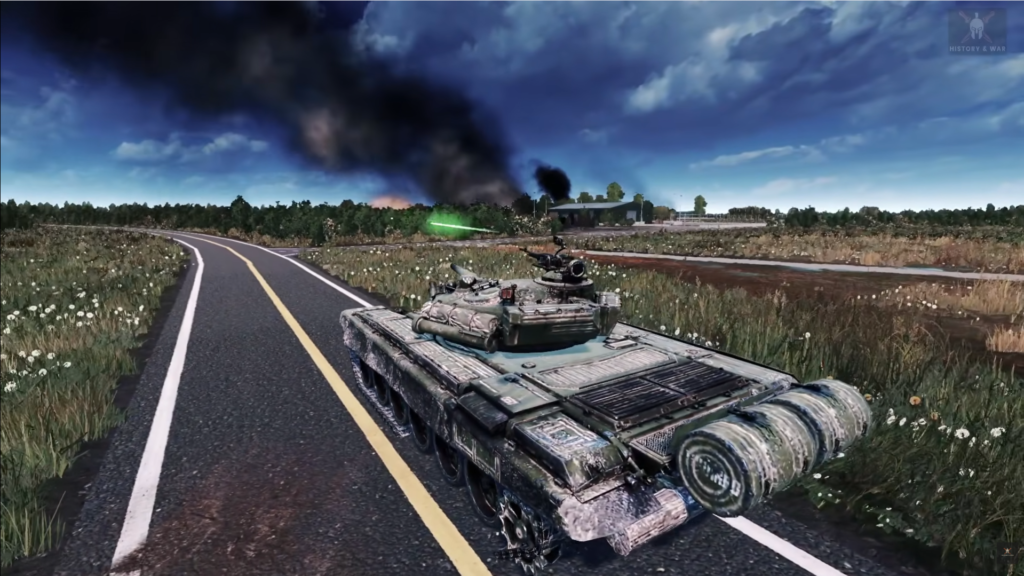
Assessing the situation, Colonel Salem opted to withdraw further south, positioning the brigade along the Saudi border to secure its flanks and rear from potential encirclement during the night. By approximately 4:30 PM, the brigade had reached its new defensive position and remained there overnight. Lieutenant Colonel Ahmad Al Wazan, accompanied by a reconnaissance element, crossed into Saudi Arabia to establish contact with the border police and inform them of the brigade’s status. The following morning, the entire brigade crossed into Saudi territory. Shortly after the last units withdrew, Iraqi aircraft launched an airstrike on the now-abandoned Kuwaiti positions.
The Saudi forces assisted the brigade in reorganization and resupply. While some units, such as the 7th Battalion, had managed to maintain adequate water supplies throughout the engagement, others were severely impacted by shortages, and the entire brigade suffered from exhaustion. At one point, due to the chaotic nature of the conflict and the rapid pace of events, both Kuwaiti and Iraqi soldiers unknowingly purchased water from the same roadside vendor, standing in line and paying in an orderly manner before returning to their respective positions.
Aftermath – Delay, Survival, and Strategic Consequence
The 35th Brigade effectively inflicted significant casualties on the Iraqi forces and successfully delayed the advance of two divisions. Had the Kuwaiti Army been able to coordinate a unified and structured defense across its entire force, it is possible that they could have prolonged the Iraqi advance sufficiently to allow the Gulf Cooperation Council forces time to mobilize and provide reinforcements.
© 2026 History and War
Author: Jishu Roy
Unauthorized reproduction of this content is prohibited.