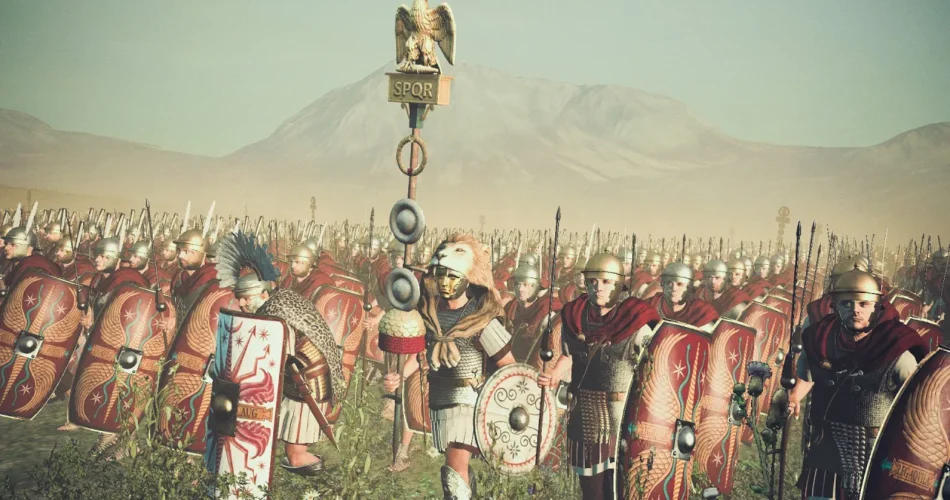
The Marcomannic Wars: Crisis on the Danube
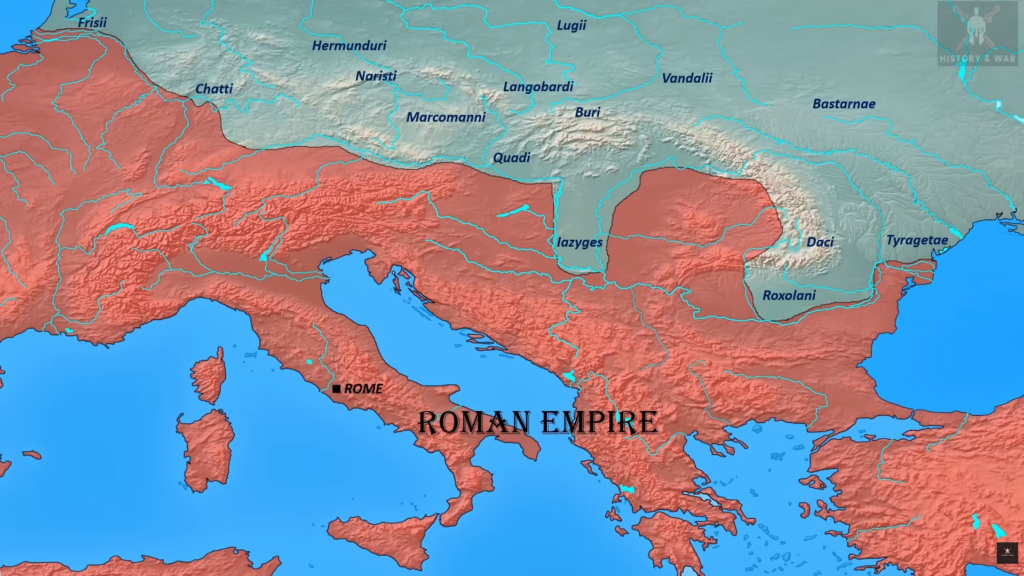
The Marcomannic Wars, which took place between AD 166 and 180, were a prolonged series of military campaigns fought between the Roman Empire and a coalition of Germanic and Sarmatian tribes. Chief among these were the Marcomanni and the Quadi, along with the Sarmatian Iazyges. Centered along the Empire’s northeastern frontier—primarily the Danube River—these conflicts also drew in other groups such as the Gothic peoples and various smaller Germanic and steppe tribes. These wars consumed a significant portion of Emperor Marcus Aurelius’s reign and posed one of the greatest external threats Rome had faced in centuries. In fact, for the first time in nearly 270 years, hostile forces penetrated deep enough to threaten the Italian heartland itself. However, our understanding of the precise course of the conflict remains limited. Much of what transpired over the thirteen years of warfare is obscured by the fragmentary nature of our sources. Still, what is certain is that the Roman response was unprecedented: never before—or after—did Roman legions advance so far toward what is now the territory of modern Poland.
Barbarian Migration and the Storm from the North
Historians generally attribute the outbreak of the so-called Marcomannic Wars to large-scale migration and social transformation occurring across Central Europe during the first and second centuries AD. At that time, the region was home to a wide array of tribal societies often labeled as “barbarian” by Roman sources. One of the most significant developments was the gradual migration of the Gothic and Gepid peoples, who are believed to have moved from their ancestral homelands in Scandinavia toward the Black Sea region. This migration triggered a wider chain reaction, setting off a series of population displacements and violent tribal conflicts that rippled across much of Central Europe. As these migrating groups—particularly the Goths—pushed into new territories, they displaced existing populations, especially Germanic tribes. Pressured by this upheaval, many of these tribes sought refuge and new land, increasingly directing their attention toward the wealthier, more stable provinces of the Roman Empire. This growing pressure along Rome’s northern frontier helped set the stage for the Marcomannic Wars.
A Frontier Under Pressure
The Marcomannic Wars involved numerous tribes of diverse ethnic backgrounds inhabiting regions along the Danube frontier. Among these, the Germanic Marcomanni and Quadi—after whom the wars are named—and the Sarmatian Iazyges played the most prominent roles. By the beginning of the first millennium, the Marcomanni had established a relatively strong and organized state in the areas corresponding to present-day Bohemia and Moravia. Their strategic position and growing power had long drawn Roman attention. In fact, Emperor Augustus had once planned a campaign against them, but the devastating Roman defeat in the Teutoburg Forest in AD 9 forced him to abandon his expansionist ambitions in the region. Roughly eighty years later, during the reign of Emperor Domitian, Rome once again clashed with the Marcomanni and Quadi—this time in a defensive campaign fought between AD 89 and 92. Over time, the proximity of these tribes to the Roman Empire accelerated their social and cultural development. Through careful observation of their more advanced neighbors, the Marcomanni improved their craftsmanship and gradually adopted elements of Roman military practice—making them far more formidable opponents by the time of the wars under Marcus Aurelius.
War in the East: Death Marches with the Legions
The invasions by the Germanic and Sarmatian tribes struck the Roman Empire at a particularly inopportune time. Between AD 162 and 166, Rome was already engaged in a difficult and costly war in the East against the Parthian Empire. The conflict began unfavorably for Rome, as Parthian forces launched a successful offensive into the Roman province of Syria, defeating unprepared local legions. However, the tide soon turned. Between AD 163 and 166, Roman counteroffensives led to significant gains: the capture of Armenia and northern Mesopotamia, and even the destruction of the Parthian capital, Ctesiphon. Yet these victories came at a steep price. A deadly epidemic—what would later be known as the Antonine Plague—swept through the returning legions, ultimately killing an estimated 7 to 8 million people across the Empire. The outbreak forced Roman commanders to halt the campaign and accept peace terms that secured only the restoration of Armenia as a Roman client state. The crisis did not end there. Italy itself was struck by famine, further straining the Empire’s resources. At such a moment of vulnerability, the last thing Emperor Marcus Aurelius needed was a new war along the Danube frontier. Unfortunately, he had little choice. While the exact sequence of events beyond the Danube remains unclear, it is likely that the withdrawal of Roman garrisons for the Parthian campaign created a power vacuum. This either provoked direct aggression from across the frontier or triggered a wave of intertribal violence that, in turn, pushed a coalition of barbarian forces—likely of medium size—into the Roman province of Pannonia.
First Breach
By the early AD 160s, growing instability along the Rhine and Danube frontiers placed increasing strain on the Roman Empire’s northern defenses. Several Germanic tribes, responding to pressures both internal and external, began launching raids into Roman territory. Between AD 162 and 165, the Chatti and Chauci—tribes from the regions of central and northern Germania—carried out incursions into the provinces of Raetia and Germania Superior. These attacks were ultimately repelled by Roman forces, but they marked the beginning of a broader wave of unrest along the Empire’s northern borders.
The Langobardi and Obii Invasion
Around AD 166 or early 167, a medium-sized invasion breached the Roman frontier in Pannonia Superior. Several thousand warriors from the Langobardi and Obii—tribes originating from regions well beyond the immediate border zone—crossed into Roman territory. These groups came from areas distant from the Danube line, which was typically occupied by the Marcomanni (in the area of modern-day Czech Republic), the Quadi (across from the Danube bend), and the Sarmatian Iazyges (in the plains between the Danube and the Carpathian Mountains). Emperor Marcus Aurelius responded with decisive force. The governor of Pannonia Superior, Iallius Bassus, led the counter-offensive. Roman forces, including detachments from Legio I Adiutrix under the command of Candidus, and cavalry from the elite Ala Ulpia contariorum led by Marcus Macrinius Avitus Catonius Vindex, quickly defeated the invaders. This early engagement marked a warning sign of the larger conflicts to come, as the frontier grew increasingly unstable and tribal pressure intensified.
Ballomarius and the Illusion of Peace
Despite the swift Roman victory, the incursion marked the beginning of a broader crisis along the Danubian frontier. Although the Langobardi and Obii were quickly defeated by Governor Bassus, their unexpected aggression sent shockwaves through the region. Fearing Roman retaliation, several client kingdoms—nervously watching from nearby—were compelled to act diplomatically. Eleven of the middle Danubian tribes appointed the Marcomannic king Ballomarius as their spokesman. He appeared before Bassus to sue for peace, claiming both his own and his fellow tribes’ continued loyalty to Emperor Marcus Aurelius. Ballomarius dismissed the Langobardi and Obii invasion as an isolated and unauthorized act—a “freak aberration” that did not reflect the intentions of Rome’s allied tribes. At the time, the Antonine Plague had confined Marcus Aurelius to Rome, delaying his ability to respond in person. In the emperor’s absence, Bassus agreed to a provisional peace, holding the situation in check until imperial leadership could fully address the unfolding tensions.
The Emperors March North
In the spring of AD 168, Emperor Marcus Aurelius personally traveled to inspect the Danube frontier. It was clear to all that this was not a mere administrative visit—it was the first step toward renewed military conflict. He was joined by his co-emperor, Lucius Verus, as well as several high-ranking officials and trusted military leaders. Among them was Furius Victorinus, the experienced Praetorian Prefect who had previously accompanied Lucius during the eastern campaign against the Parthians. The second Praetorian Prefect, Marcus Macrinius Vindex, also joined the expedition—an unusual move that likely meant Rome itself was left temporarily without a garrison during the emperors’ absence. Marcus was further supported by a group of senior generals, including Aufidius Victorinus, Dasumius Tullius Tuscus, and Pontius Laelianus. The latter two had prior experience along the Danube frontier. These commanders did not hold specific military commands at this point; rather, they accompanied the emperor in the role of comites Augusti—imperial companions who offered counsel and support during the coming campaign.
The Death of Lucius Verus
That spring, Marcus Aurelius and Lucius Verus departed Rome and established their headquarters in Aquileia, a key military and logistical hub in northern Italy. From there, they set about strengthening the Empire’s defenses in Italy and Illyricum, including the raising of two new legions—Legio II Italica and Legio III Italica—to bolster the frontier forces. The emperors then led their army across the Alps into Pannonia, signaling Rome’s renewed commitment to securing the Danube border. The advance of the imperial army reportedly had an immediate effect: the Marcomanni and the Victuali, confronted by Rome’s show of force, chose to withdraw and offer pledges of peaceful conduct. With the immediate threat seemingly contained, Marcus and Lucius returned to Aquileia to establish their winter quarters. However, in January of AD 169, tragedy struck. While traveling, Lucius Verus suffered a sudden stroke and died shortly afterward. Marcus Aurelius then returned to Rome to oversee his co-emperor’s funeral rites and his formal deification, a final honor in keeping with imperial tradition.
War on Two Fronts
In the autumn of AD 169, Emperor Marcus Aurelius resumed military operations along the Danube frontier, this time accompanied by his son-in-law and trusted general, Claudius Pompeianus. To sustain the growing costs of the war, Marcus took the unusual step of auctioning off imperial possessions—a measure historian Michael Kulikowski describes as the only realistic alternative to imposing new taxes during a time of crisis. The main target of this renewed campaign was the Iazyges, a Sarmatian people who inhabited the plains between the Danube River and Roman Dacia. Early in the campaign, the Iazyges dealt a significant blow to Roman command by killing Marcus Claudius Fronto, the governor of Lower Moesia. While the Roman army focused on the Iazyges, other tribes exploited the distraction. In the east, the Costoboci crossed the Danube and launched devastating raids deep into Roman territory. They ravaged Thrace and advanced as far south as Eleusis in Greece, where they destroyed the sacred sanctuary of the Eleusinian Mysteries—one of the most important religious sites in the ancient world. Despite these setbacks, Roman forces gradually regained control of the Balkan provinces, with crucial logistical and naval support from the Adriatic port of Salonae in Dalmatia.
The Battle of Carnuntum: Rome’s Catastrophic Defeat
A far more serious threat to the Roman Empire emerged from the west. Under the leadership of King Ballomarius, the Marcomanni forged a coalition of Germanic tribes and launched a major invasion across the Danube. Near the Roman military hub of Carnuntum in Upper Pannonia—headquarters of Legio XIV Gemina—the invaders inflicted a devastating defeat on Roman forces. This confrontation, often referred to as the Battle of Carnuntum, ended in disaster for Rome. The Roman army, composed largely of inexperienced troops, was heavily outmatched. Despite fighting with determination, the legions were unable to withstand the onslaught of the seasoned Germanic warriors. As many as 20,000 Roman soldiers were killed, marking one of the most catastrophic defeats of the war. The situation quickly spiraled into a crisis. Large numbers of Germanic and Sarmatian tribes overwhelmed the Danube frontier, breaching Rome’s defensive fortifications and penetrating deep into imperial territory. These invasions brought widespread destruction, with entire towns and settlements ravaged. Tens of thousands of Roman civilians were captured and carried across the Danube, where their labor and skills were used to strengthen the economies of the invading barbarian states. During this phase of the conflict, the barbarians occupied key Roman provinces, including Pannonia, Noricum, and Raetia, and even crossed the Alps into northern Italy. For the first time since the invasions of the Cimbri and Teutons in 105 BC, the Italian heartland itself faced the threat of foreign invasion.
Rome’s Darkest Hour: Plague, Famine, and Desperation
The early months of AD 170 marked the height of the Marcomannic crisis. Barbarian forces, having crossed the Alps, captured and destroyed the city of Opitergium (modern Oderzo) and soon after laid siege to Aquileia, a key Roman stronghold in northern Italy. An attempt to relieve the city was led by Titus Furius Victorinus, the Praetorian Prefect. However, the mission ended in failure. Victorinus was either killed in battle or succumbed to the Antonine Plague, as sources differ on the cause of his death. The news of Aquileia’s siege and Victorinus’s death, combined with the still-raging plague and a recent famine, caused widespread panic in Rome. The unexpected success of the initial Germanic invasion had even caught the invaders off guard, leaving them uncertain about their next move. Their withdrawal back across the Alps, likely to regroup and plan further action, provided Marcus Aurelius with a crucial—if brief—breathing space in which to organize a counter-offensive. Faced with a severe military manpower shortage, Marcus took extraordinary steps. A mass conscription effort was launched across Italy, drawing not only from traditional sources but also enlisting gladiators, slaves, and even convicted criminals into the legions. To further bolster defenses, Marcus redeployed troops from Britain to the Italian front. The financial strain of the war also required unprecedented action. With state coffers depleted, Marcus financed the defense of the Empire personally, selling or pledging imperial valuables—including jewelry, silverware, and other palace possessions. In an effort to restore public morale, Marcus authorized the performance of extraordinary religious rites, such as the lectisternia—ceremonies reserved by Roman tradition for moments of grave national peril. These measures served not only to appease the gods, but to reassure the Roman people during one of the most critical periods of his reign.
Rome Strikes Back
In response to the Marcomannic invasion, Marcus Aurelius reoriented the Empire’s strategic priorities. Reinforcements were transferred from other frontiers, reflecting the seriousness of the northern threat. Supreme military command was entrusted to Tiberius Claudius Pompeianus, the emperor’s son-in-law, with the capable Publius Helvius Pertinax—the future emperor—serving under him. To bolster defenses, Marcus established a new military zone known as the Praetentura Italiae et Alpium, aimed at protecting northern Italy and the Alpine passes. Additionally, the Danube fleet was reinforced to prevent further incursions by river. The critical city of Aquileia was successfully relieved, and by the end of AD 171, barbarian forces had been expelled from Roman territory. As the campaigning season drew to a close that autumn, Marcus set up court at Carnuntum, a major Roman base on the Danube, where he received diplomatic embassies from various tribal groups. The Quadi, positioned between the Marcomanni to the west and the Iazyges to the east, agreed to terms of peace. In their treaty, they promised to supply provisions to Roman forces and to prevent the movement of hostile tribes through their territory—essentially serving as a buffer state. Several other defeated groups, likely including the Hasdingi Vandals and the Lacringi, were permitted to settle within the Roman Empire. These peoples were relocated to interior provinces, where they could be monitored and integrated under imperial supervision. By the end of the campaign, the situation appeared to be stabilizing. Marcus had successfully secured a temporary peace with the Quadi, keeping them out of the conflict for the time being. For the moment, it seemed as though Rome was returning to business as usual along the frontier.
A Heavy Price: The Defeat in Bohemia
In AD 172, the strategic value of Marcus Aurelius’s treaty with the Quadi became fully apparent. With both the middle Danube bend and the Dacian frontier stabilized, Marcus was free to shift his focus toward a renewed offensive across the Danube—this time aimed directly at the Marcomanni, located in the region of modern-day Bohemia. Although detailed accounts of the campaign in Pannonia are limited, the surviving sources make one fact clear: when Roman forces crossed the river to engage the Marcomanni, they suffered a major defeat. Reports estimate that 20,000 Roman soldiers were killed, making it one of the most serious losses of the war. Among the fallen was Marcus Macrinius Vindex, one of the Empire’s leading military commanders. The precise location of this devastating loss remains uncertain. Some accounts suggest that Marcus Aurelius was not personally present at the scene of the battle. Instead, his forces may have been held back or delayed in Upper Pannonia, while the actual defeat occurred further down the Danube, possibly at the hands of a concentrated Germanic counteroffensive.
Horsemen of the Steppes: The Iazyges Join the War
Whatever the precise circumstances of the Roman defeat, two key factors appear to have significantly strengthened the Marcomannic position. First, while the Quadi did not openly violate their treaty with Marcus Aurelius, they acted as benevolent neutrals toward their Germanic kin. Though they avoided direct military engagement, they provided sanctuary and support to the Marcomanni. This ambiguous behavior created confusion among Roman commanders, who struggled to determine whether the Quadi remained trustworthy allies or covert participants in the conflict. More consequential, however, was the appearance of a powerful new ally on the side of the Marcomanni: The Sarmatians. Specifically, the Iazyges—the most warlike and mobile branch of the Sarmatian peoples—entered the conflict. Occupying the Hungarian Plain (between the Danube and the Carpathians), the Iazyges brought with them a long-standing reputation as formidable cavalry raiders from the Eurasian steppes. Their sudden alignment with the Marcomanni revealed a troubling new reality for Rome: Marcus now faced not only a pan-Germanic coalition, but also a broader alliance that united Germanic tribes and nomadic Sarmatian horsemen. This new phase of the war would demand an even more vigorous and calculated imperial response.
The Thunderbolt Emperor: Faith, Fear, and Propaganda
Despite earlier setbacks, Marcus Aurelius had by this point earned the deep trust and admiration of his troops. His leadership, calm under pressure, and stoic discipline led some soldiers to believe he possessed divine favor. In one widely circulated story, Marcus was said to have called down a thunderbolt from the heavens to destroy a barbarian siege engine—an event later commemorated on Roman coinage. Such tales enhanced his reputation and served as powerful imperial propaganda.
Following this boost in morale, the Roman army launched a highly effective campaign, reportedly inflicting at least one major defeat on the Marcomanni. Roman forces advanced deep into Moravia and western Slovakia, north of the Danube bend, striking at the heart of Marcomannic territory.
The scale of the Roman advance forced the Marcomanni to seek peace. The terms imposed by Marcus were strict and punitive. They included:
The surrender of hostages,
The return of all Roman prisoners and deserters,
A ban on large tribal assemblies,
A complete embargo on trade with the Roman Empire, and
The creation of a ten-mile-wide demilitarized zone along the northern bank of the Danube.
While the military success was substantial, the propaganda value may have exceeded the actual territorial gains. Nevertheless, both Marcus and his son, Commodus, adopted the honorific title “Germanicus” before the start of AD 173, a formal recognition of victory over the Germanic tribes.
The Sarmatian War Begins: Steel Against Steppe
With the Marcomanni decisively weakened and the Quadi maintaining a tense and reluctant peace, Marcus Aurelius turned his attention to a growing threat—the Iazyges, the most aggressive of the Sarmatian tribes. Recognizing the scale of the challenge, Marcus expanded his operational reach. While retaining his primary headquarters at Sirmium, he also established forward command bases at Vindobona (modern Vienna) and Brigetio (near modern Komárom, Hungary), positioning himself closer to the heart of Sarmatian territory. A brutal and determined campaign against the Iazyges followed. The Roman strategy aimed not only to repel their raids but to break their military power entirely, addressing once and for all the persistent threat they posed along the middle Danube frontier.
Ariogaesus and the Quadi Revolt
It was likely the relentless Roman campaign against the Iazyges, coming so soon after the humiliation of the Marcomanni, that finally pushed the Quadi beyond their limits. The internal balance of power shifted, and the pro-Roman king Furtius—installed by Marcus Aurelius as part of a diplomatic settlement—was deposed. In his place, the Quadi elevated Ariogaesus, a leader aligned with Sarmatian interests. This act was a clear violation of the treaty with Rome and constituted, in effect, a declaration of war. Marcus, typically restrained in matters of emotion, broke with his own Stoic principles. Enraged by the betrayal, he placed a bounty on Ariogaesus’s head, an exceptional move that signaled the seriousness of the renewed conflict.
The Battle on the Frozen Danube
The Quadi soon joined forces with the Iazyges, launching a new raid into Pannonia. However, the apparent strength of their alliance may have bred overconfidence. The most notable episode of this campaign was the Battle on the Frozen Danube—an extraordinary engagement that became legendary in Roman military history. As the Iazyges attempted to return across the ice-bound Danube with their spoils, Roman forces, having anticipated their route, launched a surprise attack. In a dramatic confrontation reminiscent of Alexander Nevsky’s battle on the ice in AD 1242, but on a much grander scale, the Romans struck with perfect timing, annihilating the retreating Sarmatian force. The Sarmatian cavalry, known for their power and speed, mounted a desperate countercharge. But the icy surface betrayed them—horses lost their footing, and their formations collapsed. Roman infantry squares, disciplined and well-positioned, held firm and repelled all assaults, turning the icy battlefield into a decisive Roman victory.
The Rain Miracle: When the Gods Answered Rome
One of the most famous and widely reported events of the Marcomannic Wars is the so-called “Rain Miracle,” which likely took place during the summer of AD 174. According to multiple ancient sources, the Roman army—allegedly under the direct command of Marcus Aurelius—found itself in a precarious situation. Surrounded by overwhelming Quadi forces on flat, open terrain with no access to water, the legionaries suffered terribly under the intense heat and drought. At the height of their desperation, a sudden and heavy downpour began. The rain was so intense that soldiers were reportedly able to fill their helmets with water, drinking and refreshing themselves after prolonged suffering. For a moment, the army was so relieved by the chance to drink that the battle seemed forgotten.
At that critical juncture, the Quadi launched a mass assault, hoping to catch the Romans in a moment of vulnerability. Furious hand-to-hand combat broke out. But the morale of the Roman troops, revived by what they interpreted as divine intervention, was significantly elevated. Many soldiers believed the gods had come to their aid. Ancient historian Cassius Dio vividly describes the chaos that followed: a blur of rain, blood, and battle, with Roman soldiers so eager to drink that they continued gulping water even while fighting, some reportedly swallowing blood along with the rain. Then came the second phase of the miracle. A series of hailstorms and lightning strikes descended upon the battlefield, further disrupting the Quadi’s attack. These natural phenomena scattered the enemy ranks far more effectively than Roman steel. Unable to maintain cohesion, the Quadi broke and fled, leaving the field to the victorious legions. Though embellished by time and interpretation, the “Rain Miracle” became a powerful symbol of divine favor and Roman resilience, widely commemorated in imperial propaganda, art, and coinage.
The so-called “Rain Miracle” was later interpreted by Roman soldiers and observers in differing ways, reflecting the Empire’s religious diversity. Pagan soldiers viewed the sudden storm as a sign of divine favor—proof that the gods watched over Marcus Aurelius. In contrast, Christian believers interpreted the event as an act of intervention by the Christian God, further strengthening the belief that their faith was uniquely powerful even within a polytheistic world. Following this extraordinary episode, Marcus continued his campaign against the Quadi with relentless pressure, though without engaging in any major pitched battles. The fighting during the remainder of AD 174 was marked by slow, grinding attrition—a test of endurance rather than dramatic conquest. The Quadi, now isolated, hoped for external relief—either a renewed uprising by the Marcomanni or intervention by the Iazyges—but neither materialized.
Attrition and Submission: The Quadi Collapse
By the end of the year, the Iazyges themselves were under such pressure that their internal peace faction temporarily gained dominance. This shift left the Quadi even more vulnerable. By early AD 175, the Quadi finally sued for peace, accepting terms nearly identical to those previously imposed on the Marcomanni. Marcus granted the peace but made a calculated distinction between the two tribes. While the Quadi received the same formal terms, he eased certain restrictions on the Marcomanni—reopening limited trade and reducing the width of the demilitarized zone on the Danube’s northern bank from ten miles to five. This was a deliberate political message: a classic Roman strategy of rewarding cooperation. The Marcomanni, having complied earlier, were shown leniency. The Quadi, by contrast, were reminded that their defiance had cost them—and that Roman peace came with conditions.
War Without Mercy
By April of AD 175, the Quadi had formally signed a peace treaty and were effectively removed from the military equation. This allowed Marcus Aurelius to focus the full might of the Roman war machine on his remaining adversary: the Iazyges. The emperor now declared a new and uncompromising war aim—the complete extermination of these persistent and elusive nomads who had long harassed the Danubian frontier. Although few detailed records survive regarding the final phase of the campaign in AD 174–175, it is clear that Roman forces made significant advances. So effective was their pressure that by June 175, Zanticus, king of the Iazyges and once a leading proponent of war, approached Marcus with a desperate request for peace.
Interrupted Victory: Avidius Cassius and the Eastern Crisis
Marcus, still determined to carry out his hardline policy, was prepared to reject the offer outright and send Zanticus’s envoys away with public humiliation. However, before the dismissal could occur, sensational news from the East reached the emperor: Avidius Cassius, governor of Syria and one of Rome’s most powerful generals, had declared himself emperor. The usurpation by Cassius instantly changed the strategic landscape. Recognizing the urgency of the crisis, Marcus abandoned his extermination policy, albeit with deep frustration. To secure the northern frontier quickly, he granted the Iazyges peace on the same terms as the Quadi, with one key exception—they were denied settlement rights within Roman territory. Although the official narrative in Rome portrayed the conclusion of the war as a total Roman victory, Marcus privately acknowledged that the outcome was incomplete. On the very cusp of final triumph in the north, he had been forced to shift focus to a new crisis in the East. Still, the Senate and army honored his achievements: Marcus was acclaimed imperator for the eighth time and awarded the title “Sarmaticus” in celebration of his victories.
The Storm Returns
The peace of AD 175 proved anything but tranquil. North of the Danube, Roman garrisons pressed heavily upon the Marcomanni and the Quadi. They were forbidden to cultivate their own land, denied the right to graze their cattle, and even barred from seeking new homes in calmer regions. It was no accident. This was Rome’s strategy — to grind down the tribes, to break their spirit, and to bend them into the mold of Roman rule. But oppression breeds defiance. The Marcomanni and the Quadi, weary of humiliation and hardship, rose in fury. What began as unrest soon flared into full-scale rebellion. By AD 177, the frontier once again burned — and the barbarian storm fell upon Rome with unrelenting force.
The Philosopher in Armor
By the beginning of AD 178, Marcus Aurelius reached a reluctant conclusion — once again, his presence was required at the troubled Danube frontier. The revolt of Avidius Cassius had robbed him of a decisive victory in Germany, and he had hoped the generals he left behind, the Quintilii brothers, would only need to conduct minor operations to maintain order. But peace proved fleeting. The Marcomanni and Quadi used the two years of calm to prepare for renewed conflict. This time, they avoided large, open battles and instead turned to guerrilla tactics — striking suddenly, retreating swiftly, and wearing down the Roman defenses. In response, the Roman legions crossed the Danube, advancing deep into enemy territory and fortifying strongholds within the so-called demilitarized zone. Yet despite what the historian Cassius Dio described as the “shrewdness, courage, and experience” of the Quintilii, the war dragged on. The rebellion could not be crushed without the emperor himself once more taking command.
Beside the renewed Marcomannic threat, there was also serious unrest across the empire in AD 176–178. Whether these disturbances were linked to the Marcomanni directing far-flung risings, or whether they were simply local flare-ups, is unclear. What is certain, however, is that these years saw a sharp rise in irregular warfare — brigandage, piracy, and raids that destabilized Rome’s provinces. Banditry was hardly new to the Roman world, but its scale during this period was unprecedented. In Dalmatia, Didius Julianus fought to contain robber bands entrenched in the rugged mountains of Albania and Montenegro. In Thrace, conditions grew so serious that Valerius Maximianus — a celebrated hero of the Marcomannic Wars — was dispatched in AD 176 with a strong force of vexillationes to restore order. The turmoil is also reflected in the career of Pertinax. Within just a few years, he was rapidly shifted between critical posts: first governor of Upper Moesia, then Lower Moesia, and finally commander-in-chief in Dacia. These frantic redeployments reveal just how stretched and unstable Rome’s defenses had become.
Moreover, new tribes, previously absent from the conflicts of AD 167–175, now emerged as Rome’s adversaries, most notably the Hermunduri. Additional evidence of the strain imposed on the empire by the turbulent northern frontier can be seen in Marcus Aurelius’ economic measures. During this period, the emperor oversaw the continued devaluation of the currency, and the traditional honorific titles Germanicus and Sarmaticus disappeared from coinage issued in AD 177. These changes make it clear that Marcus Aurelius was deeply troubled by the unfolding situation along the Danube.
On 3 August of AD 178, Marcus Aurelius, accompanied by his son Commodus, departed Rome for the northern frontier on what was officially designated the secunda expeditio Germanica — the Second Germanic Campaign. Perhaps aware that he might never return to the Eternal City, Marcus undertook a series of symbolic acts rooted in ancient Roman tradition. He urged the Senate to provide funds for the campaign and performed careful ceremonial preparations, including the ritual casting of the sacred spear, kept in the Temple of Bellona, into the ground — a symbolic act conducted on territory regarded as hostile. These gestures underscored both the seriousness of the conflict and the emperor’s role as a religious as well as military leader.
Marcus Aurelius brought with him to the Danube most of his key advisers, including Claudius Pompeianus, Vitrasius Pollio, and Bruttius Praesens. Another notable consular in the party was Iunius Maximus. With Pertinax and Valerius Maximianus already active on the frontier, and the dependable Aufidius Victorinus serving as proconsul in Asia, Marcus could rely on a seasoned and capable team to manage the campaign ahead.
But what exactly was Marcus’ objective? Remarkably, it appears that he intended to transform the territories of the Quadi and Marcomanni into a new, permanent Roman province — his own version of Trajan’s Dacia. Some sources also suggest that he considered establishing a second province in part of Sarmatian territory. It is important to emphasize his intentions carefully. Whereas annexation had not been part of his strategy during the First Germanic War of AD 167–175, this time Marcus viewed it as the most effective long-term solution. His plan was not driven by greed for land; rather, it was conceived with purely military and administrative aims. By incorporating these border regions into the empire, Marcus sought to eliminate any tribes that could pose a future threat to Rome.
Upon his arrival at the Danube, Marcus Aurelius’ first step was to negotiate lasting peace with the Iazyges. Demonstrating both diplomacy and strategic foresight, he secured an alliance that kept them out of the conflict. The Iazyges were granted unprecedented terms: Roman citizenship, tax immunity, a one-time tribute, and the promise of annual subsidies. They received free access to Roman markets, and were permitted to cross through Dacia to maintain contact with the Roxolani. Yet restrictions remained. They could not sail the river in their own ships, nor occupy its islands. Trade was allowed only through Roman vessels, at garrisoned towns. Marcus assured them that his campaign was aimed solely at the Quadi, the Marcomanni, and their allies. In return, the Iazyges pledged support to Rome — even proposing nothing less than the extermination of the Germanic tribes.
Victory and Attrition
Marcus informed the Iazyges that his first target would be the Cotini, located on their flank, but reassured them that his aim was merely to displace this troublesome tribe, now allied with the Quadi and Marcomanni. Confident that the Iazyges had been neutralized, Marcus launched a swift campaign against the Cotini. Their military strength was quickly broken, and the surviving members were relocated to Lower Pannonia. To further weaken Rome’s adversaries, Marcus also permitted the most prominent groups of the Naristae, along with their families, to cross the Danube and settle within the empire.
Alarmed that their supposed allies were being displaced, the Quadi broke away from the Marcomanni and attempted a large-scale migration north to join their kinsmen, the Semnones, on the middle Elbe. Marcus, however, was determined that his envisioned province of Marcomannia should not become a depopulated wasteland. He ordered Roman forces to prevent this migration. By this time, the territory of the Quadi was firmly under Roman control, with some 40,000 legionaries stationed in permanent stone forts, supported by a network of blockhouses and watchtowers that effectively monitored and controlled every part of the plains.
The Quadi found themselves in a desperate situation, unable either to leave their territory or to overcome the Romans. At this critical moment, they were offered potential relief. For reasons that remain unclear — though possibly because Marcus Aurelius did not see fit to extend to their Sarmatian kin, the Roxolani, the same generous terms granted to the Iazyges — the Roxolani sent an army to support the beleaguered Germans. Reinforced by this aid, the Quadi and Marcomanni finally emerged from their guerrilla hideouts to confront the Romans in open battle. The outcome was catastrophic for the Germans. In a day-long engagement commanded by Tarruttenius Paternus, their forces were decisively defeated, suffering enormous casualties, with some 40,000 captured. Numismatic evidence allows this decisive battle to be confidently dated to April AD 179.
This victory earned Marcus Aurelius his tenth and final triumph as imperator, while Commodus, still in his teens, recorded his third. The Roxolani, disheartened by the defeat of their forces and perhaps influenced by the generous terms granted to their kin, the Iazyges, withdrew from the coalition. The Quadi and Marcomanni were once again forced into guerrilla warfare. Determined to secure his envisioned province of Marcomannia, Marcus stationed 45,000 troops permanently across their territory. These forces were equipped with extensive facilities, including hot baths, and pursued a systematic scorched-earth policy. According to Cassius Dio, the Romans “would not allow them to pasture their flocks, till the soil, or do anything else in security, but kept receiving deserters from the enemy’s ranks and captives from their own.
The contrast with the early years of the First Marcomannic War was striking. Whereas previously deserters and prisoners had tended to flow from Rome’s ranks to the enemy, now the situation was entirely reversed. The war of attrition had become even more severe, and the brutality inflicted on the guerrillas surpassed that of AD 171–175. During the winter of AD 179–180, the Roman army was stationed in high spirits at Trencin on the River Waag — roughly one hundred miles beyond the Danube in southern Slovakia — with a widespread expectation that the final campaign to subdue the enemy would be concluded the following spring.
The Death of Marcus Aurelius
The First Marcomannic War had been interrupted by Avidius Cassius’ revolt, and the Second met a similar fate — this time due to the emperor’s death. In early March AD 180, Marcus Aurelius fell seriously ill from the Antonine plague, likely smallpox, a disease he and Galen had studied since AD 166. Recognizing the urgency, he summoned Commodus and stressed that the German campaign must be brought to a successful conclusion. Pressing his son to fulfill his final wishes, Marcus warned that failure would betray the interests of the Roman state. Commodus, citing his own health and the contagious nature of the disease, promised to comply but insisted on a brief delay. He later justified his caution by reasoning that even the healthy could achieve only gradually, while “a dead man can achieve nothing.”
Marcus Aurelius then hastened the inevitable by abstaining from food and drink. On the sixth day of self-imposed fasting, he summoned his friends and close advisers. When the troops learned that their emperor was dying, they were overcome with grief. Though he had begun his reign as a philosopher often regarded with suspicion, more than a decade of warfare had earned him the respect and deep affection of his soldiers. On the seventh day, Marcus summoned Commodus briefly but sent him away to protect him from infection. He then covered his head, lay down, and passed away in sleep. His last recorded words were a recommendation of Commodus to the army. When a tribune asked for the day’s watchword, he replied: “Go to the rising sun, for I am already setting.”
Commodus and the Peace Settlement
Almost immediately after his father’s death, Commodus announced his intention to conclude the war in Germany and abandon Marcus Aurelius’ plans for annexation. The resulting peace imposed strict conditions on the Marcomanni, Quadi, and their allies: they were prohibited from deploying armed forces near the Danube, required to pay grain tributes, and obliged to provide Rome with military contingents. Additionally, they could not wage war against neighboring peoples without Roman approval, and all tribal councils had to be held in the presence of Roman officers. In exchange, the Roman legions withdrew to the frontier established in AD 167, and the plans to create the provinces of Marcomannia and Sarmatia were permanently abandoned. While the Roman populace welcomed the peace enthusiastically, the emperor’s advisers held more divided opinions.
Toward the Third Marcomannic War
Following the death of Marcus Aurelius, Roman operations beyond the Danube continued, though now primarily directed against the Sarmatians under the supervision of local governors and military commanders. Roman forces campaigned against the Iazyges, the Buri, and the so-called “Free Dacians” inhabiting the region between the Danube and Roman Dacia. The details of this phase are sparse, but known commanders included Marcus Valerius Maximianus, Pescennius Niger, and Clodius Albinus. An inscription (CIL III 5937) even refers to a campaign against the Lugii or Buri, known as the Expeditio Burica. These victories proved sufficient for Commodus to adopt the title Germanicus Maximus by AD 182. Yet, though the Germanic and Sarmatian tribes were temporarily subdued, the Marcomannic Wars offered a grim prelude to the large-scale invasions of the fourth and fifth centuries, foreshadowing the eventual fragmentation of the Western Roman Empire.
© 2026 History and War
Author: Jishu Roy
Unauthorized reproduction of this content is prohibited.