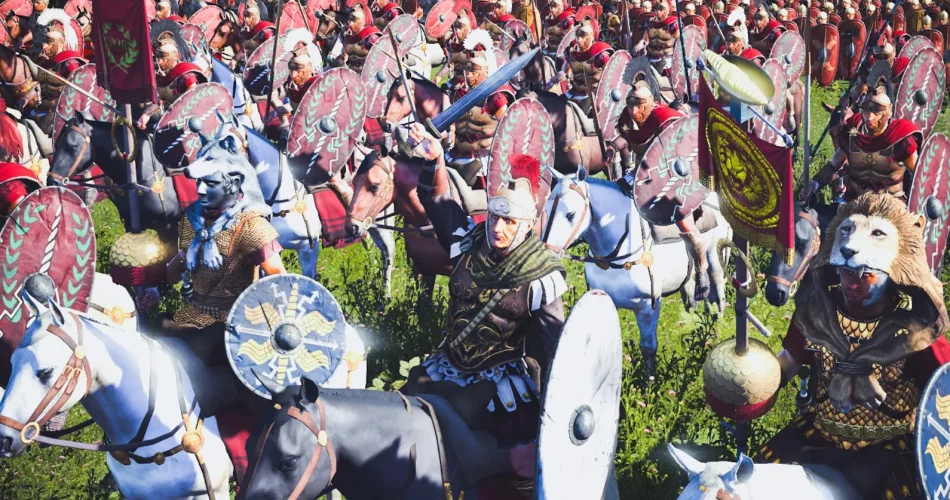
Avaricum: Between Hope and Annihilation
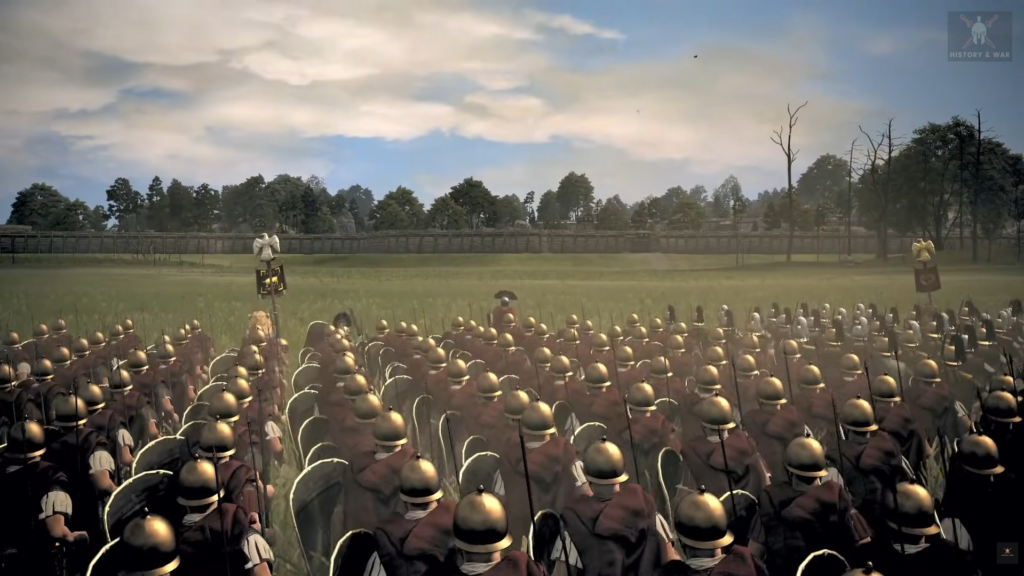
The Siege of Avaricum (52 BC) stands as one of the most brutal and strategically significant episodes of the Gallic Revolt led by Vercingetorix against Julius Caesar. As the wealthiest city of the Bituriges, Avaricum held both economic and symbolic importance, making it a critical objective in Caesar’s campaign to suppress the uprising in Gaul. Adopting a scorched-earth strategy, Vercingetorix ordered the destruction of surrounding settlements to deny supplies to the Romans. However, Avaricum was spared at the insistence of its inhabitants, leaving it isolated and vulnerable. Caesar seized the opportunity, advancing to besiege the city despite difficult terrain and growing shortages within his own ranks. The siege that followed demonstrated both the resilience of the Gallic defenders and the engineering expertise of the Roman army. It culminated in the capture of Avaricum and a massacre so extensive that even Caesar himself recorded its severity. This event not only revealed the harsh realities of Roman warfare but also marked a decisive moment in the wider Gallic War.
Rising Tensions and the Limits of Roman Control
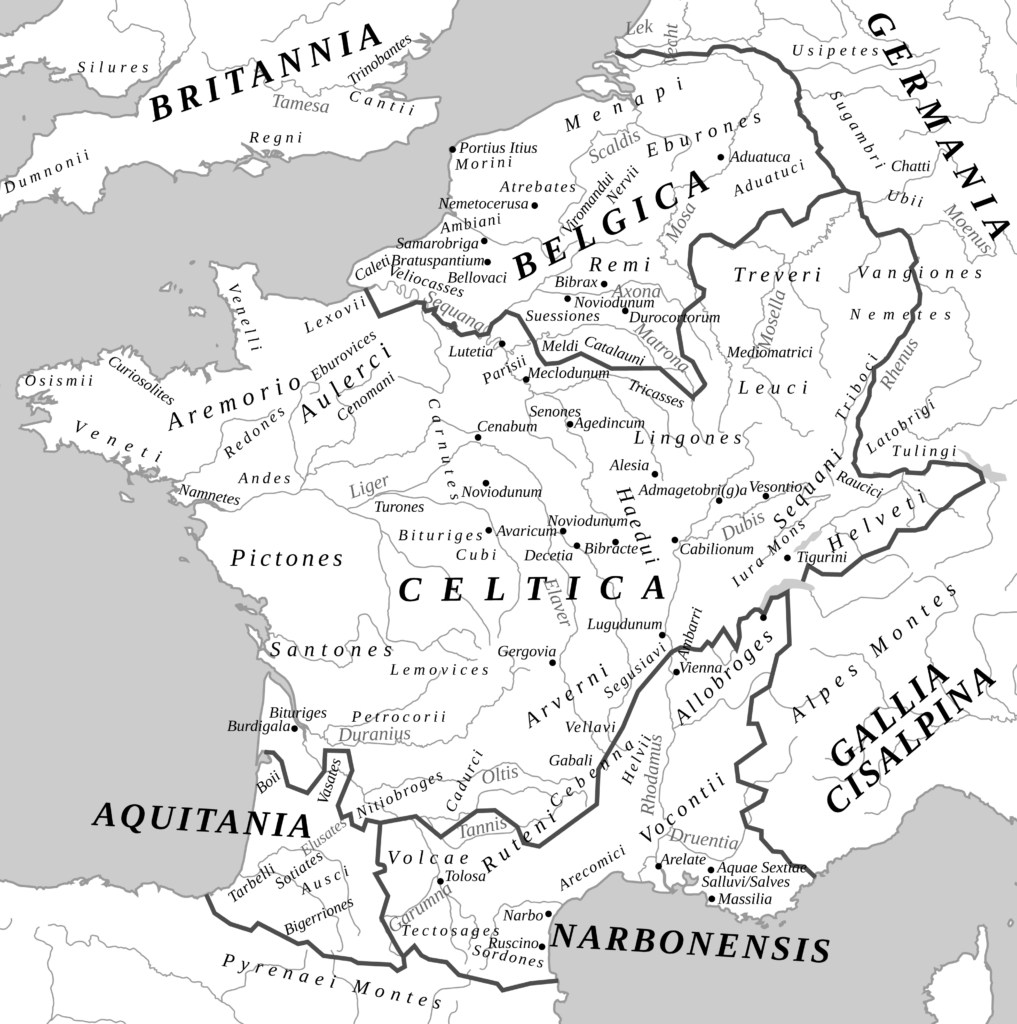
Image Source- Wikipedia

By 53 BC, Caesar’s conduct in Gaul was increasingly interpreted by the tribes as an assertion of full provincial authority. Although Gaul had not been formally organized as a Roman province, Caesar’s actions—issuing decrees, imposing hostages, and intervening in the internal affairs of the tribes—gave the clear impression that Roman law, order, and religious oversight were now being extended across the region. This development caused deep anxiety among the Gauls. Many feared that Roman domination would not only undermine their political autonomy but also threaten their sacred traditions. The most serious concern centered on the holy lands within the territory of the Carnutes, where the druids gathered each year to mediate disputes and uphold the spiritual cohesion of the Gallic world. Any Roman intrusion into this revered space was seen as an existential threat. Luxury imports and Roman goods had long been tolerated—even welcomed by some elites seeking prestige—but the prospect of religious subjugation and cultural erasure was of an entirely different order. Faced with what seemed like a choice between annihilation or complete submission, the tribes began to find common cause.
A significant portion of the Gallic aristocracy had come to believe that continued Roman domination threatened to cost them far more than it offered in return. Roman officials spoke of peace as the natural result of victory, but for the tribes of Gaul, this peace was something imposed upon them through Caesar’s campaigns, not something freely chosen. For centuries, warfare had been central to Gallic culture and political life. Chieftains were, above all, war-leaders, and their prestige depended on the size and loyalty of the warrior retinues that followed them. Under Roman oversight, this entire framework had begun to erode. The tribes were no longer free to wage war against one another, and opportunities for gaining martial honour increasingly required cooperation with the Roman army rather than the pursuit of independent tribal agendas. Powerful leaders also understood that any attempt to claim kingship or consolidate authority within their own tribe risked provoking a Roman response. Caesar, acting as the effective governor of the region, could punish or remove any figure whose rise he considered a threat. This made it far more difficult to build networks of allies, clients, and supporters across tribal boundaries, since Rome’s oversight cast a long shadow over every political decision.
Only the Remi and the Lingones held a different view. The destruction of the Belgic tribes in their region, situated between the Seine and the Marne, had not merely secured their position—it had strengthened it. They had observed first-hand the consequences of rebellion for their powerful northern neighbours and understood that defying Rome carried enormous risks. These considerations played a decisive role in their choice to remain loyal to Caesar. Confident that the situation in Gaul was stable and that no major uprising threatened Roman control, Caesar returned to Cisalpine Gaul to attend to the administrative duties of his province.
The Spark at Cenabum and the Rise of Vercingetorix
Aware of the political unrest in Rome and the increasing tension between Caesar and Pompey, the Gallic leaders concluded that the moment was ripe for action. The Carnutes had already pledged to open the revolt with a decisive blow. In fulfilment of this vow, two of their chieftains led a band of warriors into the town of Cenabum—modern Orléans—where they massacred the Roman traders residing there. Among the victims was a Roman equestrian whom Caesar had appointed to oversee the local grain supply. News of the attack spread with remarkable speed. Caesar later wrote in his Commentaries that the report had travelled as far as 160 miles by midnight, underscoring both the volatility of the situation and the rapid communication networks among the Gallic tribes.
The next to rise in revolt was a young Arvernian nobleman named Vercingetorix. His father had once exercised considerable influence across Gaul, but was ultimately killed by his own people when he attempted to establish himself as king—an action many tribes viewed with deep suspicion. Vercingetorix was already known to Caesar and appears to have been among the young aristocrats whom the proconsul had attempted to cultivate as political allies. That earlier association was now cast aside as he began organizing resistance. When Vercingetorix first attempted to raise an army, he was expelled from the Arvernian capital of Gergovia by his uncle and other leading members of the tribe who opposed his plans. Undeterred, he gathered additional followers. Caesar dismissively refers to these recruits as “vagrants and outcasts,” though they were more likely warriors without a powerful patron—men who could be quickly mobilized in a time of crisis. Reinforced by this new contingent, Vercingetorix returned to Gergovia, drove out his rivals, and was proclaimed king by his supporters.
Virtually all the tribes to the west, extending to the Atlantic coast, quickly joined his cause, with their chieftains recognizing him as their overall war-leader. From the outset, his approach differed markedly from that of most Gallic commanders. He sought to impose strict discipline on his forces and to establish an organised system of supply. According to Caesar, violations of his orders were punished with death or mutilation.
Vercingetorix was soon prepared to launch operations, directing his efforts against tribes aligned with Rome. While another chieftain led a separate force against the Remi, he advanced with his main army toward the Bituriges, who lived to the north of his own people. The Bituriges, being dependants of the Aedui, immediately appealed to them for protection. The Aedui, uncertain how to respond, consulted Caesar’s legates, who advised them to dispatch an army to support the Bituriges.
The Aedui responded with similar hesitation. Their army advanced as far as the Loire, which formed the boundary between their own territory and that of the Bituriges. There they halted for several days before withdrawing, asserting that their dependants had secretly aligned themselves with Vercingetorix and intended to ambush them once they crossed the river. Caesar later remarks that even after the revolt had been suppressed, he remained uncertain whether the Aeduan commanders genuinely believed this claim or were already contemplating treachery. Once the Aedui withdrew, the Bituriges openly joined the rebellion.
At the same time, Vercingetorix dispatched raiding parties southward across the Cévennes Mountains into Transalpine Gaul, aiming both to disrupt Roman control and to encourage the local Gauls to join the uprising. By this point, Caesar’s senior officers may have begun to grasp the scale of the developing revolt, and their reports on these incursions appear to have convinced Caesar that he was needed back with the army. Meanwhile, the political situation in Rome had stabilised: Pompey had been appointed sole consul, rather than dictator, and had deployed troops inside the city to restore order. With Rome secure for the moment, Caesar crossed the Alps and returned to Transalpine Gaul.
By this time, additional tribes had joined Vercingetorix and the rebel coalition—some out of conviction, others under pressure. The revolt was gathering real momentum. Communities loyal to Rome or closely aligned with her were coming under systematic attack, and many were compelled to abandon their allegiance. Caesar now faced one of the most difficult situations possible for a commander: he was separated from his army by several hundred miles precisely when a major enemy force was active in the field. If he ordered his legions to march toward him, they risked encountering the main Gallic army en route and being forced into battle without his presence. Such an engagement could end in defeat, or—even if they won—might leave the credit to Labienus or another of his senior officers, rather than to Caesar himself.
There were also considerable risks in Caesar’s travelling to the legions. His escort would be small, and with so many tribes defecting to the rebels he could not be certain which local chieftains remained reliable. It is unlikely that he deliberated for long. For Caesar, personal danger was preferable to exposing his army to unnecessary risk. Even after six years of uninterrupted victories, he understood that a single major defeat would provide his political opponents in Rome with all the justification they needed to undermine his standing. He also recognised that it would be far quicker for him—accompanied by his attendants, some staff officers, and an escort of four hundred German cavalry—to reach the army than the legions to march to him. Before he could begin this journey, however, new threats emerged within Transalpine Gaul itself. Several frontier tribes had joined the rebellion, and a rebel force had now crossed into the province and advanced toward the Roman colony at Narbo.
Caesar Confronts the First Threat
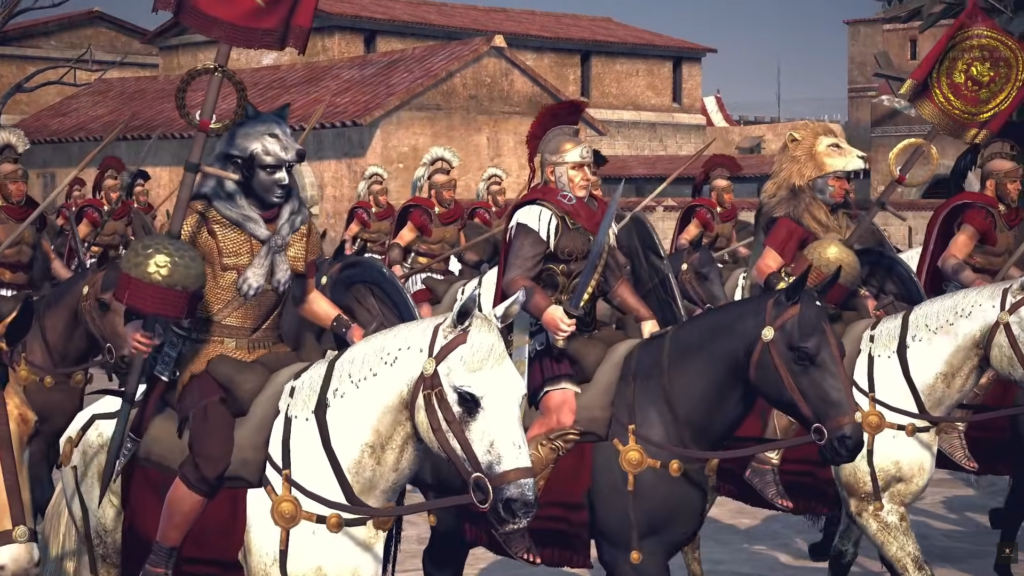
Caesar moved swiftly to the threatened town and took charge of its defence. Although no legions were stationed in the province, he could draw upon several locally raised cohorts and the contingents of new recruits he had recently brought from Cisalpine Gaul. He likely also had cavalry supplied by allied tribes within the province. A portion of these forces was deployed in a defensive screen to deter further attacks, and this show of strength soon compelled the raiders to withdraw. Caesar then ordered the main body of his troops to assemble in the territory of the Helvii, one of the Gallic tribes situated within the province.
Caesar’s Winter Incursion Across the Cévennes
With the situation in Transalpine Gaul stabilized, Caesar led this improvised and largely inexperienced force across the Cévennes Pass and advanced toward the Arverni. The march achieved complete surprise. It was still winter, and even the local inhabitants assumed that the route would be impassable under deep snow. Caesar’s troops laboured to cut a path through drifts reportedly six feet deep, and then pressed forward until they had penetrated Arvernian territory.
Once inside Arvernian territory, Caesar dispersed his cavalry in small detachments, directing them to sweep across the countryside, burning and killing as they advanced. The material damage was likely limited, yet the psychological impact was immense. To the Arverni, it appeared as though a full-scale Roman invasion had begun. Riders carried the news north to Vercingetorix, who was encamped with his main army nearly one hundred miles away among the Bituriges. Alarmed for the safety of his homeland, the Gallic commander immediately set his forces marching south. After two days of raiding, Caesar delegated command to Decimus Junius Brutus, instructing him to continue sending cavalry units on destructive sorties. Caesar then announced that he would return to the province to raise fresh levies and summon additional allied cavalry, promising to rejoin Brutus within three days.
He appears to have been confident that news of his supposed return to the province would promptly reach the enemy, for after recrossing the Cévennes he pushed on rapidly to Vienna. There, as previously arranged, a contingent of cavalry awaited him. Without pausing even for a single night, he set out again, riding at speed through Aeduan territory until he reached the two legions wintering among the Lingones to the north. Only at that point did he halt. From this position he dispatched orders to the remaining legions, directing them to assemble at Agedincum, likely near modern Sens. It had been an audacious journey through regions whose loyalty could no longer be assumed. Yet the gamble succeeded: the commander and his army were reunited, and the immediate task was now to reclaim the initiative in the face of an expanding revolt.
The Race to Rejoin the Legions
Vercingetorix had been temporarily wrong-footed by the Roman incursion over the Cévennes, and it took him several days to recognise that the operation was merely a diversion. His first objective—preventing Caesar from reuniting with his legions—had therefore failed. Reorienting his strategy, Vercingetorix resumed his plan to target those tribes that remained loyal to Rome. Moving north once more, he struck at the Boii, a community that had accompanied the Helvetii during their migration in 58 BC and had subsequently been allowed to settle on Aeduan territory at the Aedui’s request.
The Gallic army laid siege to one of the Boii’s principal settlements, a town known as Gorgobina. The timing could not have been worse for Caesar. It was still winter, and the legions were in no condition to take the field: there had been no opportunity to assemble supplies, gather fodder, or raise the necessary transport animals. Any extended campaign risked leaving the army dangerously under-provisioned. Yet delay posed an even greater strategic danger.
If the Boii were forced to surrender, they might be compelled to join the rebellion. That outcome would allow Vercingetorix to turn his attention to other Aeduan dependants, demonstrating that even the Aedui—the tribe most closely tied to Rome—were incapable of protecting their allies. Such a humiliation would send a powerful signal across Gaul, stripping away any remaining incentive for wavering tribes to remain loyal. Unwilling to permit this collapse of Roman prestige, Caesar acted immediately. He dispatched envoys to the Boii, assuring them that he and the army were marching to their relief.
The Aedui were ordered to assemble adequate grain reserves for the army’s immediate needs. Caesar then left two legions at Agedincum to protect the baggage train and marched with the remaining eight to relieve the Boii. His cavalry contingent was unusually weak, as there had been no time to raise the customary allied horsemen from the various tribes. The legions themselves were only marginally supplied, which meant that Caesar could not sustain operations in the field for long unless he secured additional provisions on the march. By taking the offensive—despite logistical strain—Caesar aimed to demonstrate resolve, disrupt the rebels’ momentum, and steady the loyalties of those tribes and chieftains whose commitment to Rome was wavering.
Rapid Sieges and the Drive Toward Avaricum
After a single day of marching, Caesar reached Vellaunodunum, a fortified settlement of the Senones. He immediately initiated a formal siege. By the third day, the inhabitants—recognising that they could not withstand a prolonged Roman assault—agreed to surrender. They pledged to deliver their weapons, six hundred hostages, and, critically for the army’s immediate logistical needs, a supply of pack animals.
Advancing without delay, the Romans next reached Cenabum—the very town where the revolt had opened with the massacre of the Roman merchants. Caesar covered the distance in only two days, arriving so quickly that the inhabitants had not yet completed their preparations for a defensive stand. Because it was already late when the legions appeared before the walls, Caesar chose to defer a direct assault until the following morning. Nevertheless, he anticipated that the defenders might attempt an escape under cover of darkness. To prevent this, he ordered two legions to remain under arms throughout the night, ready to intervene should the townspeople try to cross the Loire and abandon the settlement.
The Romans’ anticipation proved accurate. Around midnight, scouts reported large groups of townspeople moving toward the bridge spanning the Loire. When Caesar dispatched two legions into the town, there was little organized resistance, and congestion at the bridge prevented many from escaping. Following the capture, Caesar ordered the town to be sacked and set aflame, with most of the surviving inhabitants likely sold into slavery.
Caesar then crossed the Loire and advanced against the Bituriges, reasserting Roman initiative and forcing Vercingetorix to react rather than dictate the campaign. Having abandoned his assault on the Boii, Vercingetorix rapidly returned to defend the Bituriges. His arrival coincided with the Romans’ acceptance of the surrender of Noviodunum, whereupon the Gallic presence encouraged the townspeople to resist once more, driving out the centurions and the small detachments of soldiers who had entered the town.
A cavalry engagement occurred in the fields outside Noviodunum, which the Romans ultimately won after Caesar committed his contingent of 400 German cavalry. This minor victory, combined with the proximity of Roman forces and the Gallic army’s main body still at a distance, persuaded the townspeople to surrender once more, handing over those responsible for violating the truce. Caesar then resumed his advance toward Avaricum, one of the most important and best-defended towns of the Bituriges. Having regained the initiative, it was essential for the Romans to maintain momentum and prevent the enemy from regrouping.
Vercingetorix Adopts Total Denial Strategy
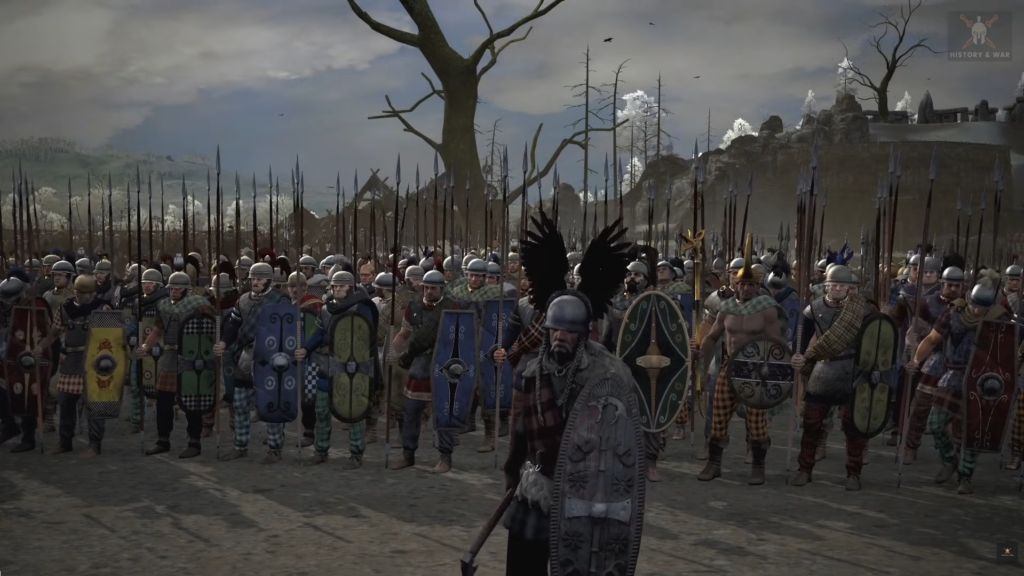
From the outset, Vercingetorix doubted his ability to defeat the Roman legions in open battle, and the rapid capture of three towns by Caesar’s forces only reinforced his respect for Roman military prowess and siegecraft. Consequently, he adopted a strategy of cautious engagement, shadowing the Roman army and targeting small detachments while avoiding large-scale confrontations. His primary objective was to deny the Romans access to supplies, instructing his followers to act with total ruthlessness: private property was to be disregarded, and villages and houses throughout areas within the likely range of Roman foragers were to be burned.
Even entire towns that could not be defended against the Romans were to be destroyed to prevent the legions from seizing their food stores. In accordance with this directive, the Bituriges set fire to twenty of their principal settlements. Vercingetorix justified these severe measures by emphasizing that the alternative would be death for the warriors and enslavement for their families.
His strategy was markedly more sophisticated than that of Caesar’s earlier Gallic opponents, and it is evident that he possessed considerable charisma and authority to persuade his followers of the necessity of such uncompromising actions. The extent of the tribes’ willingness to make these sacrifices was remarkable, though occasional hesitation was unsurprising. Following appeals from the leading figures of the Bituriges, Avaricum itself was spared. Vercingetorix reluctantly granted this exception, although he did not share their confidence that the town’s combination of natural and man-made defenses rendered it impregnable.
Engineering, Starvation, and the Contest for Avaricum
Avaricum presented a far more formidable challenge than the towns that had fallen easily in previous weeks. The town was largely encircled by rivers and marshes, leaving only a single practical route for an assault, and making it nearly impossible to establish a complete blockade.
Caesar’s army established its camp at the base of the slope and commenced construction of a ramp designed to reach the town’s walls. The legionaries also built mantlets and protective shelters to shield the workers as they advanced toward the fortifications, in addition to erecting two siege towers intended to scale the ramp once it was completed.
Caesar’s eight legions were likely understrength, numbering approximately 25,000 to 30,000 men, supported by several thousand auxiliaries and a larger contingent of slaves and camp followers. Sustaining such a force during movement was already challenging, but once the army settled to besiege Avaricum, the logistical demands became nearly insurmountable.
Foraging proved both unproductive and hazardous, as Vercingetorix was encamped no more than sixteen miles away and closely monitored every Roman detachment, attacking any units that became exposed. The proconsul repeatedly sent messages to the Aedui and Boii requesting convoys of provisions, but only minimal supplies arrived. The Aedui displayed little enthusiasm for this task, perhaps partly because they had served as one of Caesar’s principal sources of supply since 58 BC. The Boii, while still appreciative of his previous support, were a relatively small people and possessed only limited grain surpluses.
The scorched-earth tactics employed by Vercingetorix were beginning to take their toll. At one stage, the Romans had completely exhausted their grain supplies; however, foragers managed to bring in sufficient cattle, which were slaughtered to provide a meat ration. Caesar commended his men for their perseverance and discipline, continuing to work on the siege despite receiving only a meager and monotonous diet.
Despite severe shortages and the constant threat posed by the nearby Gallic army—Vercingetorix maintaining close contact with the town’s defenders—the legionaries continued to labor on the siege works. Caesar moved among the lines, inspecting progress and offering encouragement. On several occasions, he suggested abandoning the siege if the men believed the task to be beyond them, a strategic appeal to their pride and unit honor, as no soldier wished to be the first to yield. The troops insisted on completing the work, motivated both by the desire to avoid the disgrace of retreat and by lingering anger over the massacre of Romans at Cenabum.
Supply difficulties were not confined to the Romans; the Gallic camp also faced serious shortages. These challenges were partly due to the season and the necessity of remaining in a fixed position, but they also underscore the limited logistical organization typical of tribal armies. Vercingetorix was a more capable commander than most Gallic leaders, and his army was both more flexible and better prepared than the average tribal force. Nevertheless, it remained significantly less efficient in logistical matters than the Roman legions. The slow progress of the siege may also have reinforced his need to secure a decisive victory to maintain the morale of his troops.
The Gallic army advanced slightly closer to the town, and Vercingetorix personally led his cavalry and light infantry in an attempt to ambush Roman foragers. Caesar, informed of this maneuver—either through his patrols, captured prisoners, or deserters—marshalled the majority of his forces to threaten the Gallic camp. Although the enemy arrayed itself to confront him, their position was too strong for a direct assault without incurring significant losses.
The legionaries were eager for combat, bolstered by their record of previous successes and fueled by the frustration of arduous labor and meager rations. Caesar, however, emphasized that he would not risk unnecessary casualties, asserting that “their lives were more important than his own needs.” The Romans observed the enemy for a period before returning to camp. The mere display of force was sufficient to compel Vercingetorix to abandon his plans and rejoin his main army.
Sieges tested both ingenuity and endurance. Avaricum’s strategic importance was partly derived from the local iron mines, which provided skilled laborers capable of attempting to undermine the Roman ramp. Meanwhile, other defenders focused on constructing and reinforcing wooden towers along the walls, continually adapting as the Romans increased the height of their siege works. Each side sought to counter the advantages gained by the other. Ultimately, Roman engineering expertise prevailed: despite frequent sorties aimed at setting it ablaze, after twenty-five days the ramp was nearly complete. It measured approximately 330 feet in width and 80 feet in height, bringing the battering rams within striking distance of the town walls.
That night, the defenders ignited the timber supports within their mine, aiming either to collapse the ramp or to set it ablaze. In the early hours, Roman sentries detected smoke rising from the wooden structure. Almost immediately, a shout erupted from the walls, and two detachments of defenders sallied forth from separate gates, carrying torches, incendiary materials, and weapons.
In accordance with Caesar’s standing orders, two legions maintained picket duty throughout the night. Additional Roman forces were dispatched to reinforce them as the fierce combat fluctuated along the ramp. Some legionaries engaged the attackers directly, while others worked to pull the siege towers back to safety; however, they were unable to save certain mantlets and shelters positioned further up the ramp.
The struggle was intense, and in the Commentaries, Caesar provides one of his rare accounts of a minor episode he personally witnessed. A Gallic warrior positioned near one of the town gates repeatedly hurled lumps of pitch and tallow at the Roman siege works. He was struck down by a bolt from a scorpion, one of the Romans’ light artillery pieces known for its accuracy and devastating force. As soon as he fell, another warrior took his place, followed by others in succession, each likewise struck by bolts from the same ballista. Caesar’s account conveys clear admiration for their courage, a quality he consistently acknowledges in the Gauls, though he often implied that their valor was somewhat inferior to the disciplined bravery of the legions.
After intense fighting, the defenders were forced back within the town walls, having failed to inflict sufficient damage to significantly hinder the Roman advance. The following day, they complied with Vercingetorix’s exhortation to attempt an escape from Avaricum. Under the cover of darkness, the warriors endeavored to slip through the marshes toward the main Gallic army. The attempt was thwarted, however, when their abandoned families became aware of the plan and raised such loud cries that it was feared the Romans would detect their intentions.
On the twenty-seventh day of the siege, the legionaries completed the ramp. Heavy rain fell, and Caesar judged that the defenders were likely to be off guard, prompting him to order an immediate assault. Preparations for the attack were made, with the troops forming under the cover of the sheds and shelters of the siege works to conceal the Romans’ intentions.
At a given signal, the Roman soldiers erupted from cover and advanced rapidly, overwhelming the surprised defenders and swiftly securing the rampart. Small groups of Gauls attempted to regroup in open areas such as the marketplace, but their resolve faltered upon witnessing the Romans swarming along the walls. Historically, troops who storm fortified positions have frequently struggled to maintain discipline once inside. Sieges have always posed extreme challenges and hazards, with the assault itself being particularly perilous. Soldiers who had endured both prolonged siege and the initial storming often found it difficult to restrain themselves once within the town, especially in narrow streets where the close supervision of their officers was less effective.
In the storming of a town, it was common for any inhabitants who resisted to be killed, while women were often subjected to sexual violence. On this occasion, however, the soldiers’ ferocity exceeded even the usual levels of brutality. According to Caesar, the legionaries, “remembering the massacre at Cenabum and the labors of the siege, did not spare the elderly, the women, or the infants.” Of the approximately 40,000 inhabitants, little more than 800—those who had fled at the first alarm—escaped to join Vercingetorix. Although the major oppidum of the Bituriges was destroyed, the war was far from over. Both sides would meet again at the Battle of Gergovia, but that was a story for another day.
© 2026 History and War
Author: Jishu Roy
Unauthorized reproduction of this content is prohibited.