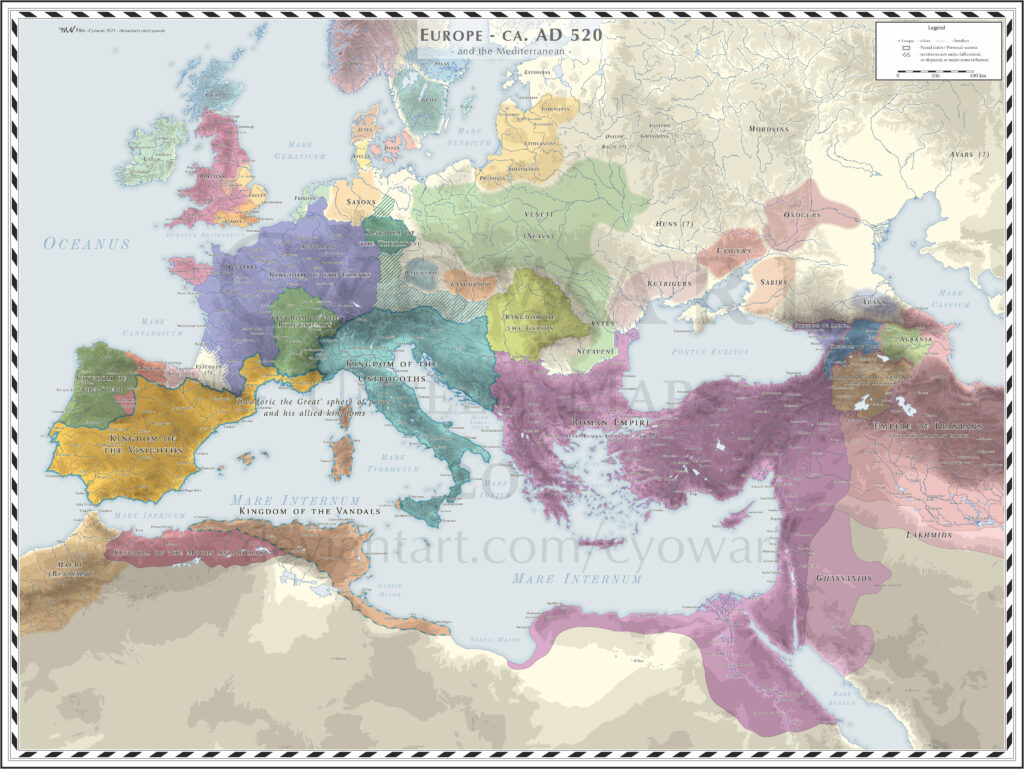
Map © Cyowari
The Persian Invasion of Armenia
In the spring of AD 530, Belisarius successfully defended Mesopotamia, but the war was far from over. The Persians had assembled another army in Persarmenia. The strategic objective of this Persian invasion was likely to sever Lazica’s ties with the Romans and to gain the support of potential Armenian defectors. In the summer of AD 530, the Persian king Kavadh launched a second invasion. This Persian force consisted primarily of allied contingents, including Persarmenians and Sounitai, as well as 3,000 Sabir Huns. The command of this mixed force of Persians and their allies was entrusted to Mihr-Mihroe. Opposing them were the Roman forces under the leadership of Sittas, the magister militum praesentalis, and his successor, Dorotheus, who served as magister militum per Armeniam. According to Procopius, the Roman army, numbering 15,000 soldiers, was outnumbered two to one by the Persian forces.
Mihr-Mihroe began assembling his forces near the Byzantine border fortress of Theodosiopolis. Upon learning of the Persian preparations, the Romans dispatched two spearmen to gather intelligence on the Persian forces. Both men successfully infiltrated the Sasanian camp, meticulously observing and noting its details before departing. However, as they travelled through the region on their return, they unexpectedly encountered a group of hostile Huns. One of the spies, named Dagaris, was captured and bound by the Huns, while the other managed to escape. The survivor promptly returned to the Roman generals and reported all the information he had gathered.
Seizing the opportunity, the Romans mobilized their entire force and launched a surprise assault on the Sasanian camp. The Sasanians, taken completely off guard, were struck with panic and offered no resistance, fleeing in disarray. The Romans capitalized on the chaos, killing many of the enemy, plundering the camp, and swiftly withdrawing. However, this sudden attack did little to dishearten the Persians. Within a few days, Mihr-Mihroe reorganized his forces and launched an invasion of Roman Armenia. Leveraging his numerical superiority, Mihr-Mihroe aimed to engage the Romans in a decisive battle. In response, the Roman commanders adopted guerrilla tactics, avoiding direct confrontation while harassing the Persian forces. This strategy persisted until the two armies eventually converged near the vicinity of Satala, where the conflict was poised to escalate.
The Battle of Satala
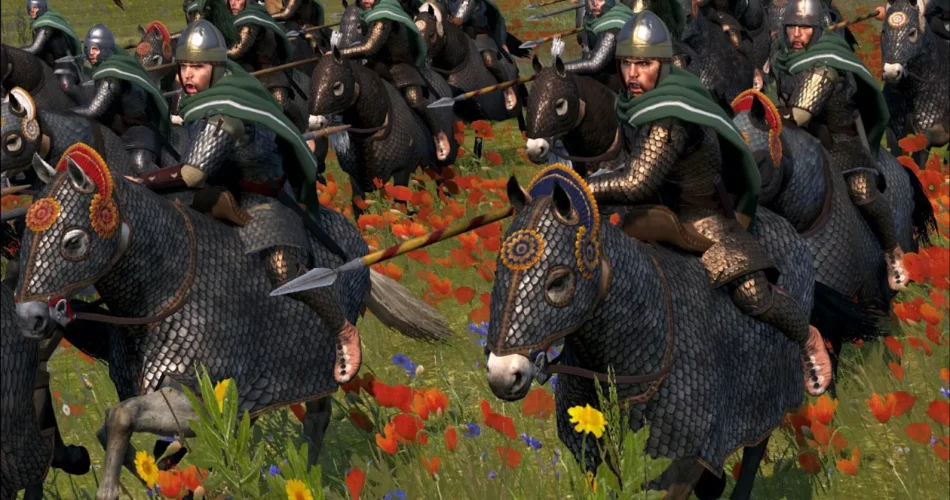
It is highly probable that Satala functioned as the principal fortress for the Legio XV Apollinaris or a successor unit, which would have necessitated a well-equipped garrison to safeguard its formidable walls. When the Persian army, approached the city, they swiftly began to encircle Satala, signalling their intent to lay siege to it. In anticipation of the impending confrontation, Sittas, the Roman commander, devised a strategic response. He meticulously selected a contingent of 1,000 elite cavalrymen, known for their exceptional skill and agility in battle. Under the cover of darkness and the undulating terrain of the hills that adorned the plain surrounding Satala, Sittas concealed his forces, positioning them advantageously to launch a surprise attack. Meanwhile, he made the decisive choice to keep Dorotheus and the remainder of the Roman soldiers within the security of the city walls. This determination arose from a careful evaluation of the circumstances, acknowledging that engaging the Persians in open combat would be ill-advised given the overwhelming numerical superiority of their foes. The Persian forces boasted an impressive strength of no fewer than 30,000 soldiers, while the Roman contingent was barely half that, making any direct confrontation extremely perilous. Thus, Sittas’s strategy revolved around waiting for the opportune moment to strike, leveraging the element of surprise against a vastly larger enemy.
The following day, the Sasanians approached the walls and began preparations for a siege of the town. However, Sittas, anticipating this move, executed his ambush with precision. As his forces descended from the high ground, the thick cloud of dust raised by the summer heat obscured the actual number of troops, leading the Sasanians to mistakenly believe that the Romans were far more numerous than they truly were. In a state of panic, they abandoned their plans to encircle the town and hurriedly attempted to form a battle line. Sittas capitalized on this confusion by dividing his ambushers into two groups, successfully encircling a portion of the retreating enemy forces.
At that moment, Dorotheus decisively opened the gates of the city, leading his cavalry out into the fray. Even in the face of this double surprise attack, the Persians exhibited remarkable resilience, managing to regroup the remnants of their forces thanks to their significant numerical advantage. The ensuing clash, as described by Procopius, was fiercely contested, marked by a chaotic rhythm of rapid advances and retreats. This back-and-forth movement was a characteristic feature of cavalry engagements, as both armies sought to exploit openings while maintaining their lines. The battlefield became a maelstrom of clashing steel and swirling dust, with both sides determined to claim victory amidst the chaos.
Then the Thracian Florentius, leading his katalogos of cavalry, charged into the enemy’s center. He successfully captured the general’s standard, forcing it to the ground, and began his retreat. Although he was eventually caught and killed, his daring actions proved pivotal in securing victory for the Romans. This assault showcased the exceptional skill of the Thracian katalogoi. Consequently, the battle between the two Armenian armies was ultimately determined by the bravery of the Thracians. The loss of the standard instilled great panic among the Persians, resulting in chaos and fear. Unable to maintain their formation, they retreated to their camp, where they remained in silence.
Aftermath and Strategic Consequences
The following day, the Persians retreated to Persian Armenia, unchallenged by the Byzantines, who were content with their victory over a significantly larger force. This triumph marked a significant success for Byzantium and prompted the defection of several Armenian chieftains to the Empire, including the brothers Narses and Aratius, who had previously defeated Sittas and Belisarius. Additionally, several key fortresses, such as Bolum and Pharangium, were either captured or surrendered. The loss of Pharangium was particularly damaging for the Persians, as it had been their primary source of gold, severely impacting their ability to sustain the war effort. Following the battle, negotiations between Persia and Byzantium resumed but yielded no results. By the spring of 531, hostilities reignited, culminating in the campaign that led to the Battle of Callinicum.
© 2026 History and War
Author: Jishu Roy
Unauthorized reproduction of this content is prohibited.