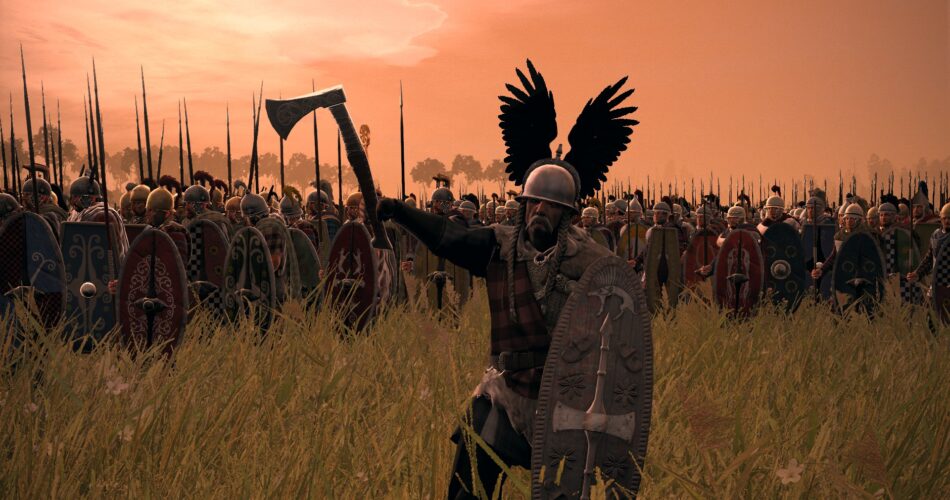
The Gamble at Gergovia
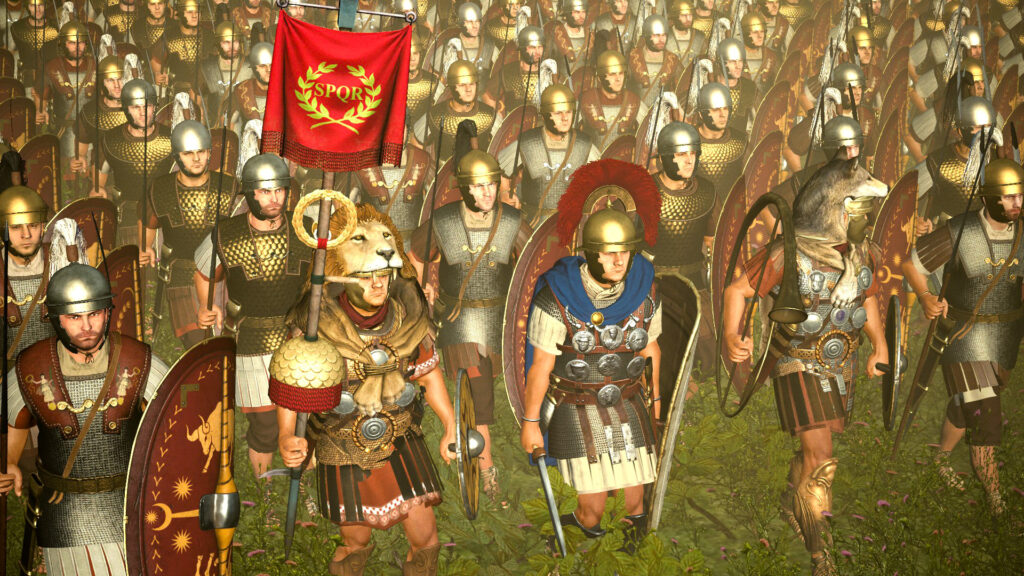
For years, the legions of Julius Caesar had dominated Gaul—crushing resistance with discipline, speed, and relentless force. But now, for the first time, he faced a united enemy under Vercingetorix—a commander who refused to fight on Roman terms. Instead of open battle, he forced Caesar into a far more dangerous position. High on the fortified heights of Gergovia, the Gallic army stood ready. The ground was steep, the defenses strong, and every advantage lay with the defenders. For Caesar, this was no longer a campaign of steady victories. It was a gamble. Because if he failed here, the rebellion would not just survive— It would spread. What followed was not a carefully controlled assault, but a battle shaped by confusion, miscommunication, and a sudden, uncontrollable surge of violence that would cost Rome dearly. It would be a clash decided by terrain… by timing… and by a single moment when discipline broke under pressure. Today, we explore the Battle of Gergovia—one of the most significant defeats of Caesar’s career, and a turning point in the Gallic War.
Divided Allegiances and March to Gergovia
Following the capture of Avaricum, Julius Caesar allowed his army a brief period of rest. The town yielded substantial stores of grain and other supplies, significantly improving the army’s logistical situation. At the same time, the arrival of spring made it easier to obtain provisions from the surrounding countryside. The two legions that had been assigned to guard the baggage train were then recalled to re-join the main force, strengthening Caesar’s army. Although Caesar was keen to continue offensive operations and prevent Vercingetorix from regaining the initiative, he was soon confronted with an urgent appeal from the Aedui—a matter he could not afford to overlook.
Two individuals had each claimed election to the tribe’s highest office, that of Vergobret, creating a serious internal dispute. At a time when the wider rebellion was ongoing, such divisions within the Aedui—Rome’s most powerful ally in the region—posed a significant risk. There was a real danger that one faction might seek support from Vercingetorix, further strengthening the rebellion. In response, Julius Caesar moved quickly south to address the situation in person. The position of Vergobret had a strict rule—its holder was not allowed to leave tribal territory during his term. Because of this, and to avoid offending an important ally, Julius Caesar could not summon the rivals and instead had to go to them himself.
After reviewing the dispute, the proconsul determined which candidate had been legitimately elected, noting that the other was disqualified under tribal law. He then requested that the tribe provide as many Cavalry as possible, along with 10,000 infantry to help secure his supply lines. Returning quickly to his army, Julius Caesar decided to divide his forces into two separate columns.
Julius Caesar next divided his army, assigning part of it to Titus Labienus while retaining overall command of the main force. He kept the experienced Tenth Legion with him and placed the Seventh under Labienus. In addition, Labienus was given the Twelfth, Fifteenth, and Sixteenth Legions and sent north to deal with unrest among the tribes around Paris. Meanwhile, Caesar advanced south with six legions, moving along the Allier River—known to the Romans as the Elaver—toward the stronghold of Gergovia, where Vercingetorix was based. Recognizing the danger, Vercingetorix marched rapidly along the opposite bank, aiming to reach Gergovia before the Romans could arrive.
Dividing his forces in this manner carried clear risks, but the proconsul appears to have considered them manageable. The rebels had shown little willingness to engage in a full-scale, decisive battle, which likely influenced his decision. Moreover, the opposition lacked a central capital or a single, unified army whose defeat could bring the revolt to an end. Despite the leadership of Vercingetorix, the rebellion was composed of numerous independent tribes, each requiring separate attention. If any rebellious region were left unchecked, it would likely grow stronger, both in confidence and in numbers, while also encouraging—or pressuring—nearby tribes to join the uprising.
River Maneuvers and Tactical Deception
The brief pause in operations allowed Vercingetorix to recover from the setback at Avaricum. In some respects, the loss even enhanced his standing, as he had originally opposed defending the town and had only agreed under pressure. His overall strategy remained unchanged. Rather than seeking direct confrontation with Julius Caesar and the Roman army, he continued to rely on harassment and maneuver. At the same time, he worked to expand the rebellion by attracting additional tribal leaders and communities to his cause.
As the Roman army advanced along the course of the Allier River, Vercingetorix matched their movement from the opposite bank. He ordered the destruction of all existing bridges and stationed troops at key points to prevent the construction of new crossings. For Julius Caesar, crossing the river was essential if he intended to threaten Gergovia—the stronghold where Vercingetorix had first proclaimed his leadership of the Arverni. However, at this time of year, the river was too deep and fast-flowing for the army to cross by fording.
That day, the Roman force established its camp in a wooded area near one of the destroyed bridges. When the army set out again the following morning, Julius Caesar remained behind with two legions, keeping them concealed among the trees. Meanwhile, the other four legions continued their march. To maintain the illusion of full strength, they spread out their cohorts so that the column appeared unchanged in size. Unaware of the deception, the Gauls allowed the Romans to proceed without interference. The marching force then set up camp in the usual manner, just as it had on previous days.
The Gauls continued their advance, intending to block any potential crossing points further along the river. However, later in the day—once Julius Caesar judged that the main Roman force had halted—he revealed his plan. Bringing forward the two legions he had kept hidden, he ordered the rapid construction of a bridge. After completing the crossing, these troops immediately began building defensive works for a new camp. At the same time, messengers were sent to recall the rest of the army. By the time Vercingetorix realized what had occurred, it was too late to intervene. Rather than risk a confrontation, he withdrew inland, seeking to maintain distance from the Roman army in line with his strategy of avoiding open battle.
Assault on a Fortified Heights
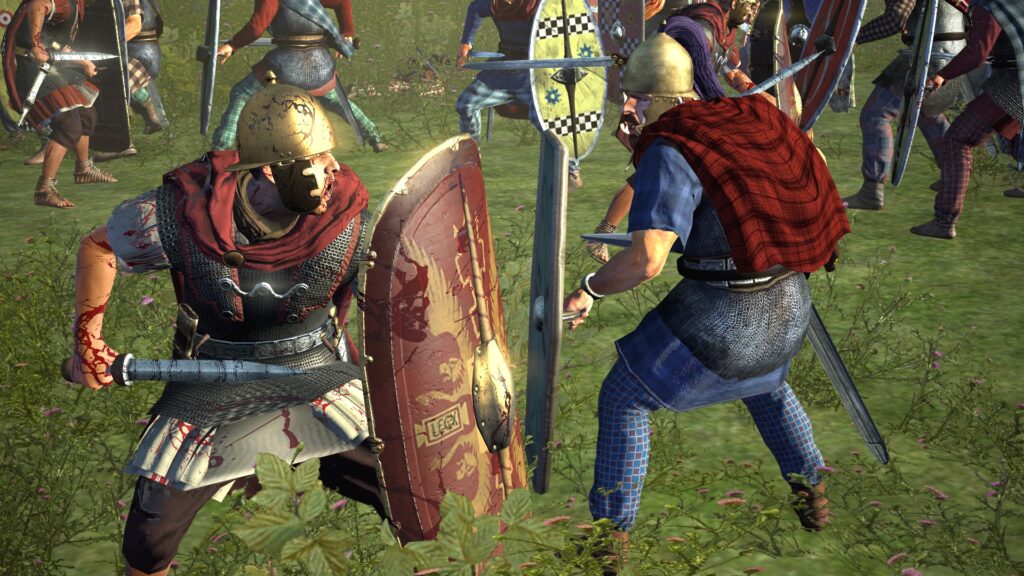
After five days of marching, both armies ascended onto the plateau and approached Gergovia at roughly the same time, although Vercingetorix managed to arrive slightly earlier. Upon reaching the vicinity of the stronghold, Julius Caesar rode forward to assess the enemy’s position. His inspection quickly made it clear that the site was naturally strong and well suited for defense.
Rising approximately twelve hundred feet above the surrounding plain, Gergovia was crowned by a plateau stretching for over a mile. The southern approach offered the most accessible route for an attack, and it was along this slope that Vercingetorix positioned his forces. Given these conditions, a direct assault appeared both difficult and likely to result in heavy losses. An alternative strategy—forcing the defenders into submission through starvation—was possible in theory. However, the Romans could not implement an effective blockade until they had first secured reliable supplies for their own army.
A supply convoy from the Aedui was expected but had not yet reached the Roman army. While waiting, Julius Caesar launched a night operation to seize one of the Gallic outposts. This gave him a forward position from which he could threaten the enemy’s access to water and foraging grounds. At this location, the Romans established a smaller camp occupied by two legions. It was linked to the main camp by a protected route, secured by deep ditches on both sides. For a time, both armies remained cautious. Cavalry and light infantry were sent out for skirmishes, but neither side was willing to commit to a full-scale engagement. Meanwhile, Vercingetorix held regular councils with his chieftains and, for the moment, maintained an unusually strict level of discipline within his forces.
Betrayal from Allies
At the same time, the allegiance of the Aedui began to weaken. Convictolitavis—the individual whose claim to the office of Vergobret had been supported by Julius Caesar—was secretly communicating with representatives of the Arverni and had accepted gifts from them. Encouraged by his influence, a chieftain named Litaviccus, who was in command of the 10,000 warriors escorting the supply convoy to the Roman army, decided to turn against his Roman allies.
When the convoy was still about thirty miles from Gergovia, Litaviccus brought it to a halt and addressed his troops. He claimed that the Aeduan cavalry serving with Julius Caesar had been executed by the Romans on suspicion of treachery. According to him, their only chance of survival was to abandon Rome and join Vercingetorix. To support this claim, he presented individuals who posed as survivors of the supposed massacre, recounting stories of Roman betrayal. The deception proved effective. The Aedui quickly turned against the Roman personnel accompanying the convoy, killing them brutally and seizing the supplies they had been transporting. Now aligned against Rome, this Aeduan force was in a position to threaten the Roman army from the rear.
However, events unfolded in Julius Caesar’s favor. When news of the situation reached the Aeduan leaders serving with his cavalry, one of them immediately informed the proconsul. Caesar responded without delay. He marched out with four lightly equipped legions and his cavalry, pushing them forward at speed until they had covered roughly twenty-five miles and came within sight of Litaviccus’ force. At that point, he sent the Aeduan cavalry ahead, instructing them to make themselves visible to their fellow tribesmen. The aim was to reveal the falsehood of Litaviccus’ claims and undermine his deception.
The warriors escorting the convoy quickly gave themselves up. However, Litaviccus, accompanied by his close followers—who, in accordance with Gallic custom, regarded it as dishonorable to abandon their patron even in adversity—fled toward Gergovia. After allowing his troops only three hours of rest, Julius Caesar forced his exhausted army to march back rapidly to their positions outside the city.
During the return march, they encountered messengers sent by Quintus Fabius, who had been left in command of the two legions near Gergovia. The reports were alarming. Since Julius Caesar had departed with the main force, these two legions had been subjected to continuous attacks by large numbers of Vercingetorix’s troops. With only two legions defending fortifications originally designed for six, they had struggled to maintain their position, managing to hold out largely due to the support of their artillery.
Marching continuously through the night, Julius Caesar returned to Gergovia with his four legions shortly before dawn. The arrival of these reinforcements was sufficient to discourage Vercingetorix from launching any further direct assaults on the Roman positions.
Julius Caesar had already dispatched envoys to reassure the Aedui, but messengers sent by Litaviccus reached them first. Their reports encouraged Convictolitavis to turn his people openly against Rome. At the town of Cabillonum, a Roman military tribune and several merchants were lured out and then attacked by a hostile crowd. As more Gallic warriors gathered to seize the plunder, Caesar’s envoys finally arrived. They brought news that the Aeduan cavalry and the 10,000 infantry were both safely in Caesar’s camp—meaning they had remained loyal and were now effectively under his control.
The leaders of the Aedui formally expressed regret for their actions, attributing the unrest to the behavior of the wider population. For the time being, Julius Caesar chose not to punish them. Instead, he reminded them of his past support and urged them to remain loyal. Privately, however, he understood that the alliance had become highly unstable. His overall position had also deteriorated. Although he had briefly regained the initiative through earlier offensive actions, he now found himself stalled outside Gergovia, lacking the resources needed either to defeat Vercingetorix in the field or to capture the stronghold. Remaining in place offered no clear advantage, yet a withdrawal would come at a significant cost to his reputation.
The Dilemma of Retreat
Since launching his campaign against the Arverni from Transalpine Gaul, Julius Caesar had maintained a nearly continuous pattern of attack and advance. In practical terms, this forced Vercingetorix to respond to Roman movements. More importantly, it created a powerful perception of Roman confidence and inevitability—the sense that Rome’s dominance was unquestionable and its victory assured. Even if this image was partly constructed, it had a strong psychological impact, particularly on those tribes that had not yet decided whether to join the rebellion. However, if Caesar were to halt his advance and begin to withdraw, that perception would collapse. The belief in Roman invincibility would be broken, potentially encouraging more tribes to side against Rome.
A withdrawal in the presence of the enemy was inherently risky. In this situation, it would almost certainly be interpreted as a sign of failure and could persuade undecided tribes that the rebellion was likely to succeed. At the same time, a retreat offered practical advantages. It would allow Julius Caesar to regroup and unite his forces with those of Titus Labienus. With a total of ten legions, he would likely have had enough strength to achieve success at Gergovia. Faced with these options, Caesar chose what he considered the less damaging course and decided to withdraw. However, he aimed first to secure a limited success, in order to make the withdrawal appear less like a retreat.
Caesar’s Cunning Maneuvers
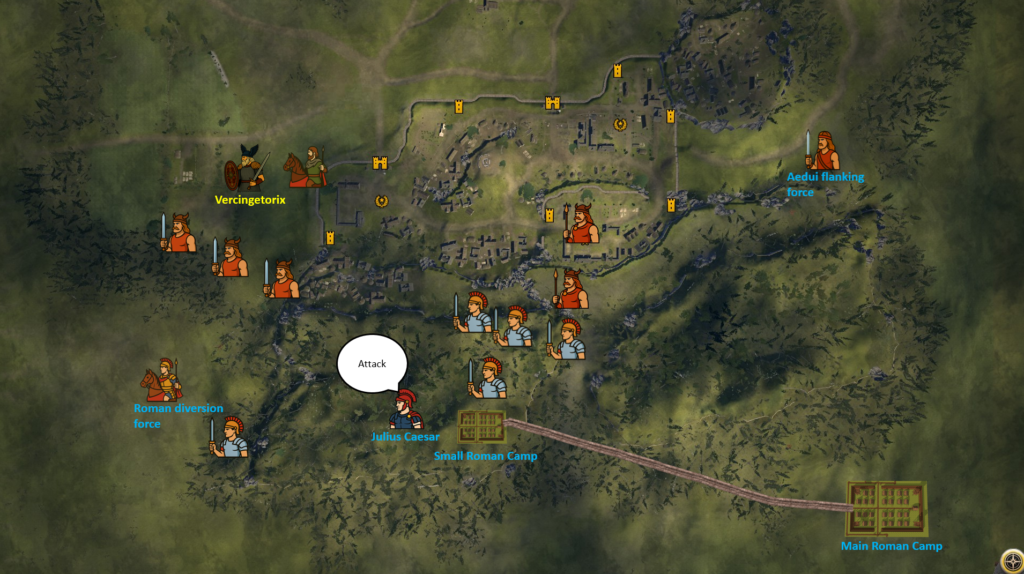
While examining the smaller fortification, Julius Caesar observed that a hill previously held in strength by the Gauls was now largely unoccupied. Questioning several deserters who had recently come into the Roman camp, he learned that Vercingetorix had become concerned that the Romans might seize another nearby height. As a result, he had redeployed a significant portion of his forces to reinforce that position. Recognizing an opportunity, Caesar decided to exploit this anxiety. During the night, he dispatched cavalry patrols toward the hill that Vercingetorix was fortifying. These units were instructed to move with greater noise than usual, ensuring that their activity would be clearly noticed by the enemy.
On the following day, Julius Caesar carried out a more elaborate deception. He mounted a large number of non-combatants on pack animals and had them wear helmets so that, from a distance, they would resemble cavalry. A small number of actual horsemen were placed among them to make the illusion more convincing, and this force was sent toward the same area by a circuitous route. Shortly afterward, a legion was dispatched in the same direction. However, after advancing a short distance, it halted in low ground and concealed itself within nearby woodland. These movements heightened Gallic suspicions. In response, Vercingetorix shifted his forces toward that sector, concentrating his troops there to guard against a possible attack.
As the Gauls focused their attention on the threatened sector and shifted their forces to meet it, Julius Caesar took advantage of the situation. He quietly redirected his legions toward the smaller camp, instructing them to conceal their shields and keep their crests out of sight. The troops moved in small, scattered groups rather than in formal formations, so as not to attract attention or suggest a coordinated advance. At the same time, Caesar briefed the legates commanding each legion. He made his intentions clear and stressed the importance of discipline, warning them not to allow their soldiers to push too far forward out of eagerness for battle or the prospect of plunder.
Chaos on the Slopes of Gergovia
At the appointed signal, the Roman legions advanced up the slope, while the Aedui moved along the opposite side of the same ridge. Each unit progressed as it could, but the uneven terrain, marked by deep folds and irregular ground, made coordination difficult and often limited visibility between groups. Resistance was minimal at this stage. With few defenders present, the legionaries were able to scale a stone wall—approximately six feet high—that the Gauls had constructed partway up the slope without significant difficulty.
With the main Gallic forces distracted by the Roman diversion, the primary assault achieved its initial objective. The defensive barrier offered only brief resistance and did not significantly slow the advance. However, the climb and the assault began to disrupt unit cohesion, and this disorganization increased as the troops pushed through the scattered Gallic camps spread across the slope. The Roman soldiers moved rapidly through these positions, seizing them in quick succession. The suddenness of the attack caught many off guard. Among them was Teutomarus, who was taken by surprise while resting in his tent. He narrowly escaped capture, fleeing with little clothing and on a wounded horse as Roman troops overran the area.
Having achieved his immediate objective, Julius Caesar ordered the signal for withdrawal. The soldiers of the Tenth Legion, who were closest to him, obeyed and halted their advance. However, the other legions did not hear the signal, as a large valley separated them from Caesar’s position. Although their officers attempted to restrain them in accordance with his orders, the troops—encouraged by the apparent success of the attack, the enemy’s retreat, and their own past victories—continued pressing forward. Driven by confidence, they pursued the enemy up to the walls and gates of Gergovia. For a brief moment, the situation appeared critical for the defenders. With only a small force present and panic spreading among the inhabitants, it seemed possible that the town might fall.
As panic spread within Gergovia, women on the walls attempted to appeal for mercy, offering valuables and begging the Romans to spare them and their children. Some even climbed down and surrendered to the approaching soldiers. Amid this chaos, a centurion named Lucius Fabius of the Eighth Legion, driven by the promise of plunder, managed to scale the wall with the help of his comrades, and then pulled others up after him.
As shouting spread throughout the city, those farther away, alarmed by the sudden noise, fled in panic, believing that the enemy had already entered through the gates. Meanwhile, the Gauls working on the fortifications beyond the far side of Gergovia heard the disturbance and realized they had been deceived. Vercingetorix also began receiving urgent messages from the townspeople asking for help. In response, he sent his cavalry back toward the city, with his infantry following behind. As these forces arrived, thoughts of surrender disappeared among the inhabitants. The women on the walls, who had earlier begged for mercy, now urged their men to defend them.
By this stage, the Roman assault had lost its momentum. The troops were exhausted, their formations had broken down, and they were not in a condition to face fresh opposition. Confusion increased when the Aedui suddenly appeared on their flank. In the chaos of the fighting, many Roman soldiers mistook them for enemy forces, failing to recognize the exposed right shoulder—the customary sign of allied troops in Julius Caesar’s army. As a result, the earlier confidence of success quickly gave way to disorder and uncertainty.
When Julius Caesar realized that his troops were fighting at a disadvantage and that enemy numbers were increasing, he grew concerned for their safety. He therefore sent instructions to Titus Sextius, whom he had left in charge of the smaller camp, ordering him to bring his cohorts forward and position them at the base of the hill on the enemy’s right flank. Their role was to check any pursuit if the Roman forces were pushed back.
At the same time, Lucius Fabius and the soldiers who had climbed the wall with him were surrounded, killed, and thrown down from the fortifications. Nearby, another centurion, Marcus Petreius, attempted to force the gates but was quickly overwhelmed and severely wounded. Realizing that escape was no longer possible, he addressed the men of his unit, acknowledging that he had led them into danger and urging them to withdraw while they still could. He then charged into the enemy, killing two opponents and briefly pushing the others back from the gate. When his soldiers tried to assist him, he refused, telling them that his strength was failing and that they should use the opportunity to retreat. Moments later, he was killed in the fighting, sacrificing himself to ensure the survival of his men.
As the Roman forces pulled back from Gergovia, the Gallic warriors, encouraged by their success, began to pursue the retreating legions. The disorder among the Roman troops made the situation appear increasingly dangerous, raising the possibility that the withdrawal might collapse into a complete rout. With the enemy pressing closely behind, Julius Caesar faced the risk of severe losses, particularly given the confusion and casualties already suffered during the fighting. However, he had anticipated this possibility. Positioned on higher ground with a clear view of the battlefield, he had already placed the Tenth Legion—his most experienced and dependable unit—in reserve, ready to intervene if needed.
As the retreating Roman units began to lose cohesion, Julius Caesar acted quickly, ordering the Tenth Legion to form up and prepare to receive the enemy attack. The legion, experienced and well disciplined, responded immediately, establishing a strong defensive position on higher ground. The pursuing Gauls, unaware of the situation, advanced directly toward this line. As they closed in, they encountered determined resistance. The soldiers of the Tenth Legion maintained a tight formation, holding their ground with shields locked together. The elevated position further strengthened their defense, forcing the attackers to advance uphill against an organized and steady Roman line, which significantly reduced the effectiveness of the Gallic assault.
As the situation stabilized, many of the retreating legionaries regrouped and returned to the fight, forming up alongside the Tenth Legion to create a more cohesive defensive line. Although the Gauls continued their advance with confidence, the Romans maintained their position. The combination of Julius Caesar’s choice of terrain and the discipline of the Tenth Legion gradually weakened the attacking force. What had begun as a determined pursuit turned into a difficult uphill engagement, in which the Gauls struggled to break through the Roman line. As their losses increased, their momentum began to fade. In response, the Romans launched a controlled counterattack, led by the Tenth Legion. Unable to make further progress and faced with growing resistance, the Gallic forces eventually began to withdraw. As a result, what might have become a complete rout was instead contained, with the Roman army managing to carry out an orderly and controlled retreat.
Defeat, Discipline, and the Road Ahead
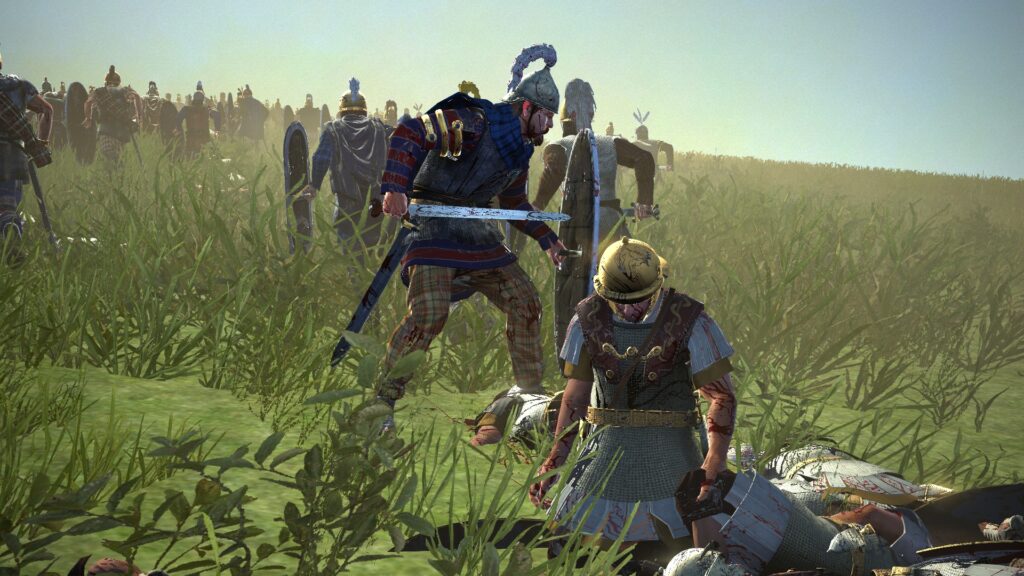
Roman losses were considerable. Approximately 700 soldiers were killed, including at least 46 centurions. As officers who typically led from the front, centurions often suffered especially heavy casualties, particularly when operations broke down. On the following day, Julius Caesar assembled the legions and addressed them. He commended their courage, but also criticized their failure to maintain discipline during the engagement.
In closing, Julius Caesar reassured his troops that the defeat had resulted from unfavorable terrain, strong enemy defenses, and a failure to follow orders, rather than any superior fighting ability on the part of the Gauls. To reinforce this message, he spent the next two days positioning his army on advantageous ground—likely along a ridge—and drew them up in battle formation, openly challenging Vercingetorix to engage in open combat.
When Vercingetorix declined to engage under conditions that favored the Romans, Julius Caesar used this to reassure his troops, presenting it as evidence that the enemy remained wary of them. On the following day, he withdrew from the area, advancing instead toward the territory of the Aedui rather than retracing his previous route.
Within three days, the Romans reached the Allier, rebuilt a destroyed bridge, and crossed without opposition from the Gaulish army. Julius Caesar recognized that his withdrawal had created a negative impression, and his attempt to offset it with a minor success had failed. News of this encouraged more tribes, including the Aedui, to join the revolt. The leaders of the cavalry with Caesar requested to return home, and he allowed it, preferring not to worsen the situation by forcing them to stay against their will.
With the revolt gaining momentum, the situation was becoming increasingly dangerous for Julius Caesar. He could no longer rely on intimidation or momentum alone. Every march… every decision… now carried the risk of total collapse. And yet, he did not retreat from Gaul. Instead, he prepared for the next—and final—confrontation. But that is a story for another day.
© 2026 History and War
Author: Jishu Roy
Unauthorized reproduction of this content is prohibited.