The Shadow of Carrhae: Rome and Parthia at the Breaking Point
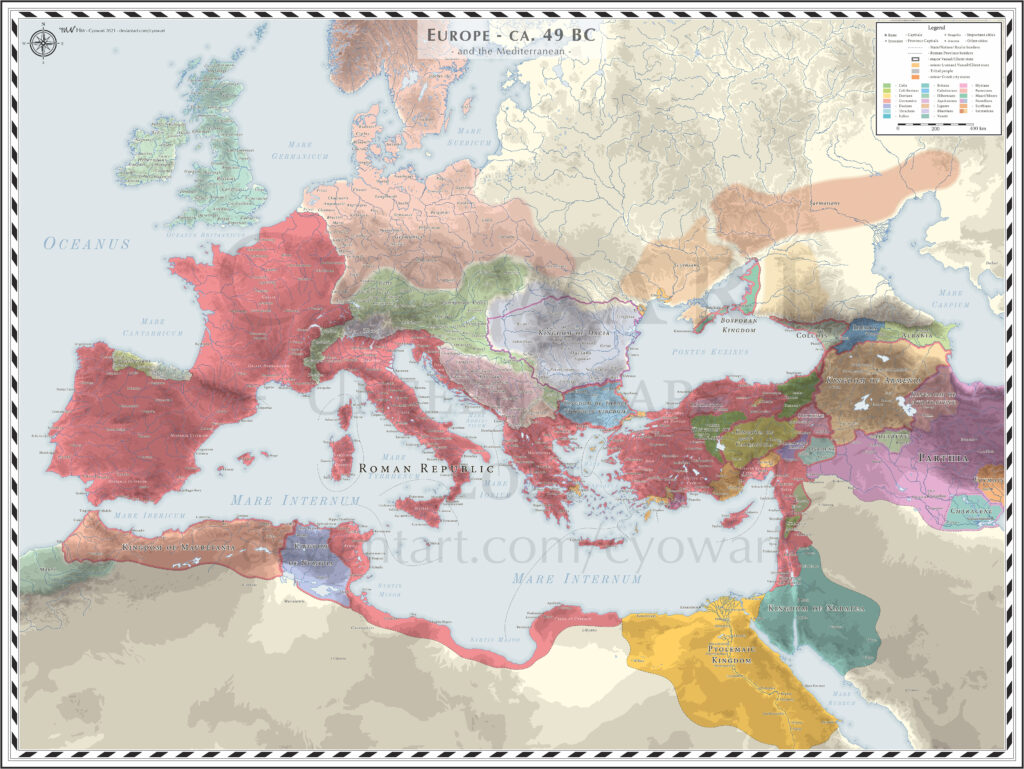
Map © Cyowari
In 53 BC, the disaster at Carrhae broke more than a Roman army. Blood soaked the sands of the East, a commander fell, the legionary standards were taken, and with them died the belief that Rome could not be challenged beyond the Euphrates. The Parthians learned a brutal truth: Rome could bleed. In 51 BC, that truth was tested again—this time in Roman Syria. What followed was not a single battle, but a campaign of violence and resolve. Parthian riders cut through the province, a siege pressed against the walls of Antioch, and Roman commanders chose endurance over pride. Then, when the moment came, Rome answered with steel. In a sudden ambush, blood repaid blood, honor answered humiliation, and the invasion ended in retreat. Raid, siege, and ambush—woven into a single, deadly campaign, on a frontier where every step was perilous, where survival was seized by courage and cunning, and where Rome learned once more that power must be earned, not assumed.
Aftermath of Carrhae: The Collapse of Roman Authority in the East
Roman–Parthian relations deteriorated sharply after the ill-judged eastern campaign of Marcus Licinius Crassus. That expedition ended in catastrophe at the Battle of Carrhae in 53 BC, where the Roman army was destroyed and Crassus himself was killed. The Parthian commander Surena’s victory was not merely a tactical success but a strategic turning point. It brought Roman expansion in the East to a halt, restored Mesopotamia to Parthian control, and effectively fixed the Euphrates as the frontier between the two powers.
Carrhae also transformed the broader balance of power. For the first time, Rome faced a rival in the East that could defeat it decisively in open warfare. Parthia emerged as Rome’s equal, and the two states became enduring geopolitical competitors for centuries to come. In this context, Parthian actions in 51 BC were both retaliatory and opportunistic. Seeking to avenge Roman aggression and to exploit the weakness of Roman defenses after Carrhae, Parthian forces launched a major raid into the province of Syria, directing their pressure toward its administrative center, Antioch.
The Parthian raid was formally led by Prince Pacorus I, although effective command rested with the experienced general Osaces. News of the invasion reached Marcus Tullius Cicero, then serving as governor of the neighboring province of Cilicia, probably in late August 51 BC. Cicero’s correspondence reflects both the speed of the Parthian advance and the alarm it caused along Rome’s eastern frontier.
At the time, the province of Syria was governed by Gaius Cassius Longinus. His position was precarious: the forces available to him were limited, and his authority was temporary, as he was awaiting replacement by the incoming governor, Marcus Calpurnius Bibulus. These constraints left Syria poorly prepared to respond to a major Parthian incursion, increasing the strategic importance of Antioch and the urgency of coordinated Roman action.
Parthian Incursion: Mobile Warfare on the Syrian Frontier
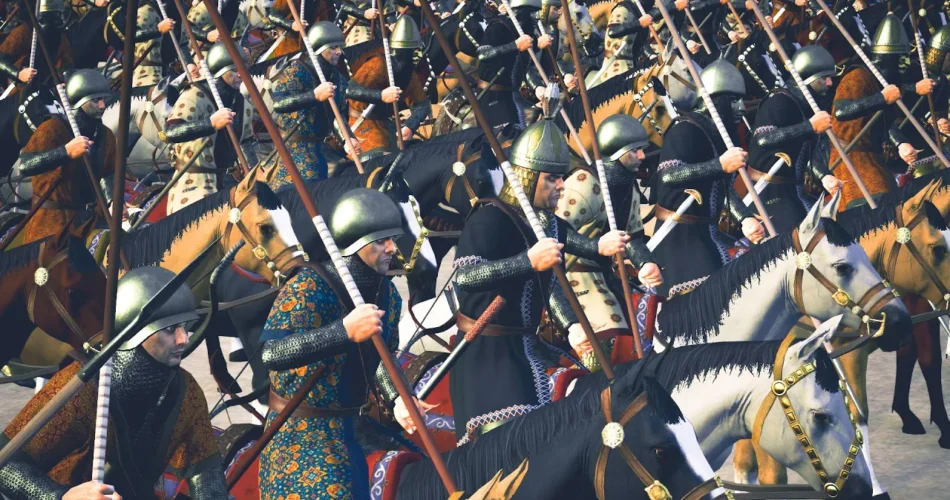
The Parthian raiding force established a camp at Tyba before advancing toward Antioch. The objective of the Parthian operation was plunder rather than permanent occupation, in keeping with Parthian strategic practice at this stage. Accordingly, the core of their force consisted of cavalry, which provided the mobility and striking power necessary for rapid raids rather than sustained territorial control.
Antioch Under Pressure: The Limits of Parthian Siege Warfare
Meanwhile, Cassius, whose forces were insufficient to confront Osaces in open battle, remained confined within Antioch. The absence of Roman field operations encouraged the Parthians to attempt a siege of the city. This, however, lay outside their customary method of warfare. The Parthians had limited experience in besieging large, well-fortified urban centers such as Antioch, and the raiding force lacked the specialized equipment necessary for a prolonged assault. Consequently, despite being restricted to a defensive posture, the Roman garrison succeeded in repelling the Parthian attack.
In essence, Pacorus and Osaces showed little indication of pursuing a sustained occupation of Syria. Apart from their advance on Antioch, the course of their campaign was irregular, characterized by rapid movements and shifting attacks from one city to another. There is no firm evidence to support the view that King Orodes II seriously intended the permanent conquest of Syria in the period from 52 to 50 BC.
He appears to have pursued a more limited objective. The only clearly identifiable aim of the Parthian operation was to advance as far as Antioch and mount a demonstration of force against it. There is no indication that Orodes ordered his commanders to remain in the field until the city was subdued. Rather, Osaces and Pacorus seem to have had no intention of conducting a full-scale siege. A brief assault on Rome’s principal city in the region was sufficient to make their point, and subsequent movements against other cities may have been intended primarily to spread fear and uncertainty throughout the province.
Roman Adaptation and Parthian Losses
The Parthians subsequently withdrew toward the city of Antigonia, which they considered easier to capture. According to Cassius Dio, they encountered unexpected difficulties there due to the dense woodland surrounding the city. The Parthians attempted to clear these woods, but the effort proved time-consuming and ineffective. During this period, Cassius’ forces exploited the situation by attacking Parthian detachments when they found them dispersed. Faced with mounting losses and limited progress, the Parthians ultimately abandoned the attempt and redirected their operations toward other areas.
Cassius, who had taken part in the disaster at Carrhae a few years earlier and had distinguished himself there more effectively than his commander-in-chief, now applied the lessons of that experience. Against the Parthians, he deliberately turned one of their favored stratagems to Roman advantage: a small Roman detachment engaged the enemy and then deliberately feigned retreat.
The Parthians took the bait.
Confident in their superiority in mobility and missile fire, they responded as they had done so many times before. When the small Roman detachment broke contact and withdrew, the Parthian cavalry surged forward in pursuit. It was the same pattern that had destroyed Crassus’ army on the plains of Carrhae: rapid advance, pressure without pause, and the expectation that Roman cohesion would dissolve under pursuit.
This time, it did not.
Cassius had chosen the ground carefully. As the Parthians pressed on, their formation stretched and fragmented, the speed of pursuit overriding coordination. At that moment, Roman troops concealed nearby rose and struck. The feigned retreat ended abruptly. Heavy infantry turned back in disciplined ranks, while additional Roman forces closed in from the flanks. The Parthians, now compressed into terrain unsuited to their style of warfare, found themselves unable to deploy effectively or disengage at will.
What followed was not a grand set-piece battle, but a sharp and brutal encounter. Roman pila found their targets at close range, shields locked and lines held firm. The Parthian cavalry, deprived of space and surprised by resistance where collapse had been expected, suffered heavily. In the confusion, command and control broke down. The very tactic that had once annihilated Roman legions now worked against its inventors.
Among the fallen was Osaces himself, the effective commander of the expedition. His loss proved decisive. According to Cassius Dio, he was killed in the fighting. Cicero, however—who was operating in the same theater and was therefore likely better informed—states that Osaces was seriously wounded and later died from the effects of those injuries. With their leadership struck down and losses mounting, the Parthians disengaged and withdrew. The raid had failed. The psychological initiative, so firmly in Parthian hands since Carrhae, was broken—if only briefly.
In Rome, the significance of the encounter was immediately recognized. Though modest in scale and limited in strategic consequence, it carried immense symbolic weight. For the first time since the catastrophe of 53 BC, Roman arms had defeated the Parthians in the field using discipline, patience, and tactical adaptation. It was spoken of as a revenge for Carrhae—not because it erased that disaster, but because it proved that Rome had learned from it.
This was not the restoration of Roman dominance in the East. It was something more restrained, and perhaps more important: a recovery of confidence. On a frontier still defined by fear and uncertainty, Cassius had shown that Parthian methods of war—especially their reliance on speed, mobility, and feigned retreat—could be anticipated and countered, and that Roman defeat need not be permanent.
Strategic Rebalancing: Rome’s Partial Recovery and the End of the 51 BC Crisis
After the death of Osaces, the Parthian forces spent the winter in northern Syria. In 50 BC they again attempted to besiege Antioch. On this occasion the city was defended by Bibulus, who employed a combination of defensive measures and psychological tactics to disrupt cohesion within the Parthian camp. Unable to achieve a decisive result, the Parthians eventually withdrew from Syria in the latter half of 50 BC.
© 2026 History and War
Author: Jishu Roy
Unauthorized reproduction of this content is prohibited.