The Road to the Battle of Nisibis
For nearly three centuries, Rome and Parthia had faced each other across the eastern frontier—two empires locked in a struggle neither could fully win, nor afford to lose. Borders shifted, kings rose and fell, and every peace was only a pause before the next war. In AD 217, that long rivalry erupted one final time on the plains of Nisibis. What began in confusion and skirmish became a brutal, three-day clash of cavalry, arrows, and iron discipline. The fighting was fierce, confused, and relentless, driven as much by accident and miscalculation as by strategy. When it ended, the balance of the ancient world had already begun to break. This is the story of the Battle of Nisibis—the last great clash between Rome and Parthia.
The Parthian Civil War and the Rise of Artabanus IV
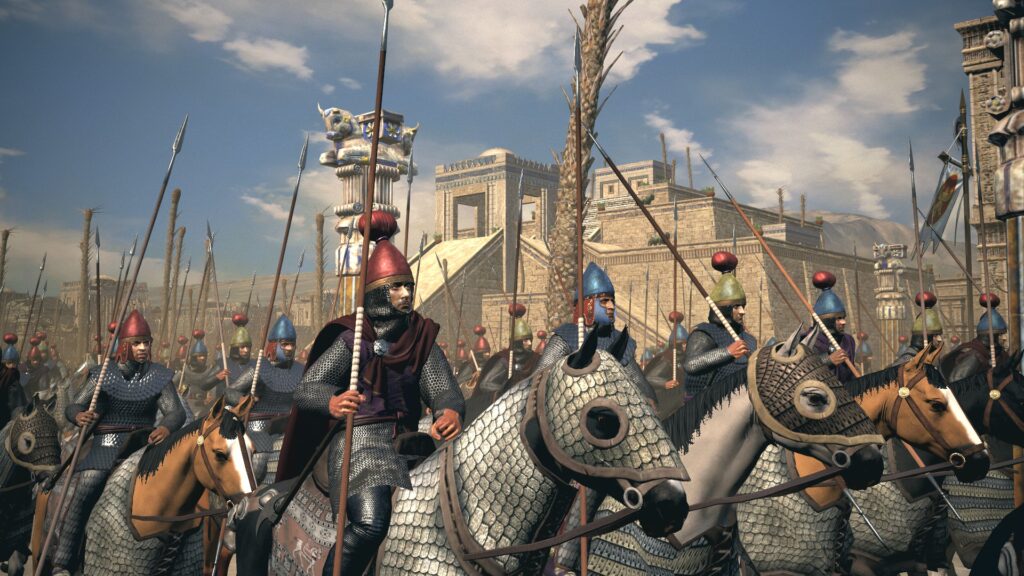
Following the death of Volagases V in AD 208, a succession struggle erupted between his two sons, Artabanus IV and Volagases VI, over control of the Parthian throne. Classical Roman sources generally portray Artabanus as the clear victor and sole ruler of the Parthian Empire from approximately AD 216 onward. Numismatic evidence, however, presents a more complex picture. Parthian coinage suggests that both brothers continued to assert royal authority for nearly two decades after their father’s death, until the rise of the Persian revolt.
The rivalry between the two brothers appears to have developed into a full-scale civil war that continued for several years. When the Roman emperor Caracalla succeeded his father, Septimius Severus, in AD 211, he viewed the Parthian conflict with satisfaction. In AD 212, he reportedly informed the Roman Senate that the ongoing struggle within Parthia could only weaken one of Rome’s principal rivals.
During the early stages of the conflict, the advantage seems to have rested with Vologases VI. In AD 215, Caracalla formally recognized him as the ruler of Parthia, suggesting that his claim to the throne was then regarded as the stronger of the two. The situation soon changed, however. After AD 215, Vologases largely disappears from the historical record, while Roman sources increasingly depict Artabanus IV as the dominant Parthian ruler. Caracalla subsequently conducted diplomatic negotiations with Artabanus IV and treated him as the sovereign of the Parthian Empire.
Numismatic evidence indicates that the reality was more complicated than the Roman accounts suggest. Coins issued by both claimants demonstrate that Vologases VI did not entirely abandon his royal ambitions. Nevertheless, the literary sources imply that from approximately AD 216 onward, his influence declined significantly. Although he may have continued to challenge Artabanus IV and retain supporters in certain regions, he no longer posed a serious threat to his brother’s supremacy and gradually fell from the status of rival king to that of a largely ineffective pretender.
There is little doubt that Artabanus IV secured control over the western regions of the empire, as he was the only Parthian king recognized by the Romans between AD 216 and AD 226. At the same time, Volagases VI appears to have retained authority over parts of the empire, where his rule may have continued largely independent of his brother’s administration. Such a division of power likely weakened the cohesion of the empire and must be considered when assessing the challenges faced by the final Arsacid ruler.
Caracalla’s Eastern Ambitions
Having effectively reduced his brother to the position of a marginal claimant and secured widespread recognition as king, Artabanus IV soon found himself confronted by a new and formidable challenge. The accession of the Roman emperor Caracalla had introduced a dangerous element into eastern affairs. From the beginning of his reign, Caracalla displayed an intense and often reckless ambition, particularly in relation to military expansion in the East. Fascinated by the legacy of Alexander the Great, he styled himself as a second Alexander and sought to emulate the Macedonian’s conquests. The extension of Roman power into the Near East quickly became one of his principal objectives, and he showed little regard for diplomatic norms or honorable conduct when pursuing this goal.
As early as AD 212, Caracalla moved against the client kingdom of Osrhoene. Summoning its ruler, Abgar XI, to appear before him, he took advantage of the king’s compliance by arresting him and placing him in captivity. Claiming that the kingdom had thereby forfeited its independence, he annexed Osrhoene and incorporated it directly into the Roman Empire as a province.
Encouraged by this success, Caracalla attempted to employ similar tactics in Armenia. Although the Armenian king and members of the royal family were successfully lured into Roman custody, the Armenian people reacted very differently. Outraged by the imprisonment of their monarch, they rose in revolt. When, in AD 215, Caracalla dispatched a Roman force under his favorite officer, Theocritus, to suppress the resistance, the Armenians inflicted a significant defeat upon the invading army.
The Causes of the Battle of Nisibis
Rather than discouraging him, this setback only strengthened Caracalla’s determination to achieve military glory in the East. Even before the Armenian campaign, he had begun seeking a pretext for war with Parthia. In AD 214, he demanded that King Vologases VI surrender two prominent political refugees who had sought protection within Parthian territory. The crisis he hoped would lead to war was temporarily averted when the Parthian king complied with the demand, thereby postponing the confrontation that Caracalla clearly desired.
By surrendering the two refugees demanded by Rome, Vologases VI temporarily avoided the conflict that Caracalla had sought to provoke. The Roman emperor was obliged, at least publicly, to express satisfaction with the concession. Nevertheless, his ambitions remained unchanged, and within a year he had devised a new strategy for advancing Roman interests against Parthia.
At roughly the same time, Vologases VI was forced to relinquish control of the western capital to his brother, Artabanus IV. As a result, Artabanus IV emerged as the principal representative of Parthian authority in the eyes of the Roman government. Seeking to exploit the situation, Caracalla, who had transferred his residence from Nicomedia to Antioch in the summer of AD 215, dispatched an embassy to the Parthian court. The envoys carried lavish gifts and a proposal unlike any previously made between the two great powers.
According to the message they delivered, the Roman emperor considered it beneath his dignity to marry the daughter of a private citizen or become the son-in-law of anyone lacking royal status. Consequently, he requested the hand of Artabanus’ IV daughter in marriage. The proposal was presented as a means of uniting the two dominant powers of the known world. Once joined by dynastic ties, Rome and Parthia would no longer regard one another as rivals separated by a frontier but as partners sharing a common destiny.
The embassy argued that such an alliance would create an unprecedented concentration of military and political strength. Together, the two empires could extend their influence over the surrounding peoples and maintain control through a coordinated system of government. Rome possessed the finest infantry in the world, unmatched in close combat, while Parthia excelled in cavalry warfare and mounted archery. By combining these complementary military strengths, they would possess every major advantage required for success in war, making the establishment of a universal empire appear attainable.
The proposal also emphasized the economic benefits of closer union. The valuable spices, textiles, and luxury goods of the East, along with the metals, manufactured products, and resources of the Roman world, would no longer need to pass through restricted channels of trade. Instead, if Rome and Parthia became united through marriage and alliance, commerce could flow freely throughout their territories, allowing the peoples of both empires unrestricted access to one another’s products and wealth.
The proposal placed Artabanus IV in a highly difficult position. He found it hard to believe that Caracalla’s offer was genuine or intended to lead to an honorable alliance. To him, the scheme appeared unrealistic and politically implausible, the sort of proposal that no prudent ruler could easily accept at face value. At the same time, however, he was reluctant to offend the ruler of the Roman Empire or provide him with a convenient excuse for war.
Consequently, Artabanus IV adopted a cautious and diplomatic approach. Rather than rejecting the proposal outright, he sought to delay the matter by raising several objections and respectfully declining immediate compliance. In his response, he argued that such a marriage was unlikely to produce a harmonious union. The prospective bride and groom would come from vastly different cultural backgrounds, speaking different languages and following different customs and ways of life. These differences, he suggested, would inevitably create distance and misunderstanding between them.
Artabanus IV further pointed out that the Roman aristocracy contained many noble families whose daughters would be suitable matches for the emperor, just as the Parthian royal house traditionally sought spouses from within its own social and dynastic circles. In his view, it was neither necessary nor desirable for the ruling families of Rome and Parthia to intermarry. Such a union would depart from long-established traditions and blur the distinct identity and lineage that each dynasty sought to preserve.
By framing his refusal in these terms, Artabanus IV attempted to avoid a direct confrontation while rejecting a proposal that he almost certainly regarded with suspicion. His response reflected both diplomatic caution and an awareness that Caracalla’s intentions might extend far beyond the simple pursuit of a dynastic marriage.
The events that followed remain a matter of historical debate. It is unclear whether Caracalla interpreted Artabanus’ response as a definitive rejection of his marriage proposal and therefore resolved upon military action, or whether he regarded the reply as leaving room for further negotiations. The surviving ancient sources present sharply conflicting accounts.
According to the contemporary historian Cassius Dio, Artabanus IV firmly refused to give his daughter in marriage to the Roman emperor. Caracalla, viewing this refusal as an insult, subsequently launched his campaign against Parthia. Another contemporary author, Herodian, offers a very different version of events. He claims that Caracalla responded to Artabanus’ IV initial objections by dispatching a second embassy, which sought to reassure the Parthian king of the emperor’s sincerity. The envoys reportedly swore that Caracalla’s intentions were entirely peaceful and that he genuinely desired an alliance between the two empires.
According to Herodian, these assurances eventually persuaded Artabanus IV. Accepting the proposed marriage, he acknowledged Caracalla as his future son-in-law and invited him to travel to Parthia to receive his bride. Herodian then describes, in considerable detail, the emperor’s ceremonial journey through Parthian territory, the lavish hospitality extended to him, and the cordial meeting between the two rulers on the plains near Ctesiphon.
The apparent reconciliation, however, concealed a darker purpose. Herodian alleges that Caracalla had planned an act of treachery from the outset. At a moment when the Parthians were unprepared for hostilities, the Roman forces suddenly attacked. Artabanus IV narrowly escaped capture, while many of his attendants and soldiers, caught completely by surprise, were cut down without effective resistance. The Romans then proceeded to plunder and devastate portions of Parthian territory before withdrawing into Mesopotamia with considerable booty.
Traditionally, historians have tended to favor the account of Cassius Dio, who is generally regarded as the more reliable source. Nevertheless, there are reasons to question whether Herodian may preserve the more accurate outline of events in this particular instance. If Caracalla had indeed committed an act of such extraordinary bad faith, Dio—himself a prominent Roman official—may have had strong reasons to present the episode in a less damaging light. Furthermore, Dio’s narrative contains several difficulties and differs not only from Herodian’s account but also from that of Aelius Spartianus on important points.
For these reasons, it remains possible that Herodian’s version preserves the essential truth of the episode, even if his characteristic taste for dramatic storytelling led him to embellish certain details. While the precise sequence of events cannot be established with certainty, the evidence suggests that Caracalla’s campaign may have involved a calculated act of deception rather than a straightforward response to a diplomatic rejection.
Caracalla’s Invasion of Parthia
If the account of Spartianus is accepted, Caracalla started his invasion of Parthia advanced through Babylonia before penetrating deeper into Parthian territory. His return journey, however, appears to have followed a different route. According to the evidence preserved by Cassius Dio, the Roman emperor likely withdrew along the Tigris, passing through Adiabene and Upper Mesopotamia on his way back to Roman lands.
It was probably during this retreat that Caracalla committed one of the most provocative acts of the campaign. Near Arbela in Adiabene, a city long associated with royal burials and regarded in many respects as a sacred resting place of the dead, he ordered the desecration of the tombs of the Parthian kings. The remains of the Arsacid monarchs were reportedly scattered, and the sanctity of their burial places deliberately violated. The act offered no military advantage and appears to have been intended solely as an insult to Parthian pride and tradition.
For the Parthians, the outrage carried profound significance. Respect for the dead and the inviolability of tombs were deeply rooted cultural values, and the desecration of the royal sepulchres was viewed not merely as an act of vandalism but as a grave affront to the dynasty itself. The resentment it generated would contribute to the determination with which the Parthians later sought revenge for the injuries inflicted during Caracalla’s campaign.
After completing his raid, Caracalla retired to Edessa, where he spent the winter of AD 216–217. Following the hardships of the expedition, he devoted himself largely to leisure pursuits, particularly hunting and chariot racing. Yet he had no intention of abandoning his eastern ambitions. With the arrival of spring, preparations for a renewed offensive against Parthia created widespread anxiety among both the Parthians and their Median allies, who feared another Roman invasion.
The Assassination of Caracalla and the Rise of Macrinus
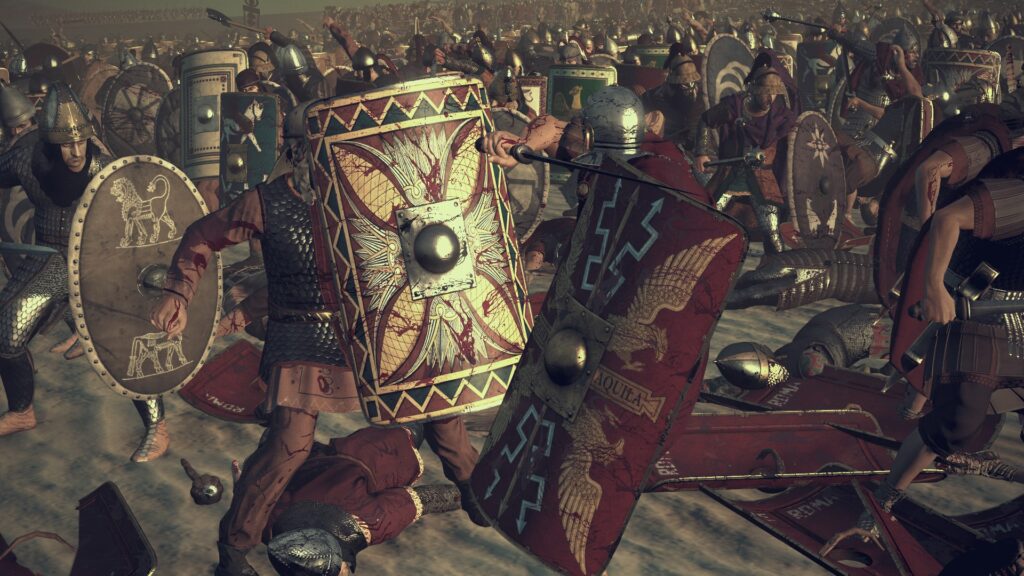
Events, however, took an unexpected turn before the campaign could begin. On 8 April AD 217, Caracalla departed Edessa with only a small escort while traveling to visit a renowned temple of the Moon God near Carrhae. During the journey, he was suddenly attacked and killed by Julius Martialis, a member of his own bodyguard. The assassination abruptly ended the emperor’s plans for further conquest and brought his eastern campaign to an unexpected conclusion.
The assassination of Caracalla in AD 217 dramatically altered the strategic situation between Rome and Parthia. In the immediate aftermath of the emperor’s death, the Praetorian Prefect Macrinus emerged as his successor. Unlike Caracalla, however, Macrinus was a cautious and pragmatic figure. Conscious of the suspicion that naturally surrounded the sudden death of an emperor, he refrained from openly claiming the throne for two days, fearing that the army might conclude that he had been involved in the conspiracy.
The ancient sources offer differing accounts of this brief interregnum. According to Herodian, there was even discussion of elevating Adventus, the other praetorian prefect, to the imperial office, but he declined on account of his advanced age. Cassius Dio, by contrast, states that Macrinus spent the intervening period securing the support of military units stationed throughout Mesopotamia before accepting power. On the fourth day after Caracalla’s death, which coincided with the birthday of Septimius Severus, Macrinus assembled the troops and allowed them to proclaim him emperor after a conventional display of reluctance. He subsequently informed the Senate that he had accepted the imperial dignity at the insistence of the army.
The new emperor immediately faced several serious challenges. The first was the army’s continuing loyalty to Caracalla. Many soldiers were deeply angered by the emperor’s murder, making it essential for Macrinus to distance himself from any suspicion of involvement. To reassure the troops, he supported the deification of Caracalla and promoted imagery depicting the slain emperor’s death and his own public mourning for his predecessor.
A second challenge involved constructing an effective administration. Macrinus, who had risen through the imperial bureaucracy rather than the senatorial aristocracy, naturally relied upon officials drawn from the court and equestrian service. He elevated several trusted administrators to prominent positions, including Ulpius Julianus and Julianus Nestor as praetorian prefects. Although Cassius Dio criticized these appointments, viewing the men as unworthy favorites of the previous regime, they were in fact representative of the increasingly influential bureaucratic class upon which a non-senatorial emperor was obliged to depend. Their advancement reflected the growing importance of the imperial court and administrative apparatus that had characterized the later Severan period.
Failed Peace Negotiations Before the Battle
The most pressing issue, however, was the war with Parthia. Upon learning of Caracalla’s death, King Artabanus IV seized the opportunity to seek redress for the injuries inflicted upon his kingdom. He assembled a large army and prepared to invade Roman Mesopotamia. According to Cassius Dio, Artabanus IV even demanded that Rome surrender the province of Mesopotamia, which had been incorporated into the empire under Septimius Severus.
Recognizing the dangers of a prolonged conflict, Macrinus initially attempted to negotiate a settlement. His efforts proved unsuccessful. Artabanus IV rejected the emperor’s overtures and presented a series of demands that reflected both practical and symbolic grievances. He insisted that towns and fortifications destroyed during Caracalla’s campaign be rebuilt, that Mesopotamia be restored to Parthian control, and that compensation be paid for the desecration of the Arsacid royal tombs. These demands were intended not only to repair the damage inflicted upon Parthia but also to restore the honor of the Arsacid dynasty.
For a Roman emperor, however, acceptance of such terms without resistance would have amounted to a humiliating admission of defeat. No ruler could reasonably agree to surrender territory and pay reparations without first testing the outcome of war. Consequently, despite his preference for peace, Macrinus resolved to meet the Parthian challenge on the battlefield, setting the stage for one of the largest and most significant confrontations of the late Roman-Parthian wars.
Armies at the Battle of Nisibis
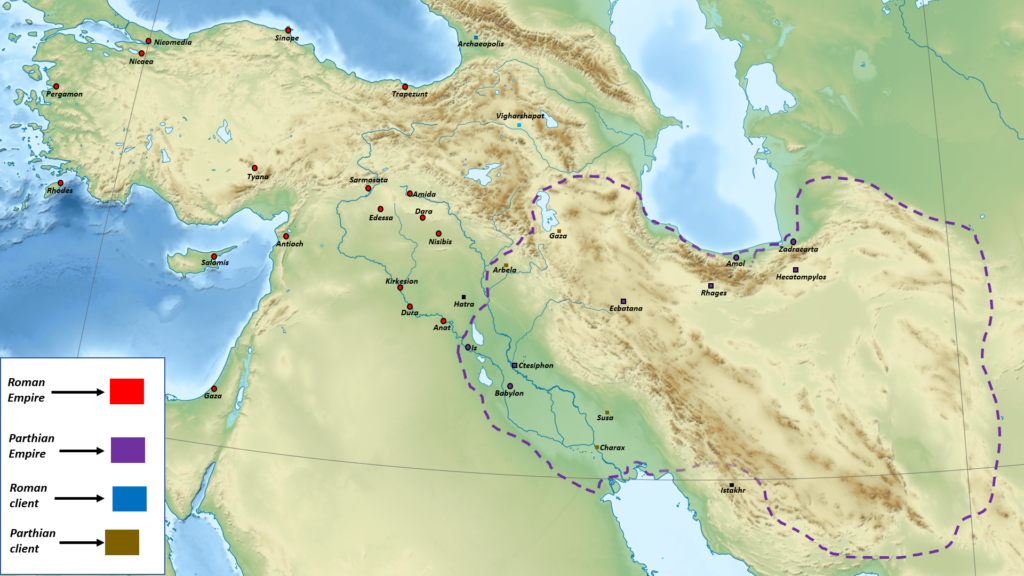
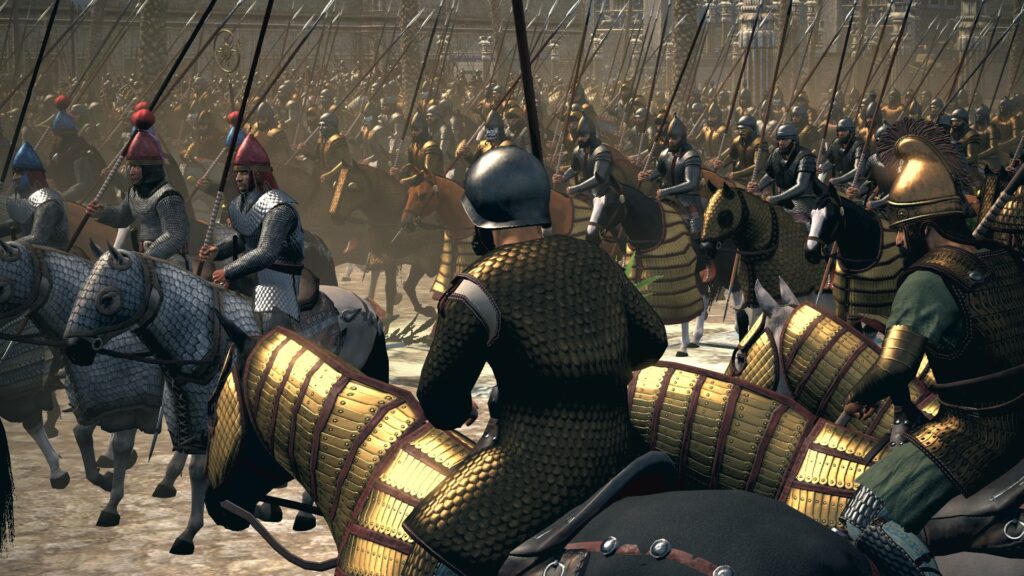
Artabanus IV advanced into northern Mesopotamia and moved against Nisibis, where the Roman emperor Macrinus gathered his forces to block the Parthian advance. The confrontation that followed was intended to settle the latest phase of the centuries-long struggle between Rome and Parthia. Ancient sources describe it as one of the fiercest and most hard-fought engagements ever fought between the two great powers. The battle raged for three days, with neither side able to secure a decisive advantage in the opening stages.
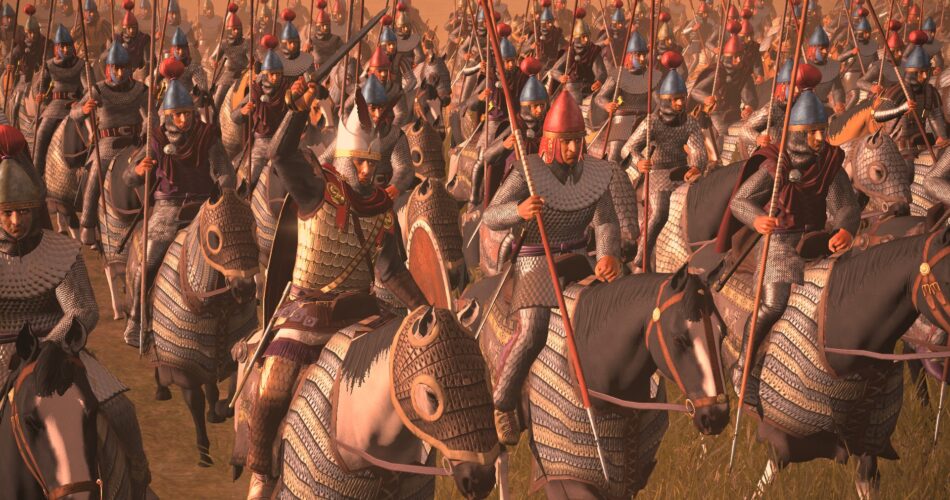
The Parthian army was large, well-equipped, and organized around the traditional strengths of Arsacid warfare. As in most Parthian campaigns, cavalry and mounted archers formed the backbone of the force. These troops excelled at mobility, harassment, and long-range combat, allowing them to exploit the open terrain of Mesopotamia. In addition, Artabanus IV fielded a contingent of heavily armored cataphracts. Unlike the more familiar horse-mounted cataphracts, some of these elite troops fought from camelback, using dromedaries as mounts. Both rider and mount were protected by armor, while the warriors themselves were armed with long spears or lances designed for powerful shock attacks. Herodian highlights these unusual camel-mounted cataphracts as one of the distinctive features of the Parthian army during the campaign.
The Roman army reflected a very different military tradition. Its core consisted of disciplined infantry formations drawn from the legions, whose strength lay in close-order combat, battlefield cohesion, and tactical flexibility. Supporting the legions were various auxiliary units, including lightly armed troops and a contingent of Mauretanian cavalry. These forces provided mobility and skirmishing capabilities that complemented the heavy infantry upon which Roman battlefield doctrine primarily relied.
The Battle of Nisibis therefore represented more than a clash between two armies; it was a contest between two contrasting military systems. The Romans depended on the endurance, discipline, and staying power of their infantry, while the Parthians sought victory through the speed of their cavalry, the accuracy of their mounted archers, and the devastating charge of their armored cataphracts. The prolonged struggle that unfolded outside Nisibis demonstrated the strengths and limitations of both approaches and became one of the most memorable engagements of the final decades of the Parthian Empire.
The Battle of Nisibis
According to Cassius Dio, the battle was triggered by a minor skirmish over access to a water source. While the two armies were encamped facing each other, a dispute broke out between soldiers over control of the water supply. This small confrontation quickly escalated and nearly resulted in the loss of the Roman camp itself. The situation was only saved by the presence of armour-bearers and baggage handlers who happened to be nearby. Acting on impulse and confidence, they rushed forward and attacked the opposing forces. Their sudden intervention created confusion among the enemy, as their appearance and aggressive action made them seem like fully armed combat troops rather than camp followers or non-combat personnel.
This account differs markedly from that of Herodian, who presents the opening of the battle not as a chance escalation, but as a deliberate and organized assault initiated by the Parthian army. According to his narrative, Artabanus IV appeared at sunrise at the head of his large army. Following customary practice, the Parthians first greeted the rising sun before launching their attack. Almost immediately afterward, they advanced with a loud and coordinated charge, unleashing volleys of arrows while driving their horses forward at speed.
The Roman army had already been carefully arranged in preparation for engagement. The infantry formed a stable central line, while cavalry units and Moorish javelin troops were positioned on the wings. Between these formations, light-armed and highly mobile soldiers were stationed in such a way that they could be rapidly deployed wherever pressure was greatest. As the Parthian forces advanced, the Romans received the charge and the battle was fully joined.
In the initial phase of combat, the Parthians inflicted considerable damage from a distance. Arrows rained down upon the Roman ranks, and the heavily armored riders and camel-mounted troops added further pressure with long spears delivered from above. However, once the fighting closed to melee range, the Romans gained the advantage. According to Herodian, Roman troops employed a tactical withdrawal, drawing the enemy forward and then deploying concealed caltrops and other sharp iron devices scattered across the ground. Hidden beneath the surface of the sand, these obstacles were not visible to the advancing cavalry and camel riders, causing severe disruption as they injured and unhorsed the Parthian forces.
The deployment of concealed caltrops and similar iron devices had a particularly devastating effect on the Parthian cavalry and, above all, on the more vulnerable camel-mounted troops. Both horses and dromedaries, especially the latter with their soft feet, were injured when they stepped on these hidden weapons, causing them to stumble and collapse. As the animals fell, their riders were thrown and often left exposed on the ground. According to the narrative, Parthian effectiveness in warfare depended heavily on mobility and mounted combat; once unhorsed, they were far less capable in close-quarters fighting and could be captured with relative ease. Their flowing garments also became a disadvantage when retreating or pursuing, as they could easily entangle the legs and hinder movement.
The fighting continued for the remainder of the day without producing a decisive result. Ancient accounts suggest that the engagement ended inconclusively, with both sides withdrawing to their respective camps while each claimed success. On the following day, combat resumed and again lasted from morning until evening, but still without a clear outcome.
On the third day, however, the scale and intensity of the battle increased significantly. The Parthian forces, which were numerically superior, attempted to encircle the Roman army. In response, the Romans abandoned attempts to maintain a deep formation and instead extended their line, seeking to prevent encirclement and stabilize their front across a wider area. This adjustment allowed them to resist the Parthian manoeuvre and hold their position.
The scale of the fighting produced catastrophic losses on both sides. The battlefield became so densely covered with dead soldiers and animals that movement was severely restricted. Bodies accumulated in such numbers that they formed obstructive heaps across the plain, particularly where camel-mounted troops had fallen in large concentrations. The accumulation of corpses eventually created physical barriers that prevented effective engagement. With visibility and movement impaired, neither side was able to press its advantage, and the battle ultimately dissolved as both armies withdrew once more to their camps.
The Aftermath
Under these circumstances, Macrinus reopened negotiations with Artabanus IV. He was prepared to make greater concessions than he had originally offered, while also calculating that the Parthian king, having encountered unexpectedly strong Roman resistance, would be willing to moderate his demands. This expectation proved correct. Artabanus IV eventually abandoned his claim to the cession of Mesopotamia and instead agreed to accept financial compensation.
In addition to the return of prisoners and booty taken during Caracalla’s earlier campaign, Macrinus secured peace through the payment of an enormous indemnity, estimated at approximately 200 million sesterces (or about 50 million denarii), distributed both as direct gifts to Artabanus and as payments to influential figures within the Parthian elite. The settlement was presented in Rome as a diplomatic success, and Macrinus was offered the honorific title “Parthicus,” which he declined. Nevertheless, coin issues from AD 218 carried victory propaganda suggesting Roman success over Parthia. In reality, the agreement marked the effective conclusion of centuries of intermittent conflict, ending not in decisive conquest but in a financially costly compromise.
Soon after these events, internal instability overtook the Roman Empire. On 18 May AD 218, Elagabalus was proclaimed emperor by Legio III Gallica at Raphana. His forces advanced on Antioch, where Macrinus attempted to resist but was decisively defeated on 8 June. Following the collapse of his position and the defection of much of his army, Macrinus fled eastward in disguise but was captured near Chalcedon and later executed in Cappadocia. His son, Diadumenianus, whom he attempted to send to safety, was also intercepted and killed at Zeugma.
Meanwhile, the Parthian world itself was undergoing a parallel transformation. Artabanus IV faced mounting internal pressure from the emerging Sasanian power under Ardashir I, whose rebellion would ultimately bring an end to Arsacid rule. Although Nisibis is often regarded as the last major confrontation between Rome and Parthia, the broader struggle in the region did not cease; instead, it transitioned into renewed conflict between Rome and the newly established Sasanian Empire, a confrontation that would continue intermittently for centuries.
Bibliography
1) ROMAN HISTORY | Herodian
2) THE ROMAN EMPIRE AT BAY: AD 180–395 | David S. Potter
3) OME’S WARS IN PARTHIA: BLOOD IN THE SAND | Rose Mary Sheldon
© 2026 History and War
Author: Jishu Roy
Unauthorized reproduction of this content is prohibited.