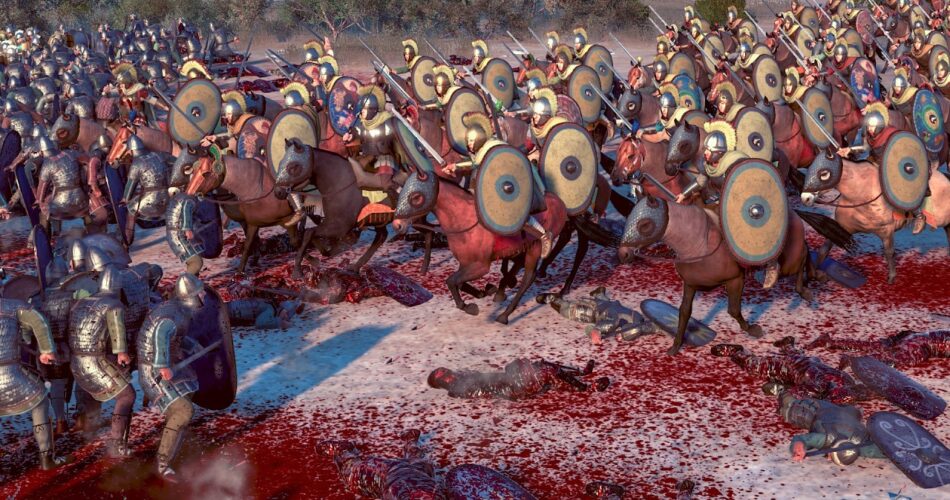
The Collapse of the Long Peace
Several factors contributed to the end of the longest period of peace that the Byzantine and Sassanian Empires had ever experienced. Persian King Kavadh, who had only recently regained his throne in AD 498 or 499 with the support of the Hephthalite Huns, found himself in urgent need of funds as his allies demanded payment. The situation was further complicated by recent changes in the flow of the Tigris in lower Mesopotamia, which led to both famine and flooding. When Byzantine Emperor Anastasius declined to offer any assistance in AD 501 or 502, Kavadh had little option but to seek the necessary funds through force.
Siege Of Theodosiopolis → Kavadh’s Invasion Begins
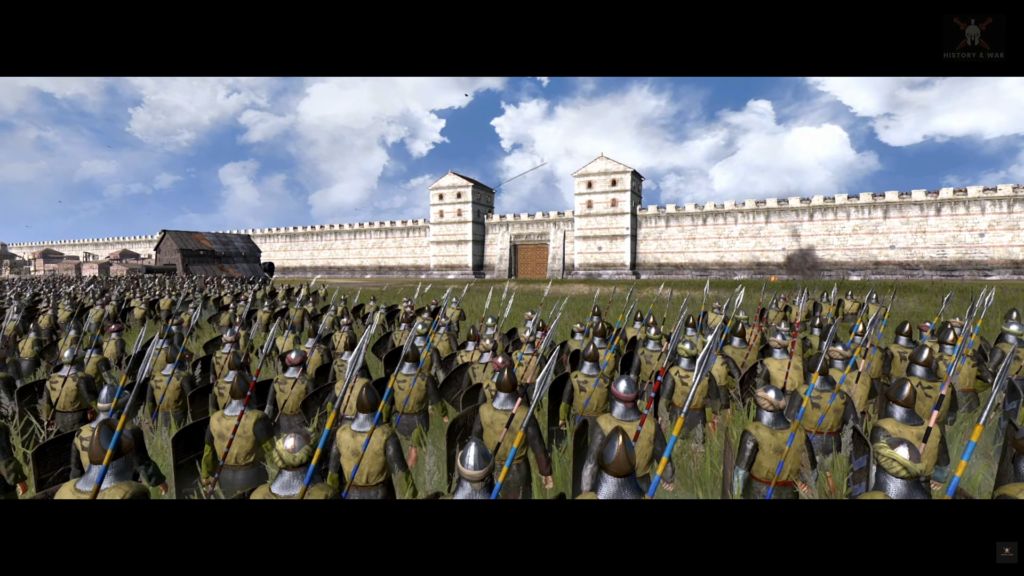
Kavadh, the ruler of the Persian Empire, strategically allied himself with various groups that had previously revolted against his reign. These included the Tamuraye, a fierce and resilient tribe, the Qadishaye, known for their tactical prowess, as well as the Arabs and the Armenians, whose motivations for joining him varied significantly. Some of these factions were eager to support his cause, driven by personal grievances or a desire for change, while others were coerced or felt compelled to participate against their will. In August of 502, seizing the opportunity for expansion, Kavadh launched a bold invasion into Roman territory. His forces advanced swiftly and decisively, managing to capture the crucial city of Theodosiopolis, located in the region of Armenia Interior. The city seemed particularly vulnerable, possibly benefiting from local support that had remained unexamined. However, Theodosiopolis was largely undefended, with a minimal military presence and weak fortifications, rendering it an easier target for Kavadh’s experienced troops. The siege was relatively unchallenged, and once the city fell, Kavadh demonstrated a surprisingly merciful approach towards its inhabitants. He sought to win their favor and prevent further dissent, which was a tactical move to consolidate his control over the newly acquired territory. However, in a calculated decision, he captured Constantine, the prominent leader of Theodosiopolis, ensuring that he could quash any potential rebellions and send a clear message regarding the consequences of opposing his rule. This act solidified Kavadh’s authority in the region, setting the stage for the complexities of governance that would follow.
The Surrender of Martyropolis
Anastasius became aware of Kavadh’s military preparations only after the Persian king had initiated his invasion. In a moment of urgency, he quickly dispatched his trusted envoy, Rufinus, with the mission to persuade Kavadh to reconsider his aggressive actions. However, the situation had already escalated. After successfully captured Theodosiopolis, Kavadh swiftly redirected his forces southward, overwhelming the largely unprotected Armenian satrapies that lay in his path. As Kavadh advanced, he paused at the city of Martyropolis, where the local satrap, Theodore, recognizing the futility of resistance, surrendered without confrontation. In a show of compliance, he handed over two years’ worth of accumulated taxes from the satrapy of Sophanene, a significant sum meant to sustain the Persian campaign. Following this acquisition of resources, Kavadh decided to leave Theodore in control of Martyropolis, ensuring that he would have a loyal ally overseeing the region as he continued his military campaign towards Amida, a critical target in his quest for expansion.
The Great Siege of Amida
Near Amida, Rufinus encountered Kavadh but could not steer him off his intended path. The siege of Amida, a clear indication of Kavadh’s relentless desire for plunder, turned out to be a far more challenging endeavor than Kavadh had anticipated. Zachariah of Mytilene offers one of the most comprehensive accounts of a siege along the eastern frontier. In October, Kavadh arrived at Amida in Mesopotamia. Despite launching fierce assaults with sharp arrows from bows and employing battering rams to collapse the walls, along with shields made of hide to protect the men building the mound, he was unable to capture the city after three months of relentless effort. The men accompanying him endured great hardships due to constant work and fighting. Kavadh could hear the disorderly mockery of those on the wall, which filled him with indignation and regret. As winter’s harshness set in, he grew increasingly concerned—observing the Persians, clad in their loose garments, appearing ineffective; their bows weakened by the moist air; and the battering rams failing to breach the walls. In response, the defenders reinforced the walls by binding bundles of rushes with chains to absorb the impact of the battering rams.
Later in the siege, a group of chosen Persian soldiers ascended the siege mound and placed beams on the wall to create an entry point. They were supported by the king, who stood nearby with his army, offering support by providing weapons, shooting arrows, shouting commands, and inspiring his soldiers by his presence. Approximately five hundred Persian soldiers were involved in this effort. In response, the defenders threw ox-hide strips soaked in a mixture of vetch and myrrh oil onto the beams, creating a slippery surface. They poured additional liquid from the vetch onto the skins to increase slipperiness and set fire to the supports beneath the mound. After approximately six hours of intense combat, the Persians were unable to breach the defenses. Eventually, the fire grew and consumed the wooden supports, reducing the rest of the mound to ashes. As the mound collapsed, the Persian soldiers atop it were burned and injured, struck by stones hurled from the walls.
After Kavadh and his army faced defeat in their various assaults on the city, resulting in the death of many of his soldiers, his strength began to wane. He requested a small gift of silver in exchange for withdrawing from the city. However, the city council refused to pay this tribute. Frustrated and humiliated, Kavadh chose to continue the siege.
On the night when the city was finally subdued, darkness descended, accompanied by a black cloud that brought a gentle rain. This weather caused the sentries to lower their vigilance. A traitor informed the Persians of the situation, prompting them to send a small team to capture a section of the wall. This team scaled the wall and killed the sleeping Roman defenders, taking control of both a tower and the rampart. They then set up ladders against the wall and sent a message to the king.
Nearby sentries in a guard tower heard the commotion and raised an alarm, though some were hit by arrows from the Persians and were unable to continue. When word of the attack reached Cyrus, the governor, he quickly hurried to the scene. His torches made him visible, making him an easy target for the Persians, who stayed concealed in darkness. Cyrus was struck by an arrow and had to retreat.
At dawn, the king and his army arrived, positioning ladders against the city wall and commanding his soldiers to ascend. Many who attempted the climb faced dire consequences, struck by arrows and stones or repelled by spears. Those who retreated down the ladders in fear were met with the king’s wrath, branded as cowards and deserters. Witnessing this, the remaining soldiers grew increasingly determined, resolved to conquer the city or to fight valiantly rather than incur the king’s disapproval. The king’s presence as an observer of their struggle further fueled their resolve.
As the defenders within the city worked to undermine the Persians’ position by loosening the keystone of the arch that supported the tower where their enemies had assembled, they faced mounting challenges. Despite their efforts to destabilize this crucial structure, additional towers continued to succumb to the Persians one after another, and the guards posted along the walls were systematically eliminated.
The Persians ultimately took control of the entire wall and held it for one day and two nights, during which they killed and drove back the guards. Eventually, they descended and opened the gates, allowing the army to enter after receiving the king’s orders to eliminate men, women, and people of all ages for three days and nights. The slaughter continued until the king commanded it to cease after this period. He appointed Glones to guard the city while he returned to the city of Nisibis, leaving the Persian forces positioned between Amida and Constantia.
War Across the Eastern Frontier
During the lengthy siege, King Kavadh of the Sasanian Empire gave strategic orders to his Lakhmid allies, who were under the leadership of their king, Na‘man. Kavadh instructed Na‘man to launch a campaign of devastation across the territories surrounding Carrhae, while another contingent of Lakhmid forces was dispatched to target the region near Constantia. These allied forces encountered staunch Roman resistance, which was commanded by the dux Olympius. In a series of fierce confrontations, they ultimately triumphed in a pivotal battle near Tell Beshme, showcasing their military prowess.
Na‘man’s troops did not stop at Carrhae. They boldly advanced and successfully penetrated deep into Roman territories, reaching as far as Edessa, a significant city known for its strategic importance. Meanwhile, in the southern front, Eugenius, the dux of Armenia, achieved a notable success by recapturing Theodosiopolis, a key stronghold that had previously fallen into enemy hands.
In an intriguing turn of events, Rufinus, an important figure who had been detained by Kavadh during the duration of the siege, was eventually permitted to leave and travel westward. Upon his arrival in the western cities, the news he carried about the siege and the developments in the east caused widespread alarm and concern among the populace and leadership alike. However, it is important to note that Emperor Anastasius had already begun to respond decisively to the unfolding situation upon receiving initial reports of the siege, indicating the gravity of the conflict and the urgency of his strategic decisions.
Anastasius Mobilizes for War
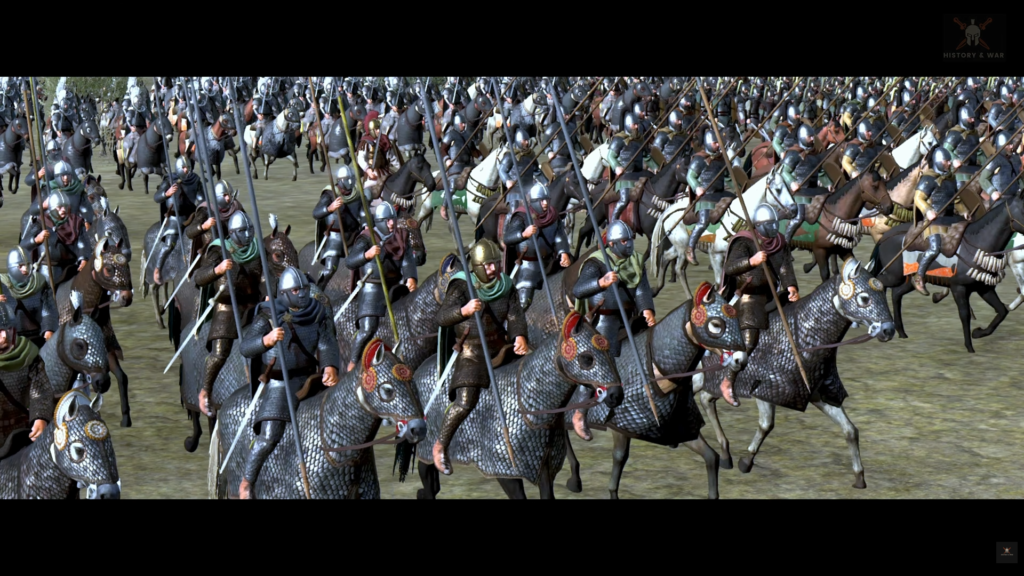
The emperor Anastasius, upon learning of the fall of Amida, dispatched a significant army of Roman soldiers to winter in the cities and fortify them. However, the loot Kavadh had seized and the captives he had taken were not sufficient for him; he remained unsatisfied with the considerable bloodshed he had caused. He sent ambassadors to the emperor demanding, “Send me gold, or prepare for war.” This ultimatum was issued in the month of April. The emperor, instead of complying with the demand for gold, chose to prepare for retaliation to seek justice for those who had fallen. In May, he sent three generals—Areobindus, Patricius, and Hypatius—along with numerous officers to confront Kavadh. The forces gathered at Edessa and Samosata. Areobindus moved down to encamp on the border near Dara and Ammodius, facing the city of Nisibis where Kavadh was residing. Meanwhile, Patricius and Hypatius set up their camp against Amida to drive out the Persian garrison, bringing with them 40,000 troops. Amida was held by a garrison of 3,000 under the command of Glones. The assembly of Roman forces represented the largest concentration seen on the eastern front since Julian’s invasion of Persia and was the largest Roman army gathered throughout the 6th century.
Kavadh’s Counteroffensive
Although Areobindus initially achieved notable success in his military campaign towards the fortified city of Nisibis, the tide turned against him in July when he encountered overwhelming Persian forces, which outnumbered his troops significantly. Faced with this daunting challenge, Areobindus sought assistance from his colleagues, Patricius and Hypatius. Unfortunately, their response was delayed and ultimately inadequate, compelling him to make a strategic decision to withdraw his forces westward to avoid complete encirclement.
In the following days, Patricius and Hypatius did manage to mobilize their armies to lend support, but their arrival came far too late to change the course of events. By the time they reached the battlefield, Areobindus had already moved further west and had abandoned his camp at Apadna. This camp, rich in resources and supplies, fell prey to the advancing Persian forces, who took advantage of the situation and proceeded to plunder the area.
The combined armies of Patricius and Hypatius soon found themselves engaged in a fierce confrontation with the Persian leader Kavadh. In the brutal clash that ensued between Apadna and Tell Beshme, the forces of the two generals faced a crushing defeat. As they attempted to retreat towards the city of Samosata, chaos ensued. According to the historian Zacharias, the cavalry, in particular, suffered devastating losses during this withdrawal, with many riders and their horses tragically tumbling from the treacherous cliffs of the surrounding mountains, highlighting the perilous conditions of their retreat.
Kavadh then continued his journey due west, first arriving at Constantia, although he was unable to capture the city. Frustrated in his attempt to conquer it but having received some supplies from the inhabitants, he proceeded further west to Edessa, reaching its vicinity in early September. The king sought to extort 10,000 pounds of gold from the city, but Areobindus refused to comply. Despite elements of the Persian army, particularly the Arabs, seizing much of Osrhoene, efforts to storm Edessa proved unsuccessful. After further failed negotiations, Kavadh was compelled to retreat to Persia due to dwindling provisions and the imminent arrival of additional Roman reinforcements.
Roman Victories Against the Lakhmids
In the midst of ongoing conflicts in the region, Timostratus, the dux of Osrhoene, who was stationed in the strategic city of Callinicum, achieved a significant military victory over the Lakhmid forces. This defeat was pivotal, demonstrating the effectiveness of his leadership and the strategy employed by his troops. Meanwhile, the Tha‘labites, a faction of Arabs allied with the Roman Empire, took advantage of the situation by launching a bold offensive against Hira, the capital city of the Lakhmid kingdom. Their attack showcased not only their determination to resist Lakhmid influence but also the growing coordination between local forces and their Roman allies.
The Trap and Death of Glones
As Kavadh launched his invasion of Osrhoene, a Roman commander by the name of Pharesmanes remained undeterred, continuing to exert pressure on the Persian garrison stationed in the fortified city of Amida. Meanwhile, Glones, commander Amida garrison, received misleading reports about a small contingent of Romans maneuvering in the vicinity of the city. Eager to establish his reputation and prove his valor, Glones made the ill-fated decision to leave the safety of Amida, assembling a force of only 400 horsemen to engage the purported Roman threat.
However, the information that Glones acted upon was a clever trap set by Pharesmanes, who had intentionally spread false intelligence to lure the Persian commander out of the safety of the city. As Glones and his troops moved into the open terrain, they quickly found themselves surrounded and outnumbered. A surprise attack by the Roman forces led to a rapid and brutal confrontation, resulting in a devastating defeat for the Persian troops. In this chaotic battle, Glones lost his life, and the Romans triumphantly took his head, which they carried back to Constantia as a grim trophy of victory. This event not only highlighted the strategic intelligence and tactical skill of Pharesmanes but also served as a stark reminder of the dangers of underestimating one’s opponent.
The Devastation of Palestine
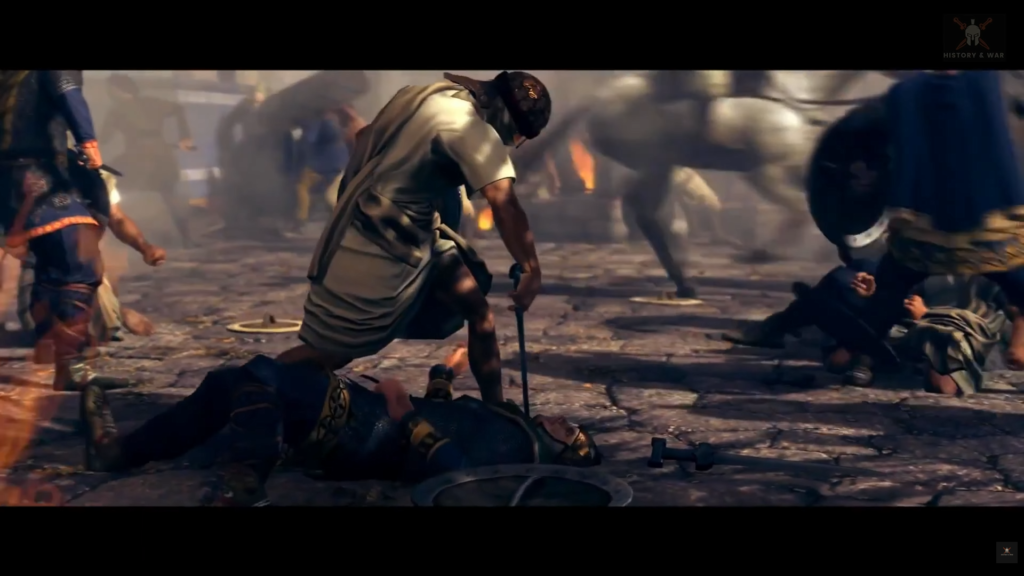
While the Roman forces were deeply occupied in the vast and challenging terrains of Mesopotamia, the newly appointed Lakhmid ruler, Mundhir, seized the opportunity to execute a bold and audacious campaign further south. In a fit of fury directed at the Roman Empire, he launched an invasion into the arid regions of Arabia and the surrounding territories of Palestine.
Mundhir’s forces swept through the landscape with ruthless efficiency, laying waste to towns and villages, uprooting crops, and instilling terror among the local populations. His men enslaved countless thousands of Romans caught in the turmoil, dragging them away to unknown fates and committing numerous lawless acts that further destabilized the region.
Byzantine Strikes Back
In the summer of AD 503, Emperor Anastasius dispatched additional reinforcements to the East, commanded by the magister officiorum, Celer. He also granted a temporary reprieve from taxes for the regions of Mesopotamia and Osrhoene. By late September, upon his arrival in Hierapolis, he recalled Hypatius and Apion, assigning the other commanders to their winter quarters. During the winter, Patricius relocated from Melitene to Amida to prevent the Persians from replenishing their supplies. Although a Persian force was sent to dislodge him, Patricius successfully defeated it and laid siege to the city. At this juncture, Kavadh was compelled to leave the front to address a Hunnic incursion, while Celer intensified pressure on the remaining Persian forces. In the spring of 504, from his assembly point at Resaina, Celer advanced north to join Patricius in the siege of Amida, having previously executed a successful raid on Persian livestock in the Jebel Sinjar. However, the defenses of Amida, despite the hardships faced by its inhabitants, proved too formidable for the besieging forces, who ultimately could not maintain the siege through the winter.
While the siege of Amida was ongoing, Celer launched raids against Beth Arabaye, the Persian territory located east of Nisibis. At the same time, Areobindus carried out a punitive expedition in Arzanene. The vulnerability of the Persian position was underscored by the defections of the renegade Constantine, the Arab chief Adid, and the Armenian Mushlek, along with his forces.
The End of the Anastasian War
As the war began to encroach upon Persian territory, Kavadh sought to avoid any further escalation. He dispatched a spahbadh to negotiate the surrender of Amida and returned the Roman hostages taken earlier. While Celer initially favored continuing the siege of Amida, convinced that its capture was imminent, he ultimately agreed to a truce when the Roman army proved incapable of maintaining the siege through the winter. Consequently, a truce was established, pending ratification by both rulers. Procopius notes that peace was set for a duration of seven years, and it is likely that some payments were made to the Persians. The Persians did not retain Byzantine territory, and no annual tribute was imposed, suggesting that the peace treaty was relatively lenient for the Byzantines.
John Lydian offers a decidedly negative evaluation of the Roman military efforts during the war. Commissioned to document Justinian’s conflict from 527 to 532, it’s clear he sought to downplay the accomplishments of previous emperors, similar to the approaches taken by Procopius and Marcellinus Comes. Roman generals attributed many of their challenges in this war to the absence of a significant base near the frontier—a role that Nisibis fulfilled for the Persians and had previously served the Romans before its secession in 363. In response, Anastasius ordered the construction of a substantial fortified city at Dara in 505. Additionally, the deteriorating fortifications at Edessa, Batnae, and Amida were upgraded. Following the successful conclusion of negotiations, Celer returned west and entered Edessa in triumph. Although no large-scale conflicts occurred during Anastasius’ reign, tensions persisted, particularly as work continued at Dara. Once Kavadh concluded his war with the Huns, he accused the Romans of violating the treaty established in 422, which prohibited further fortifications near the frontier. Nevertheless, Anastasius continued with the project, deflecting Kavadh’s complaints with bribes; the Persian king was ultimately unable to halt the construction. A few decades later, both sides would engage in battle outside the great fortress of Dara.
© 2026 History and War
Author: Jishu Roy
Unauthorized reproduction of this content is prohibited.