The Return of Vengeance
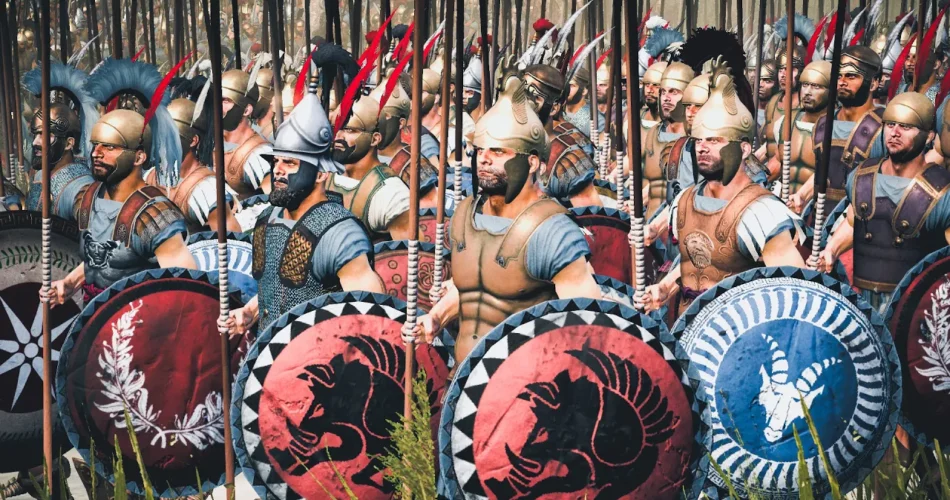
Seventy years after the decisive Greek victory at the Battle of Himera, the balance of power in Sicily once again began to shift. That earlier conflict had ended in a crushing defeat for Carthage, and with the death of the Carthaginian commander Hamilcar Mago, it marked a temporary withdrawal of Punic influence from the island. For decades thereafter, an uneasy peace prevailed between Carthage and the Greek cities of Sicily.
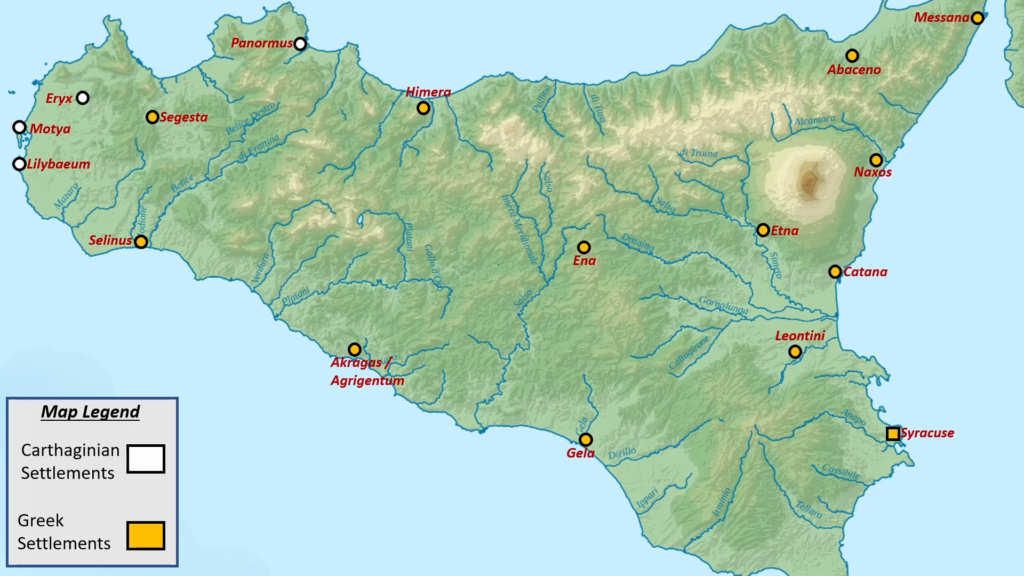
By 409 BC, however, this balance had collapsed. Under the leadership of Hannibal Mago, grandson of the fallen Hamilcar, Carthage launched a major expedition to reassert its power in Sicily. The campaign began with the destruction of Selinus, a Greek city overwhelmed by a large and well-prepared Carthaginian force. Its fall signaled not only the return of Carthaginian military ambition, but also the beginning of a wider and more aggressive intervention in Sicilian affairs.
With Selinus eliminated, Hannibal advanced northward toward Himera—the very city that had once dealt Carthage its humiliating defeat. The coming confrontation was shaped not only by strategy and territorial ambition, but also by memory and retribution. The siege that followed would become one of the most brutal episodes in the history of Sicilian warfare.
This article examines the events of the Siege of Himera in 409 BC, a campaign defined by vengeance, calculated military force, and the destruction of a city that had once stood at the center of Carthage’s greatest defeat.
From Selinus to Himera: The Path to Retribution
With the destruction of Selinus, Hannibal Mago had fulfilled the objectives laid out by the Carthaginian Senate. The mission had been clear: answer Segesta’s appeal for aid, punish Selinus for its aggression, and remove a dangerous Greek foothold from western Sicily. In just nine days of brutal siege and slaughter, Hannibal achieved all that Carthage had demanded. Selinus was no more. Yet Hannibal was not satisfied. His gaze turned northward, toward Himera — the city that had humiliated Carthage in 480 BC and where his grandfather, Hamilcar, had fallen in battle. Here lay his true purpose: vengeance. But Hannibal’s campaign was not driven by blood alone. Strategically, the elimination of Himera would secure Carthaginian dominance in western Sicily, intimidate other Greek cities into submission, and weaken Syracuse, the leading power of the island. The Syracusans, recognizing the scale of the threat, began hastily preparing to defend Himera.
The Siege of Himera
Breaking the Walls
After the destruction of Selinus, Hannibal swiftly advanced against Himera with his full force, joined along the way by a reported 20,000 Sicel and Sican allies. The city of Himera was strategically positioned on a hill rising 300 to 400 feet above the western bank of the River Himera. Its defenses were naturally strong: the northern, western, and eastern slopes were steep, while the southern side provided a more gradual ascent. Additional hills lay to the west and south of the settlement, shaping the battlefield. Upon arriving near the city, Hannibal divided his forces. Roughly one-third of his troops were stationed in a fortified camp on the hills south of Himera, tasked with blocking any Greek relief forces. The remainder of the army, bolstered by thousands of native auxiliaries, moved to attack from the west. Diodorus claims that Hannibal “invested” the city, yet the events that followed suggest otherwise. As at Selinus, Hannibal bypassed the traditional practice of surrounding and besieging the settlement; instead, he launched a direct assault on the walls with siege engines. The 6,000 defenders of Himera, rather than surrendering or seeking terms, resolved to fight.
Hannibal soon discovered that Himera would not yield as easily as Selinus had. The walls of the city, far more solid than those of its fallen neighbor, resisted the relentless pounding of his battering rams. Stroke after stroke rang out against the stone, but the walls stood firm, denying the Carthaginians their expected breach. Recognizing the futility of continuing in the same fashion, Hannibal ordered a different approach. He directed his engineers to employ sappers, men trained to burrow beneath the fortifications. Hidden beneath makeshift shelters, teams of soldiers began driving tunnels under the wall, reinforcing their shafts with wooden beams. When the work was complete, the supports were set aflame. With a roar, the ground shifted and collapsed, dragging a wide section of the wall down in a cloud of smoke and dust. Carthaginian trumpets blared. Soldiers surged forward, eager to pour into the breach and finish the work.
Yet the defenders of Himera, though shaken, did not break. Fighting with desperate courage, they met the attackers head-on in the rubble. For every Carthaginian who tried to climb through, a Greek spear or sword was waiting. Blood flowed across the broken stones as the Himerans hurled missiles from the ramparts and struck fiercely in close combat. In the chaos, the citizens of Himera displayed remarkable resolve. Working amid the fighting, they gathered the very rubble of their shattered defenses and piled it high, shaping a makeshift barrier where the wall had collapsed. What had seemed a gaping entry for the Carthaginians was transformed into a rough but stubborn line of defense. Meanwhile, salvation was on the way. The Syracusans, under the command of the general Diocles, marched with allied contingents to the city’s aid. They had been too late to save Selinus, but they would not allow Himera to fall so easily. With some 4,000 men, the relief army approached and pressed close to the Carthaginian positions. Hannibal, caught between fierce defenders within and the growing threat of reinforcements outside, was forced to call back his men. The assaults ceased, and the Carthaginian host withdrew to reorganize. For the moment, Himera had withstood the might of Carthage.
The arrival of reinforcements dramatically changed the situation at Himera. Three thousand Syracusan hoplites, one thousand troops from Agrigentum, and a contingent of mercenaries entered the city under the command of Diocles. Together with the Himeran force of roughly six thousand men—composed mainly of hoplites, supported by cavalry and peltasts—the defenders now possessed more than enough strength to withstand Hannibal’s siege. However, the Greeks chose not to remain on the defensive. The Himerans, unlike the people of Selinus who had endured a siege, resolved to take the initiative. Rather than waiting passively behind their walls, they prepared for a bold offensive. Leaving only a small garrison to guard the fortifications, the main body of the army assembled within the gates. At the chosen moment, the gates of Himera swung open and the Greek forces surged out in a coordinated sortie, determined to strike directly at the Carthaginian camp. What Hannibal had expected to become a war of attrition was suddenly transformed into an open battle, dictated by the boldness of the defenders.
The Sortie from Himera
At dawn, with the Carthaginians still scattered across their camps south of the city, the gates of Himera suddenly swung open. From them poured nearly ten thousand Greek soldiers, fighting now not only for their city but for their families who watched from the walls above. The assault fell with devastating force upon the Punic lines to the south, where Hannibal had stationed a third of his army to guard against relief forces. The Carthaginians were completely unprepared. Expecting the Greeks to remain caged within their fortifications, they had grown lax. The sudden rush of spears and shields shattered their cohesion before proper formations could be drawn. The historian Diodorus remarks that the Carthaginians suffered not only from the spears of their enemies, but from their own numbers. Pressed too tightly together in confusion, they trampled one another, unable to wield their weapons effectively. The Greek hoplites, advancing in ordered ranks, drove their spear-points into the mass of disarrayed soldiers. The weight of their phalanx, combined with the shock of their charge, broke the Punic line.
What began as a surprise soon turned into slaughter. Carthaginian soldiers, hemmed in by their comrades, could neither fight nor flee. Six thousand are said to have fallen in the rout. The Himeraeans and their allies, emboldened by the sight of their success and spurred on by the desperate cries of their kin watching from the city walls, pressed the attack relentlessly. For a moment, it seemed as though history itself was repeating—a second Marathon, where a disciplined citizen-army shattered a vastly larger invading force. The Punic camp was in chaos, fires breaking out as men stumbled over tents and trampled supplies in their panic. Those who escaped did so only by abandoning their arms and fleeing back toward Hannibal’s main encampment. The victory was not decisive enough to destroy the Carthaginian host altogether, but for that day the Greeks had achieved the unthinkable: they had turned back Hannibal Mago’s great army through sheer daring and discipline.
The Carthaginian Counterattack
The Greek pursuit carried them too far from the safety of Himera’s walls. Exhilarated by their sudden victory and the rout of the Punic lines, they pressed the chase across the plain, cutting down stragglers and scattering their enemy. Yet, in their eagerness, they lost cohesion. Their ranks stretched thin, hoplites running forward in knots rather than as one phalanx, the discipline of the formation giving way to the fury of the pursuit. It was then that Hannibal revealed his design. From the western heights, where his reserve had waited in silence, Hannibal gave the signal. At once, fresh Carthaginian troops swept down the slopes— Libyan spearmen, Iberian swordsmen, and cavalry — advancing in ordered lines against the scattered Greeks. The sudden counterstroke fell upon the pursuers with crushing weight. The Syracusan general Diocles tried desperately to rally his men, calling them back into formation, but the momentum had turned. What had begun as triumph dissolved into grim struggle. The Greeks fought stubbornly, the Himeraeans in particular refusing to yield, spurred on by the sight of their city behind them.
The clash was fierce and merciless, spear meeting spear, swords flashing in the dust. Slowly, the superior numbers and fresh strength of the Punic reserves prevailed. The main Greek body broke off and fell back toward the gates of Himera, retreating under the cover of their comrades. Yet not all could withdraw. Some three thousand warriors, whether cut off or choosing to stand, held their ground. Surrounded on all sides, they fought with desperate valor, refusing to yield an inch. Hoplites formed last stands around their standards, spears splintering, then swords drawn, battling until they were overwhelmed. One by one they fell, leaving the field heaped with their bodies — a grim monument to their courage. Though the sortie ended in bloody failure, its very audacity left its mark. The near success at Himera showed that aggressive sallies could break the momentum of a siege, a lesson that the Sicilian Greeks would carry into their future wars.
The Final Assault
At this stage, the defenders of Himera received additional support with the arrival of twenty-five Syracusan triremes. Hannibal’s fleet remained stationed at Motya, the principal Carthaginian naval base on the western tip of Sicily, leaving the Syracusans in full control of the sea. The arrival of the ships brought new hope to the besieged. Rumors quickly spread within the city that Syracuse was preparing not only a naval contingent but also a levy en masse, and that a large army would soon march to their aid.
But soon a deeply troubling report spread among the defenders. Word came that Hannibal was preparing to man his ships with chosen troops from his army, with the intention of striking directly at Syracuse once that city was left undefended by its fighting men. Faced with this alarming prospect, the Syracusan commander Diocles judged it too great a risk to remain at Himera. He ordered the fleet to return home at once. Before departing, however, the Syracusan crews agreed to take with them as many of Himera’s non-combatants as their ships could hold. The offer, though painful, was eagerly accepted. For the inhabitants of Himera, abandoning their homes was a dreadful prospect, yet it was the only hope of survival.
The Syracusan triremes could carry only about half of Himera’s population. Diocles therefore devised a plan: half the inhabitants would be evacuated to safety, while the remainder would stay behind to defend the city until the ships could return. With this arrangement in place, Diocles set out with his own troops for Syracuse. His departure was so hurried that he failed to collect the bodies of the Syracusan soldiers who had fallen in the fighting—an act considered sacrilegious, and one that later led to his exile. As the fleet prepared to depart, a large crowd of women and children rushed after it, fearful that they would be left behind and unable to find space aboard the ships.
At dawn the next day, Hannibal gave the signal for a renewed assault. The Carthaginian camp stirred like a vast hive, siege engines creaking forward, ranks of Iberian mercenaries tightening their shields in grim anticipation. Inside the battered city, the reduced garrison—exhausted but resolute—manned the crumbling walls. They knew their numbers were far too few, yet desperation lent them strength. For a full day they resisted, hurling missiles down upon the advancing enemy, and once more it seemed Himera might defy its fate. But on the following morning, the defenders’ hope rose and fell in the same breath. From the watchtowers, keen-eyed lookouts spotted the returning Syracusan triremes gliding toward the harbor. A murmur swept through the streets: salvation was near.
Yet even as the ships drew closer, a dull thunder shook the city walls. Hannibal’s great rams, pushed relentlessly by teams of sweating soldiers, smashed against the same weakened stretch of masonry again and again. Stone cracked, dust rose, and at last with a deafening roar, a section of the wall gave way. Through the breach surged Hannibal’s Iberians, hard-bitten mercenaries famed for their ferocity. They fought like wolves unleashed, storming the gap with savage cries. Scaling the ruins of the fallen wall, they seized the high ground on either side of the breach. From there, they rained javelins and stones down upon the Himeran defenders, keeping them pinned at a distance. Any attempt to retake the wall was met with a storm of missiles and flashing steel. Behind the Iberians, the weight of the Punic host poured into the city. Libyans, Phoenicians, and allies from across the sea pressed forward in an unstoppable tide.
The Himeraeans, already depleted by the earlier sortie and the departure of Diocles, were overwhelmed. Street by street, house by house, the Carthaginians advanced, cutting down all resistance in their path. The clash of bronze and the screams of the wounded echoed through the narrow alleys. By the time the Syracusan triremes reached the harbor, the Punic army was already inside the walls. The proud city of Himera, once defiant, had fallen. Its streets ran red with blood as Hannibal’s men secured their prize, and those who had not escaped with the first evacuation were left to the merciless fate of conquest.
Vengeance Fulfilled: The Fate of Himera
With the city taken, Hannibal turned to his own grim purpose. A massacre began, yet simple slaughter was not his aim. The soldiers were given the plunder of Himera, while the women and children were reduced to slavery. Approximately 3,000 surviving men were gathered and led to the very place where Hamilcar, Hannibal’s grandfather, had perished in 480 BC. There, they were mocked, tortured, and finally executed as a sacrificial offering to Hamilcar’s spirit. After this vengeance was carried out, Hannibal ordered the systematic destruction of the city. The walls were torn down, the temples looted and set ablaze, and Himera was left a ruin. Unlike Selinus, whose remains still stand, the hill of Himera was emptied of life and never again rebuilt. However, discontent soon arose among the Italian mercenaries who had led much of the assault. They complained that Hannibal had mistreated them and that their share of pay and reward was inadequate. As a result, they were dismissed from service and later entered into the pay of the Greeks.
Shockwaves Across Sicily
The destruction of Selinus and Himera sent shockwaves throughout the other Greek cities of Sicily, as they feared that the same fate might soon befall them. Yet, for the moment, their anxiety was eased. Hannibal had achieved his objectives: he had avenged the Carthaginian defeat at Himera seventy years earlier, honored the memory of his grandfather Hamilcar, and vindicated his father’s exile. Satisfied with this, he dismissed many of his mercenaries, allowed the native Sicilians who had joined his cause to return to their homes, and left behind only enough troops to secure the newly conquered territory. The remainder of his army, along with vast amounts of booty and trophies, he carried back to Carthage. There he was welcomed with the highest honors. In only a few weeks of campaigning, Hannibal had secured victories greater than any victories Carthage had ever achieved before, cementing his reputation as one of its most successful commanders.
The Greek response to the sack of Himera was unexpectedly limited, even though the conflict was far from concluded. Syracuse focused on expanding its fleet, while Agrigentum strengthened its army. Yet no united action was taken against Carthage or its strongholds in western Sicily. In the years that followed, the Syracusan general Hermocrates turned the memory of Himera into a rallying point. Around 407 BC, he established a base at Selinus and launched raids against Motya and Panormus. This provoked a powerful Punic counteroffensive, and by 405 BC nearly all of Sicily had fallen under Carthaginian domination. That, however, is a story for another day.
© 2026 History and War
Author: Jishu Roy
Unauthorized reproduction of this content is prohibited.