The Gathering Storm in Sicily
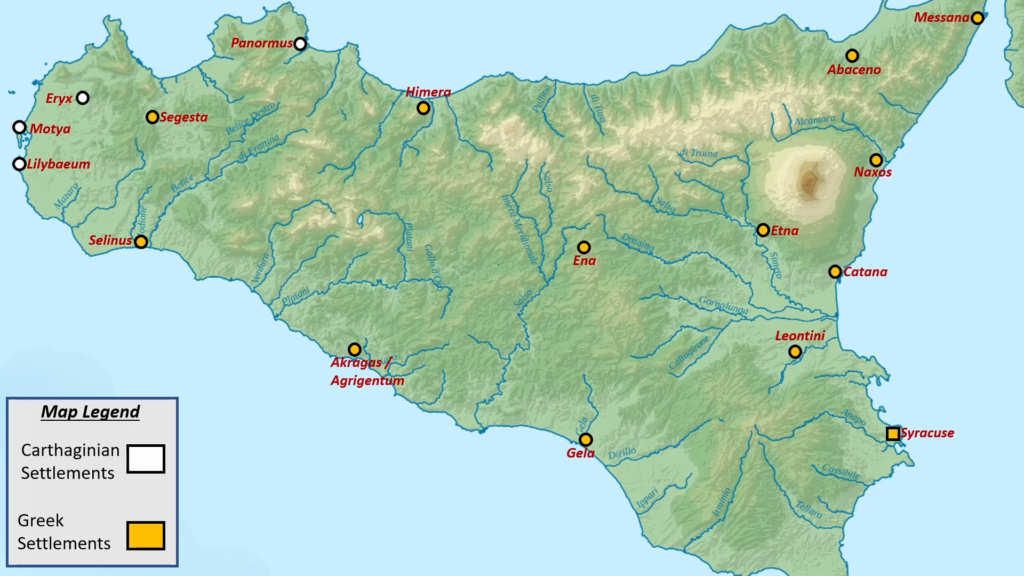
The closing years of the 5th century BC marked a decisive turning point in the history of Sicily. After nearly seventy years of uneasy peace, the powerful city of Carthage once again turned its attention toward the island, seeking to restore its influence and settle long-standing rivalries with the Greek cities of the region. Its immediate target was Selinus, a prominent Greek polis on Sicily’s western frontier—once an ally, now a vulnerable and defiant adversary.
In 409 BC, a massive Carthaginian expeditionary force crossed the sea and landed on Sicilian shores, initiating a campaign that would culminate in one of the most brutal and consequential sieges in the island’s history. The fall of Selinus was not merely the destruction of a single city, but the beginning of a renewed era of conflict between Carthage and the Greek world in Sicily.
This article examines the events surrounding the Battle of Selinus—an episode defined by strategic ambition, failed alliances, desperate resistance, and overwhelming force.
The Road to War: Selinus and Segesta
The Greek city of Selinus and the Elymian city of Segesta shared a long and complex relationship shaped by both economic cooperation and territorial rivalry. For much of their early history, the two cities were trading partners, with ties strong enough to support formal agreements, including laws that permitted inter-marriage between their citizens—a notable sign of mutual trust and integration in the ancient world. However, this relationship was not without tension. Disputes over land, influence, and local alliances led to periodic hostilities. By around 416 BC, the fragile balance between Selinus and Segesta began to deteriorate once again. Skirmishes and provocations resumed, particularly over contested border regions, reigniting a cycle of conflict that would eventually draw in far more powerful actors—first Athens, and later, Carthage.
The Greeks of Selinus advanced across the upper reaches of the River Mazaros, occupying disputed lands along the border of Segestan territory. These incursions quickly turned into raids, provoking Segesta to demand that Selinus withdraw. When these requests were ignored, the Segestans launched a counterattack and briefly regained control of the contested lands—only to be defeated by Selinus in a subsequent battle. In response, Segesta appealed for assistance from neighboring Greek powers, notably Agrigentum and Syracuse, but their calls went unanswered. In fact, Syracuse chose to side with Selinus, even going so far as to dispatch a fleet to blockade the Elymian coastline—a severe blow to Segesta’s security and economy. Facing growing isolation, Segesta turned to Carthage for help. However, the Carthaginians, at that time still cautious about interfering in Greek affairs, refused to intervene. Desperate, Segesta then looked to an earlier ally: Athens, with whom it had aligned during the first Athenian intervention in Sicily in 426 BC. An embassy was sent to Athens, pleading for aid. The result was the ill-fated Athenian Sicilian Expedition of 415–413 BC—a massive military campaign that ended in disaster. The invasion was crushed by a coalition of Sicilian cities, including Selinus and Syracuse. With the destruction of the Athenian force, Segesta’s alliance with Athens had backfired, leaving the city politically isolated and militarily vulnerable.
In the aftermath of the Athenian defeat in Sicily, the city of Selinus once again turned its attention to territorial expansion. Given its geographic position in western Sicily, Selinus had limited options for growth. To the west lay Motya, a powerful Carthaginian settlement; to the east, the wealthy and well-defended city of Agrigentum; and to the north, the Elymian city of Segesta, now politically weakened and isolated. Conquering Segesta and subduing the Elymian territories would have dramatically expanded Selinus’s domain, creating a territory that could rival Syracuse in both size and strategic importance. It would also give Selinus direct access to the Tyrrhenian Sea, opening valuable trade routes with Etruscan and Massaliot markets—greatly enhancing its economic position in the western Mediterranean.
By 410 BC, Selinus once again resumed its campaign of expansion by reoccupying the contested territories beyond the River Mazaros, deepening the long-standing border dispute with Segesta. The Elymians, still recovering from the collapse of their Athenian alliance and wary of provoking a larger conflict, especially with Syracuse now aligned with Selinus, chose not to offer immediate resistance. Despite their restraint, Selinuntine forces continued raiding Segestan lands, placing increasing pressure on the city’s economy and security. Facing a growing threat and finding no allies among the Greek cities of Sicily, Segesta dispatched an embassy to Carthage, appealing for protection and military assistance. This marked a critical turning point in western Sicilian politics, as Carthage was now being invited to intervene directly in Greek affairs on the island.
In the seventy years following the Battle of Himera, Carthage had focused its attention away from Sicily, pursuing expansion and consolidation elsewhere in the western Mediterranean. Under the leadership of the Magonid dynasty, Carthage extended its control over vast territories in North Africa, secured Sardinia, and actively explored new trade routes along the Atlantic coasts of Africa and Europe. Rather than engaging in military confrontation with the Greeks, Carthage prioritized economic growth, refining its trade networks and consolidating commercial dominance across the western Mediterranean. By around 430 BC, these efforts had paid off significantly—Carthage had accumulated a massive reserve of gold and silver, the result of careful market control and expanding international commerce. During this period, a mutual avoidance took hold: Carthage refrained from intervening in Sicilian affairs, and the Sicilian Greeks, recognizing Carthage’s power, largely avoided provoking it. While Carthage refused Segesta’s initial request for aid in 416 BC, the situation had changed considerably by 411 BC. And this time, Carthage began to take the matter seriously.
To secure its survival, Segesta formally submitted to Carthage, agreeing to become a dependent ally. While the precise terms of this arrangement are unknown, it likely allowed Segesta to retain internal autonomy and control over local commerce, while surrendering its foreign policy to Carthaginian oversight. In exchange for military protection, Segesta would have been expected to host Punic garrisons and possibly pay tribute—placing it in a position akin to that of a vassal state. At the same time, one of Carthage’s Suffets was Hannibal Mago, a prominent figure of the Magonid dynasty. Hannibal was no friend of the Greeks; his hostility was likely personal as well as political—his grandfather, Hamilcar, had led the Carthaginian army at the Battle of Himera in 480 BC, where he was killed in a crushing defeat at the hands of the Sicilian Greeks. For Hannibal, aiding Segesta was not only a strategic opportunity but also a matter of family vengeance. The Carthaginian Senate debated the matter at length, weighing both the strategic benefits and the potential dangers. Ultimately, the influence and determination of Hannibal Mago carried the decision. The Senate accepted Segesta’s submission to Punic hegemony, and Hannibal was granted full authority to provide assistance to Segesta by any means necessary—including the use of military force.
Diplomacy and Deception
Despite his personal animosity toward the Greeks, Hannibal Mago approached the unfolding situation with strategic caution rather than emotion. Before committing to war, he sent an embassy to Selinus, offering a diplomatic solution: Selinus would be allowed to retain control of the disputed borderlands, provided it agreed to a ceasefire with Segesta. This proposal served multiple purposes. If accepted, it would have expanded Carthage’s influence peacefully, since Segesta was now a Carthaginian dependency. It would have also secured Segestan safety without military confrontation and, crucially, given Carthage time to prepare, as the city did not maintain a standing army and needed time to mobilize forces from its provinces and allies. The offer was debated within the Selinuntine council, where opinions were divided. One prominent citizen, Empidion, known for his connections to Carthage, strongly urged acceptance, warning that rejection could lead to war with a powerful and wealthy adversary. Nevertheless, the majority of Selinus’s leaders chose to reject the Carthaginian proposal, confident in their position and perhaps underestimating the scale of the Punic response to come.
Continuing his measured approach, Hannibal Mago next dispatched Carthaginian and Segestan envoys to Syracuse, proposing that the Syracusans act as neutral mediators in the dispute between Selinus and Segesta. Hannibal’s strategy was calculated: he anticipated that Selinus would reject arbitration, and that Syracuse, unwilling to escalate the situation, would in turn choose not to intervene further. Unexpectedly, a Selinuntine delegation also approached Syracuse, requesting mediation—perhaps hoping to formalize Syracusan support or compel action. The Syracusan response was carefully balanced: they affirmed their alliance with Selinus but also stated they would not break the peace with Carthage. In doing so, Syracuse effectively withdrew from the conflict, unwilling to be drawn into a war that did not directly threaten its own interests. With this diplomatic exchange, Carthage had succeeded in isolating Selinus. Through careful maneuvering, Hannibal had removed the risk of direct Syracusan intervention, giving Carthage a free hand to deal with Selinus without fear of a wider Greek response—for the time being.
First Blood: Carthage Enters the Conflict
As a preliminary move, Hannibal Mago dispatched an initial Carthaginian force to Sicily, consisting of approximately 5,000 African infantry and 800 Italian mercenaries, the latter having previously served in the Athenian expedition during the Sicilian campaign. Carthage also supplied horses for the Italians, enhancing their mobility. This force was deployed to Segesta, bolstering the city’s defenses and deterring further Greek incursions.
At the time, the Selinuntine army was conducting raids into Segestan territory but had grown overconfident and disorganized. Scattered into small detachments and lacking discipline, the Greeks were vulnerable. Seizing the opportunity, the reinforced Segestan army, now backed by Carthaginian troops, launched a sudden counterattack. They caught the dispersed Greek raiders by surprise, inflicted around 1,000 casualties, and reclaimed the plunder that had been taken from their lands.
Following this sharp defeat, the Greek forces withdrew to Selinus, and Segesta was secure—for the moment—from further raids. In the aftermath, Selinus appealed to Syracuse for assistance. Although the Syracusan assembly voted in favor of providing aid, no action was taken at that time, likely due to political hesitation or strategic caution. Meanwhile, Segesta, perhaps still wary of a larger Greek response—particularly from Syracuse—petitioned Carthage for additional support, setting the stage for a more substantial Punic intervention.
The Carthaginian War Machine
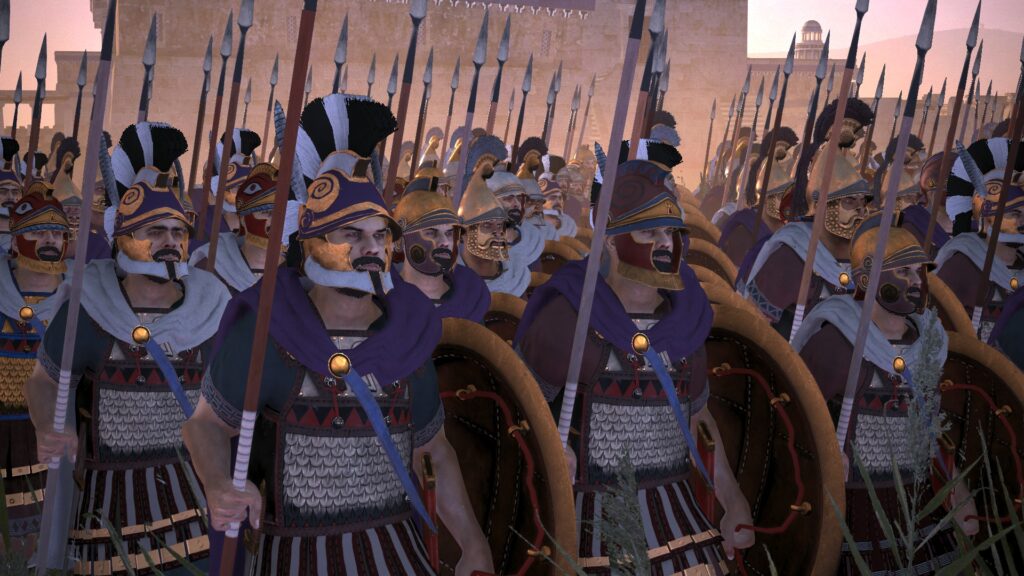
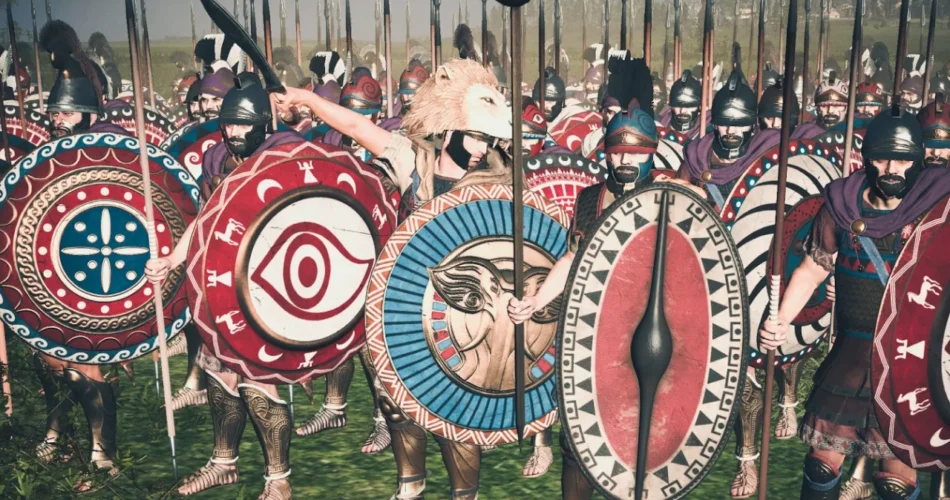
In response to Segesta’s renewed appeal, Hannibal Mago began preparations for a full-scale military campaign in Sicily. However, as Carthage did not maintain a standing army, Hannibal had to spend the entire winter organizing and recruiting troops from across the Punic world. The resulting force was drawn from North Africa, Sardinia, Spain, and even included contingents of Sicilian Greeks. Notably, the army also contained a significant number of Carthaginian volunteers, an uncommon occurrence that suggests the campaign carried strong political and emotional weight within Carthage itself.
Ancient sources differ widely on the size of this invading force. The historian Ephorus claims that Hannibal assembled 204,000 men, while Timaeus puts the number at 100,000. However, such figures are likely exaggerated. Most modern scholars estimate a more realistic total of 40,000 to 50,000 troops. Two important aspects stand out about this army. First, the active participation of Carthaginian citizens—who typically did not serve in large numbers—indicates the significance of the campaign. Second, Hannibal managed to recruit Greek mercenaries, some of whom were Sicilian Greeks willing to fight against their fellow Hellenes—a fact that would have been seen as deeply dishonorable by many of their contemporaries.
Selinus: Geography, Strength, and Vulnerability
Founded in 628 BC by Dorian Greek settlers from Megara Hyblaea, Selinus grew into one of the wealthier cities of Sicily, though it never quite matched the size or influence of Syracuse or Agrigentum. Nevertheless, due to its strategic location, economic strength, and capable citizenry, the city was expected to mount a respectable defense—an assumption shared by the Syracusans, who believed Selinus could hold out long enough for a relief force to arrive.
Geographically, Selinus occupied a hill rising approximately 47 meters, gently sloping on three sides and bordered to the south by the sea, where the elevation was more abrupt. The city was flanked by two rivers—the Selinus to the west and the Hypsas to the east. The original urban core, located on the walled acropolis at the southern end of the hill, eventually expanded northward to cover the entire elevation. Two harbors, situated at the mouths of the rivers, provided access to maritime trade and transport.
In terms of military strength, large Sicilian cities such as Syracuse and Agrigentum could field armies of 10,000 to 20,000 citizen-soldiers. In contrast, mid-sized cities like Himera and Messana typically mustered between 3,000 and 6,000 troops. Selinus likely had a fighting force of around 3,000 to 5,000 hoplites, composed entirely of its own citizens, as there is no evidence that the city employed mercenaries at this time. In addition to its infantry, Selinus possessed a notable cavalry contingent, which would have played a key role in defending the surrounding territory.
However, little is known about the naval capabilities of Selinus during this period. Sources are silent on the number or readiness of warships, and it remains unclear whether the city maintained an active fleet in 409 BC. Furthermore, having conducted most of its military campaigns outside its own walls since the early 5th century, Selinus appears to have neglected its fortifications over time. By the eve of the Carthaginian assault, the city walls were reportedly in a poor state of repair, a critical vulnerability given the scale of the coming siege.
The Invasion of Sicily (409 BC)
In the spring of 409 BC, Hannibal Mago’s invasion force crossed from North Africa to Sicily. The operation was carried out with impressive logistical coordination: the army, along with supplies and siege equipment, was ferried across the sea in approximately 1,500 transport ships, escorted by 60 triremes.
This force was significantly more powerful than the Athenian expedition to Sicily just a few years earlier. While the Athenians deployed a larger battle fleet of 134 triremes, their actual invasion force numbered only around 6,400 troops. In contrast, the Carthaginian army was far larger—likely between 40,000 and 50,000 soldiers—and far better supported.
Perhaps the most decisive difference lay in logistics. The Carthaginian supply system was far more sophisticated than that of the Athenians. Although the figure of 1,500 transports may be exaggerated—possibly inflated due to ancient estimates of the army’s size—it is clear that Carthage prioritized logistical preparation. The Athenians had brought only 130 transports and relied heavily on a disorganized fleet of private merchant vessels to carry supplies, a factor that contributed to the eventual collapse of their campaign.
In addition to superior manpower and organization, the Carthaginians were well-equipped for siege warfare. The army brought with it a full arsenal of siege equipment, including battering rams and siege towers—tools essential for breaching fortified cities like Selinus. These capabilities were supported by Carthage’s long-standing Phoenician tradition of engineering skill, a legacy that proved invaluable in the highly technical and labor-intensive operations of siege warfare.
The Siege of Selinus
The Carthaginian army first made landfall at Lilybaeum on the western tip of Sicily. From there, Hannibal Mago moved the fleet to Motya, where the ships were securely stationed, and then began a direct overland march toward Selinus, the primary objective of the campaign. Along the way, it is likely that allied contingents from Carthage’s local allies and client cities in Sicily joined the advancing army, further strengthening its numbers.
Despite the speed of the Carthaginian advance, Selinus was not taken entirely by surprise. A detachment of Selinuntine cavalry, scouting near Motya, had observed the arrival of Hannibal’s army and swiftly returned to report the threat. In response, the city’s leaders took immediate defensive measures. All citizens living outside the city walls were called in for protection, and provisions were gathered in anticipation of a siege. At the same time, urgent requests for military assistance were sent to other Greek cities, notably Gela and Syracuse. Though hastily prepared, these actions show that Selinus was aware of the danger and attempted to organize a defense before the Carthaginian army could strike.
Before laying siege to the city itself, Hannibal took steps to secure his logistical base. He captured a trading station located at the mouth of the River Mazaros, near Selinus. This installation was probably the city’s main port, offering excellent landing facilities for ships arriving from Africa. Securing this site ensured a steady flow of supplies, reinforcements, and equipment, which would be critical for sustaining a prolonged siege. By establishing firm control over this coastal point, Hannibal effectively cut off Selinus’s access to the sea and placed the city under growing pressure from both land and sea.
With his supply lines secured through the captured trading post at the River Mazaros, Hannibal Mago began his assault on Selinus. He first divided his army, assigning a smaller contingent to the east of the city to monitor and potentially block any Greek relief forces approaching from cities such as Gela or Syracuse. The main force, meanwhile, moved directly into position to begin the siege of Selinus.
The primary assault likely focused on the northern side of the city, where the terrain was more favorable for siege operations. Although the historian Diodorus Siculus wrote that Hannibal “invested” the city—that is, surrounded it completely—this should not be taken too literally. Carthaginian siege tactics were generally more aggressive than those of the Greeks and rarely emphasized complete encirclement. Instead, they relied heavily on direct assaults, supported by siege engines.
For the attack, Hannibal deployed six large wooden siege towers and an equal number of battering rams. The rams were reinforced with iron plating to protect them from being set on fire—an innovation that highlights Carthage’s advanced engineering capabilities, rooted in their Phoenician heritage.
Although Selinus had once been an ally of Carthage, its leaders did not anticipate that the Punic state would launch a full-scale military campaign against them. As a result, the city had little recent experience with siege warfare, and its defensive structures had been neglected over time. Due to the limited archaeological evidence, the precise layout of the city’s fortifications remains uncertain. However, it is generally believed that a single circuit wall enclosed both the city and the acropolis. Regardless of the exact configuration, it is clear that the defenses were poorly maintained and outdated by the time Hannibal’s army arrived.
The Carthaginian siege towers, far taller than the Selinuntine walls, allowed enemy troops to fire down into the city with ease. Large numbers of slingers and archers—were deployed to suppress the defenders on the battlements, clearing the way for siege engines to advance. Under this intense covering fire, the iron-plated battering rams were brought forward and quickly began pounding the city’s walls. A breach was made on the very first day of the assault—a remarkably rapid outcome that exposed both the poor condition of the fortifications and the Selinuntians’ lack of experience in repelling large-scale siege operation.
After the Carthaginian battering rams broke through the Selinuntine wall, Hannibal Mago sent in his Campanian mercenaries to exploit the breach. According to the historian Diodorus Siculus, these troops were considered among Hannibal’s most effective and disciplined soldiers. The Campanians advanced in relays, attacking in coordinated waves that maintained constant pressure on the defenders. This tactic significantly intensified the assault and prevented the Selinuntians from regrouping or counterattacking effectively. These mercenaries had arrived in Sicily around three years earlier, originally serving in the Athenian expedition. After Athens’s disastrous defeat, they were left without employment. What they did in the intervening years is unknown, though sources suggest they may have engaged in irregular or lawless activity before being hired by Carthage. Interestingly, the Carthaginians had provided them with horses, allowing them to serve as cavalry. However, cavalry units are generally of limited value in siege warfare, which typically demands infantry assaults. It is possible that Carthage anticipated this need, and as part of their contract, the Campanians were required to fight dismounted when necessary. This detail, whether explicitly arranged or naturally adopted, illustrates the versatility of mercenary troops and the strategic value they offered to ancient armies like that of Carthage.
A crucial detail of the assault on Selinus is that it was carried out entirely by mercenaries, not Carthaginian citizens. Carthage generally avoided exposing its own citizens to the high-risk task of storming fortified cities, preferring to rely on hired troops for such dangerous operations. However, the initial attempt to exploit the breach in the wall appears to have been premature. The Carthaginians had not yet cleared the rubble created by their siege engines, leaving the breach clogged with debris that impeded movement and disrupted the assault. While the sheer size and power of the siege towers and battering rams initially intimidated the defenders, the entire population of Selinus—including civilians—rallied fiercely to resist the attackers.
As the Campanian mercenaries pressed forward, they became bogged down in the rubble, unable to maintain momentum or establish a foothold within the city. The determined resistance of the Selinuntians turned what was expected to be a swift breakthrough into a prolonged and bloody struggle. By the end of the campaign, the Campanians expressed dissatisfaction, feeling they had been exploited and insufficiently rewarded for the intensity of their effort. According to ancient accounts, they complained bitterly that Hannibal had not compensated them properly for their hard service. The battle at the walls of Selinus raged for an entire day, but as darkness fell, the Carthaginians were forced to break off the assault, having failed to breach the city on the first day despite their overwhelming force.
Taking advantage of the brief pause in the fighting, the Selinuntians dispatched urgent appeals for aid to nearby Greek cities, including Agrigentum, Gela, and Syracuse. However, the response was cautious and delayed. Both the Agrigentines and Geloans were reluctant to act without Syracusan leadership, preferring to wait for a unified response. At that moment, Syracuse was engaged in a local conflict of its own, which initially prevented an immediate reaction. Nonetheless, recognizing the seriousness of the threat, the Syracusans broke off their local campaign and began assembling a relief army to march west and support Selinus. Despite the fact that the walls of Selinus had already been breached, the Syracusans believed the city could hold out until reinforcements arrived. They assumed that the Carthaginians would be forced into a prolonged, passive siege, as was typical in Greek siege warfare, where direct assaults were less common and progress often depended on starvation or psychological attrition. This assumption revealed a critical misjudgment. The Syracusans failed to appreciate that Carthaginian siege doctrine—rooted in Phoenician engineering traditions—was far more aggressive and technologically advanced than what most Greek city-states were accustomed to.
On the following day, Hannibal adopted a more methodical approach to the siege. Rather than concentrating all efforts on a single breach, he ordered his forces to attack the city walls at multiple points. This tactic was designed to distract and stretch the defenders, drawing them away from the original breach, thereby allowing Carthaginian engineers to enlarge the opening and clear away the rubble with greater efficiency. Over the course of nine days, the Carthaginians engaged in intense labor and fierce combat. Progress was slow and costly, but ultimately, it was a contingent of Iberian mercenaries who succeeded in forcing their way into the city. However, the breach did not mark the end of the conflict. Urban combat ensued, and the struggle for control of Selinus continued within the city’s streets and homes, where defenders resisted with desperate determination.
Once inside the city, the Iberian mercenaries encountered fierce resistance. The Selinuntians defended their city street by street, house by house, with young men holding the front lines, while older men and women delivered food, water, and supplies to sustain the defense. The historian Diodorus Siculus describes how, in the face of overwhelming danger, even women took up arms, setting aside the traditional modesty and restraint expected of them in peacetime. He attributes this extraordinary behavior to the severity of the crisis, which demanded the full participation of the entire population. Much like in the urban fighting at Plataea and Corcyra, women and even children climbed onto rooftops to hurl stones and tiles at the invaders below. The battle of attrition continued throughout the day, marked by relentless Carthaginian assaults in rotating waves, which gradually wore down the exhausted defenders. By late afternoon of 9th day, Hannibal’s forces had fought their way from the northern wall across the entire city, eventually securing the acropolis and bringing Selinus under Carthaginian control. Although the construction of siege equipment may have taken up to a month, the actual siege and capture of the city lasted only ten days—a remarkably short period for such a large and fortified settlement.
The human cost was devastating. While between two and three thousand armed men managed to escape, around four to six thousand people—men and women—were taken prisoner, and the remainder were massacred. Ancient sources claim that as many as sixteen thousand bodies were counted after the battle—a grim testament to the scale of the slaughter.
The Fall of Selinus and Its Aftermath
Following their hard-fought victory, the Carthaginians razed the city of Selinus, effectively erasing it as a political and military force. However, in keeping with Phoenician religious customs, the temples were left intact and not desecrated, though their treasuries were looted and the valuable offerings removed.
With the mission fully accomplished, Hannibal Mago had fulfilled the objectives set by the Carthaginian Senate: Selinus—formerly a Greek stronghold and a threat to Carthaginian interests—had been decisively eliminated. Yet rather than returning to Carthage or pursuing diplomatic avenues with the now-alarmed Greek cities, Hannibal chose to continue the campaign, marching on Himera, the site of Carthage’s humiliating defeat in 480 BC. This move marked a symbolic act of vengeance, as well as a strategic effort to further dismantle Greek resistance in western Sicily. The Syracusans, recognizing the threat, began preparing in earnest to defend Himera. It remains uncertain whether Himera had directly participated in aiding Selinus, but its strategic location and symbolic value made it an obvious next target for Carthaginian aggression.
© 2026 History and War
Author: Jishu Roy
Unauthorized reproduction of this content is prohibited.