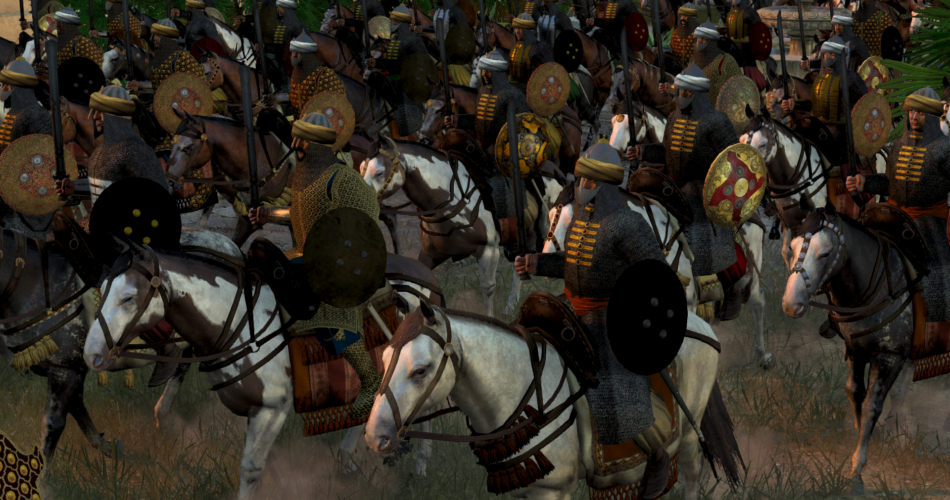
The Ghurids and the Chaulukyas: Collision at Kasahrada
The Battle of Kasahrada, fought in AD 1178 near the foothills of Mount Abu, marked a pivotal military setback for Muhammad of Ghor during his early campaigns in the Indian subcontinent. Seeking to expand Ghurid authority into the prosperous territories of western India, Muhammad led his forces across the Thar Desert toward Gujarat, which was then ruled by the young Chaulukya monarch Mularaja II under the regency of his mother, Queen Naikidevi. Rather than submitting, the Chaulukya court forged a unified regional coalition—incorporating the Paramaras of Abu and the Chahamanas of Naddula and Jalor—to intercept the invaders.
This article examines the strategic prelude to the campaign, the tactical execution of the engagement in the rugged terrain of Mount Abu, the primary Sanskrit and Persian historical sources documenting the conflict, and the long-term geopolitical consequences that forced Muhammad of Ghor to redirect his expansionist strategy toward northern India.
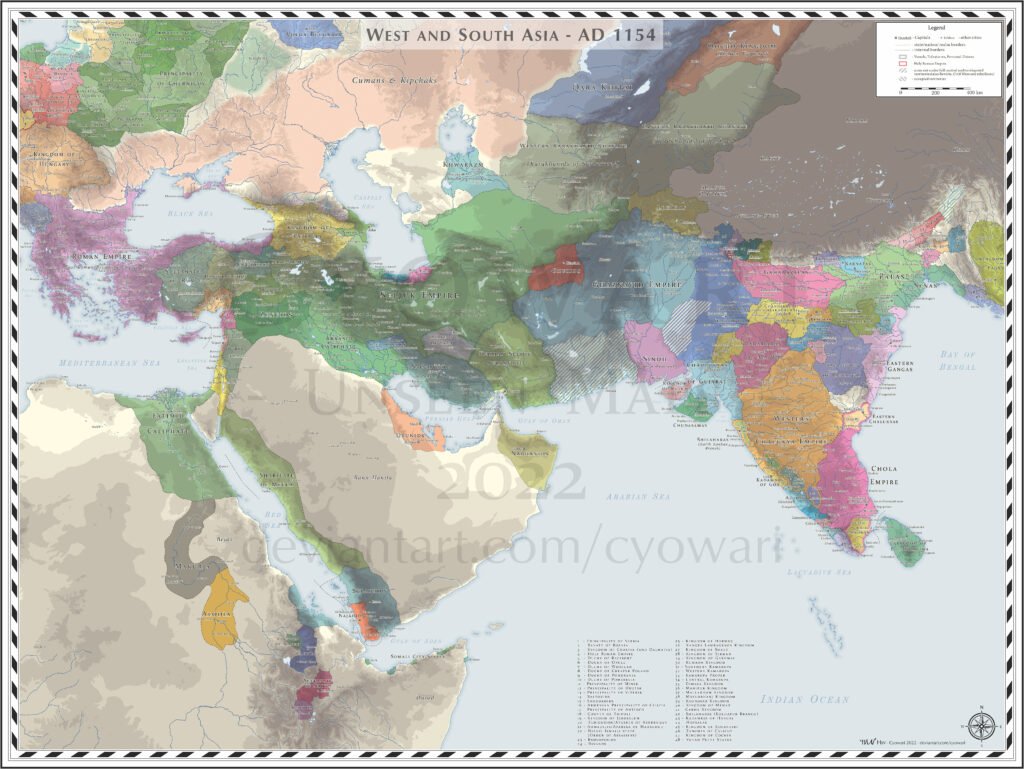
Copyright © Cyowari
The Road to Mount Abu: Ghurid Strategy and Rajput Defense
During the last quarter of the twelfth century, the Ghurid Sultanate was governed through a functional dyarchy shared by Ghiyath al-Din Muhammad and his younger brother Muhammad of Ghor. While Ghiyath al-Din directed the sultanate’s westward expansion from the capital at Firuzkuh, Muhammad of Ghor concentrated on extending Ghurid authority eastward toward the Indian subcontinent.
By AD 1173, Muhammad had seized Ghazna and consolidated control over eastern Afghanistan after expelling the Oghuz Turkmens. The capture of Ghazna was strategically significant: it provided both symbolic legitimacy and a forward military base. From this position, Muhammad launched a series of campaigns into the Indus Valley, using the city as a staging ground for deeper incursions into north-western India.
In AD 1175, Muhammad of Ghor undertook his first major expedition into the Indian subcontinent. He captured Multan from the Qarmatians and seized Uch, then under either the Bhatti Rajputs or the Qarmatians. With these conquests, he secured two strategically valuable bases in the lower Indus region.
From this position, Muhammad had the option of advancing toward Lahore. The most direct route from Ghazni to Lahore runs through the Khyber Pass, which would normally require first occupying Peshawar before moving eastward, as he indeed did in later campaigns. However, on this occasion, he chose a different strategy. Instead of proceeding through the Khyber route, he entered via the Gomal Pass, and after consolidating control over Multan and Uch, he turned sharply south toward southern Rajputana and Gujarat.
This decision suggests a calculated attempt to expand into the prosperous regions of western India rather than immediately confronting the Ghaznavids at Lahore. Had this campaign succeeded, much of southern Rajputana and Gujarat might have fallen under Ghurid authority. With secure bases in these territories and stable lines of communication back to Ghazni, Muhammad would then have been well positioned to challenge either the Ghaznavids of Lahore or the Chahamanas of Shakambhari from a position of strategic strength.
Persisting with the Gomal Pass route, Muhammad of Ghor advanced through lower Sindh and then moved northeastward, seeking to enter the northern territories of the Chaulukyas by way of western Rajasthan. This line of march avoided the more heavily contested Punjab corridor and instead targeted the frontier zones of Gujarat from a less expected direction. Before reaching the eventual battlefield near Mount Abu, Muhammad attacked and plundered Naddula. During this advance, the temple complex at Kiradu was reportedly desecrated, including the destruction of a Shiva idol.
Meanwhile, the Chaulukyas, under their youthful ruler Mularaja II, organized a coordinated military response to the advancing Ghurid forces. Although the king was still young, the kingdom acted decisively, drawing support from key regional feudatories, including the Paramara ruler of Abu, and the Chahamana chiefs of Naddula and Jalor. Together, they assembled a substantial army to confront the invasion. This mobilization reflects not only the strategic importance of Gujarat but also the willingness of its subordinate rulers to unite in the face of an external threat.
The twelfth-century Kashmiri historian Jayanaka, in his court epic Prithviraja Vijaya, provides a dramatic account of the hardships faced by the invading army. He writes that by the time the Turks approached the Chahamana kingdom, they were so severely affected by thirst after crossing the desert that they were forced to drink the blood of their own horses. While this description is likely exaggerated for literary effect, it reflects the perception of extreme hardship endured during the march.
After crossing the Thar Desert into the region of Marwar, the exhausted forces of Muhammad of Ghor eventually reached the foothills of Mount Abu. By this stage, the physical strain of the campaign had likely weakened the army before it even encountered the Chaulukya defenses.
The Clash at Kasahrada (AD 1178)
At the foot of Mount Abu, the exhausted army of Muhammad of Ghor emerged from its brutal march across desert and scrubland, expecting a confrontation as they pushed toward the fertile plains of Gujarat. The rugged mountains loomed ahead, concealing the strength and disposition of the defenders. Unbeknownst to Muhammad, the approaches were guarded by the feudatories of the Chaulukyas: the Paramara ruler Dharavarsha of Abu, the Chahamana chief Kelhana of Naddula, and his brother Kirtipala of Jalor. Behind them, drawn up with deliberate depth and discipline, was the main Chaulukya host, ready to fight in the name of the youthful king Mularaja II. This was no improvised resistance; the defenders had carefully prepared the terrain to their advantage.
According to the Jain chronicle Prabandha Kosha, Dharavarsha allowed the Ghurid army to advance into the narrow defile before sealing the exit behind them. Embellished or not, the tactical logic is unmistakable. The invaders pressed into the rocky pass, hemmed in by steep ridges. With every step forward, their room to maneuver diminished. When the Ghurid army saw the main Chaulukya line drawn across the mouth of the pass, they attacked at once.
Mounted archers rode forward first, loosing volleys in disciplined rhythm. Composite bows hummed; arrows hissed into shields and flesh. But the terrain betrayed them. There was no space to wheel and withdraw, no open ground to feign retreat and encircle. Horses stumbled on uneven stone. Ranks compressed into suffocating density.
Then the Chaulukya counterstroke fell. War drums thundered from the heights. Conch shells echoed off granite cliffs. From the front, the Chaulukya infantry advanced in tight formation, shields interlocked, spears leveled like a wall of iron thorns. They struck the Ghurid frontline with relentless pressure — step by step, thrust by thrust.
From the flank, the Chahamana of Naddula and Jalor descended with sudden fury Swords rose and fell in flashing arcs. Spears punched through mail. Mounted archers were dragged from their saddles and cut down before they could draw again. The pass became a corridor of slaughter. Then came the decisive blow.
From the ridges behind, Dharavarsha unleashed the Paramara assault. Stones and arrows rained down first, smashing helmets, breaking bones, throwing formations into confusion. Then Paramara cavalry and infantry surged into the Ghurid rear. They cut through stragglers, severed retreat routes, and drove forward with ruthless determination.
The invaders were now trapped — crushed between hammer and anvil. Steel collided in suffocating proximity. Lances splintered against breastplates. Blades hacked through cloth, leather, and flesh. Blood slicked the stones; men slipped and were trampled under horses’ hooves. The air thickened with dust and iron. Cries of command dissolved into screams. Dharavarsha’s rear assault intensified the collapse. Paramara warriors struck at backs and hamstrings, isolating clusters of resistance and annihilating them in close combat. Signals were lost in the chaos. Standards fell. Cohesion dissolved.
The Ghurid frontline attempted to push through, to break the Chaulukya front before the encirclement tightened. For a moment, banners bearing the crescent pressed forward, and the clash reached a desperate intensity. But fatigue — accumulated from weeks of marching through arid lands — began to show. The Chaulukya infantry, fighting on familiar ground, pressed their advantage relentlessly. Gradually, cohesion faltered among the Ghurid troops.
What had begun as organized resistance degenerated into fragmented pockets of combat. Units lost contact with one another. Commands went unheard in the roar. The sealed pass now became a death trap. Men trying to retreat found their way blocked; panic spread faster than orders could contain it.
In the thick of the struggle, Muhammad himself was wounded. Whether struck by arrow or blade, the injury forced him from active command at the most critical moment. The sight — or rumor — of their injured leader shattered what cohesion remained. Panic replaced discipline. What had been a battle now became a massacre.
Hemmed in by mountains, assailed from front and rear, the Ghurid army broke. Men fought desperately to escape the killing ground, abandoning banners and comrades alike. Many were cut down as they fled; others were crushed in the press of retreat. The narrow pass amplified the slaughter — bodies piled where the path constricted, and the living stumbled over the dead.
When the sun dipped lower, the field beneath Mount Abu was strewn with fallen men and broken horses. The Ghurid invasion force — confident only days earlier — lay shattered. Muhammad of Ghor, bleeding and shaken, was carried from the field by surviving guards. The retreat northward was grueling and humiliating, through hostile country and with the shadow of defeat clinging to every step. Only after immense hardship did he reach Ghazna.
At Mount Abu, the Chaulukya coalition had not merely repelled an invasion — it had annihilated it. The Paramaras of Abu, the Chahamanas of Naddula and Jalor, and the Chaulukya host had turned the mountain pass into a graveyard, and for nearly two decades, the memory of that blood-soaked defeat would linger in Ghurid ambition.
Primary Evidence: Contrasting Indian and Persian Chronicles
Solanki inscriptions and Gujarati chroniclers strongly glorify Mularaja II for the victory at Kasahrada. The poet Someshvara writes that Mularaja defeated the “lord of the Turushkas” and crushed the foreign (mlechchha) army. Balachandra emphasizes that Mularaja achieved this victory despite being only an infant. Udayaprabha Suri, in his work Sukrita-Kirti-Kallolini, poetically states that Queen Naikidevi gave her young son an “army to play with,” with which he defeated the Hammira and his fully armored troops. Arisimha also mentions that Mularaja defeated the Muslim forces. An inscription of Bhima II even claims that during Mularaja’s reign, “even a woman” could defeat Hammira — a reference highlighting the role of Naikidevi.
A fourteenth-century account by Merutunga states that Naikidevi carried her son in her lap, personally led the army at the Gāḍarāraghaṭṭa pass, defeated the Ghurids, and secured for Mularaja the title “vanquisher of the king of Ghazni.” However, modern historians consider Merutunga unreliable, as he often mixed legend with history. Historian Ashoke Kumar Majumdar specifically criticized his tendency to use mythical elements.
The Sundha Hill inscription of the Jalor Chahamanas claims that Kirtipala routed the Turushka army at Kasahrada. It also records that his brother Kelhanadeva built a golden gateway at the shrine of Somesha after defeating the Turks. According to the court epic Prithviraja Vijaya, Muhammad of Ghor had earlier captured Naddula, but Kelhanadeva regained it after the victory at Kasahrada.
According to the thirteenth-century Persian chronicler Minhaj-i-Siraj, Muhammad of Ghor advanced toward Nahrwala (the Chaulukya capital Anahilavada, modern Patan) through Uchchha and Multan. He notes that the “Rae of Nahrwala” was young but commanded a large army supported by war elephants. In the battle that followed, the Ghurid army was defeated and forced to retreat without achieving its objective.
Nizam-ud-din Ahmad gives a similar account, stating that Muhammad marched to Gujarat through the desert. The sixteenth-century historian Abdal Qadir Bada’uni also records the defeat and describes the difficult retreat to Ghazni. Likewise, Firishta writes that the ruler of Gujarat defeated the invading army with heavy losses, and that the surviving troops suffered great hardship on their return to Ghazni.
Aftermath: How Kasahrada Reshaped Twelfth-Century North India
The defeat of Muhammad of Ghor by Mularaja II in AD 1178 forced him to reconsider his expansion strategy in India. Rather than attempting another advance through Gujarat, he shifted his focus to the northwestern frontier. In the following year, he entered the subcontinent through the Khyber Pass, captured Peshawar, and later gained control of Lahore through political maneuvering. From this stronger base in Punjab, he eventually confronted the Chahamanas in direct engagement. This change in approach had long-term consequences for the political history of northern India.
Significantly, Muhammad never again attempted to invade Gujarat during his lifetime. The next major Muslim incursion into the region occurred during the reign of Bhima II and was carried out by Muhammad’s leading general, Qutb udh-Din Aibak. In AD 1197, Aibak defeated Bhima II near Mount Abu and sacked the Chaulukya capital of Anahilavada (modern Patan). This campaign is often viewed as avenging Muhammad’s earlier defeat at the same battlefield nearly two decades earlier.
Bibliography
1) THE PARAMĀRAS (C. 800–1305 A.D.) : A STUDY IN THE POLITICAL AND CULTURAL HISTORY OF THEIR KINGDOMS | Pratipal Bhatia
2) CHAULUKYAS OF GUJARAT | Ashoke Kumar Majumdar
3) THE CHAHAMANAS OF JALOR | Ashoke Kumar Srivastava
4) EARLY CHAUHĀN DYNASTIES | Dasharatha Sharma
5) AL-HIND: THE MAKING OF THE INDO-ISLAMIC WORLD, VOL. 2 : THE SLAVE KINGS AND THE ISLAMIC CONQUEST, 11TH–13TH CENTURIES | André Win
© 2026 History and War
Author: Jishu Roy
Unauthorized reproduction of this content is prohibited.