The Gathering Storm: Delphi Under Siege
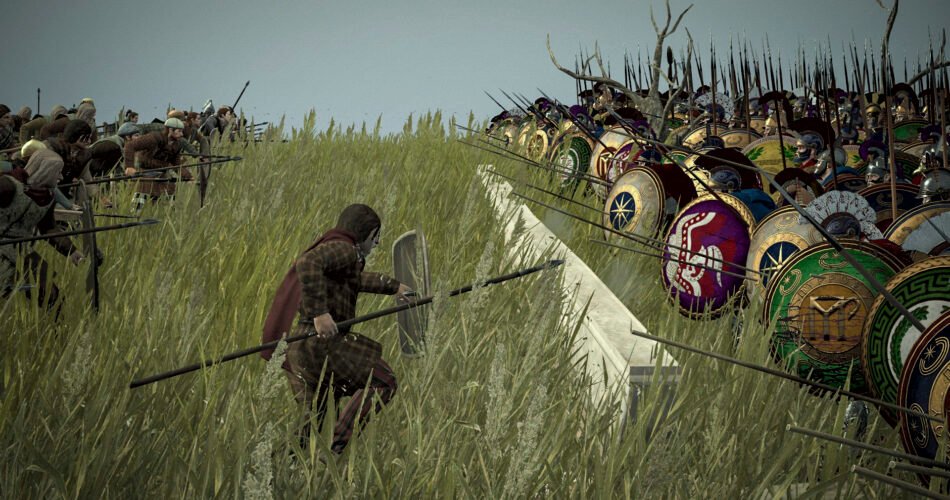
In 279 BC, a mighty Celtic army swept into Greece, crushing resistance and leaving destruction in its wake. Even the legendary pass of Thermopylae failed to stop their advance. But despite their victories, the invaders were about to face their greatest challenge. Led by the fierce warlord Brennus, the Celts marched towards Delphi, home to the sacred sanctuary of Apollo, drawn by the promise of unimaginable riches. Terrified by the approaching army, the Greeks gathered their forces for a desperate defence of one of their most sacred sites. Then the battle took an extraordinary turn. Violent storms battered the mountains, enormous rocks crashed down upon the Celtic ranks, and Greek warriors launched relentless attacks against the invaders. As hunger, exhaustion, and fear spread through their army, the Celts found themselves fighting not only the Greeks but also the unforgiving forces of nature. What began as a bold campaign of conquest soon descended into a desperate struggle for survival. This is the story of the Celtic invasion of Greece, the defence of Delphi, and the disastrous retreat that changed the fate of the invaders.
A Precarious Advance: The Road to Delphi
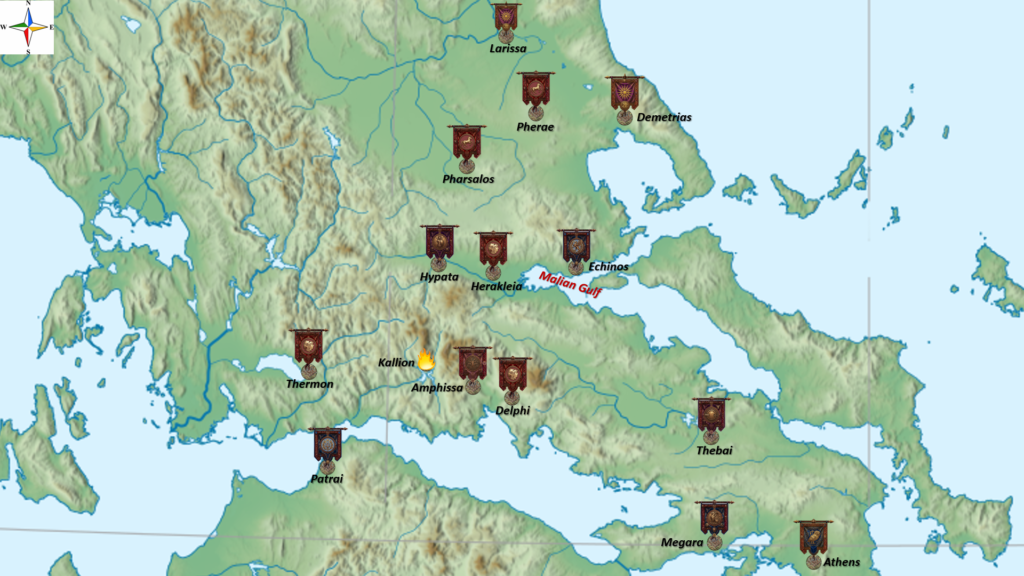
Despite heavy losses at Battle of Thermopylae, the Celts outflanked the Greek coalition, forcing the Greek forces into a hasty retreat. Earlier in the campaign, they had also sacked Kallion, adding to the impression that their invasion of Greece was progressing successfully. However, their strategic position was becoming increasingly precarious. Their forces were now divided into three separate armies, leaving them vulnerable to Greek counterattacks and making it more difficult to coordinate their operations.
While Brennus’s army advanced rapidly towards Delphi, the other two Celtic forces faced growing difficulties. The army responsible for the sack of Kallion, commanded by the Celtic chiefs Combutis and Orestorius, came under fierce attack from the Aetolian militia as it attempted to re-join the main force.
Meanwhile, Acichorius’s army moved much more slowly. The Aetolians now turned their main force, which had fought at Thermopylae, against Acichorius’s advancing army, repeatedly harassing the rear of the Celtic column. Rather than risk a direct battle, Aetolians relied on hit-and-run attacks, killing baggage carriers and plundering supplies. Acichorius was also burdened with the need to protect the baggage and the spoils accumulated during the campaign, which further hindered his progress. Moreover, he had left part of his army at Heracleia to guard the baggage stored in the camp. With fewer troops available to protect the marching column, Acichorius struggled to advance quickly and catch up with Brennus.
As Brennus’s force was not encumbered by a large baggage train, it marched at a much faster pace than Acichorius’s army. Nevertheless, the rapid advance had left the soldiers exhausted and hungry by the time they reached Delphi. According to Justinus, when Brennus caught sight of the sanctuary, he hesitated over whether to launch an immediate assault or allow his weary troops a night to recover.
The commanders of the Ainianians and Thessalians, who had joined the Celtic expedition in the hope of sharing in the spoils, urged him not to delay. They argued that the defenders were unprepared and still unsettled by news of the approaching Celts. Waiting until the following day, they warned, would give the Greeks time to regain their confidence, summon reinforcements and block the routes leading to the sanctuary.
However, the ordinary soldiers had different priorities. After enduring prolonged shortages, they were delighted to find an abundance of wine and other provisions in the surrounding countryside. Many scattered across the fields to seize the available supplies, abandoning their standards and behaving as though they had already conquered the region. This disorder gave the defenders of Delphi a valuable opportunity to prepare.
Justinus further relates that, when the Celtic invasion was first reported, the local population had been instructed by the oracle not to remove the grain and wine from their homes. The significance of this command became clear when the invaders stopped to consume and gather the provisions. Their delay allowed neighbouring communities time to assemble reinforcements for the defence of Delphi.
Meanwhile, the situation among the Greeks was becoming increasingly desperate. When the people of Delphi learned that the defence of Thermopylae had collapsed and that Brennus was advancing towards their city, with the sanctuary of Apollo as his apparent target, they were overcome with fear. In their desperation, the Delphians sought refuge at the oracle. According to the tradition, the god assured them that they had nothing to fear and promised to defend his own sanctuary.
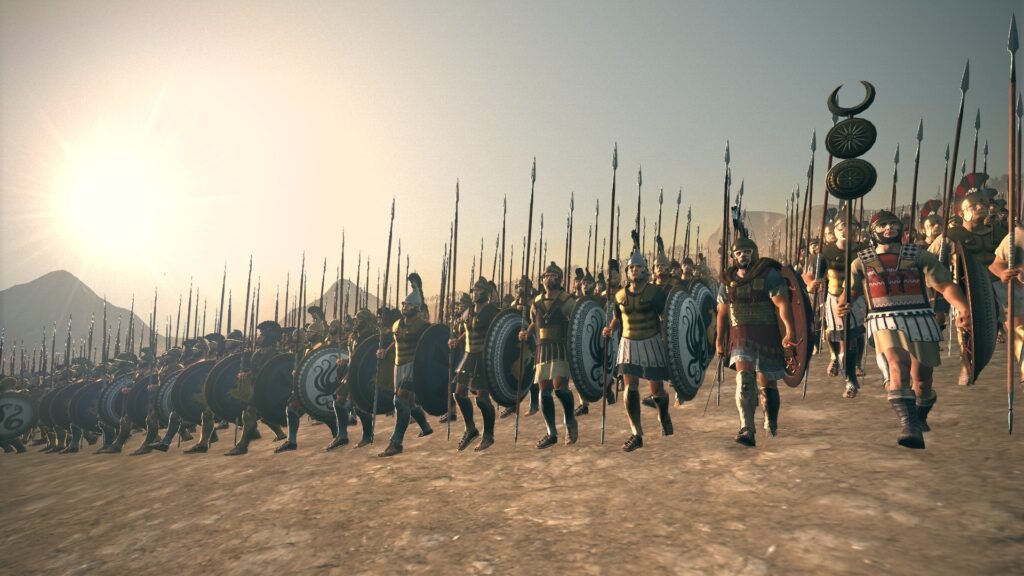
Despite their initial panic, the local Greeks soon began assembling forces to protect one of their most sacred religious sites. The Phokians arrived from their various cities, while Amphissa contributed 400 hoplites. Some Aetolian troops also came to the defence of Delphi as soon as they heard of the Celtic advance. Later, Philomelus arrived with a further 1200 Aetolian soldiers.
According to Justinus, the Greek defenders numbered no more than 4,000 men. They faced a vastly larger force: Brennus had selected 65,000 infantry from his army for the attack, reportedly representing its most capable troops. The defenders of Delphi were therefore confronted by overwhelming numerical odds as they prepared to protect the sanctuary of Apollo.
Terrors of the Night: Nature’s Divine Intervention
However, the situation soon took a turn for the worse for the Celts. According to Pausanias, as Brennus’s army approached Delphi, violent thunderstorms and lightning struck the region for much of the day. The storm was accompanied by a severe frost and snowfall, while earthquakes sent enormous rocks tumbling down the slopes of Mount Parnassus. These falling boulders struck the Celtic soldiers, sometimes crushing thirty or more men at once when they were gathered together on guard duty or resting.
The thunder also terrified the Celts and drowned out commands, making it difficult for them to maintain order. Meanwhile, lightning struck the soldiers, setting fire to their bodies and armour, as well as those standing nearby. To the Greeks, these extraordinary events were signs that Apollo himself had intervened to protect his sanctuary. The Celts, in turn, were left facing not only the defenders of Delphi but also the terrifying forces of nature, which their enemies interpreted as evidence of divine opposition.
Pausanias further recounts that the Celts believed they saw the ghosts of the heroes Hyperochus, Laodocus and Pyrrhus, along with Phylacus, a local hero associated with Delphi. These supernatural appearances added to the sense that divine powers were fighting against the invaders. Whether understood as religious tradition or as an account shaped by Greek beliefs, the story presents the Celtic advance on Delphi as a campaign beset by extraordinary and terrifying obstacles.
Clash at the Sanctuary: The Battle for Apollo’s Riches
The following morning brought little relief for the Celts. Their attack was delayed further by the disorder within their ranks, as many soldiers were still suffering from the effects of the wine they had consumed the previous day. Meanwhile, encouraged by the violent storms and falling rocks, the Greek defenders grew more confident, believing that the gods were fighting on their side, and began advancing against the invaders.
Sensing the uneasiness among his troops, Brennus sought to restore their courage by directing their attention towards the wealth that awaited them at Delphi. According to Justinus, he pointed out the numerous statues and four-horse chariots visible in the distance, claiming that they were made of solid gold and would prove even more valuable when weighed than they appeared. The prospect of such enormous plunder stirred the Celtic soldiers. Despite their disorder and the dangers surrounding them, they rushed into battle with renewed enthusiasm, seemingly unconcerned about the risks ahead.
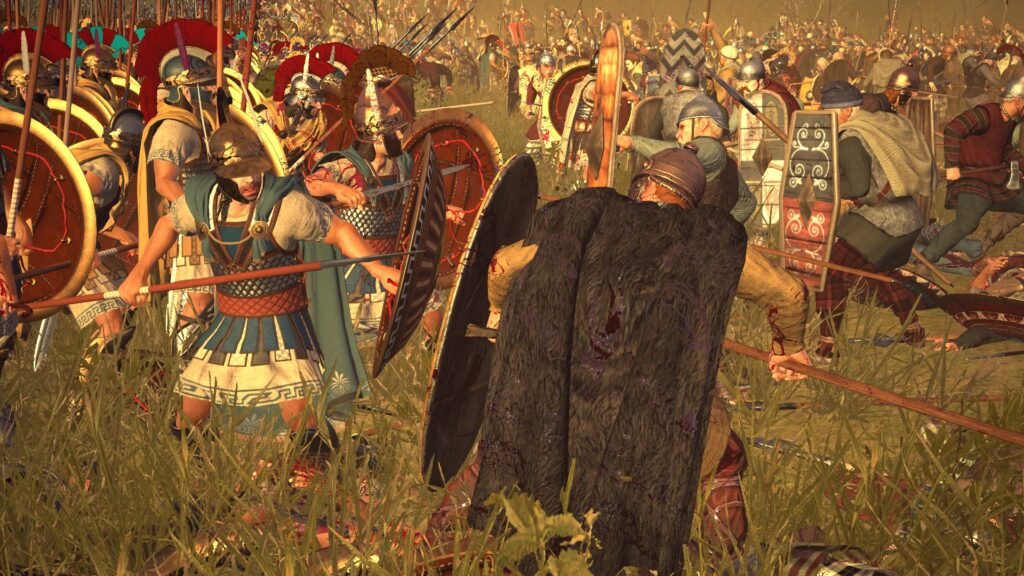
Most of the Greek forces, with the exception of the Phokians, maintained their phalanx formations and met the Celtic advance head-on. The Phokians, meanwhile, used the higher ground to their advantage, hurling rocks and striking at the Celts as they struggled to climb the slopes.
According to Justinus, the fighting soon took on a religious dimension. Priests and priestesses from the local temples rushed towards the combatants, their hair loose and their ceremonial ornaments in disarray. They proclaimed that the gods had appeared to them: a remarkably beautiful young man had leapt into the temple of Apollo through its open roof, while two armed goddesses, identified with Diana and Minerva, had emerged from nearby sanctuaries. The priests and priestesses claimed to have seen these divine figures and heard the twang of a bowstring and the clatter of weapons.
They urged the Greeks to press their attack, declaring that the gods themselves were leading them into battle. Inspired by these accounts, the defenders advanced with renewed determination. At the height of the fighting, an earthquake reportedly caused part of the mountainside to break away, sending enormous rocks crashing down upon the Celtic ranks. The falling debris crushed many soldiers, while others were scattered and injured, further worsening the invaders’ position.
While the Celts were fully engaged in fighting the main Greek forces, the Phokians seized the opportunity to outflank them. Familiar with the local terrain, they descended the steep slopes of Mount Parnassus and attacked the Celtic army from the rear with arrows and javelins, catching the invaders off guard.
Among the Greek defenders who died in the fighting was Aleximachus of Phokis, who distinguished himself through his courage and strength in battle. In his honour, the Phokians later commissioned a statue and dedicated it to Apollo at Delphi.
Despite being attacked from several directions, the Celts initially resisted fiercely, particularly the elite contingent accompanying Brennus, whose warriors were considered among the tallest and bravest in his army. However, the combination of sustained Greek attacks and the bitter cold gradually weakened their resistance, with the freezing conditions proving especially dangerous for the wounded.
The situation took a decisive turn when Brennus himself was wounded three times and carried unconscious from the battlefield. With their commander incapacitated and Greek forces pressing their attack from multiple directions, the Celts were eventually forced to retreat. According to Pausanias, they killed some of their own comrades who were too badly wounded or ill to accompany them.
Panic and Pursuit: The Chaotic Celtic Retreat
The Celtic retreat soon descended into further chaos as the Greeks continued to harass them along their route. Already weakened by prolonged fighting, hunger and exhaustion, the invaders faced another disaster after nightfall. Pausanias attributes this episode to a sudden panic sent by the god Pan, which spread through the Celtic ranks while they were encamped for the night.
The terror began with a few soldiers who believed they could hear approaching cavalry and enemy troops. Before long, the fear gripped the entire army. In the darkness and confusion, the Celts turned against one another, mistaking their own comrades for Greek warriors. They could no longer distinguish friend from foe, and a violent struggle broke out within their ranks, resulting in heavy casualties.
However, this confusion may also have been caused by the Celts’ growing fear of their Greek pursuers. Exhausted by days of fighting and constant harassment, they had become so nervous that even the slightest sound could trigger panic, causing them to mistake their own comrades for enemies and turn their weapons against one another.
The following morning, the Phokians who had remained behind to guard their flocks were the first to discover the confusion that had gripped the Celtic army during the night. They quickly reported the news to the other Greek forces, encouraging them to intensify their attacks on the retreating enemy. The Greeks also kept a closer watch on the surrounding countryside, preventing the Celts from obtaining essential supplies without a fight. As a result, the entire Celtic army soon faced a severe shortage of grain and other food.
According to Pausanias, the losses suffered by the Celts in Phokis were devastating. Nearly six thousand were killed in battle, while more than ten thousand perished in the freezing storms and the panic that followed. A further ten thousand or more reportedly died from starvation. These figures illustrate the scale of the disaster that befell Brennus’s expedition as it struggled to withdraw from Delphi.
Just after the battle, Athenian scouts reached Delphi to learn what had happened. After gathering information about the Celtic defeat and the losses inflicted upon them, they returned to Athens with the news. The Athenians then mobilised their forces and marched towards the retreating enemy. As they passed through Boeotia, they were joined by Boeotian troops, and the combined Greek forces pursued the Celts, ambushing them and killing those who fell behind the main column.
Meanwhile, Brennus’s surviving troops had only recently reunited with Acichorius’s army, which joined them the previous night. Acichorius’s force had also suffered heavily during its march, as the Aetolians continued to attack it with javelins and whatever weapons they could find. Their relentless harassment prevented most of the Celts from reaching the camp at Heracleia, and only a small portion managed to escape there.
Brennus, who had been gravely wounded during the fighting at Delphi, eventually took his own life. Despite the disastrous outcome of his campaign, he had proved himself an adaptable commander, willing to change his objectives when faced with resistance and capable of driving his troops through long and demanding marches. His fellow Celtic leaders, however, failed to achieve comparable success, and several suffered serious defeats.
According to the ancient accounts, Brennus gave his final instructions before his death. He reportedly ordered that the wounded who could not continue the retreat should be killed, allowing the surviving troops to withdraw more quickly. He also advised his followers to appoint Acichorius as their new leader. Unable to recover from his injuries, Brennus then committed suicide, although ancient writers differ over how he died.
Pausanias states that Brennus, overcome by fear of his own people and remorse over the suffering his invasion had brought upon Greece, took his life by drinking undiluted wine. Justinus offers a different account, stating simply that Brennus killed himself with his dagger. Diodorus Siculus likewise associates his death with drinking unmixed wine before taking his own life. Despite these differences, the accounts agree that Brennus died by suicide after the disastrous failure of his expedition against Delphi.
After Brennus’s death, command of the surviving Celtic forces passed to Acichorius, who led the army in its desperate retreat from Greece. According to the contemporary accounts, the new commander punished those held responsible for the disastrous campaign before hastening north with the surviving troops, including around ten thousand wounded men.
When Acichorius reached the Spercheios River, he crossed it in the hope of escaping further pursuit. He may have expected the Aetolians to abandon the chase once he had left their territory. If so, his expectation proved correct, as the Aetolians halted at their borders. However, his troubles were far from over. The Malians and Thessalians, who had previously been forced to join the Celtic expedition, had now turned hostile once more. Seeking revenge for the destruction and violence inflicted upon their lands during the invasion, they launched relentless ambush attacks against the retreating army.
The ancient accounts differ considerably over the fate of the surviving Celts. Pausanias describes the Thessalians and Malians attacking them at the Spercheios crossing and continuing their assaults further north, claiming that their attacks were so devastating that not a single Celt returned home safely. Diodorus Siculus, meanwhile, attributes the destruction of the retreating force to the Dardanians.
These reports suggest that Acichorius’s army suffered further heavy losses during its withdrawal, although the claim that virtually none of the Celts survived is likely an exaggeration. The ancient narratives also say little about the women and children who accompanied the expedition. Since they were unlikely to have participated directly in the fighting at Thermopylae and Delphi, they may have remained under guard in the Spercheios valley until the retreating army returned to collect them.
The Aftermath: Shattered Armies and Lasting Legacies
The Aetolians emerged from the campaign with a greatly enhanced reputation, having played a major role in resisting the Celtic invasion. They would make full use of this achievement in the years that followed. At Delphi, they helped transform the Soteria festival, originally established to commemorate the sanctuary’s deliverance from the Persian threat, into a celebration of the Greek victory over the Celts. This also served to strengthen Aetolian prestige and influence. Meanwhile, stories of Apollo’s miraculous intervention spread throughout the Greek world and were widely accepted as evidence of the god’s protection of his sanctuary.
Despite ancient claims that the Celtic invaders had been completely annihilated, many survivors escaped Greece. Their defeat at Delphi marked the end of the invasion’s most ambitious phase, but not the end of Celtic activity in the region. Some survivors settled around Byzantium and established the kingdom of Tylis in Thrace. From Tylis, the Celts were able to demand regular payments from Byzantium, until the kingdom was eventually destroyed by the Thracians around 212 BC.
Other Celtic groups continued to operate in the Balkans and the Greek world. A force under Cerethrius was defeated by Antigonus Gonatas at Lysimachia in 277 BC, while many other survivors remained in Greece and Macedonia, finding employment as mercenaries. Some later served in Antigonus’s army in 274 BC, and their shields were among the spoils dedicated at the sanctuary of Athena Itonia near Larissa after Antigonus’s defeat by Pyrrhus.
Another substantial Celtic force crossed the Hellespont into Asia Minor in 278 BC at the invitation of Nicomedes I of Bithynia, who sought their military assistance in his struggle for power. Their migration opened a new chapter in Celtic history, eventually leading to the establishment of the Galatian communities in Asia Minor.
Bibliography
1) DESCRIPTION OF GREECE | Pausanias
2) EPITOME OF THE PHILIPPIC HISTORIES OF POMPEIUS TROGUS | Justinus
3) LIBRARY OF HISTORY | Diodorus Siculus
4) THE ANCIENT CELTS | Barry Cunliffe
5) CELTS AND THE CLASSICAL WORLD | David Rankin
6) THE GALATIANS: CELTIC INVADERS OF GREECE AND ASIA MINOR | John D. Grainger
7) THE CELTIC WORLD | Miranda J. Green (ed.)
© 2026 History and War
Author: Jishu Roy
Unauthorized reproduction of this content is prohibited.