The Final Phase of the Gallic War
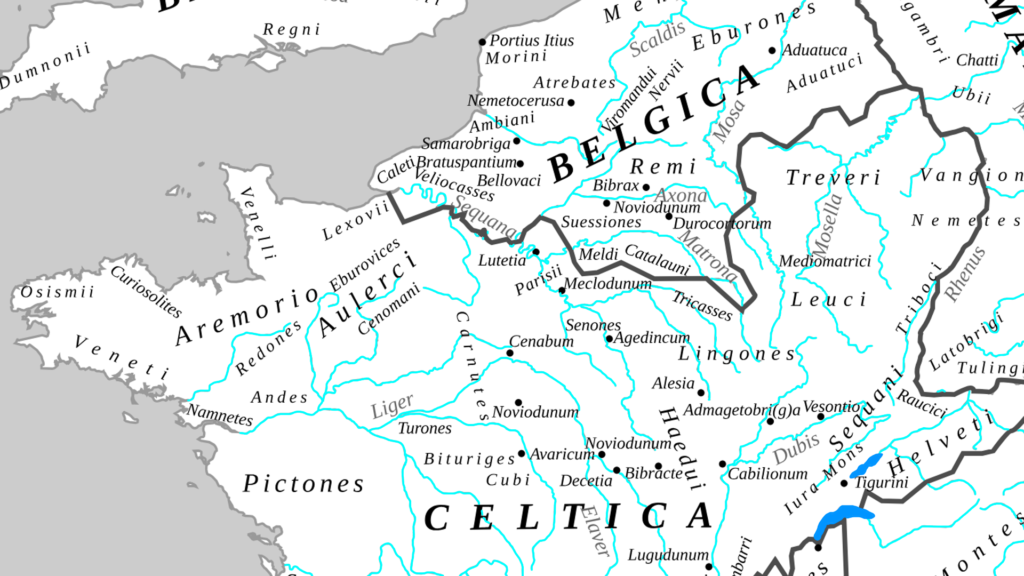
Following the surrender of Vercingetorix after the Battle of Alesia, Roman authority in Gaul appeared, at least superficially, to have been secured. Yet the conflict was far from concluded. Although the large-scale unified uprising against Rome had collapsed, resistance continued across several regions as various Gallic tribes refused to accept Roman domination. The nature of the war consequently entered a new phase, marked less by major set-piece engagements and more by dispersed resistance, rapid manoeuvre, ambush warfare, and localised campaigns conducted across difficult terrain.
Gaul After Alesia
As Aulus Hirtius began the final book appended to Commentarii de Bello Gallico, he declared that “the whole of Gaul was conquered.” Yet the narrative itself reveals that Roman victory was not entirely complete. Although many tribes submitted following the surrender of Vercingetorix after the Battle of Alesia, several groups still refused to accept Roman domination and continued their resistance.
Although the Gauls had suffered defeat, not all had been fully pacified. Their resistance was marked not only by courage, but also by a determination to continue fighting until every possible strategy had been exhausted. The great united uprising had failed, demonstrating that even large Gallic armies could not overcome the discipline and organization of the Roman legions. Yet the conflict also revealed another lesson: Caesar had faced his greatest difficulties not from a single massive revolt, but from numerous smaller and coordinated campaigns of local resistance carried out across different regions simultaneously.
The Gauls therefore resolved to adopt this strategy once again. They understood that although Julius Caesar was capable of defeating any force he encountered directly, he could not respond to simultaneous uprisings across all of Gaul at once. Had the tribes fully committed themselves to this coordinated approach, and had they possessed another leader of the caliber of Vercingetorix to sustain the effort, the Roman conquest of Gaul might never have been completed. Yet fortune did not favor the Gallic cause. Caesar quickly learned of the tribes’ plans and resolved to suppress the rebellion before it could fully develop. While the Gallic leaders were still debating and organizing their preparations, he moved swiftly into action.
Campaign Against the Bituriges
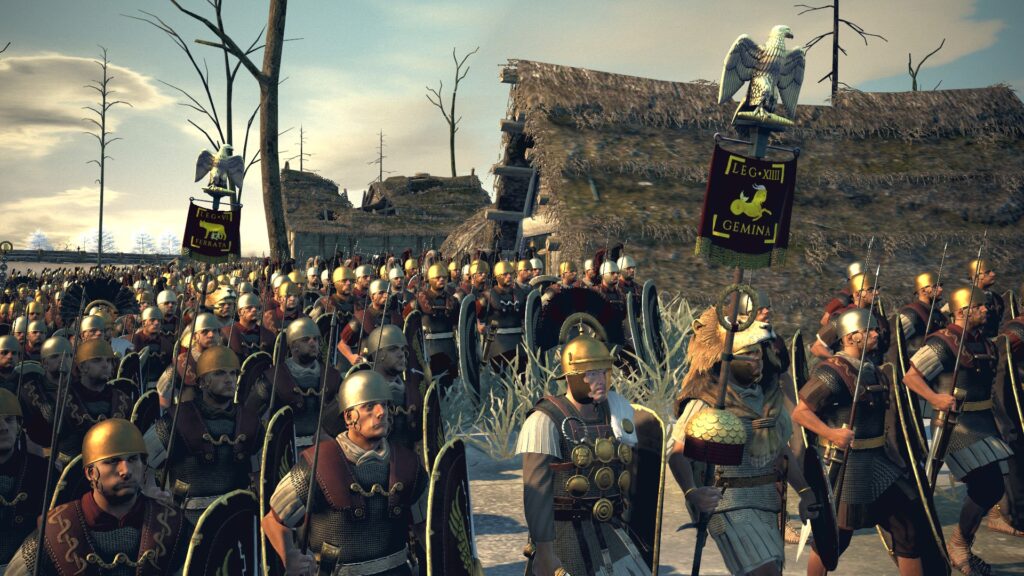
Leaving Mark Antony in command of the Roman headquarters at Bibracte, Julius Caesar departed on 31 December 52 BC with the Legio XI and the Legio XIII from their winter quarters to launch a punitive campaign against the Bituriges.
Leaving two cohorts from each legion behind to protect the baggage train and winter encampments, Julius Caesar advanced rapidly against the Bituriges, catching them entirely by surprise. To maintain secrecy, the proconsul instructed his troops not to burn farms and villages as they normally would during a campaign, thereby preventing smoke from revealing the army’s approach. This decision also allowed the Romans to preserve valuable supplies of grain and forage for their own use. Unable to organize an effective defense, the Bituriges suffered heavily, and thousands were taken captive.
The lands of the Bituriges had already been devastated during the previous summer’s campaigns, when they had loyally followed Vercingetorix’s command to destroy their own settlements and food supplies in order to deny resources to the Romans. Exhausted and weakened by these earlier hardships, the tribe was in no condition to continue resistance and soon submitted to Julius Caesar. Their decision was influenced in part by the lenient treatment Caesar had recently extended to other defeated tribes, as the proconsul was eager to encourage submission through clemency rather than further destruction.
Because the campaign produced little opportunity for plunder or the capture of slaves, Caesar compensated his troops financially for their discipline and endurance during the winter operation. Each legionary received a reward of 200 sestertii, while every centurion was granted 2,000. The entire campaign lasted only forty days. Following the successful conclusion of the operation, the two legions returned to their winter quarters.
Campaign Against the Carnutes
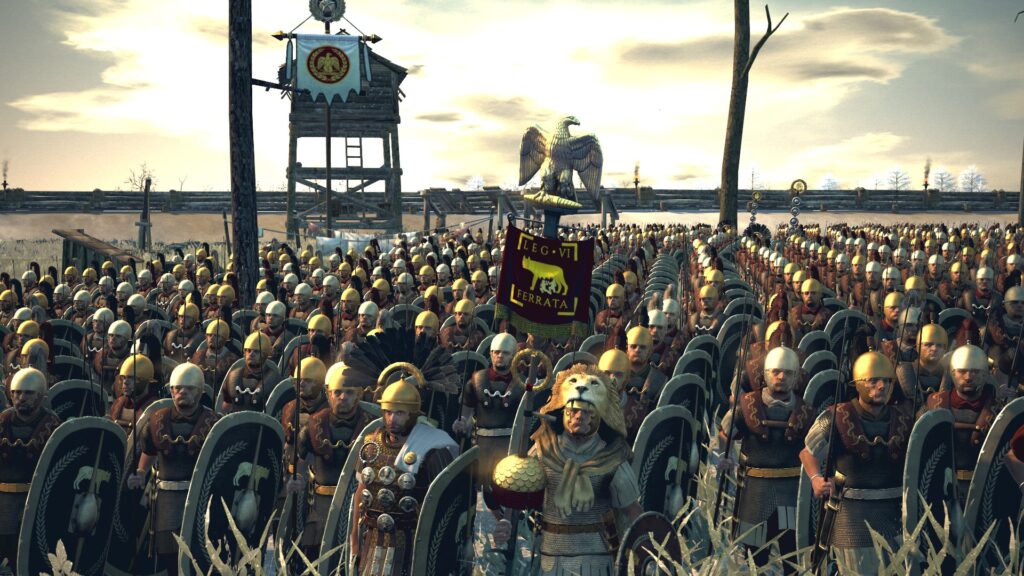
Eighteen days after Julius Caesar returned to Bibracte at the end of February, the Bituriges appealed to him for protection against attacks launched by the Carnutes. Determined not to undermine the loyalty of a tribe that had only recently submitted to Roman authority, Caesar responded immediately. He summoned Legio VI under Quintus Tullius Cicero from Cabillonum, as well as Legio XIV commanded by Publius Sulpicius from Matisco along the Saône River, before marching toward Cenabum.
As the Romans advanced, many of the Carnutes abandoned their homes and fled into the countryside. For a time, Julius Caesar quartered a large portion of his troops in the town of Cenabum, the same settlement where the massacre of Roman citizens had taken place the previous year. From there, Roman infantry and cavalry detachments regularly conducted raids across the surrounding region, devastating the countryside and placing constant pressure on the local population.
Forced into hiding during the harsh winter conditions, the Carnutes soon faced severe shortages of food and suffered greatly from exposure and deprivation. Many eventually abandoned the region altogether and sought refuge among neighboring tribes. Despite these successes, Caesar judged that the season was unsuitable for launching further large-scale operations. Concerned for the welfare and endurance of his soldiers during the severe weather, he decided to suspend active campaigning and kept the two legions stationed at Cenabum, where they could be quartered under more favorable conditions.
The Bellovaci Revolt
Julius Caesar left Gaius Trebonius in command of the two legions stationed at Cenabum before departing for the territory of the Remi. The Remi had requested Roman assistance after the Bellovaci and several neighboring tribes began preparing for war against them and their dependents, the Suessiones. The uprising was led by Correus of the Bellovaci and Commius, the Atrebatian leader who had once been among Rome’s most loyal allies in Gaul.
The Remi had long been among Rome’s most reliable allies in Gaul, and Julius Caesar considered their protection essential. Their earlier assistance during the campaign against the Belgae had proven invaluable, and Caesar was determined to support them against the growing threat posed by the Bellovaci and their allies.
Caesar ordered Quintus Fabius Maximus to march with the two legions wintering among the Remi into the territory of the Suessiones. He himself remained constantly active and relentless in directing operations. Caesar summoned the Legio VII, Legio VIII, and Legio IX and XI Legion from their winter quarters, and advanced against the Bellovaci.
The Bellovaci possessed a formidable reputation for bravery and military skill. Unlike many other Gallic tribes, they had contributed only a relatively small contingent to the massive relief army assembled during the Battle of Alesia. Only a few thousand warriors were sent, largely in response to the personal request of Commius, who maintained strong connections with the tribe. The majority of the Bellovaci chose instead to resist the Romans independently, preferring to wage war according to their own methods rather than participate fully in the wider Gallic coalition.
After entering the territory of the Bellovaci, Julius Caesar established camp and dispatched his cavalry to conduct reconnaissance operations. Reports soon revealed that the fighting men of the Bellovaci and several neighboring tribes — including the Ambiani, Aulerci, Caletes, Veliocasses, and Atrebates — had abandoned their settlements and assembled for war on a strongly defended hill position, generally identified with modern Mont Saint-Marc in the Forest of Compiègne. Their baggage and supplies had been concealed deeper within the surrounding woodland.
Command of the allied force was held by Correus, while Commius had departed to seek additional support from Germanic tribes living near the Meuse River. According to the intelligence gathered, the Gauls intended to offer battle only if Caesar commanded no more than three legions. If confronted by a larger Roman force, they planned instead to avoid direct engagement and rely on guerrilla tactics, harassing the Romans continuously and targeting their foraging parties, especially since supplies in the region were already difficult to obtain. Caesar considered these reports reliable, as they were confirmed by the consistent testimony of several captured prisoners.
The Roman March Formation and Tactical Deception
In response, Caesar attempted to deceive the Bellovaci by concealing a fourth legion behind the army’s baggage train, hoping this would encourage the Gauls to attack and allow him to secure a swift victory. To support this maneuver, he arranged his forces in a formation that roughly resembled a square and advanced in such a way that the enemy encountered the Roman army sooner than expected. Caesar had already carefully instructed his officers regarding the details of the operation.
The description found in the Commentaries has often puzzled historians, especially because the campaign took place in heavily wooded terrain. From a modern military perspective, moving an army in a true square formation through such country would appear extremely difficult. However, ancient armies, particularly those composed mainly of infantry and cavalry with limited baggage and no heavy artillery trains, possessed a mobility that is often underestimated today. Caesar’s account is therefore best understood as a general description of his marching formation rather than as a perfectly rigid geometric square in the modern military sense.
The Bellovaci refused to be provoked into battle, and the two armies established camps facing one another across a valley. As Julius Caesar approached, the Gauls formed up before their camp but chose not to abandon the strong defensive position they held on the high ground.
Fortifications and Psychological Warfare
Recognizing that the enemy force was too numerous to assault without careful preparation, Caesar established his own camp on the opposite side of the valley, likely on what is now identified as Mont Saint-Pierre. The Roman camp was heavily fortified with a rampart approximately twelve feet high, topped with covered breastworks for protection. Additional defensive works were constructed along the slope, including two trenches roughly fifteen feet wide. Caesar described these trenches as having steep vertical sides and flat bottoms, although archaeological evidence suggests that their actual form may not have matched this description precisely.
These extensive fortifications served not only a defensive purpose but also a psychological one. Caesar hoped that the enemy would interpret the elaborate defenses as a sign of Roman caution or insecurity and, believing the Romans reluctant to fight in open battle, would be tempted to attack the entrenched camp.
Skirmishes Across the Marshlands
Frequent skirmishes took place at a ford crossing the marshy ground that separated the two opposing camps, an area now believed to be low meadow land. Small detachments from each side repeatedly crossed the ford to engage the enemy, with neither army gaining a decisive advantage as success shifted back and forth between them.
Roman foraging parties operating in the surrounding countryside were also subjected to continual attacks by the Gauls. These smaller successes, combined with the arrival of approximately five hundred German cavalry brought by Commius, significantly strengthened the morale and confidence of the barbarian coalition.
Reinforcements and the Expansion of the Campaign
Julius Caesar eventually concluded that the forces currently under his command were insufficient for the campaign and therefore summoned more legions to reinforce his army. He instructed Gaius Trebonius to bring in the Legio XIII, which was stationed in the territory of the Bituriges under the command of Sextius, and then march with it together with the Sixth and Fourteenth Legions from Cenabum to reinforce Caesar by forced marches.
The campaign against the Bellovaci was proving far more difficult than Caesar had originally expected. As reports of the fighting spread, exaggerated rumors began circulating in Rome, claiming that the Romans had suffered severe setbacks. At the same time, the Gallic coalition gained further confidence after successfully luring Roman cavalry and allied horsemen from the Remi, Lingones, and other tribes into an ambush. The attack resulted in significant casualties, including the death of their commander.
The Bellovaci Withdrawal
A few days after this setback, some of the German infantry auxiliaries crossed the marsh separating the two armies and engaged the enemy in close combat. The attack proved highly successful, driving the Gauls back into their camp, while a number of the attackers even pushed beyond the defensive perimeter itself.
This reverse, combined with the arrival of reinforcements under Gaius Trebonius, had a profound effect on the morale of the allied Gallic forces. The confidence they had previously gained was quickly replaced by fear and discouragement. Concerned that they might soon face another encirclement similar to the Battle of Alesia, the Gauls began preparing to withdraw from their position.
During the night they sent ahead their baggage, non-combatants, and elderly people. However, daylight overtook the movement before the retreat could be fully completed. Unwilling to reveal their withdrawal openly, the Gauls deployed part of their army in front of the camp in order to shield the operation and conceal the movement of the column as it continued to pull back.
Julius Caesar closely observed the movements of the Bellovaci and their allies. In response, he constructed a causeway across the marshland in front of his position—of which physical traces are still thought to remain—and advanced to a nearby hill, identified as Mont Collet, which overlooked the enemy camp.
From this elevated position, Caesar deployed his forces in battle formation. However, he judged that a direct assault was unnecessary, and that pursuing the retreating enemy column would be strategically unwise. The geography of the area constrained his options: with the Aisne River on one side and the marshland on the other, any attempt at pursuit would have forced his troops into a vulnerable position, exposing their flank to significant risk.
Recognising Caesar’s intent to maintain pressure, the Bellovaci devised a calculated withdrawal strategy. They planned to disengage gradually, covering their retreat with a line of burning obstacles made from straw bales and dry timber that had been secretly prepared in advance.
Julius Caesar anticipated this manoeuvre, but advanced with caution, as he reasonably suspected the possibility of an ambush. The Roman cavalry found it difficult to move forward through the barrier of fire, which limited immediate pursuit. As a result, the Bellovaci were able to withdraw safely for roughly ten miles. They then occupied a new defensible position on a naturally strong hill. This site is generally identified with modern Mont Ganelon, located north of the confluence of the Aisne River and the Oise River. Although this position lies only about six miles in a straight line from Mount Saint-Marc, the actual route likely required a longer circuit due to the need to cross the intervening river systems and terrain obstacles.
It is not recorded that Julius Caesar pursued the retreating enemy directly. Instead, he is likely to have remained in his camp, carefully surveying the surrounding area through reconnaissance operations in order to identify a more favourable opportunity for engagement.
Guerrilla Warfare and Ambush Tactics
From their new position, the Bellovaci avoided open battle and instead relied primarily on ambush tactics, keeping their main forces stationed at a distance while conducting irregular attacks. Over the following days, they succeeded in inflicting several minor setbacks on Roman detachments. In such operations, intelligence gathering proved crucial. Acting on information obtained from the interrogation of a captured prisoner, Caesar recognised a potential opportunity: the Bellovaci leader Correus was positioned in ambush with approximately 6,000 infantry and 1,000 cavalry, waiting to strike one of the Roman foraging parties.
Julius Caesar personally accompanied the foraging expedition, intentionally making the detachment larger than usual to strengthen its protection. He integrated his cavalry with light infantry units and supported them with several cohorts of legionaries to ensure greater combat effectiveness. The ambush site was a plain roughly one mile across, located not far from modern Choisy-au-Bac, enclosed by woodland and bordered by the Aisne River. The Gallic force was under the command of Correus. At the appropriate moment, Correus emerged from the surrounding forest and launched an attack on the Roman foraging column, anticipating a complete and decisive victory.
The ambush failed, as the Roman force was present in strong numbers and fully prepared for the attack. The cavalry was quickly reinforced by archers, and after a sharp engagement at the front—during which the cavalry and light troops displayed notable courage—the legionary infantry arrived and encircled the Gallic fighters. Although most of the Bellovaci managed to escape, their commander Correus refused either to flee or to surrender and was ultimately killed by a volley of javelins. Following this engagement, Julius Caesar advanced with his legions toward the main enemy encampment, which his scouts estimated to be located approximately eight miles away.
The death of Correus, combined with the arrival of survivors from his defeated force, led the Bellovaci to send envoys to negotiate peace with Julius Caesar. During these negotiations, the envoys attempted to place full responsibility for the rebellion on the deceased leader. Caesar responded that he did not believe a single individual could have been solely responsible for the uprising, but he was nevertheless willing to accept their submission and refrain from imposing further punishment. The Bellovaci consequently handed over hostages as a guarantee of their surrender. Impressed by this lenient treatment, several other tribes also submitted to Roman authority in the following weeks. While Caesar’s statement contained some truth regarding the role of individual leaders in sustaining resistance, he clearly recognised the importance of charismatic leadership in maintaining rebellion.
Meanwhile, Commius also escaped following the defeat of the Bellovaci. He and his followers were pursued by Roman forces. At one point, Titus Labienus pretended to seek negotiations with the Atrebatian king in an attempt to assassinate him, but Commius escaped with only a wound. Later, he narrowly avoided capture by another Roman patrol and declared that he was willing to make peace on the condition that he would never again have to meet a Roman face to face. Although Caesar’s response is not recorded, Commius eventually fled across the sea to Britain, where he established himself as king of a tribe on the southern coast and founded a ruling dynasty.
Toward Uxellodunum: The Last Centre of Resistance
By this stage, nearly all of Gaul had been brought under control, with only one major centre of resistance remaining: the fortified hill-town of Uxellodunum. Here, elements of the Cadurci and allied groups, including the Senones, resolved to make their final stand against Julius Caesar. This final phase of resistance, however, belongs to a separate episode that will be discussed later.
© 2026 History and War
Author: Jishu Roy
Unauthorized reproduction of this content is prohibited.