A Regional Crisis Turned European War
The Thirty Years’ War (1618–1648) was one of Europe’s most devastating conflicts, redrawing the continent’s political and religious map. Yet before drawing in major powers like France and Sweden, it began as a regional crisis in the Kingdom of Bohemia. Triggered in May 1618 by the defenestration of imperial officials in Prague, the Bohemian Revolt pitted Protestant nobles defending their constitutional liberties against the Catholic Habsburg monarchy’s push for centralized rule.
This article traces the arc of that rebellion from its political roots to its decisive climax on November 8, 1620, at the Battle of White Mountain (Bílá Hora). It examines the succession crisis that sparked the uprising, the early military campaigns across Bohemia and Austria, and the diplomatic missteps that left the rebels isolated. Finally, it analyzes the brief, one-hour battle outside Prague and the sweeping Counter-Reformation that crushed Bohemian autonomy and ignited a wider European war.
Copyright © Cyowari
Origins of the Conflict
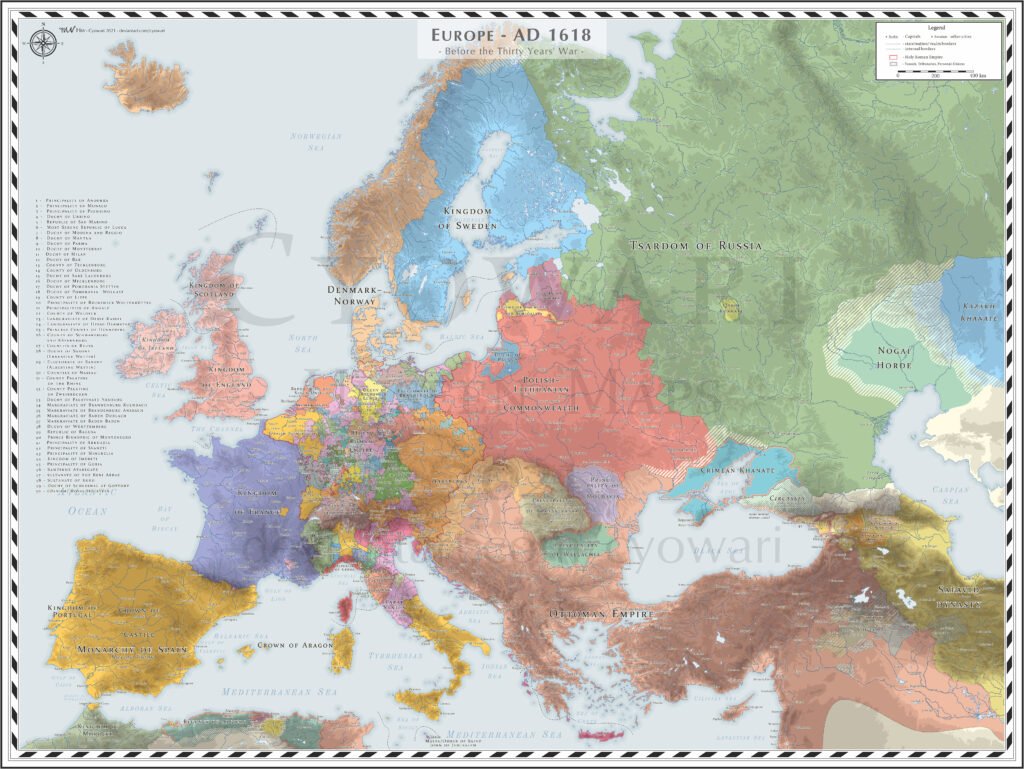
In the early seventeenth century, the Kingdom of Bohemia, though part of the largely Catholic Holy Roman Empire, was home to a significant Protestant majority. For decades, these Protestant nobles and townspeople had enjoyed religious and political privileges granted under imperial charters, which ensured a measure of autonomy within the realm. However, in AD 1617, as Emperor Matthias’s health declined, he designated his cousin Ferdinand — a staunch Catholic and a fervent supporter of the Counter-Reformation — as his successor to both the imperial throne and the crown of Bohemia.
Many of Bohemia’s Protestant nobles feared that their religious freedoms — guaranteed by Emperor Rudolf the Second’s Letter of Majesty in 1609 — would be revoked under Ferdinand’s rule. Seeking to preserve these rights, a faction of Protestant leaders instead favored Frederick the Fifth, Elector Palatine and heir to Frederick the Fourth, the founder of the Protestant Union. Yet not all Protestants were united in opposition; some aligned themselves with the Catholic position. In the end, in AD 1617, the Bohemian Estates formally elected Ferdinand as crown prince, ensuring that upon Emperor Matthias’s death, he would ascend as the next King of Bohemia.
To oversee Bohemia in his absence, the newly elected king sent two Catholic councillors — Vilem Slavata of Chlum and Jaroslav Bořita of Martinice — as his representatives to Prague Castle in May 1618. On the 23, an assembly of Protestant nobles confronted the councillors, accusing them of violating the Letter of Majesty. In a sudden outburst of anger, the Protestants seized both men, along with their secretary, Filip Fabricius, and hurled them from a window of the castle — nearly seventeen metres above the ground. Remarkably, all three survived the fall, sustaining only minor injuries.
This dramatic episode, remembered as the Third Defenestration of Prague, ignited the Bohemian Revolt. Within months, the conflict spread throughout the Lands of the Bohemian Crown — Bohemia, Moravia, Silesia, and the Lusatias. What began as a regional uprising over faith and autonomy would, in time, expand far beyond Bohemia’s borders, drawing in major European powers such as Sweden and France, and transforming into the devastating Thirty Years’ War.
Early Military Campaigns in Bohemia (1618)
The Siege of Pilsen
The newly established Protestant government, composed of Bohemian nobles and gentry, appointed the German mercenary general Ernst von Mansfeld to command its forces. Meanwhile, many Catholic nobles and clergy fled the kingdom, seeking safety in loyalist strongholds. Several monasteries and unfortified estates were abandoned, and a large number of Catholic refugees gathered in the city of Pilsen, believing it could serve as a defensible base of operations. Although the city’s fortifications were strong and provisions sufficient for a prolonged siege, its garrison was small and dangerously short on gunpowder. Recognizing the opportunity, Mansfeld resolved to seize Pilsen before the defenders could receive reinforcements from outside Bohemia.
On 19 September AD 1618, Mansfeld’s army arrived at the outskirts of Pilsen. The defenders promptly sealed two of the city’s gates and reinforced the third with additional guards. Although Mansfeld commanded nearly ten thousand men, the city’s fortifications were too strong for a direct assault. Instead, he chose to blockade Pilsen, intending to starve the defenders into submission.
By 2 October, Protestant artillery had reached the camp, but the guns were too few and of too small a calibre to breach the walls effectively. The siege dragged on, with Mansfeld’s forces regularly receiving new recruits and supplies, while the city’s defenders suffered from dwindling food and munitions. The situation worsened when the main well was destroyed, cutting off their access to fresh water.
Finally, on 21 November, breaches appeared in the walls, and Mansfeld’s troops stormed the city. After several hours of fierce close-quarters fighting, Pilsen fell to the Protestants. The capture of the city secured almost all of Bohemia under rebel control.
The Battle of Lomnice
Meanwhile, a Habsburg Roman Catholic force under Charles Bonaventure de Longueval, Count of Bucquoy, advanced toward Prague. However, it was intercepted near Čáslav by a Protestant army, which managed to halt its progress for several weeks. Shortages of food and the outbreak of disease soon weakened Bucquoy’s troops, forcing him to retreat. Later, as Bucquoy attempted to regroup and bring reinforcements northward, Count Jindřich Matyáš Thurn, commander of the Bohemian national army, pursued him and engaged his forces near the village of Lomnice nad Lužnicí in southern Bohemia.
During the battle, a portion of the Catholic army took position between two ponds, where it was heavily bombarded by Protestant artillery and suffered the majority of its casualties. Count Bucquoy’s forces were decisively defeated, losing at least fifteen hundred men. As a result, the main body of the Habsburg army was compelled to withdraw from Bohemia. However, the Protestant commanders failed to exploit their victory; they did not pursue the retreating enemy, thereby missing the chance to deliver a decisive blow. With the onset of winter — a harsh and bitter season for the inhabitants of southern Bohemia — large-scale military operations came to a temporary halt. By the following year, AD 1619, their break from Habsburg authority was complete when Frederick V formally accepted the crown of Bohemia.
Escalation and Shifting Fortunes (1619)
Thurn’s March on Vienna
On 20 March AD 1619, Emperor Matthias died, an event that emboldened the rebellious Protestant leaders, who had previously been close to negotiating a settlement. With Matthias’s death, Ferdinand formally assumed the Bohemian throne, but both his position and that of the Bohemian rebels were marked by internal weaknesses. These political and military uncertainties allowed the conflict to expand beyond Bohemia, spreading into western Germany and drawing in a wider range of participants.
Thurn and Mansfeld once again took to the field. Mansfeld remained behind to monitor Count Bucquoy’s forces, while Thurn advanced with the aim of securing the territories that had previously submitted to Emperor Matthias and had so far remained neutral in the Bohemian uprising. His campaign met with little resistance, and he soon succeeded in bringing Moravia over to the rebel cause. Thurn then proceeded through Lower Austria and laid a brief, poorly organized siege of Vienna, where Ferdinand himself was present, defended by only a small garrison of about 300 soldiers and a number of hastily assembled volunteers. Thurn expected support from sympathizers within the city who might open the gates for him, but he squandered valuable time negotiating with the Austrian nobility, allowing his opportunity to slip away.
However he was forced to abandon only a few days later, on 14 June. The rebels lacked the heavy artillery necessary for a sustained assault, and their lines of communication were dangerously overextended, making continued operations before the city impossible.
Though most of Ferdinand’s Austrian territories joined the rebellion — with Styria, Carniola, and the Tyrol being the key exceptions — the newly crowned Emperor Ferdinand the Second still commanded far greater resources in both money and manpower than his opponents. In May 1619, a contingent of 7,000 seasoned veterans from the Spanish Army of Flanders was dispatched across the Holy Roman Empire to reinforce his position at Vienna. By July, Ferdinand had also received substantial financial aid from Spain, amounting to 3.4 million thalers. With these funds and reinforcements, the Imperial army was soon expanded to around 30,000 men, providing Ferdinand with the strength he needed to reassert control over his rebellious dominions.
The Battle of Sablat
Meanwhile, the situation in Bohemia began to deteriorate for the Protestant forces. While Ernst von Mansfeld was marching to reinforce General Hohenlohe, who was besieging České Budějovice, his army was intercepted by Count Charles Bonaventure de Longueval, Count of Bucquoy, near the small village of Záblatí (German: Sablat), approximately 25 kilometers northwest of the city. On 10 June 1619, Bucquoy — a seasoned commander who had gained valuable experience in the wars of the Low Countries — decisively defeated Mansfeld’s army in a pitched battle. While parts of Mansfeld’s cavalry managed to escape, his infantry suffered devastating losses, with roughly 1,500 men killed and his baggage train captured. This crushing defeat forced the Bohemians to abandon the siege of České Budějovice, marking a serious setback for the Protestant cause.
The Battle of Wisternitz
After securing control over key strongholds in southern Bohemia, Emperor Ferdinand II dispatched a force under Count Henri du Val Dampierre to Moravia, which had aligned itself with the Bohemian rebels. However, in August 1619, Dampierre’s army suffered a defeat at Dolní Věstonice (German: Wisternitz) at the hands of Moravian forces commanded by von Tiefenbach (the brother of Rudolf von Tiefenbach) and Ladislav Velen ze Žerotína. This victory ensured that Moravia remained firmly within the Bohemian alliance, strengthening the Protestant position in the region.
Diplomatic Isolation and the Imperial Election of 1619
The Bohemian leadership, in their search for allies against Ferdinand II, pursued a risky and inconsistent diplomatic strategy. Members of the Bohemian Estates offered the Bohemian crown—or at least promises of political favor and alliance—to several different rulers in hopes of securing military and financial support. Approaches were made to the Duke of Savoy, the Elector of Saxony, and the Prince of Transylvania, each being courted as a potential protector of the Bohemian cause. However, this duplicity soon backfired. The Austrian authorities, having intercepted much of the Bohemians’ correspondence, made these conflicting proposals public, revealing the rebels’ divided diplomacy. The exposure seriously undermined Bohemian credibility among their would-be Protestant allies, particularly in Saxony, where trust in the movement collapsed. As a result, Ferdinand II faced little opposition at the Imperial Election of 1619, securing his position as Holy Roman Emperor and significantly strengthening his authority against the Bohemian rebellion.
The Battle of White Mountain (November 8, 1620)
In AD 1620, now firmly established as Holy Roman Emperor, Ferdinand II resolved to crush the Bohemian revolt and make an example of its leaders. Opposing him, King Frederick V and his commander, Prince Christian of Anhalt, assembled a Protestant army of roughly 30,000 men. Ferdinand responded by mustering a Catholic force of about 25,000 troops, many of them experienced veterans, under the command of Field Marshal Johann Tserclaes, Count of Tilly, a skilled Spanish-Flemish nobleman and one of the most capable generals of the age.
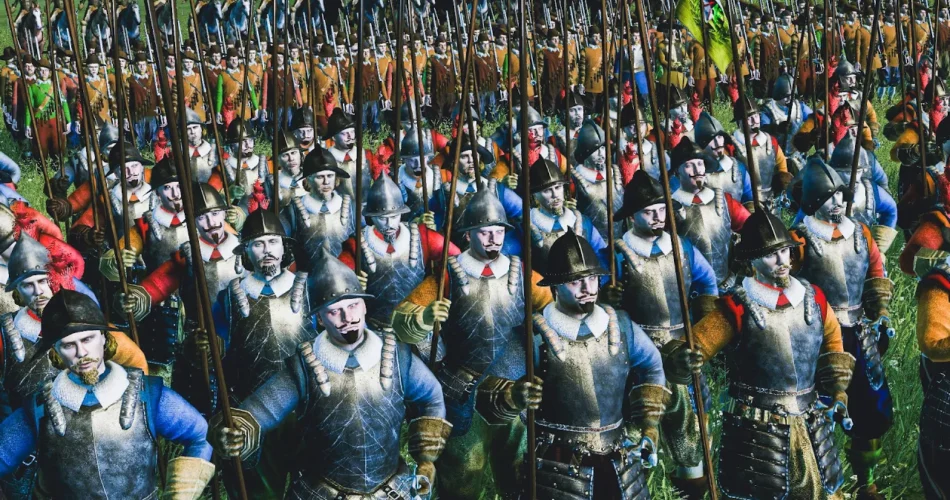
Tilly’s army enjoyed a significant advantage in leadership, as it included not only himself but also the rising commander Albrecht von Wallenstein, who would later play a major role in the wider conflict. The Imperial host was composed of two principal contingents: Imperial troops under Charles Bonaventure de Longueval, Count of Bucquoy, and the forces of the Catholic League, commanded directly by Tilly. Like most armies of the period, both sides relied heavily on mercenaries, men who fought for pay rather than loyalty — a hallmark of the warfare that characterized the Thirty Years’ War.
After securing control over most of western Bohemia, the Imperial army advanced toward Prague, the Bohemian capital, which remained in rebel hands. The Bohemian forces attempted to block their approach by establishing a series of defensive positions, but the Imperial troops skillfully outmaneuvered them, avoiding direct engagement.
Marching rapidly to intercept the enemy, Prince Christian of Anhalt managed to reach Prague ahead of the Imperial army, taking up a defensive position on the nearby White Mountain — a low plateau overlooking the city. However, he had little time to fortify his position, and morale among his men was already low.
After weeks of setbacks, Christian’s army had dwindled to about 15,000 soldiers, many of them unpaid and weary. The Imperial forces, too, were short on pay and provisions, and with winter fast approaching, the cold and damp weather further eroded the troops’ enthusiasm for battle. Both sides entered the engagement with fatigue and uncertainty, setting the stage for the brief but decisive Battle of White Mountain.
The Battle of White Mountain need not have occurred when it did. Both Imperial and Catholic League commanders recognized that time favored their cause — with the coming spring likely to strengthen their strategic position through better weather, fresh recruits, and renewed supplies. Initially, they preferred to delay major engagement and allow the rebellion to weaken further over the winter. However, Bavarian Prince Maximilian, the political head of the Catholic League, pressed for an immediate and decisive victory to bring the Bohemian campaign to a swift conclusion. Yielding to his insistence, Count Bucquoy ultimately agreed to test the strength of the enemy in a large-scale engagement. The plan was to gauge the outcome of the initial clash and, based on its progress, decide whether to launch a full assault or withdraw. This decision would soon lead to one of the most pivotal confrontations in the early phase of the Thirty Years’ War.
The Imperial command decided to launch its main assault against the left wing of the Bohemian army, as the terrain there offered a more favorable approach. Shortly after midday, around 2,000 pikemen and musketeers, supported by approximately 1,800 cavalry, began their advance toward the Bohemian position. The left wing was held by some of the Bohemians’ elite infantry, commanded by Jindřich Matyáš Thurn, one of the leading figures of the Bohemian army. However, despite their reputation, panic quickly spread among the defenders. During the second Imperial assault, many of Thurn’s troops broke ranks and fled—some even before the enemy had reached their lines. As disorder spread, other units followed suit, and confusion engulfed the Bohemian ranks. Though General Thurn, leading the Bohemian cavalry, attempted to stem the Imperial advance, his efforts could not restore discipline. One after another, Bohemian regiments retreated from the field, many without offering serious resistance, turning what had begun as a tactical engagement into a complete rout.
The Imperial commanders quickly decided to reinforce their assault by committing additional troops to the engagement. Despite the growing pressure, the battle was not yet entirely lost for the Bohemian forces and their ruler, the so-called “Winter King.” From the center of the Bohemian line, Christian of Anhalt the Younger, son of Christian I, Prince of Anhalt-Bernburg, led a small cavalry detachment in a daring counterattack. In a moment of bold initiative, his cavalry broke through the ranks of the Imperial cuirassiers and even disrupted several units of Imperial infantry. This unexpected charge temporarily halted the Imperial and League advance, throwing parts of their line into confusion.
However, this success proved to be brief and isolated. The momentum of the counterattack soon faded, and the Bohemian army was unable to capitalize on the opening created by Christian’s charge. Soon the cavalry of Christian of Anhalt the Younger, a young boy only 21 years old, was smashed by larger League cavalry. As the Bohemian infantry advanced toward the Imperial positions, they saw their own cavalry in retreat. Startled and disheartened, they fired a single, ineffective volley from long range before withdrawing as well.
Meanwhile, the forces of the Catholic League advanced up the steeper slopes on the left, pressing against the rebels’ right flank. Owing to the difficult terrain in this sector, the Bohemian troops stationed there initially managed to check the advance of the League’s veteran tercios. At that moment, however, the right wing of the Protestant army came under sudden attack from Polish Cossack cavalry. This proved to be the final blow. The Bohemian army, already plagued by poor morale, began to collapse. One unit after another abandoned its position, many doing so without ever engaging the enemy. On the far right of the rebel line, a contingent of German mercenaries found themselves trapped by the rough terrain and unable to retreat. Forced to stand their ground, they fought until the last man fell. In later years, legend would transform their grim fate into a tale of valiant resistance — of men who chose death over surrender.
General Tilly then advanced with about 2,000 Bavarian hussars, pushing the Protestant forces steadily back toward the Star Palace, located just west of Prague. There, the rebels attempted—unsuccessfully—to form a new defensive line. The Bohemian army proved no match for Emperor Ferdinand’s disciplined and experienced troops. The entire battle lasted barely an hour and ended in a decisive Imperial victory. More than 2,000 Protestants were killed or captured, while Imperial losses were only about 700.
Aftermath: Habsburg Consolidation and the Wider Thirty Years’ War
With the Bohemian army destroyed, Tilly entered Prague, bringing the revolt to an end. King Frederick fled with his wife Elizabeth after barely a year on the throne, earning him the derisive nickname “the Winter King.” His lands in the Rhenish Palatinate were handed over to Catholic nobles, and his electoral title was transferred to Duke Maximilian of Bavaria. In Prague, forty-seven rebel leaders were tried, and twenty-seven were executed in the Old Town Square. Today, twenty-seven white crosses mark the site in their memory. In the aftermath, much of the Bohemian nobility fled into exile, and their estates were confiscated.
A Protestant force under Johann Georg of Brandenburg continued resistance in Silesia and Moravia until 1623, but the rebellion was effectively over. The Habsburgs imposed a harsh Counter-Reformation, expelling or forcibly converting Protestants and abolishing Bohemia’s elective monarchy in favor of hereditary rule. The “Letter of Majesty,” which had guaranteed religious freedoms, was revoked. Though Bohemia fell under firm Habsburg control, unrest persisted elsewhere. The shifting balance of power soon drew in other Protestant states—setting the stage for the wider conflict that became the Thirty Years’ War.
Bibliography
1) BATTLES OF THE THIRTY YEARS WAR : FROM WHITE MOUNTAIN TO NORDLINGEN, 1618–1635 | William P. Guthrie
2) THE HISTORY OF THE THIRTY YEARS’ WAR | Friedrich Schiller
3) THE THIRTY YEARS’ WAR : 1618–1648 (ESSENTIAL HISTORIES) | Richard Bonney
4) AN ENCYCLOPEDIA OF BATTLES : ACCOUNTS OF OVER 1,560 BATTLES FROM 1479 B.C. TO THE PRESENT | David Eggenberger
© 2026 History and War
Author: Jishu Roy
Unauthorized reproduction of this content is prohibited.