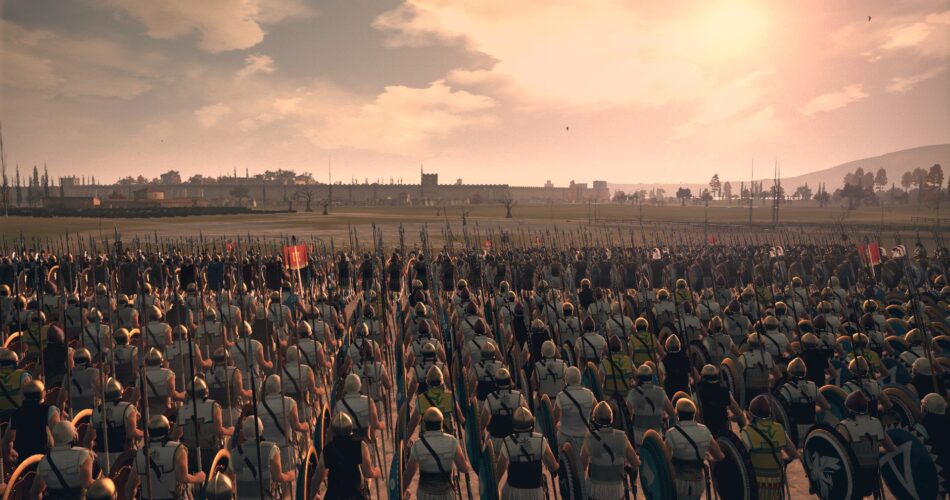
Potidaea: Where Peace Finally Failed
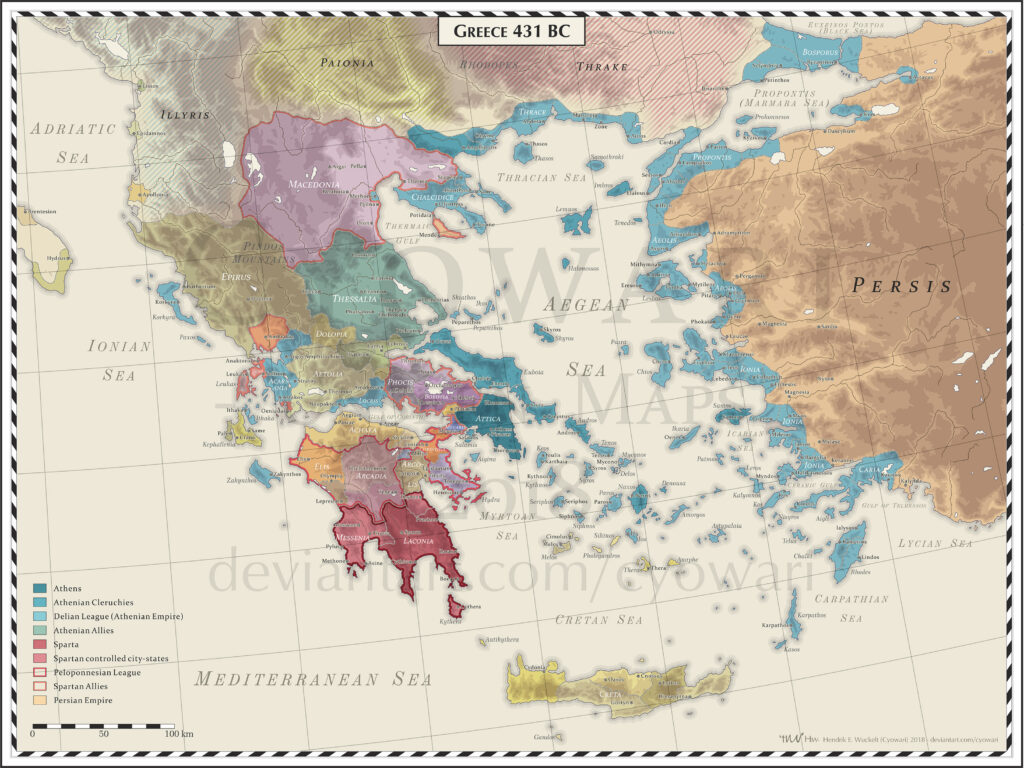
Map credit – © Crowari
In 432 before Christ, the Greek world still spoke the language of peace—but it no longer believed in it. On the northern edge of the Aegean, at the city of Potidaea, loyalty itself became a crime. A Corinthian colony, bound by blood and memory, yet held within the grasp of Athenian power, Potidaea stood divided—caught between oath and survival. Athens demanded obedience. The city was ordered to submit, not negotiate. Its walls were to be torn down. Its sons taken as hostages. Its loyalty rewritten by decree. This was not diplomacy—it was domination. Potidaea refused. Athens answered with steel. Corinth, watching its colony strangled under the language of “security,” could no longer pretend this was restraint. What unfolded was not an accident, not a misunderstanding, but a warning—of how the coming war would be fought: slowly, deliberately, and without mercy. At Potidaea, hoplites marched not for conquest, but for principle. Allies faced allies. Greeks raised spears against Greeks—not over land alone, but over the future balance of power in the Hellenic world. Here, beneath the walls of a single city, restraint finally failed. And from this siege the road to a generation-long war became unavoidable. This is the Battle of Potidaea.
A City Between Empires: Athens, Corinth, and Rising Tensions
The Potidaeans inhabited the isthmus linking the Pallene peninsula with Chalcidice, on the frontier of Thrace and Macedonia. Their political position was unusual. They were tribute-paying allies of Athens, bound to the Athenian alliance system, yet they remained loyal colonists of Corinth and continued to receive annual magistrates sent from their mother city. After the indecisive Battle of Sybota in 433 BC, Corinth began to consider measures of retaliation against Athenian influence. Athens, in turn, became increasingly suspicious of Corinthian intentions, viewing the situation at Potidaea as a potential threat to its authority in the region.
In the winter of 433 to 432 BC, probably in January, Athens issued a series of demands to Potidaea. The city was ordered to demolish the section of its wall facing Pallene, to surrender hostages, to dismiss the Corinthian magistrates, and in future to refuse the annual officials traditionally sent from Corinth to replace them. These measures were taken out of fear that Potidaea might be persuaded to revolt. Athens suspected that Perdiccas II, king of Macedon, together with Corinth, would encourage such a rebellion and that Potidaea’s defection might draw other Athenian allies in the Thracian region into revolt as well. The Athenian precautions followed immediately after the battle at Corcyra. By this point, Corinth had become openly hostile, and Perdiccas II—once a friend and ally of Athens—had also become an enemy. This change resulted from Athenian support for Perdiccas’ rivals, his brother Philip and his nephew Derdas, who were allied against him.
Perdiccas, however angered he may have been, was not in a position to act on his own. An undistracted Athens remained too powerful, especially when combined with the internal challenge posed by Perdiccas’ brother and nephew. For the time being, he therefore remained cautious, waiting for a more favorable opportunity. That opportunity emerged after the Battle of Sybota, when conflict between Athens and Corinth became increasingly likely. Perdiccas moved quickly to exploit the situation their rivalry created. Even before Athens issued its ultimatum to Potidaea, he had already taken steps that aroused Athenian suspicion. The announcement of the ultimatum encouraged him to act openly. Perdiccas sent envoys to Sparta in an effort to persuade the Spartans to confront Athens. At the same time, he sought to win Corinth’s support by proposing the encouragement of a revolt at Potidaea. He also approached the cities of the Thracian Chalcidice and the Bottiaeans along the northern shore of the Thermaic Gulf, urging them to join in resistance against Athenian power.
Aware of these developments and determined to prevent a wider revolt, the Athenians responded decisively. At this time, they were dispatching a force of thirty ships and one thousand heavy infantry to the region, under the command of Archestratus, son of Lycomedes, together with four fellow commanders. The officers were instructed to take hostages from the Potidaeans, to demolish the city’s walls, and to remain alert for any signs of rebellion among the surrounding cities.
When the Potidaeans received the Athenian demands in the winter of 433 to 432 BC, they sought to preserve their autonomy through diplomacy. An embassy was sent to Athens in an effort to persuade the Athenians to abandon or soften their intentions. The negotiations were prolonged, likely lasting through the winter, but they produced no outcome favorable to Potidaea. Instead, the Athenians became increasingly aware that resistance was possible. As a result, in the spring they issued further instructions to the commanders of their expedition to Macedonia, authorizing them to take action against Potidaea as well.
The Potidaeans, however, were far more resolute than the Athenians realized and had already taken steps to prepare for an unfavorable response. While sending envoys to Athens, they simultaneously dispatched ambassadors to the Peloponnese. Accompanied by their Corinthian kinsmen, these envoys traveled to Sparta to seek assistance should it become necessary. In Sparta, they met with the ephors and received an unexpectedly favorable response. The Spartan magistrates gave a direct assurance that, if Athens attacked Potidaea, Sparta would invade Attica in retaliation. These ephors had assumed office in the spring of 433 BC, meaning they were elected before Athens’ alliance with Corcyra and the Battle of Sybota. There is therefore no reason to assume that they entered office as opponents of Athens. Rather, it was the outcome of the battle and the subsequent actions taken by Athens that had altered their stance.
The Potidaeans acted without delay. Aware of the approaching Athenian expedition and encouraged by the promise of Spartan support, they openly revolted from Athens. At the same time, they concluded alliances with the cities of the Chalcidice and with the Bottiaeans, both of whom joined the rebellion. This development provided exactly the opportunity Perdiccas had been waiting for. He moved at once, persuading the coastal Chalcidian communities—vulnerable to attack by the Athenian fleet—to abandon and destroy their towns. He encouraged them instead to relocate inland at Olynthus, which was thereby transformed into a central stronghold. In exchange, Perdiccas granted them portions of his own territory to sustain them during the war against Athens.
Mobilization and Miscalculation
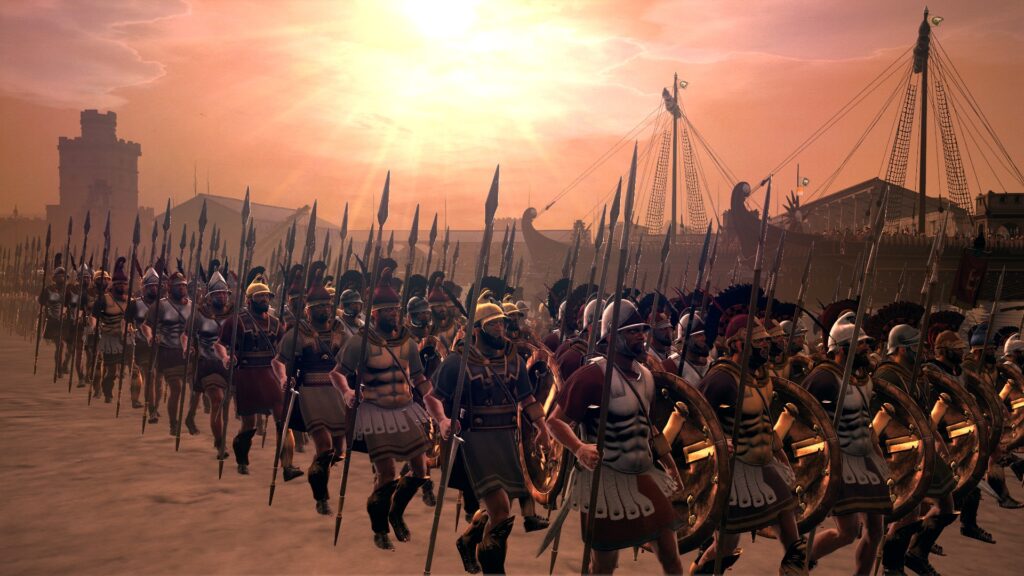
When the Athenian expedition arrived on the Thracian coast, it found that Potidaea had already revolted. The generals quickly realized that their forces were insufficient to carry out both of their assigned objectives. For the time being, they set Potidaea aside and chose instead to campaign against Perdiccas, acting in cooperation with Philip and the army of Derdas, which had already begun an invasion of Macedonia from the west. The limited size of the Athenian force suggests that Pericles had not anticipated Potidaea’s defiance. Had he expected such a response, he would likely have dispatched the reinforcements that Athens was later compelled to send. In that case, Potidaea might have capitulated at once, sparing Athens considerable loss of life, heavy expense, and nearly two years of strategic distraction.
When the Corinthians learned of Potidaea’s revolt and the dispatch of an Athenian expedition to the region, they resolved to provide assistance. Even at this stage, however, they were unwilling to take actions that would openly violate the Thirty Years’ Peace. Instead, they chose to support an expedition presented as a private venture, composed of so-called “volunteers,” under the command of the Corinthian general Aristeus, son of Adimantus. Aristeus was a long-standing friend of the Potidaeans and held in high regard at Corinth. It was largely on his personal reputation that the volunteers agreed to serve. Their numbers were increased by Peloponnesian soldiers who enlisted for pay supplied by Corinth. In total, the force amounted to sixteen hundred hoplites and four hundred light-armed troops.
When news reached Athens of the revolts in Potidaea, the Chalcidice, and the surrounding region, as well as of Aristeus’ expedition, the Athenians quickly recognized the gravity of the situation. In response, they dispatched a force of two thousand Athenian hoplites and forty ships under the command of Callias, son of Calliades, another close associate of Pericles. Upon arrival, Callias found that the army led by Archestratus had already captured Therme and was engaged in the siege of Pydna, and he joined in these operations. However, Callias’ instructions differed markedly from those given to Archestratus, indicating a shift in Athenian priorities.
By this stage, Pericles understood that a widespread revolt among Athenian allies in the Thraceward region posed a far greater danger than Perdiccas himself. Callias was therefore instructed that the capture of Potidaea was to be his primary objective. As a result, the Athenians moved quickly to reach an agreement with Perdiccas and concluded a new alliance with him. This arrangement was openly pragmatic and cynical on both sides. Perdiccas welcomed the Athenian decision to abandon the siege of a key Macedonian city, which relieved him—at least temporarily—from the pressure created by the coordinated attack against him. The Athenians, in turn, were satisfied to disengage from the Macedonian campaign so that they could concentrate their full strength on Potidaea. Both parties viewed the alliance as a temporary expedient, to be discarded when circumstances required.
After the treaty was concluded, the Athenians withdrew from Macedonia. They marched first to Beroea and then to Strepsa, where they made an unsuccessful attempt to take the city. Abandoning this effort, they continued overland toward Potidaea with a force of three thousand Athenian hoplites, reinforced by allied contingents and six hundred Macedonian cavalry drawn from the followers of Philip and Pausanias. At the same time, seventy Athenian ships sailed along the coast in support of the advance. Moving in short daily marches, the army reached Gigonus on the third day, where it established its camp.
Meanwhile, the Potidaeans and their Peloponnesian allies under Aristeus took up positions on the isthmus facing Olynthus, anticipating the Athenian advance. They established their camp outside the city walls. The allied forces appointed Aristeus as commander of all the infantry. Command of the cavalry was assigned to Perdiccas, who had already abandoned his alliance with Athens and returned to the Potidaeans’ side, delegating authority in the field to his officer Iolaus.
Aristeus’ Gamble: A Battle on Two Fronts
Aristeus’ plan was to hold his own forces on the isthmus and await the Athenian attack. The Chalcidians and other allied troops were positioned beyond the isthmus, while two hundred cavalry provided by Perdiccas were stationed at Olynthus. Their role was to strike the Athenian rear as the enemy advanced, thereby placing the Athenians between two attacking forces.
While Callias and his fellow Athenian commanders sent the Macedonian cavalry and a small contingent of allied troops to Olynthus to prevent any action from that direction, the main Athenian force broke camp and advanced directly against Potidaea.
Clash on the Isthmus
When the Athenians reached the isthmus and observed the enemy forming for battle, they drew up their own lines and soon engaged. On one flank, Aristeus—leading Corinthian and other selected troops—broke through the opposing Athenian wing and pursued it for some distance. Elsewhere, however, the Athenian forces prevailed. The remaining Potidaean and Peloponnesian troops were defeated and driven back, taking refuge within the city’s fortifications.
On returning from the pursuit, Aristeus became aware that the remainder of the allied army had been defeated. Uncertain whether it was safer to withdraw toward Olynthus or to retreat to Potidaea, he ultimately chose the second course. He drew his men into a tight formation and led them at a run, forcing their way back into Potidaea.
Not without difficulty, and under heavy missile fire, Aristeus led his force along the breakwater and through the sea, bringing most of his men safely into Potidaea, though a few were lost. Meanwhile, auxiliary troops from Olynthus—located about seven miles away and visible from Potidaea—advanced in response to the signal raised at the start of the battle in an attempt to provide support. Their movement, however, was checked by the Macedonian cavalry, which formed up to block their advance.
When the outcome of the battle became clear in favor of the Athenians and the signal was lowered, the Olynthian auxiliaries withdrew back within their walls, while the Macedonian cavalry returned to the Athenian side. As a result, no cavalry remained engaged on either side. After the fighting ended, the Athenians erected a victory trophy and returned the bodies of the fallen to the Potidaeans under a truce. Potidaean losses amounted to nearly three hundred men, while the Athenians lost about half that number, including their general, Callias.
Encirclement and Attrition
The Athenians now had little choice but to place the city under siege, as the direct storming of a well-defended city was virtually unknown in fifth-century warfare. It soon became clear that the forces at hand were still insufficient to seal Potidaea completely. Only with the arrival of Phormio, bringing an additional sixteen hundred hoplites, was the circumvallation of the city finally completed.
Upon arriving in Pallene, Phormio established his headquarters at Aphytis and advanced toward Potidaea in a series of short marches, devastating the surrounding countryside as he went. As no enemy force dared to confront him in the open, he constructed siege works against the city walls on the Pallene side. In this way, Potidaea was finally placed under a tight siege from both landward approaches, while the fleet cooperated in maintaining the blockade from the sea.
Aristeus, who had earlier demonstrated considerable bravery by breaking through the Athenian lines to join his Corinthian troops inside Potidaea, recognized that the city could not be relieved without outside assistance, particularly from the Peloponnese. Concluding that Potidaea required only a small garrison to defend its walls, he slipped out of the city to pursue more effective action elsewhere.
Aristeus remained in the Chalcidice, working to undermine Athenian control and negotiating with Peloponnesian leaders in an effort to draw them more deeply into the conflict. Meanwhile, the siege of Potidaea, which lasted until 430 to 429 BC, placed a heavy strain on Athenian resources. More than four thousand six hundred Athenian hoplites, along with many allied troops, were tied down at Potidaea and could not be deployed elsewhere.
From Crisis to the Peloponnesian War
The fighting at Potidaea did not end the crisis—it formalized it. In the months that followed, representatives from Corinth, Athens, and Sparta gathered at Sparta to judge what had already become clear. Grievances were presented, alliances invoked, and arguments weighed, not to prevent war, but to justify it. Sparta concluded that Athens had violated the peace. With that judgment, hesitation ended. What had begun as isolated conflicts was now acknowledged as a general war. From this decision emerged the Peloponnesian War.
© 2026 History and War
Author: Jishu Roy
Unauthorized reproduction of this content is prohibited.