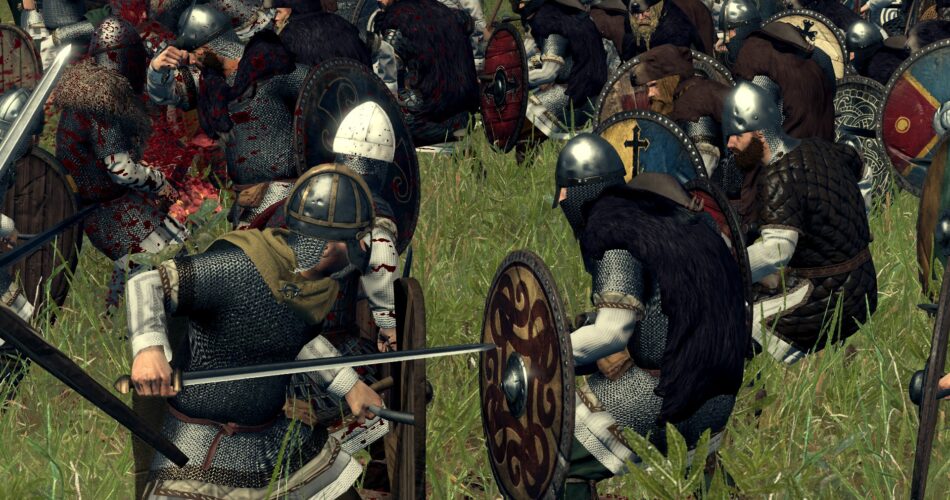
Battle of York (AD 867): A Turning Point in Viking England
The year is AD 867. Northern England stands on the edge of collapse. For generations, the Anglo-Saxon kingdoms fought among themselves—divided, weakened, unprepared. But now… a far greater storm has arrived. From across the cold seas, the Great Heathen Army descends. They didn’t come to raid. They come for land. For power. And for revenge… they say, for the death of Ragnar Lothbrok. At the heart of it all lies York—rich, fortified, and vital. The key to the north. Inside its walls, rival kings scramble to unite against a common enemy. Outside, hardened warriors wait—patient, confident. What follows is not just a battle… but a turning point. A clash that will decide the fate of kingdoms. A moment where ambition, desperation, and survival collide. This… is the Battle of York.
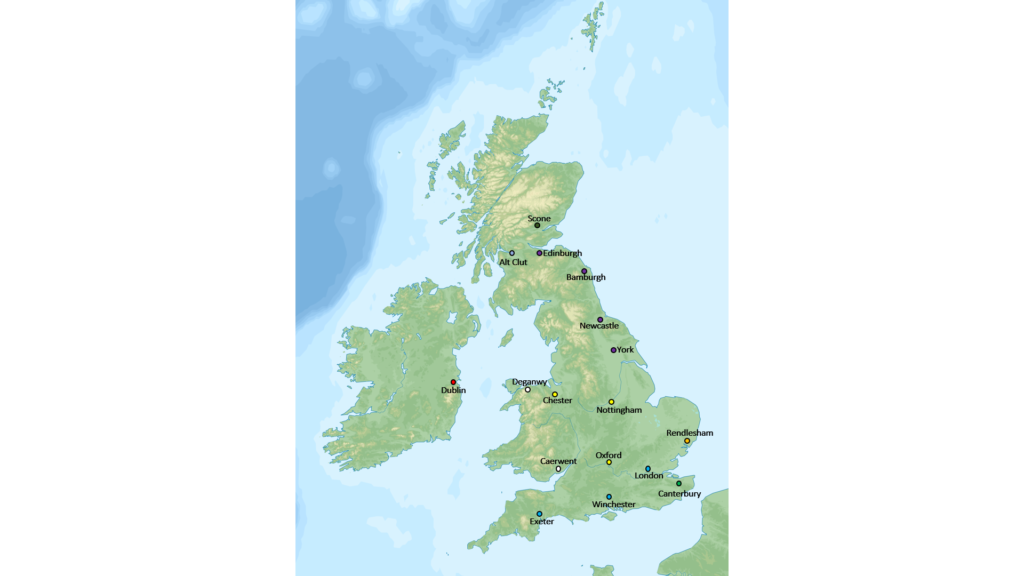
Viking Raids on England: From Early Attacks to Invasion (AD 789–865)
At the start of the eighth century, seafarers from Scandinavia began to venture far beyond their homelands. They crossed the North Atlantic, reaching as far south as North Africa… and as far east as the lands of Russia. Through the Mediterranean, they pushed on toward Constantinople and the Middle East. But their first strikes were closer to home. Not against great kingdoms…but against a divided England.
The earliest recorded Viking raid on England dates to AD 789. However, there were almost certainly earlier raids that went unrecorded. Evidence from the early AD 790s suggests that such attacks were already a growing concern. In a charter dated to AD 792, Offa of Mercia granted privileges to religious institutions in Kent, but notably excluded military service against seaborne raiders, implying that coastal threats were already familiar. Around the same time, in a letter written between AD 790 and 792, Alcuin of York criticized the Northumbrians for adopting the customs of pagan peoples who, in his words, threatened them with terror. Taken together, these sources suggest that contact between the Anglo-Saxons and the Scandinavians had already been established before the more famous raids, and that the Vikings were not acting blindly, but with some knowledge of their targets.
The incident of AD 789, which we mentioned earlier, began when three ships from Hordaland reached the Isle of Portland on the southern coast of Wessex. They were met by Beaduheard, a local official responsible for identifying foreign merchants entering the kingdom. Mistaking the newcomers for traders, he approached them—only to be killed. As time went on, these raids became more frequent, increasingly directed against isolated Christian monasteries and remote coastal settlements.
Throughout the first three decades of the ninth century, the Vikings appear to have continued raiding the Anglo-Saxon kingdoms. However, it may not have been until around AD 850 that these raids reached a level of intensity sufficient to leave a lasting impression on the English population as a whole. The Anglo-Saxon Chronicle records that “heathen men” wintered on Thanet for the first time in AD 850-51, and on the Isle of Sheppey for the first time in AD 854-55. These entries suggest that, in retrospect, such events were understood to mark a new phase in the escalation of Viking activity in England.
This pattern of overwintering marked a significant escalation in Viking activity. The Anglo-Saxon Chronicle claims that a Viking fleet of 350 ships took part in these operations. While this figure is likely exaggerated, evidence from Frankish sources suggests that fleet sizes had been increasing steadily throughout the AD 840s. For instance, a force of sixty-seven ships is recorded attacking Nantes in AD 843, while around 120 ships are said to have advanced on Paris in AD 845. If a fleet of similar scale was assembled in AD 851, it would have represented a substantial increase compared to earlier raids—potentially involving around 2000 to 4000 men.
A force of this scale would have been extremely difficult to resist. In AD 851, it attacked Canterbury, showing that even towns protected by Roman walls could no longer be considered secure. The fleet then moved to the mouth of the River Thames and went on to capture London—most likely the old walled city rather than the earlier trading settlement. At the time, London was under Mercian control, and Berhtwulf of Mercia appears to have attempted its defence. However, his efforts failed; the Anglo-Saxon Chronicle records that the Viking forces defeated him and forced his army to retreat.
The Viking force then crossed the River Thames and advanced into Surrey, a region that had been part of Wessex for roughly twenty-five years since Egbert of Wessex had taken it from Mercian control. In response, his son Æthelwulf of Wessex moved to confront the invaders, aiming to achieve greater success than in earlier encounters such as those at Carhampton. Despite the strength of the Viking force, the West Saxons won a decisive victory, inflicting heavy losses. The Anglo-Saxon Chronicle describes it as “the greatest slaughter of a heathen army that we have ever heard of.” Given the reported size of the opposing force, this outcome must have appeared extraordinary. The Annals of St Bertin similarly interpreted the victory as being achieved with divine assistance.
In the spring of AD 860, another large Viking fleet moved inland and captured Winchester, demonstrating once again that even fortified towns were vulnerable to attack. The fall of such a major centre would have been deeply unsettling. However, the West Saxons soon mounted a response. According to Asser, a contemporary writer closely associated with the court of Alfred the Great, the raiders were intercepted as they made their way back to their ships, carrying their plunder. They were attacked by local levies led by the ealdormen of Hampshire and Berkshire. In the ensuing engagement, the Viking force was heavily defeated. Asser describes the attackers as being overwhelmed and eventually forced to flee, leaving the West Saxons in control of the battlefield.
According to the Anglo-Saxon Chronicle, Æthelberht of Wessex had ruled the kingdom “in good harmony and in good peace” after reuniting it in AD 860. However, this period of stability began to unravel toward the end of AD 864, when a Viking force occupied the Thanet and demanded payment from the people of Kent under threat of violence. The Chronicle reports that the inhabitants agreed to these terms in the interest of peace. Yet the agreement proved deceptive: under cover of darkness, the Viking force moved inland and ravaged the eastern regions of the former kingdom. Such actions would normally have prompted a strong royal response, but any plans for retaliation were interrupted by Æthelberht’s death in AD 865. He was succeeded by his younger brother, Æthelred of Wessex.
The Great Heathen Army
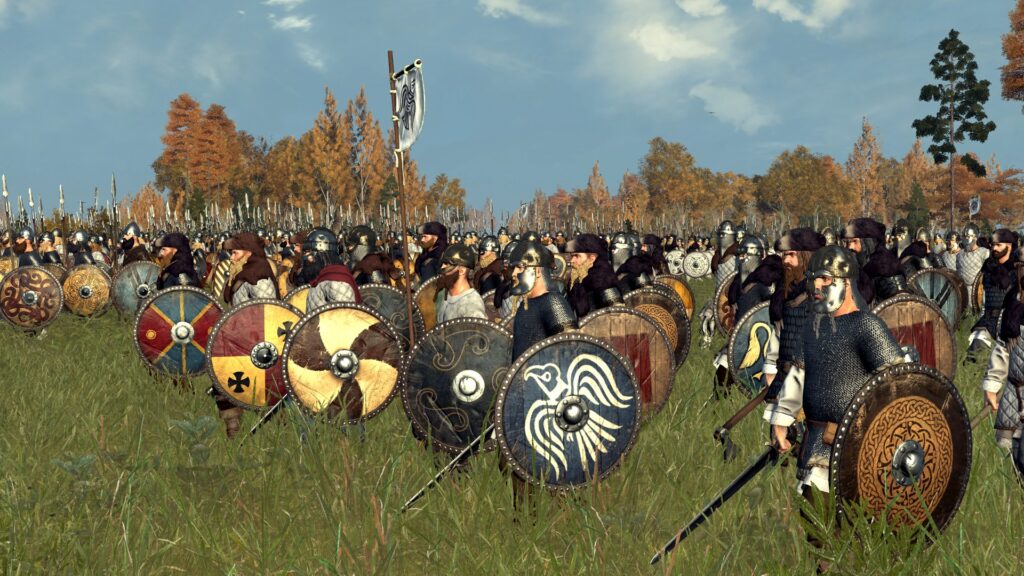
Æthelred of Wessex had only just come to power when a far greater threat emerged. In the autumn of AD 865, the Anglo-Saxon Chronicle records that “the land of the English” was invaded by “a great heathen army.” The exact origins of this force are uncertain. Some of its warriors were likely drawn from the group that had occupied Thanet the previous year, suggesting that this earlier presence may have been a precursor to the larger campaign. Others may have come from West Francia, where increasing royal resistance—particularly under Charles the Bald—had made operations more difficult. In addition, new contingents almost certainly arrived directly from Scandinavia.
A tenth-century Latin version of the Anglo-Saxon Chronicle attributes leadership of the Great Heathen Army to a figure named Ivar, described simply as coming “from the north.” Later tradition identifies him as Ivar the Boneless, one of the sons of Ragnar Lothbrok. Some historians have suggested that he may be the same individual who appears in Irish sources in the mid-ninth century, although this identification remains uncertain.
The leadership of the army is also said to have included Halfdan Ragnarsson, traditionally regarded as Ivar’s brother and another son of Ragnar Lothbrok. In addition, sources mention a ruler named Bagsecg, along with several earls, indicating that the army was led by a coalition of prominent commanders rather than a single leader.
Beyond describing the force as “great” (micel), the Anglo-Saxon Chronicle provides no precise indication of its size. Nevertheless, its scale can be inferred from both its actions and its objectives. The Chronicle records that the army established a winter camp in East Anglia and made peace with the local population. In practical terms, this meant that the East Angles paid tribute—offering money and valuables—in return for being spared from destruction.
Significantly, the terms of this agreement went beyond the usual demands for wealth. The Chronicle notes that the Vikings were also supplied with horses, suggesting a shift in both strategy and intent. This was no longer a temporary raiding force, nor even a group intending to remain only until local resources were exhausted. Instead, it appears to have been an army preparing for sustained campaigns, with the aim of conquering and controlling entire kingdoms.
The Fall of York (AD 866–867)
After spending a year in East Anglia gathering supplies and consolidating its strength, the Great Heathen Army moved in the autumn of AD 866 toward Northumbria. Its main objective was York, which fell to the invaders on 1 November.
Very little is known about the internal history of either Northumbria or East Anglia during the ninth century, as many of their records—charters and annals—were likely lost during Viking activity. However, the Anglo-Saxon Chronicle indicates that Northumbria was already politically unstable before the viking army arrived. It records that King Osberht of Northumbria had been deposed by Ælla of Northumbria, described as a ruler without hereditary legitimacy, resulting in significant internal conflict. Such divisions worked to the advantage of the Vikings, and it is possible that this internal instability itself helped attract them to Northumbria in the first place.
By the spring of the following year, the two rival kings had set aside their differences in order to confront the Viking threat. In March AD 867, their combined forces advanced toward York, forcing the Norse army to withdraw inside the city’s walls. Rather than settling into a prolonged siege, the Northumbrians chose to press the attack. They breached the city’s defenses and pushed into the streets, turning the fight into close-quarters combat within the urban confines. But at this point, the advantage shifted. The conditions of urban combat—particularly the narrow streets—likely reduced any numerical advantage held by the Northumbrians, favouring the Viking forces. The Viking forces, now fighting from within fortified positions, launched a coordinated counterattack. The result was a catastrophic reversal. Both Osberht and Ælla were killed in the fighting, and their army was effectively broken.
Much later Icelandic sagas, written in the thirteenth and fourteenth centuries, claim that Ælla of Northumbria was subjected to the so-called “blood eagle,” a ritual in which the lungs were supposedly removed from the ribcage and arranged to resemble wings. However, there is no contemporary evidence to support this account. Most historians consider it a later invention, possibly inspired by a vague line in eleventh-century poetry that may simply refer to Ælla’s body being left exposed to scavenging birds.
However, the historian David Eggenberger presents a slightly different account of events. According to his interpretation, when Ivar the Boneless besieged York, the two rival kings of Northumbria—Osberht and Ælla—temporarily united to resist the Viking advance and managed to push them back toward the city walls. At the same time, encouraged by the apparent success of the relieving army, the Northumbrian garrison within York sallied out to join the attack. For a brief moment, the Viking forces have found themselves under pressure from both sides—caught between the advancing Northumbrian army and the troops emerging from the city.
However, during the ensuing battle, the Viking army ultimately overcame the combined Northumbrian forces, inflicting heavy losses. Any initial advantage gained by the Northumbrians appears to have been undermined by confusion and a lack of coordination between the field army and the garrison, allowing the Vikings to regain the initiative at a critical moment. Both Northumbrian kings—Osberht and Ælla—were killed in the fighting, marking the complete collapse of organized resistance. The Annals of Ulster, record that “the dark foreigners won a battle over the northern Saxons at York, in which fell Ælla of Northumbria.” The Latin term “cecidit”, meaning “he fell” is generally understood to indicate death in battle rather than execution, reinforcing the view that Ælla died during the engagement itself.The consequences were immediate and far-reaching. With both rival kings dead and their army shattered, Northumbria was left without effective leadership or military cohesion.
Aftermath of the Battle of York: Rise of the Viking Kingdom of Jórvík
In York, the Viking leaders installed a puppet ruler named Ecgberht, who remained in power until AD 872, when a revolt forced him into exile in Mercia. In AD 876, Halfdan Ragnarsson suppressed the rebellion and took direct control of York and the wider region of south-east Northumbria, distributing land among his followers. This consolidation of power eventually led to the formation of the Kingdom of Jórvík, which remained under Viking rule until AD 910, when it was taken by Anglo-Saxon forces. Although Viking control was re-established on several occasions thereafter, the region finally came under the authority of Edward the Elder in AD 954. After this point, no further attempt was made to restore an independent Kingdom of Northumbria.
Bibliography
1) A HISTORY OF THE VIKINGS | Gwyn Jones
2) THE OXFORD ILLUSTRATED HISTORY OF THE VIKINGS | Peter Sawyer (ed.)
3) THE VIKINGS IN ENGLAND: SETTLEMENT, SOCIETY AND CULTURE | D. M. Hadley
4) THE ANGLO-SAXONS: A HISTORY OF THE BEGINNINGS OF ENGLAND 400-1066 | Marc Morris
5) AN ENCYCLOPEDIA OF BATTLES: ACCOUNTS OF OVER 1,560 BATTLES FROM 1479 B.C. TO THE PRESENT | David Eggenberger
6) THE VIKING CAPTURE OF YORK | Richard Hall
© 2026 History and War
Author: Jishu Roy
Unauthorized reproduction of this content is prohibited.