Copyright © Cyowari
Strategic Situation in 240 BC
The engagement examined in this article represents one of the most decisive yet least understood battles of the Mercenary War (241–238 BC). Fought in 240 BC, it marked a critical turning point in the conflict between Carthage and the rebel coalition led by Spendius and Autaritus. After becoming trapped in a mountain valley and facing encirclement by a numerically superior enemy, Hamilcar Barca found his army in an increasingly precarious position. The unexpected defection of the Numidian noble Naravas, together with his cavalry contingent, fundamentally altered the strategic balance, enabling Hamilcar to seize the initiative and inflict a decisive defeat on the rebels. Although the ancient sources do not preserve a name or precise location for the battle, its consequences were profound. The Carthaginian victory shattered the cohesion of the rebel alliance, restored Hamilcar’s operational freedom, and initiated a new phase of the war characterized by escalating brutality, later remembered by Polybius as the “Truceless War.” This article examines the strategic context, the course of the engagement, and its military and political significance within the broader history of the Mercenary War.
Hamilcar’s Inland Campaign
Following the Battle of the Bagradas River in 240 BC, Hamilcar Barca chose not to link up with Hanno, who was stationed at Hippo Acra with a diminished force following his defeat at Utica. Instead, Hamilcar advanced through the surrounding region, though his limited resources constrained his strategic options. His campaign faced significant resistance, particularly from forces harassing his movements from the foothills, which made progress slow and challenging. Given his restricted manpower, Hamilcar was unable to secure captured towns with garrisons or organize supply convoys to Carthage. However, the course of his campaign suggests that securing and transporting supplies was not his primary objective. Instead, his strategy focused on undermining support for the rebellion by demonstrating the futility of the rebels’ primary tactic—blockading Carthage. Hamilcar aimed to sway Libyan communities to his side, either by persuasion or intimidation. By spreading his efforts across a broad area, he sought to create confusion and disrupt the rebellion’s cohesion, thereby weakening its overall effectiveness.
Hamilcar’s strategy was undeniably risky. Moving inland meant that he would be operating beyond the reach of direct support from Carthage, leaving him vulnerable if he encountered significant resistance. He was well aware that the rebels would not permit him to march unchallenged through the interior. Moreover, it is likely he anticipated—or had already learned—that the rebels were seeking assistance from the Numidian tribes, long-standing adversaries of Carthage. The Numidians posed a particular threat due to their highly skilled and adaptable cavalry, which could disrupt Hamilcar’s operations and supply lines. This risk may explain why, as Polybius subtly implies, Hamilcar secured reinforcements before embarking on his inland campaign. These additional troops could have been sent from Carthage, either via Utica or possibly across the Gulf of Hammamet, depending on the direction of his movements. The reinforcements would have bolstered his forces, enabling him to better counter potential threats and engage in the protracted operations required to weaken the rebellion.
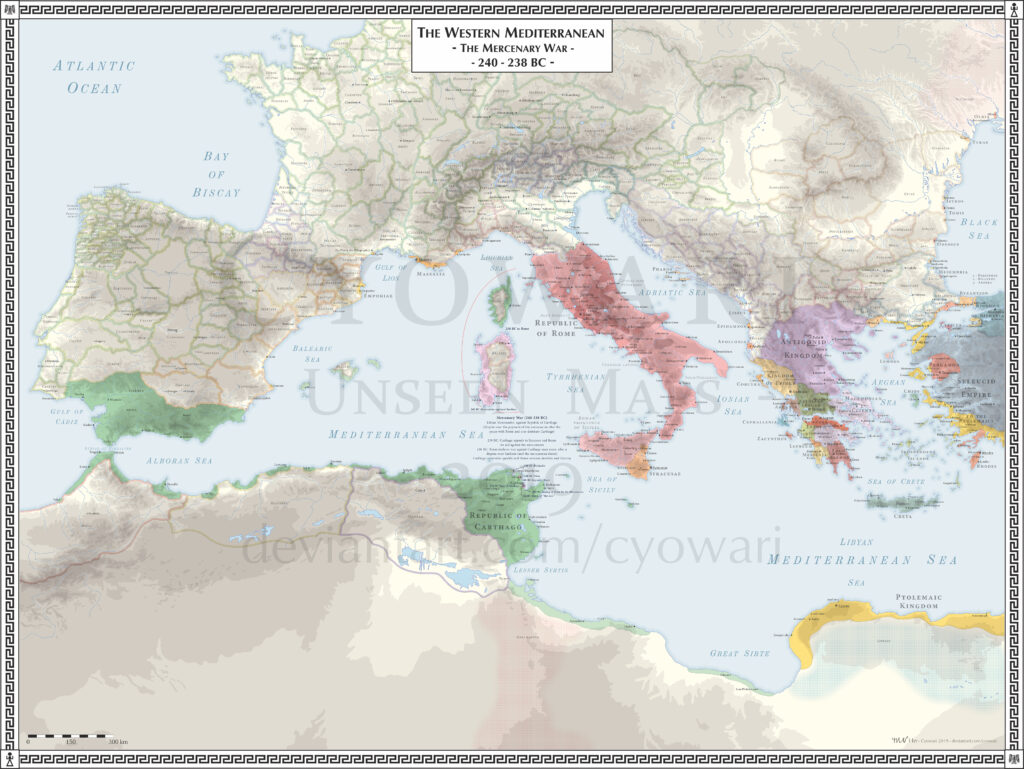
As the Carthaginian forces advanced into the interior, they were closely shadowed by the rebel army under the command of Spendius and Autaritus, the latter leading the Gauls. Many of the rebels, particularly those not directly involved in earlier engagements at the Bagradas River, remained fresh and capable. Recognizing their disadvantage against Hamilcar’s superior cavalry and war elephants in open combat, the rebels adopted guerrilla tactics, likely inspired by Hamilcar’s own earlier strategies. They avoided the plains, where Carthaginian cavalry and elephants had the upper hand, and instead moved through the rugged foothills, awaiting reinforcements and a strategic opportunity to confront the Carthaginians. During this phase of the campaign, Hamilcar led his army on an extended march to the east, though the precise extent of his movement remains uncertain. At some point, his forces became trapped in a mountain valley. Modern historians propose various locations for this critical moment, including areas near Tunis, Grombalia, ancient Nepheris, the lower Bagradas River, the Mellane River, or regions between Utica and Hippo Acra, as well as near modern Souk al Jamaa. It is unclear from the historical sources whether Hamilcar’s entrapment resulted from a deliberate stratagem by Spendius or a miscalculated attempt by Hamilcar to attack an isolated segment of the rebel forces. Regardless, the Carthaginian camp found itself in a precarious position, surrounded on three sides: Spendius and Autaritus held positions on one flank, newly mobilized Libyan units blocked the front, and Numidian cavalry—arriving from the west—closed in on the rear. Polybius’ account suggests that Hamilcar had been advancing east or southeast at the time, aligning with the reported positioning of the Numidians and rebel forces. This complex encirclement underscored the rebels’ growing coordination and tactical acumen, putting Hamilcar in a critical situation.
The battlefield, though expansive enough to accommodate a full-scale engagement, saw relatively small forces compared to larger conflicts of the era. Hamilcar commanded between 10,000 and 15,000 troops, while the opposing forces—under Spendius, Autaritus, and their Numidian allies—numbered over 20,000. The rebel contingent included approximately 8,000 troops led by Spendius and Autaritus, around 2,000 Numidian cavalry, and a Libyan force estimated at 10,000 to 15,000. Hamilcar’s position within an encircled plain presented a significant strategic challenge. Despite his substantial force, he was outnumbered by the combined strength of the rebels and their allies. The situation was exacerbated by the potential for prolonged encirclement. Although Spendius did not directly assault the Punic camp, likely because it was well-chosen and fortified—reflecting Hamilcar’s expertise in position warfare honed during the Sicilian campaigns—the threat of starvation loomed. Even if the camp had a sufficient water supply, its ability to sustain the army in the face of dwindling provisions was doubtful. Polybius emphasizes the gravity of Hamilcar’s dilemma. He faced a stark choice: risk a battle against a numerically superior force or remain in his defensive position and endure the slow attrition of hunger.
Naravas’ Defection
What followed next, as Polybius suggests, was both unexpected and transformative. A young Numidian nobleman named Naravas, commanding a force of approximately 2,000 Cavalry—likely the entirety of the Numidian contingent supporting the rebels—initiated a dramatic shift in the balance of power. After this event, Spendius is mentioned engaging the Carthaginian forces only with his own troops, those of Autaritus, and the newly raised Libyan division, suggesting that Naravas’ defection significantly weakened the rebel alliance. Naravas’ decision to approach the Carthaginian camp appears to have been motivated by both familial ties to Carthage and a personal admiration for Hamilcar Barca. Seeking an audience with the general, Naravas was granted a personal interview, during which he pledged his loyalty to Hamilcar and transferred the allegiance of his entire cavalry force to the Carthaginians. This unexpected reinforcement not only bolstered Hamilcar’s position but also underscored his reputation as a leader capable of inspiring loyalty, even among potential adversaries. Naravas’ defection was a turning point, shifting the dynamics of the conflict and providing Hamilcar with a critical advantage in the face of overwhelming odds.
The Battle
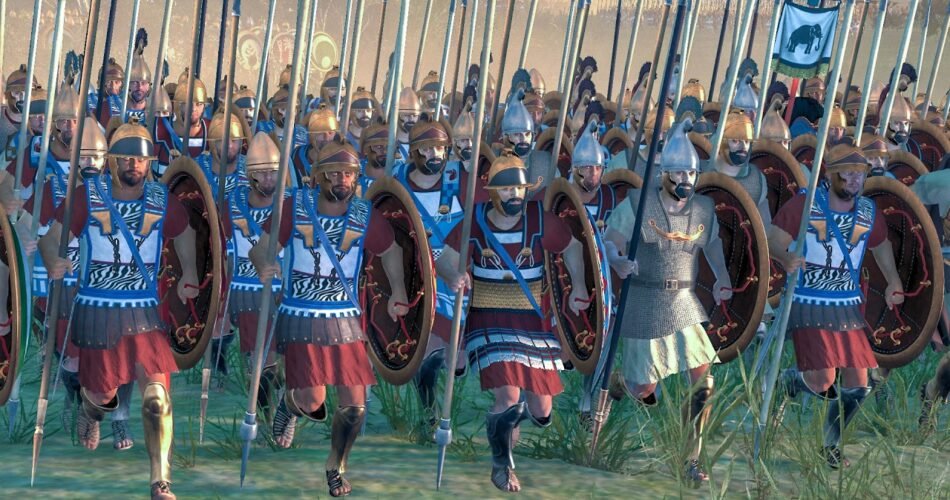
With the morale of the Carthaginian forces soaring after an unexpected and encouraging turn of events, Hamilcar promptly made the decision to have his army abandon their defensive fortifications and organize into a battle formation. At this critical juncture, Hamilcar likely commanded a cavalry force numbering at least 3,000, and possibly more, adding considerable strength to his military capability. Seeing the opportunity to capitalize on the Carthaginian repositioning, Spendius, the rebel general, allied with the Libyan forces, led them down onto the open plain to confront the Carthaginians. Faced with the demoralization caused by Naravas’ defection from the rebel ranks, Spendius felt a pressing urgency to act decisively. By uniting his forces for a full-frontal assault, he hoped to bolster the morale of his own troops, as well that of the newly-arrived Libyan reinforcements, who were now compelled to rally against the common enemy. However, Spendius’s decision to consolidate his forces for an all-out attack, while seemingly a tactical choice, could be interpreted as a significant miscalculation. Had the rebels instead opted for a two-pronged assault, coordinating simultaneous attacks from their respective camps, it would have forced Hamilcar to split his attention and resources. This strategic maneuver could have significantly diminished Hamilcar’s striking power and defensive capacity. With deft maneuvering and a bit of luck, the rebels might have disrupted the Carthaginian formation, thrown portions of their forces into disarray, and potentially weakened the effectiveness of their war elephants, which were a cornerstone of Hamilcar’s army. Additionally, there was a risk that the presence of the Numidian allies might falter under the pressure of a divided offensive if things were not executed perfectly. One of the critical factors influencing Spendius’s strategy was undoubtedly the inexperience of his Libyan reinforcements. The risk of a divided attack leading to confusion—where one group might strike too soon while another hesitated—was substantial. The bitter memory of how his previous engagement at the Bagradas had unraveled would have weighed heavily on Spendius’s mind, reinforcing his desire for a more cohesive, singular assault rather than risking the chaos of a fragmented one. Terrain also played a pivotal role in shaping the battle dynamics. While the historian Polybius did not record detailed geographical features such as rivers or mountains in the vicinity of the battlefield, it is important to recognize that these operations were far from taking place in a barren desert landscape. Hamilcar would have strategically chosen his encampment location to maximize the advantages offered by the surrounding environment. If the Carthaginian forces were positioned behind natural obstacles or in a defensible area, a coordinated two-pronged assault from the rebels might have been rendered complex, if not entirely unfeasible.
In the battle, the rebels faced a comprehensive and decisive defeat. As demonstrated in the earlier encounters at Bagradas, Spendius exhibited strategic acumen; however, his tactical prowess fell short. Details surrounding the exact circumstances of the loss remain unclear. Polybius, the ancient historian, provides some insights, noting that Spendius initiated an aggressive assault on the Carthaginian forces. This skirmish proved to be fiercely contested, with the elephants playing a significant and potentially game-changing role. One of the remarkable moments in the battle was attributed to Naravas, who displayed exceptional bravery and skill. His actions likely included successfully routing the remaining cavalry forces of the rebel side. This maneuver allowed Hamilcar, commanding the Carthaginian infantry, to focus his forces on engaging the main body of the rebel infantry, aided by the formidable presence of the elephants. Spendius had hoped that the raw energy and fervor of his troops would compensate for any shortcomings in tactical sophistication. However, once the initial thrust was met with resilience, he found it challenging to reclaim the momentum amidst the chaos of the battle. Managing to maintain cohesion among his diverse forces became increasingly problematic as the fight progressed. It is evident that Hamilcar successfully intercepted Spendius’s attack, halting it in its tracks. Following this, he likely launched a counteroffensive, utilizing his elephants in a crucial capacity, as Polybius emphasized, turning the tide of battle decisively in favor of the Carthaginians.
The rebels did not falter immediately, as they had during the confrontation at the Bagradas River. Instead, they put up a fierce and determined resistance, engaging in a protracted and intense struggle that significantly exceeded the hardships they had faced in that earlier battle. This time, the rebel fighters showcased their tenacity, holding their lines against the advancing forces. In response to this staunch resistance, the elephant corps played a critical role, likely employing their overwhelming presence and tactical maneuvers to wear down the rebels. Their repeated charges were designed not only to wreak havoc but also to disrupt the rebels’ formations, creating fractures in their ranks that the Punic infantry could then exploit. The sight of massive elephants thundering into battle would have been both intimidating and disorienting, likely prompting confusion among the rebel forces. Moreover, the timing of Naravas’ cavalry was crucial. If they succeeded in driving away Spendius’ cavalry, they would have the opportunity to either launch a decisive charge against the beleaguered rebel infantry or, at the very least, to pursue them when they finally began to shatter under the relentless pressure of the Punic forces. As the rebel lines began to show signs of cracking, the cavalry could effectively take advantage of the situation, further demoralizing their foes and turning the tide of battle in favor of the Punic coalition.
Polybius reported that rebel losses amounted to 10,000 dead and 4,000 captured, figures that have been deemed excessive, much like his estimates for the Bagradas victory. There is no means to verify these numbers. While the significant disparity between the slain and captured may seem questionable, it is worth noting that Hannibal inflicted similar casualties in multiple well-documented battles, which, like this one, did not signify the war’s conclusion. If Polybius’ figures are accurate, they suggest a devastating defeat for Spendius and Autaritus. The rebel army, although not completely destroyed, appeared to disintegrate as a cohesive fighting force. Hamilcar likely incurred some losses as well; however, he was now free to operate as he wished. Spendius, Autaritus, and presumably some of their men managed to escape to the coast.
Aftermath
Hamilcar displayed a well-considered magnanimity; he enlisted those prisoners willing to serve under his command, while gathering the others into their respective national contingents. He informed them that they would be pardoned and free to go wherever they wished. However, he cautioned that if they chose to take up arms against Carthage again, no mercy would be afforded to them. They were subsequently dismissed.
Spendius interpreted Naravas’ defection as a direct result of Hamilcar’s diplomatic and generous treatment of those who aligned with Carthage. This perception deepened his fear of losing control over his forces, as he recognized that such favorable terms would likely not extend to him or the other rebel leaders. In response, and likely under pressure from his senior advisors, particularly Autaritus, Spendius sought to eliminate any possibility of reconciliation between the two sides. To solidify the rebels’ commitment and prevent any reconciliation between the two sides, Spendius ordered a harsh punishment for 700 Carthaginian prisoners, including the notable commander Gisco. The prisoners were subjected to severe mistreatment and ultimately executed in a manner designed to instill fear and deter further defections. This event marked a significant escalation in the conflict, prompting the Carthaginians to retaliate by enacting their own strict measures against rebel captives. These actions deepened the animosity between the two sides, further intensifying the war. From this point forward, the war descended into extraordinary brutality, earning the name “Truceless War,” as described by Polybius. Neither side showed any mercy; the Carthaginians, in particular, adopted the grim practice of having captured rebels executed by being trampled underfoot by war elephants. The mutual atrocities exemplified the intense animosity and desperation that defined this phase of the conflict.
© 2026 History and War
Author: Jishu Roy
Unauthorized reproduction of this content is prohibited.