Factionalism, Diplomacy, and the Levantine Advance (AD 1099)
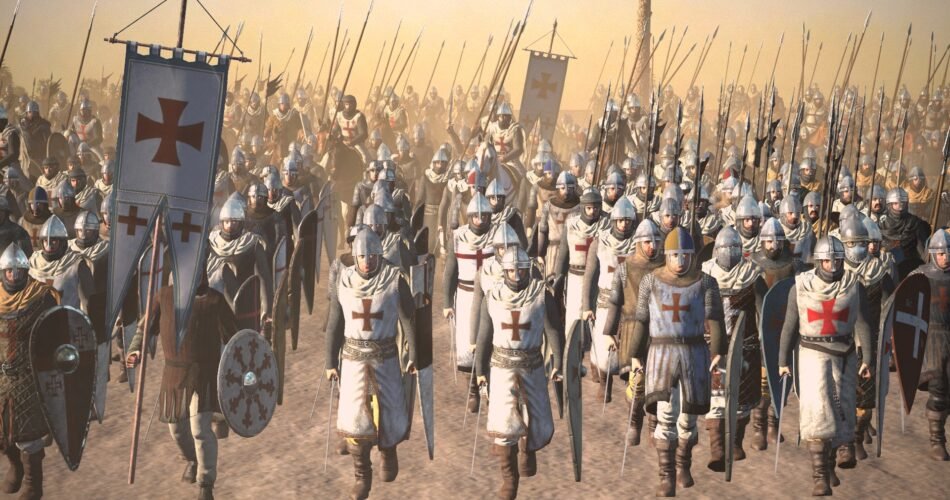
The final advance of the First Crusade through the Levant in AD 1099 was defined as much by internal factionalism and pragmatic diplomacy as by military conquest. Between Raymond of Toulouse’s departure from Ma‘arra in January and the army’s arrival before Jerusalem in June, the expedition nearly fractured under the weight of competing territorial ambitions and logistical strain. The prolonged siege of ‘Arqah served as a critical turning point, laying bare the tensions between Raymond, Godfrey of Bouillon, and the Byzantine court, while simultaneously undermining the spiritual authority of the Holy Lance. By analyzing the Crusaders’ strategic shift toward coastal navigation, their tactical reliance on local treaties, and the pressing threat of Fatimid intervention, this study reconstructs the complex final stage of the campaign that brought the Latin forces to the gates of the Holy City.
Geopolitical Fragmentation in Syria and the Departure from Ma‘arra
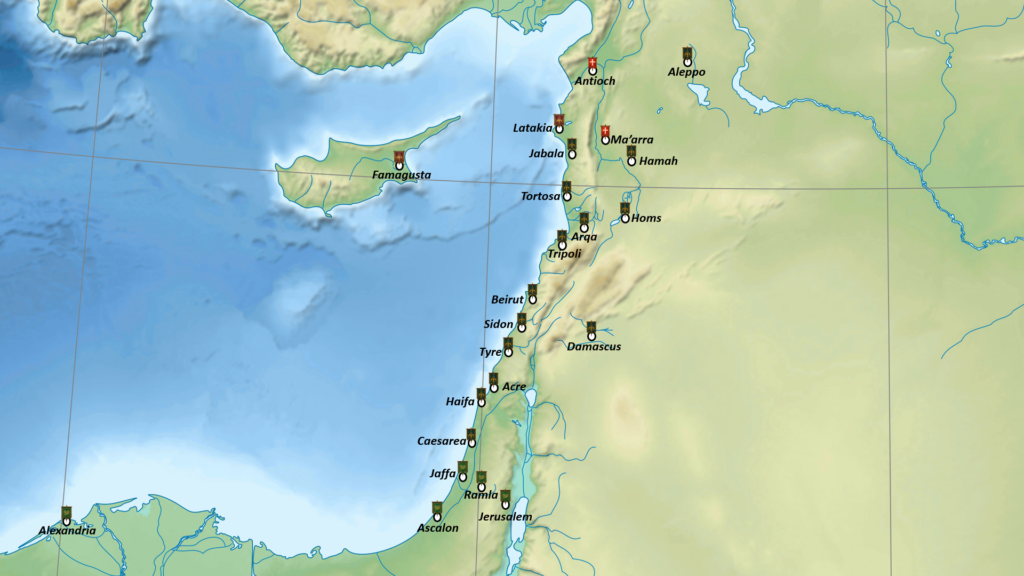
On 13 January AD 1099, Raymond IV, Count of Toulouse, set out from Ma‘arra with his contingent of Crusaders and resumed the campaign towards Jerusalem. He chose to advance southwards, hoping to make his way through the region without encountering prolonged resistance. The devastation left behind at Ma‘arra had spread fear across northern Syria. Reports of the massacre had reached neighbouring towns, many of whose inhabitants now preferred to negotiate with the Crusaders rather than risk the horrors of a military assault. With resistance weakening in the surrounding countryside, the route towards Jerusalem appeared increasingly accessible.
The defeat of Kerbogha in the previous year had severely weakened the Turkish forces in Syria, leaving them divided and poorly coordinated. The two Seljuk princes who ruled the region, Ridwan of Aleppo and Duqaq of Damascus, were too deeply divided by their mutual rivalry to unite against the advancing Crusaders. Duqaq also had to contend with another threat, as the Egyptians had recently recovered Palestine from the Artuqids. Meanwhile, the lesser Turkish emirs remained preoccupied with protecting their own territories and interests. The two prominent Arab dynasties of the region, the Banu Munqidh of Shaizar and the Banu Ammar of Tripoli, were also willing to cooperate with anyone who could weaken their Turkish rivals. Under these circumstances, Raymond encountered little resistance as he continued his march southwards.
Raymond’s first destination was Kafartab, a settlement approximately 12 miles south of Ma‘arra. Upon reaching it, he halted his advance until 16 January to secure provisions and replenish his army’s supplies. During this interval, Tancred and Robert of Normandy arrived and joined his expedition. Meanwhile, Godfrey of Bouillon and Robert of Flanders remained in Antioch alongside Bohemond.
At Kafartab, Raymond received envoys from the Emir of Shaizar, who offered to provide the Crusaders with local guides and provisions at favourable prices, provided they crossed his territory peacefully. Raymond agreed to these terms. On 17 January, the emir’s guides led the Crusader army across the Orontes River, passing between Shaizar and Hama before directing it into the valley of the Sarout. However, one of the guides inadvertently led the Crusaders into an area where local peasants had concealed their livestock. The soldiers seized the animals in such large numbers that the knights were able to sell the surplus and use the proceeds to purchase packhorses.
While preparations were underway to replenish the army’s supplies, Raymond and his senior commanders gathered to determine the next stage of their campaign. Raymond proposed crossing the Nosairi Mountains westwards to reach the Mediterranean coast by the shortest possible route. The coastal stronghold of Latakia was already under Christian control, and an advance along the coastline would keep his forces connected to Antioch. It would also allow him to receive provisions from the Byzantine authorities in Cyprus, with whom Raymond maintained friendly relations.
Tancred, however, opposed this proposal. He argued that advancing along the coast would be dangerous unless the Crusaders first secured the coastal cities along their route. Given the army’s limited numbers and inadequate equipment, capturing and holding these strongholds would be extremely difficult. Instead, Tancred recommended following the Orontes River valley southwards before continuing through the Biqa Valley towards the upper Jordan region. However, this route carried its own risks, as such a movement would almost certainly provoke Duqaq of Damascus into confronting the Crusaders, while securing sufficient provisions along the way could also prove challenging. Unable to agree entirely with either proposal, the commanders settled on a compromise. They decided to march south through the Buqai‘ah Valley and make for the Mediterranean coast near Tripoli.
Logistical Foraging and the Capture of Hosn al-Akrad
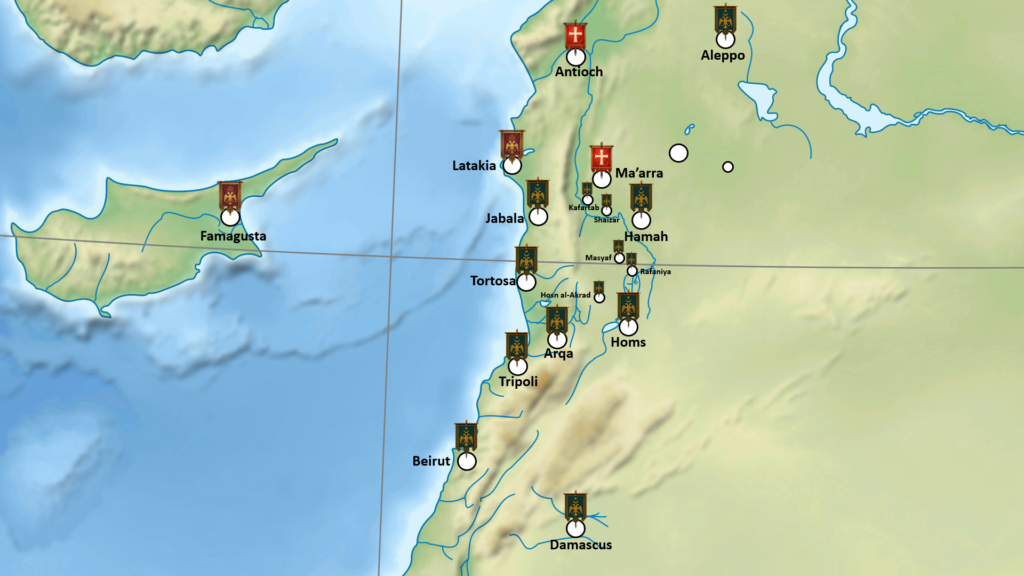
On 22 January AD 1099, the Crusader army arrived at Masyaf, where the local ruler quickly negotiated an agreement with them to ensure the safety of his territory. After securing passage, the Crusaders continued south-eastwards, taking a route around the mountainous Jebel Helou range. The following day, they reached Rafaniya, only to find that its inhabitants had abandoned the town. However, they discovered that considerable quantities of food and other provisions had been left behind. The Crusaders therefore remained there for three days, gathering supplies before continuing their march into the Buqai‘ah Valley.
Overlooking the plain stood the imposing fortress of Hosn al-Akrad, meaning the Castle of the Kurds. It occupied the elevated site where Krak des Chevaliers would later become one of the most renowned fortresses of the medieval world. As the Crusaders entered the valley, they found that the local population had taken refuge inside the fortress, bringing their livestock with them. Eager to secure the supplies and animals stored within its walls, the Crusaders decided to capture the stronghold. Their objective was primarily to obtain provisions rather than to gain a strategic military position.
On 28 January AD 1099, the Crusaders launched an assault on the fortress of Hosn al-Akrad. However, the defenders, familiar with the Crusaders’ eagerness for plunder, devised a clever diversion. They opened one of the gates and drove out some of their livestock, tempting the attackers to abandon their positions and rush after the animals. As the Crusaders scattered in pursuit of the fleeing livestock, they lost their formation and became vulnerable to a counterattack. The defenders seized the opportunity to launch a sortie from the fortress, preventing the Crusaders from regrouping. In the confusion, Raymond of Toulouse was nearly captured after becoming separated from his personal guards.
Humiliated by the deception, the Crusaders prepared a determined assault the following morning. However, when they approached the fortress, they discovered that its defenders had abandoned it during the night. The Crusaders entered the stronghold and found that a considerable amount of plunder had been left behind. With the fortress now in their possession, the army established its camp there and remained for approximately three weeks. During this period, the Crusader leaders held further discussions about the direction of their campaign, while the Feast of the Purification was also observed within the fortress.
Tribute Diplomacy and the Pivot to ‘Arqah
While the Crusader army remained at Hosn al-Akrad, Raymond received a diplomatic mission from the Emir of Hama, who sent him gifts. This was soon followed by an embassy from the Emir of Tripoli, who proposed negotiations to ensure the Crusaders’ peaceful passage through his territory. In response, Raymond dispatched his own representatives to Tripoli to discuss the arrangements. Upon their return, the envoys reported that the city and its ruler possessed considerable wealth but showed little inclination towards military confrontation. They believed that the emir would be willing to pay a substantial sum to protect his other territories if the Crusaders threatened one of his towns.
Facing a shortage of funds, Raymond decided to act on this assessment. Rather than continue towards Jerusalem immediately, he turned his attention to the emir’s territories and marched towards ‘Arqah, a fortified town approximately fifteen miles from Tripoli, near the point where the Buqai‘ah Valley opened towards the Mediterranean coast. His army arrived there on 14 February AD 1099 and began laying siege to the town.
The Fall of Tortosa (February 1099)
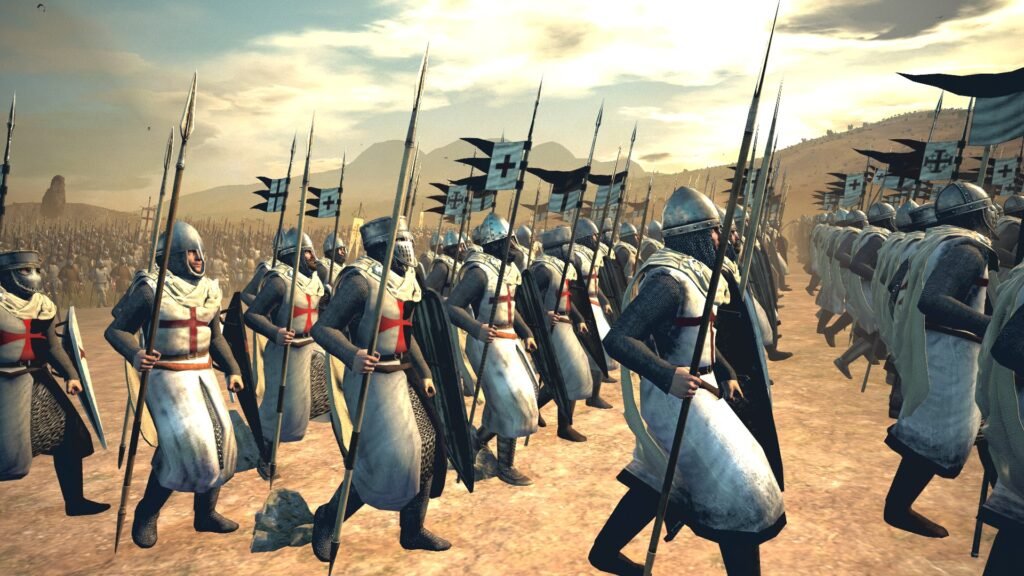
While Raymond of Toulouse continued his operations around ‘Arqah, he was also concerned with securing access to the Mediterranean coast and establishing reliable communications with the Christian-held garrison at Latakia. To achieve this, he encouraged Raymond Pilet and Raymond I, Viscount of Turenne, to capture Tortosa, an important harbour situated between Latakia and Tripoli. The two commanders gathered a small force and advanced rapidly towards the town, reaching its walls after nightfall on 16 February AD 1099.
Knowing that their forces were insufficient for a direct assault, they resorted to deception. Their soldiers lit numerous campfires around the town, creating the impression that a much larger Crusader army had arrived. The tactic succeeded. Alarmed by what appeared to be an overwhelming enemy force, the governor of Tortosa, who acknowledged the authority of the Emir of Tripoli, abandoned the town along with his garrison and escaped by sea during the night. By the following morning, the Crusaders had entered Tortosa without resistance.
The news of Tortosa’s capture soon reached the neighbouring settlements. The governor of Marqiye, located approximately ten miles to the north, quickly submitted to Raymond’s authority. The acquisition of Tortosa was a significant advantage for the Crusaders, as its harbour provided them with a valuable maritime connection to Antioch, Cyprus and, ultimately, the western territories of Europe. This considerably improved their ability to receive reinforcements, supplies and communications by sea.
Northern Contingents Resume the March
Raymond’s successful advance towards the south eventually prompted the other Crusader leaders to reconsider their prolonged stay in Antioch. In early February AD 1099, Godfrey of Bouillon, Robert of Flanders and Bohemond met to discuss the growing dissatisfaction among their followers. Their soldiers were expressing grievances similar to those previously voiced by Raymond’s men at Ma‘arra. They complained that their continued stay in Antioch was unnecessarily delaying the expedition, despite having left their homes and endured immense hardships for the sole purpose of reaching Jerusalem.
Discontent within the Crusader army was becoming increasingly serious, and desertions were on the rise. Some soldiers were attempting to leave by sea and return to their homelands. Concerned about the growing loss of manpower, the princes were forced to prohibit their followers from boarding ships without permission. Recognising the need to restore discipline and renew the army’s commitment to the campaign, Godfrey, Robert and Bohemond convened a public assembly on 1 March AD 1099.
At the gathering, they announced that all Crusader forces still remaining in Antioch, apart from those already marching with Raymond, would assemble at Latakia, a Byzantine-controlled port approximately fifty miles south of Antioch. From there, the entire army would resume its advance towards Jerusalem without further delay, regardless of the dangers they might encounter along the way.
The Crusader forces assembled at Latakia as previously agreed, but their renewed determination to advance towards Jerusalem proved short-lived. Instead of continuing southwards, the army established its camp a few miles beyond the city and began laying siege to Jabala. This was the same coastal town that Raymond of Toulouse had considered attacking earlier, before Tancred persuaded him to abandon the idea in favour of another route.
Bohemond, however, showed little interest in continuing the expedition. According to Albert of Aachen, he was concerned about a possible conspiracy to seize Antioch from his control. It is also possible that, upon reaching Jabala, he had concluded that the Crusader army was unlikely to proceed towards Jerusalem in the immediate future.
In that situation, he may have considered it more worthwhile to devote his resources and attention to securing Antioch, the principality he had already acquired, rather than pursuing the uncertain prospects of the campaign. The journey to Jerusalem could wait; safeguarding his newly established dominion was a more immediate concern. Whatever his actual reasons, Bohemond eventually withdrew from the Crusade and returned to Antioch. Unlike his earlier departure, this time he did not re-join the expedition.
The siege of Jabala, however, did not last long. Approximately ten days after it began, an urgent message arrived from Raymond of Toulouse, delivered by Peter, Bishop of Albara. According to the report, alarming news had reached the Provençal forces besieging ‘Arqah. A powerful Turkish army, described in the message as an immense host of warriors, had allegedly been assembled under the command of the so-called “Pope of the Turks” and was preparing to launch a major attack against the Crusaders. The enemy forces were said to have gathered at Damascus and were now only a few days away from ‘Arqah.
Raymond warned that the situation was extremely dangerous. Unless the other Crusader leaders arrived with reinforcements, a large portion of his army could be destroyed, potentially jeopardising the entire expedition to Jerusalem. He further cautioned that the forces besieging Jabala might also face a similar fate if they remained isolated.
Faced with this alarming report, Godfrey of Bouillon and Robert of Flanders abandoned the siege of Jabala and immediately marched southwards along the coast to assist Raymond. They reached ‘Arqah around 14 March AD 1099, only to discover that the reports of an approaching Turkish army were entirely unfounded.
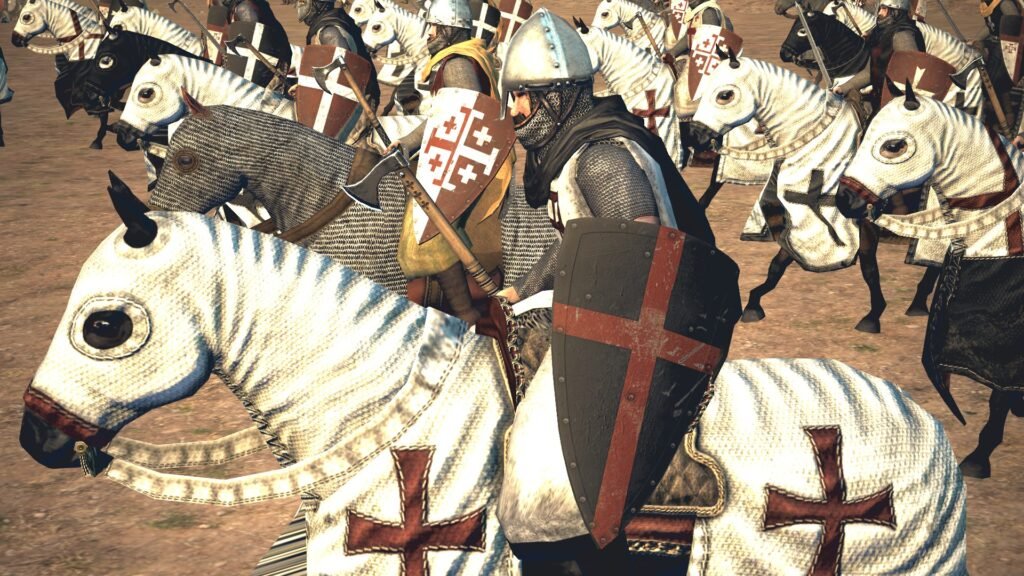
Factional Rifts at ‘Arqah
The discovery that the reported Turkish threat was false infuriated Godfrey of Bouillon and Robert of Flanders. They suspected that the entire story of an approaching army from Damascus had been fabricated. More seriously, they accused Raymond of Toulouse of deliberately spreading false information after accepting a substantial payment from the Emir of Jabala, whose town he was supposedly trying to protect from the Crusaders. Believing that they had been manipulated into abandoning the siege, Godfrey and Robert established their camp about two miles from ‘Arqah and refused to cooperate with Raymond for several days.
Raymond’s difficulties were further compounded by the growing dissatisfaction of Tancred. However, Tancred’s grievance was primarily financial rather than political. Dissatisfied with the rewards he had received from the Provençal count, he decided to end their association. In a symbolic gesture, he returned the staff representing the authority Raymond had granted him and transferred his allegiance to Godfrey’s forces.
The Protracted Siege of ‘Arqah: Byzantine Diplomacy and the Ordeal of Peter Bartholomew
While the siege of ‘Arqah continued, Raymond’s forces extended their operations into the surrounding territories, sending raiding parties towards the outskirts of Tripoli. The inhabitants initially attempted to resist these incursions, but their defending force was decisively defeated. The fighting was reportedly so bloody that the stream flowing into Tripoli was said to have been stained red with the blood of the city’s Muslim defenders. The defeat spread panic throughout the region, prompting Tripoli and several neighbouring settlements to agree to display Raymond’s banner as a gesture of submission, anticipating that they would eventually have little choice but to surrender to the Crusaders.
Although Raymond’s forces appeared to be making progress in the surrounding territories, the situation at ‘Arqah itself was proving far more difficult. Despite the pressure exerted by the Crusaders, the town’s defenders continued to resist, and the siege showed little sign of reaching a successful conclusion. Unfortunately, very few detailed accounts of the siege have survived, making it difficult to reconstruct the fighting in its entirety. Nevertheless, contemporary reports indicate that the Muslim garrison made effective use of its defensive artillery. The defenders possessed at least one powerful catapult, which they used to launch heavy projectiles against the besieging army, inflicting considerable casualties.
Among those killed was Pons of Balazun, a close associate of Raymond of Aguilers and one of the contributors to the earlier sections of his chronicle. He was struck and killed by a large stone fired from the fortress. Another prominent casualty was Anselm of Ribemont, who had written at least two detailed letters describing his experiences during the Crusade. He was struck on the head by a projectile and subsequently died from his injuries.
As the siege of ‘Arqah dragged on without a decisive outcome, dissatisfaction began to spread throughout the Crusader army. Many ordinary soldiers were growing impatient and demanded that the expedition abandon the prolonged siege and continue its advance towards Jerusalem. Tensions intensified in early April, when an embassy from the Byzantine emperor Alexios I Komnenos arrived at the Crusader camp.
The imperial representatives raised the issue of Bohemond’s seizure of Antioch, which Alexios regarded as a violation of his claims over the city. Nevertheless, the emperor offered to provide additional troops and financial assistance if the Crusaders agreed to postpone their departure until 24 June, the Feast of Saint John the Baptist, when he intended to join the expedition in person. Raymond of Toulouse supported the proposal, arguing that the arrival of Byzantine reinforcements would considerably strengthen the Crusader army. He also maintained that abandoning the siege of ‘Arqah without capturing the town would amount to admitting defeat.
However, other leaders strongly opposed this arrangement. Godfrey of Bouillon emerged as one of the most outspoken opponents, expressing deep mistrust of Alexios and questioning whether the emperor would fulfil his promises. He and those who shared his position insisted that the Crusaders should not delay their ultimate objective any longer and should proceed towards Jerusalem without waiting for the Byzantine ruler.
While disagreements over the future of the campaign continued to divide the Crusader leadership, another controversy emerged from the visions of Peter Bartholomew. On the night of 6–7 April AD 1099, he claimed to have received a further divine revelation. This vision presented Raymond of Toulouse and his Provençal followers as the true favourites of God, while portraying the other Crusader contingents as having strayed from the righteous path and, in some cases, as enemies of the divine cause.
Such claims deepened the divisions within the army, particularly among those who were already impatient to abandon the siege and march towards Jerusalem. They also emboldened those who had begun questioning the authenticity of the Holy Lance, which Peter claimed to have discovered at Antioch. In an attempt to silence his critics and prove the truth of his revelations, Peter offered to undergo an ordeal by fire on Good Friday, 8 April.
The outcome of the ordeal, however, remained disputed. Some accounts claimed that Peter emerged badly burned, while others maintained that his supporters crowded around him so enthusiastically that he was injured in the ensuing commotion. Whatever the precise circumstances, he died shortly afterwards. His death dealt a serious blow to the credibility of the Holy Lance revelations and weakened Raymond’s position within the Crusader army. Already struggling to persuade the other leaders to continue the siege of ‘Arqah, the count now found it increasingly difficult to maintain his authority and keep the army together.
Reaching the Gates of Jerusalem (May–June 1099)
On 13 May AD 1099, Raymond of Toulouse finally abandoned the siege of ‘Arqah. Deeply disappointed by the failure to capture the town, he reportedly ordered the dismantling of the Crusader camp with tears in his eyes. He then led his forces towards Tripoli, accompanied by a large number of Provençal followers. His departure also brought an end to the remaining hopes of securing meaningful military cooperation with the Byzantine emperor.
Around the same time, the Crusader ambassadors who had been sent to negotiate with the Egyptians returned with a proposal from al-Afdal, the Fatimid vizier. He offered to permit unarmed Christian pilgrims limited access to Jerusalem. Although the Crusaders might have been willing to consider an arrangement that divided control of Palestine between the two powers while leaving Jerusalem under their authority, al-Afdal’s proposal fell far short of their ambitions. Access to the Holy City as pilgrims was no substitute for capturing and establishing Christian rule over Jerusalem itself.
Before resuming their march towards Jerusalem, the Crusaders held further discussions about which route would offer the safest and most practical passage. Three possible routes were considered. The first passed through Damascus, where food supplies were abundant but access to drinking water was limited. The second crossed the Lebanon Mountains, offering a reliable supply of water but presenting considerable difficulties for the army’s pack animals and other beasts of burden. The third followed the Mediterranean coastline. Although this route offered easier access to maritime support, it was also vulnerable to enemy attacks, as narrow passages along the coast could easily be blocked by even a relatively small defending force.
Despite these difficulties, the coastal route was eventually selected. Local prophecies had predicted that the liberators of Jerusalem would approach along the coast, lending the route a sense of religious significance. However, practical considerations were probably more important in the final decision. By following the coastline, the Crusaders could maintain contact with the English and Genoese fleets operating in the eastern Mediterranean, which could provide much-needed supplies and assistance.
As the Crusader army approached Tripoli, the emir became increasingly concerned about the safety of his capital and surrounding settlements. Seeking to avoid an attack, he attempted to secure the Crusaders’ goodwill through generous concessions. He released approximately three hundred Christian captives held in the city and provided them with compensation amounting to fifteen thousand bezants and fifteen valuable horses. He also supplied the Crusader army with pack animals and provisions for its onward journey. According to contemporary reports, the emir even expressed his willingness to embrace Christianity if the Franks succeeded in defeating the Fatimids.
With the prospect of Byzantine assistance abandoned and negotiations with the Egyptians having failed to produce an acceptable agreement, the Crusaders finally resumed their march on 16 May AD 1099. Their objective was now unmistakable: to capture Jerusalem as quickly as possible, before the Fatimids could organize a counter-offensive. Once again, the army marched with its religious symbols prominently displayed, united by the common purpose of reaching the Holy City. The prolonged siege of ‘Arqah had failed to establish Raymond of Toulouse’s supremacy over the other leaders. Instead, the expedition returned to a system of collective command, with the principal nobles directing their respective contingents.
Despite their internal disagreements, the Crusaders advanced remarkably quickly, covering approximately 225 miles between Tripoli and Jerusalem in just twenty-three days. They followed the often narrow Mediterranean coastal road, accompanied by an English fleet that had joined the expedition at Antioch the previous year but was now considerably weakened. Because maintaining their rapid advance was essential, the Crusaders favored diplomatic agreements and actively sought to avoid military conflict. As a result, treaties were negotiated with Beirut and Acre, while Tyre, Haifa, and Caesarea offered no resistance. Sidon, however, put up limited opposition before ultimately allowing the army to pass.
The Fatimids, meanwhile, appeared unable to organize an effective defence along the coast. Recognising the difficulty of holding Jaffa, the principal port nearest to Jerusalem, they dismantled its defences and abandoned the town. At Arsuf, the Crusaders turned inland and continued towards Ramla, which they captured after finding it evacuated on 3 June AD 1099. Following a brief rest, they left a bishop and a small garrison at nearby Lydda to secure the area. On 6 June, the army resumed its advance towards Jerusalem, rejecting a proposal, possibly put forward by Raymond of Toulouse, to abandon the immediate objective and launch an attack against the Fatimids in Egypt instead. The Crusaders now entered the Judean highlands and established their camp at Qubeiba, approximately ten miles from Jerusalem.
That evening, Tancred separated from the main army and led a detachment towards Bethlehem, a Christian settlement a few miles south of Jerusalem. Although one account suggests that the inhabitants initially mistook the approaching Crusaders for another Turkish force and feared an attack, they soon recognised them as fellow Christians and welcomed their arrival. Tancred’s occupation of Bethlehem was therefore not simply an act of territorial ambition; it also reflected the importance of local Christian contacts and intelligence in facilitating the Crusader advance. Meanwhile, other contingents spread throughout the surrounding Judean hills, securing nearby villages and strategic positions.
The decision to advance directly towards Jerusalem was not without considerable risks. Even at Ramla, some Crusaders had warned that besieging the city during the height of summer would be extremely dangerous, particularly because of the scarcity of water in the surrounding region. Nevertheless, the leaders decided that delaying the assault would be even more perilous. Their greatest fear was that a Fatimid army might arrive before they could capture the city, trapping the Crusaders in a prolonged siege with dwindling supplies and little hope of survival. Military necessity, therefore, reinforced the religious determination that had driven the expedition from the beginning.
Yet strategy alone could not explain the determination with which the Crusaders approached their final destination. For many, Jerusalem was not merely another city to be conquered but the ultimate spiritual purpose of their entire journey. One contemporary account recalled that, during the final approach, some of the pilgrims, out of reverence for God’s command, walked barefoot. Another chronicler captured the prevailing atmosphere among the exhausted but elated Crusaders in two words: ‘rejoicing and exulting’.
Finally, on Tuesday, 7 June AD 1099, the Crusader army arrived before the walls of Jerusalem. Their long and arduous journey had brought them to the very city they had set out to reclaim. Yet reaching Jerusalem was only the beginning of their greatest challenge. The ultimate test now lay before them: the siege and capture of the Holy City.
Bibliography
1) A HISTORY OF THE CRUSADES, VOLUME I: THE FIRST CRUSADE AND THE FOUNDATION OF THE KINGDOM OF JERUSALEM | Steven Runciman
2) ARMIES OF HEAVEN: THE FIRST CRUSADE AND THE QUEST FOR APOCALYPSE | Jay Rubenstein
3) GOD’S WAR: A NEW HISTORY OF THE CRUSADES | Christopher Tyerman
4) THE CRUSADES AND THE EXPANSION OF CATHOLIC CHRISTENDOM, 1000-1714 | John France
5) THE FIRST CRUSADE 1096-99: CONQUEST OF THE HOLY LAND | David Nicolle
6) THE FIRST CRUSADE: A NEW HISTORY | Thomas Asbridge
7) VICTORY IN THE EAST: A MILITARY HISTORY OF THE FIRST CRUSADE | John France
8) THE FIRST CRUSADE: ANTIOCH TO ASCALON | Steven Runciman
© 2026 History and War
Author: Jishu Roy
Unauthorized reproduction of this content is prohibited.